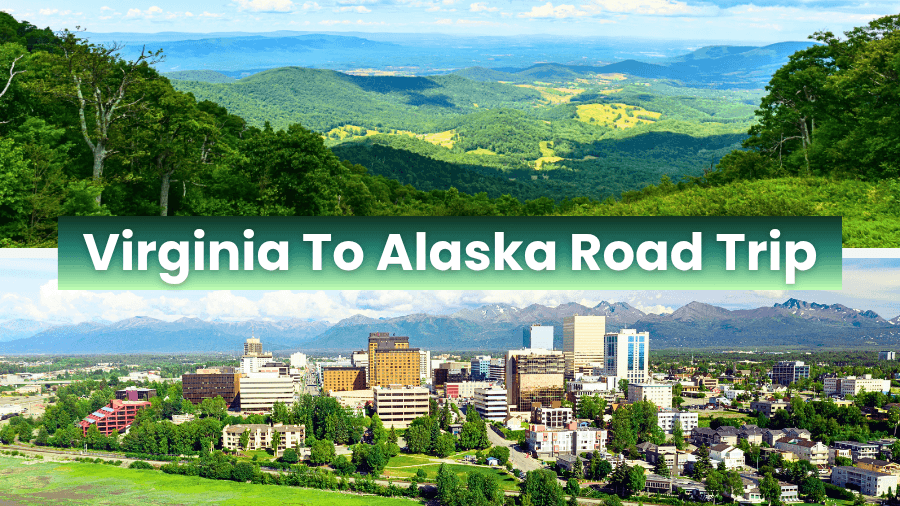
Driving from Virginia to Alaska is the kind of road trip that makes an ordinary vacation look seriously small.
You’ll cover thousands of miles through the United States and Canada, passing turquoise lakes, hot springs, waterfalls, wildlife, and snow-covered peaks.
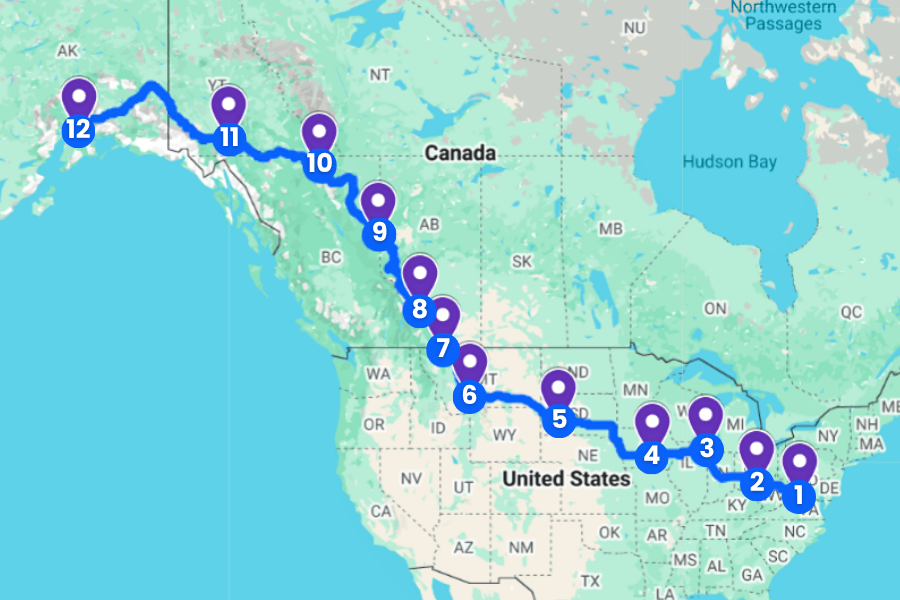
This Virginia to Alaska road trip itinerary breaks the journey into unforgettable stops, with the best things to do, scenic detours, practical tips, and road-trip highlights you won’t want to miss.
Keep reading, because the farther north you drive, the wilder this adventure gets.
1. Shenandoah National Park, Virginia
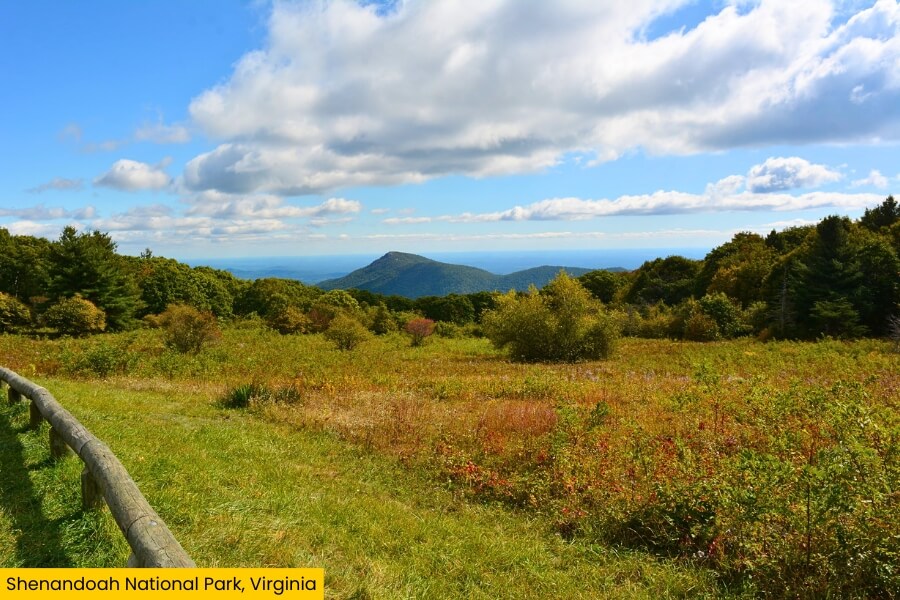
Shenandoah National Park stretches along Virginia’s Blue Ridge Mountains, about 1 hour and 15 minutes from Washington, D.C., protecting nearly 200,000 acres of forests, waterfalls, rocky peaks, and wildlife habitat.
Drive the famous 105-mile Skyline Drive, which runs the length of the park and packs in more than 75 scenic overlooks with huge views across the Shenandoah Valley and rolling mountain ridges.
If you’re ready to hike, tackle the 9.4-mile Old Rag circuit with over 2,300 feet of elevation gain, or follow the 1.4-mile Dark Hollow Falls Trail to a 70-foot waterfall.
Shenandoah also contains more than 500 miles of hiking trails, including about 101 miles of the Appalachian Trail, and you might spot black bears, white-tailed deer, wild turkeys, and colorful wildflowers along the way.
2. Hocking Hills State Park, Ohio
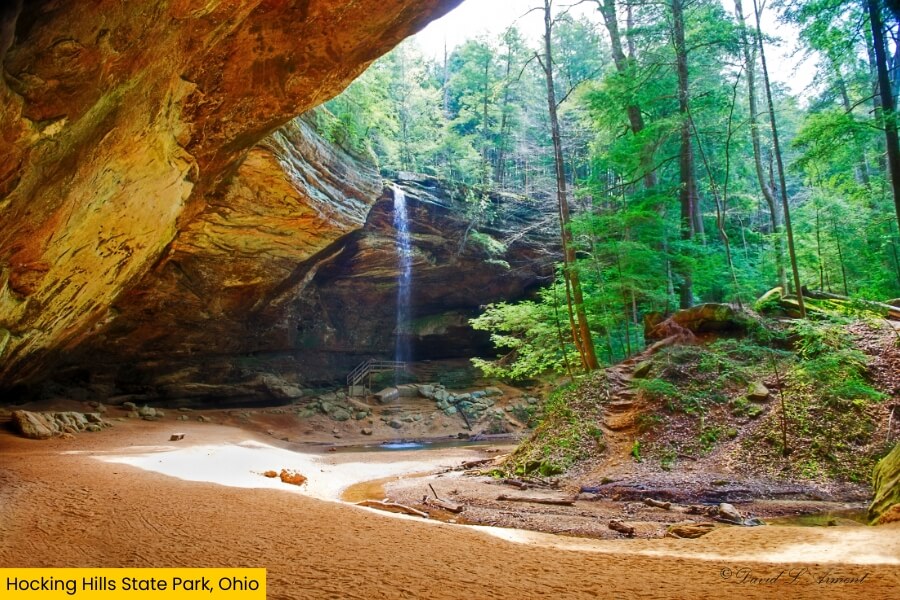
Next up, Hocking Hills State Park in southeastern Ohio swaps Virginia’s sweeping mountain views for sandstone cliffs, narrow gorges, waterfalls, and massive rock shelters spread across several scenic areas.
Start with the 1-mile Old Man’s Cave loop, where the trail twists past Upper Falls, Lower Falls, stone bridges, and the towering cliffs of the Black Hand Sandstone gorge.
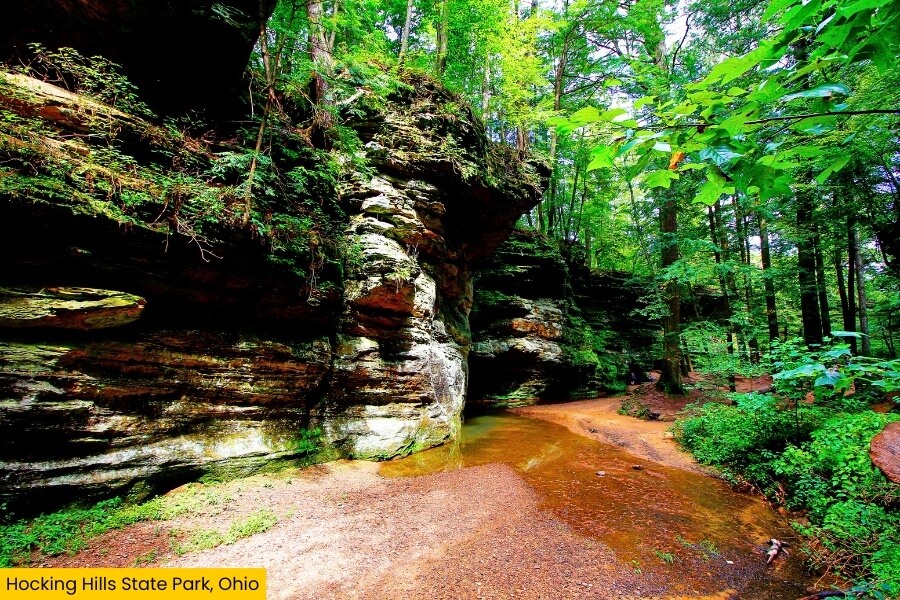
Then check out Ash Cave, the park’s largest recess cave at about 700 feet wide and 100 feet deep, reached by an easy 0.5-mile out-and-back paved trail that ends beneath a seasonal waterfall.
For another cool stop, hike the 1-mile Conkle’s Hollow Trail between cliffs that rise more than 200 feet, or explore Cedar Falls, where Queer Creek tumbles over chunky sandstone ledges.
3. Chicago, Illinois
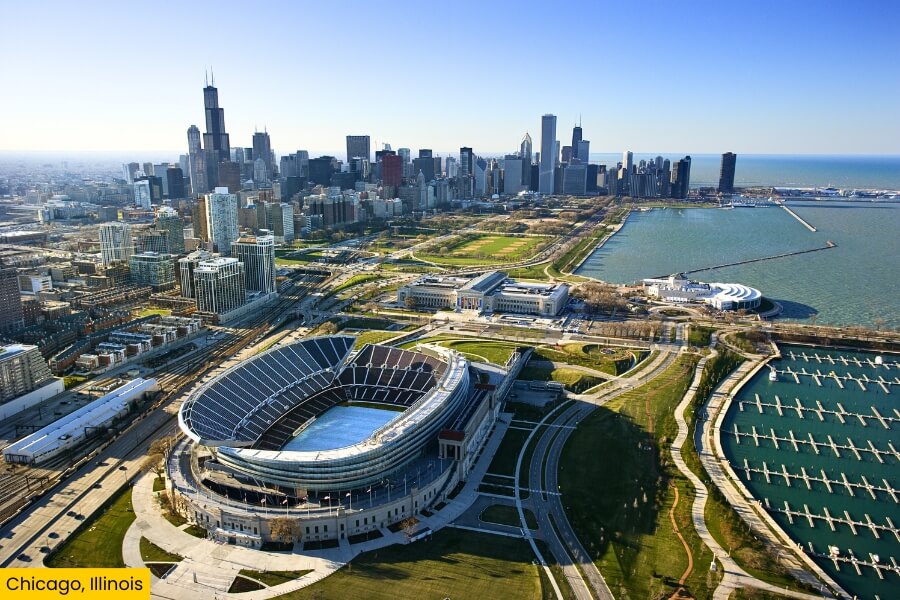
After exploring Ohio’s rocky gorges, point the car toward Chicago, Illinois, where skyscrapers, Lake Michigan, and some seriously good food make a fun change of pace from the trails.
Walk the 1.25-mile Chicago Riverwalk through downtown, then head to Millennium Park to snap the classic reflection photo at Cloud Gate, the 33-foot-high sculpture better known as “The Bean.”
For huge city views, ride up to 360 CHICAGO on the 94th floor of the 1,030-foot 875 North Michigan Avenue building, or visit Skydeck Chicago on the 103rd floor of the 1,450-foot Willis Tower.
Save room for a deep-dish pizza from Lou Malnati’s or Giordano’s, then stroll part of the 18.5-mile Lakefront pedestrian trail past beaches, harbors, and the bright blue water of Lake Michigan.
4. Pella, Iowa
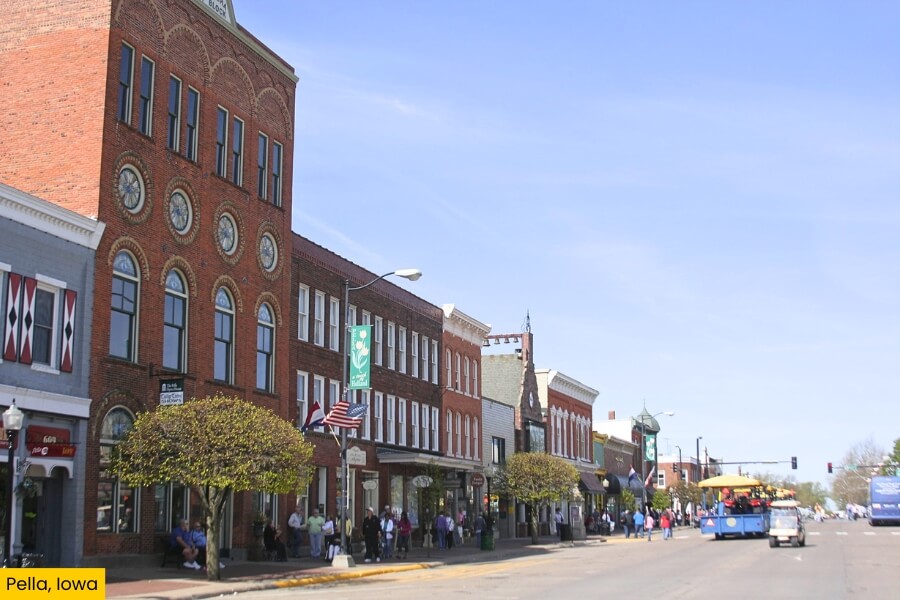
Leaving Chicago’s skyscrapers behind, a 4-hour-and-45-minute drive brings you to Pella, Iowa, a small town about 45 minutes from Des Moines.
Founded by Dutch immigrants in 1847, it still proudly celebrates its Dutch roots.
Walk through the downtown square to see the 124.6-foot Vermeer Windmill, the tallest working grain windmill in the United States, then tour the Historical Village with its 18 historic buildings.
If you visit in early May, the three-day Tulip Time festival fills the streets with hundreds of thousands of tulips, Dutch costumes, parades, dancing, and traditional food.
Before getting back on the road, stop at Jaarsma Bakery, open since 1898, for a Dutch Letter, a flaky S-shaped pastry packed with sweet almond filling.
5. Badlands National Park, South Dakota
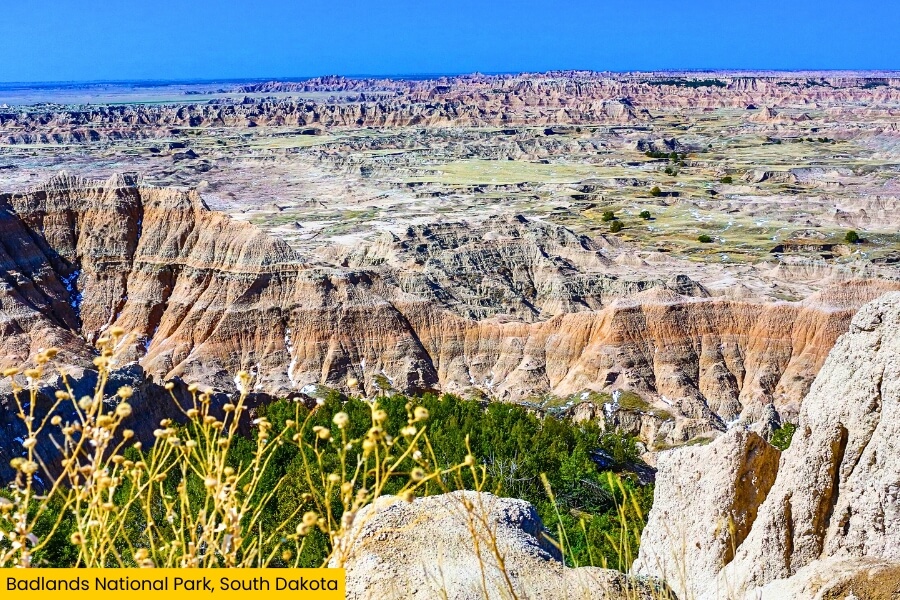
From Pella’s tulips and Dutch treats, keep driving about 8 hours and 40 minutes to Badlands National Park in southwestern South Dakota.
Here you’ll find 244,000 acres of striped rock formations, sharp spires, and wide-open prairie that create a wild roadside stop.
Cruise the 39-mile Badlands Loop Road and pull over at Big Badlands Overlook, Panorama Point, and Yellow Mounds Overlook for close-up views of colorful layers shaped by millions of years of erosion.
Keep watch for bison, bighorn sheep, prairie dogs, and pronghorn, and check out the Fossil Exhibit Trail to learn about ancient animals that once roamed here, including three-toed horses and saber-toothed predators.
6. Bozeman, Montana
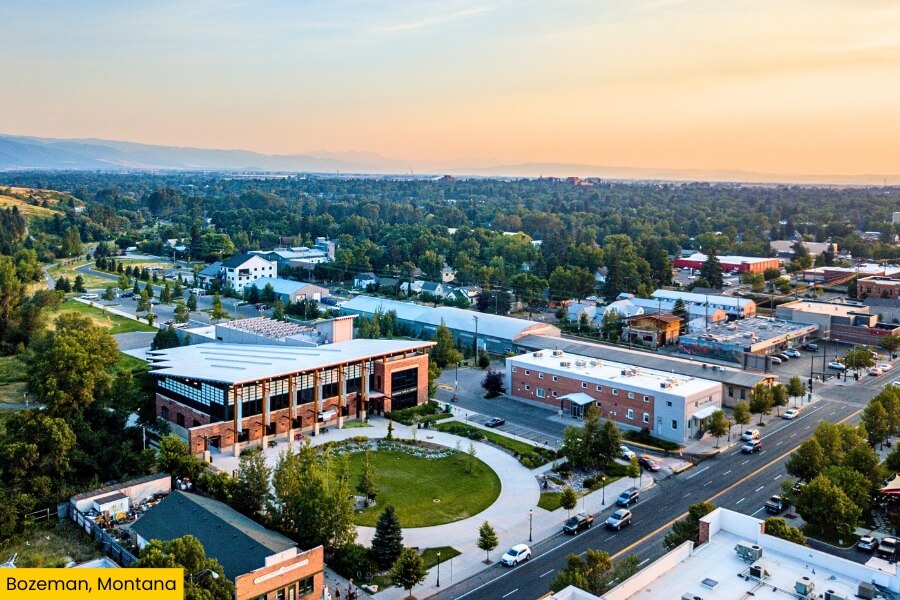
After South Dakota’s striped rock formations, roll into Bozeman, Montana, a lively mountain town in the Gallatin Valley surrounded by the Bridger, Gallatin, and Madison mountain ranges.
Make the Museum of the Rockies your first stop, where you can see one of the world’s largest collections of Tyrannosaurus rex fossils, including the famous 38-foot-long “Big Mike” bronze T. rex outside.
For some trail time, hike the 2.2-mile Drinking Horse Mountain Trail, which climbs about 700 feet and rewards you with views across Bozeman and the surrounding peaks.
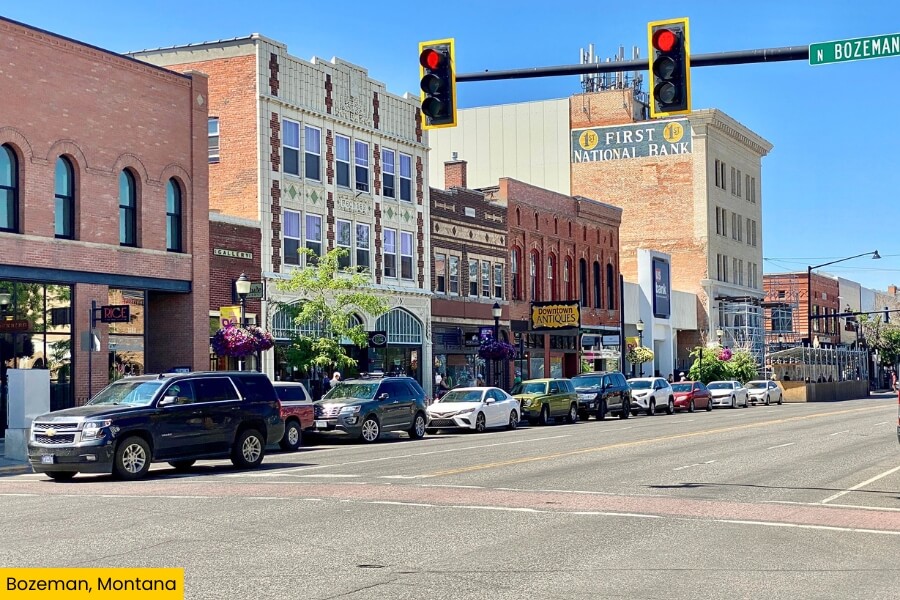
Back downtown, wander along historic Main Street for local shops and restaurants, then soak your tired road-trip legs at Bozeman Hot Springs, which has 12 indoor and outdoor pools heated with natural hot-spring water.
7. Glacier National Park, Montana
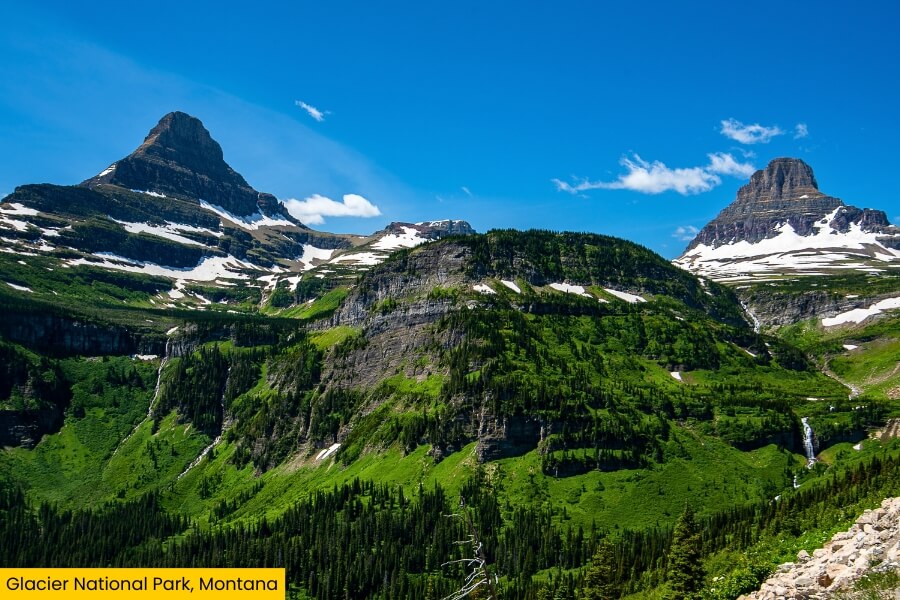
From Bozeman, a 4-hour-and-40-minute drive brings you to Glacier National Park.
It covers around 1 million acres of glacier-carved mountains, turquoise lakes, alpine meadows, and deep valleys that stretch along Montana’s border with Canada.
Drive the spectacular 50-mile Going-to-the-Sun Road, climbing to 6,646-foot Logan Pass and stopping at Lake McDonald, the park’s largest lake at 9.4 miles long and nearly 500 feet deep.
For an unforgettable hike, follow the 4.6-mile round-trip Avalanche Lake Trail through a cedar forest to a mountain lake surrounded by steep cliffs and waterfalls.
Glacier has more than 700 miles of trails, 26 named glaciers, and wildlife ranging from mountain goats to grizzly bears, so keep your camera ready and follow bear-safety rules while exploring.
8. Banff National Park, Alberta
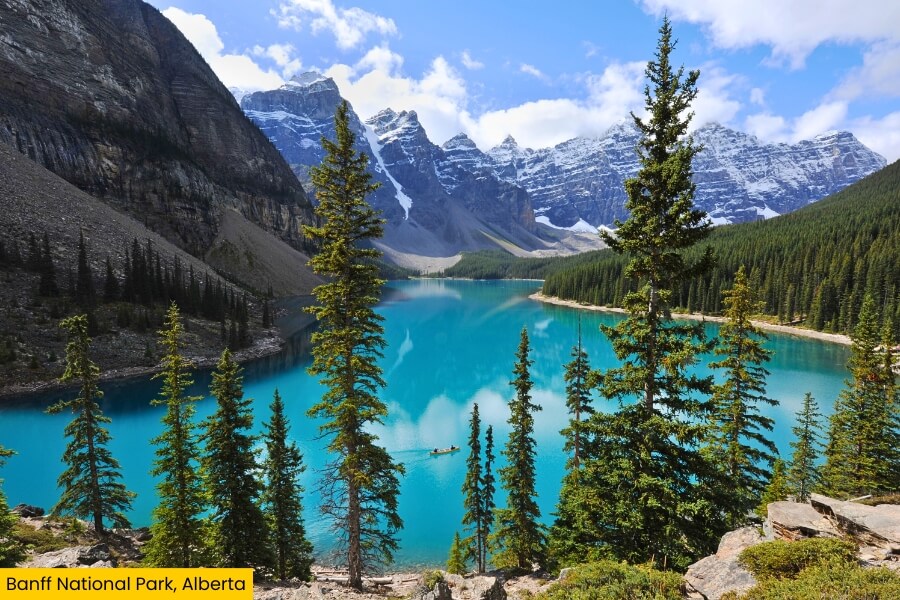
After a 4-hour drive, you’ll arrive at Banff National Park in Alberta, Canada’s first national park.
It covers 2,564 square miles of the Canadian Rockies with snowy peaks, bright blue lakes, and enormous glaciers.
Lake Louise is the big-name stop, stretching about 1.5 miles beneath the 11,365-foot Mount Victoria, while nearby Moraine Lake sits in the Valley of the Ten Peaks and is famous for its intense turquoise water.
Hop on the Banff Gondola for an 8-minute ride up Sulphur Mountain, then follow the 0.6-mile Sulphur Mountain Boardwalk to Sanson’s Peak.
Banff also packs in about 1,000 miles of trails, plus elk, wolves, and grizzly bears, making it an action-filled first stop on the Canadian stretch toward Alaska.
9. Dawson Creek, British Columbia
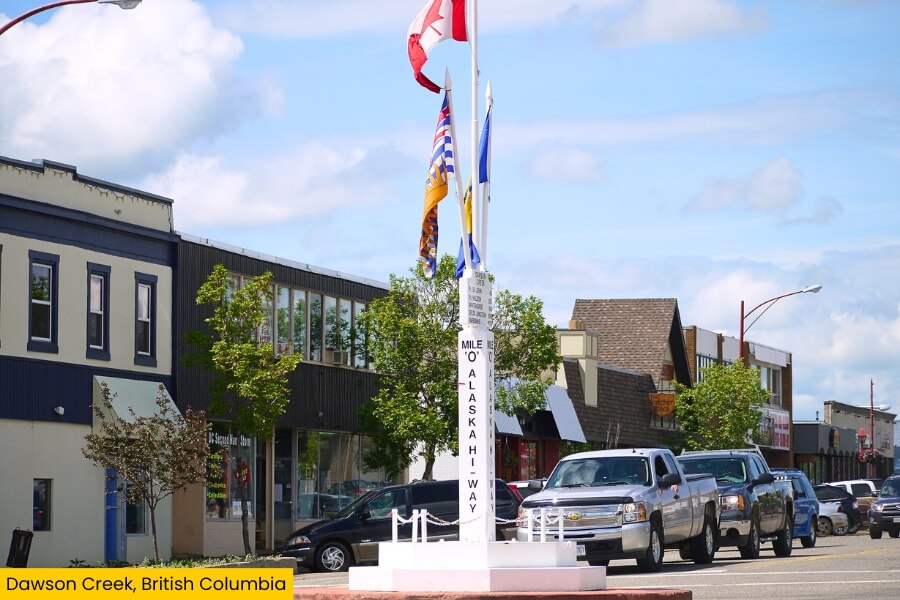
After the huge peaks and blue lakes of Banff, a nearly 9-hour drive brings you to Dawson Creek, British Columbia, where you’ll officially reach Mile 0 of the legendary Alaska Highway and start one of this road trip’s most exciting stretches.
Grab a photo beside the Mile 0 Post in downtown Dawson Creek, then head to Walter Wright Pioneer Village to learn more about the Alaska Highway.
Exhibits from the former Alaska Highway House explain how more than 10,000 U.S. Army troops helped build the historic 1,523-mile route in 1942.
The village’s historic buildings, old machinery, and a one-room schoolhouse show what early life in northern British Columbia looked like.
Before leaving town, find the curved Mile 0 Cairn at the traffic circle, fill your gas tank, and get ready for the long drive north through forests, mountains, and seriously remote country.
10. Liard River Hot Springs Provincial Park, British Columbia
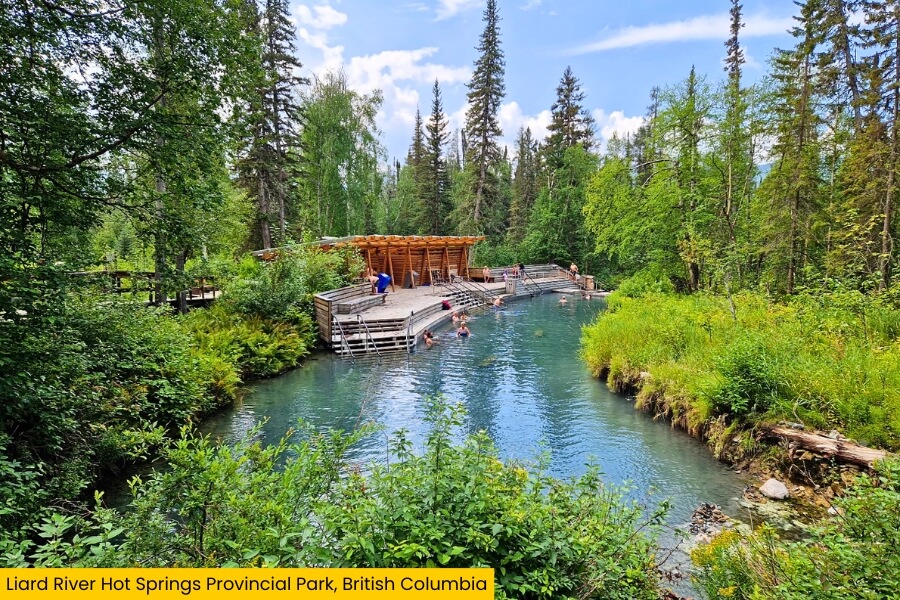
Once you leave Dawson Creek and follow the Alaska Highway deeper into northern British Columbia, Liard River Hot Springs Provincial Park gives you the perfect excuse to trade the driver’s seat for a steamy soak.
Follow the 0.4-mile boardwalk through warm-water wetlands to Alpha Pool, where natural mineral water bubbles up at temperatures reaching about 126°F near the source and cools as it flows through the pool.
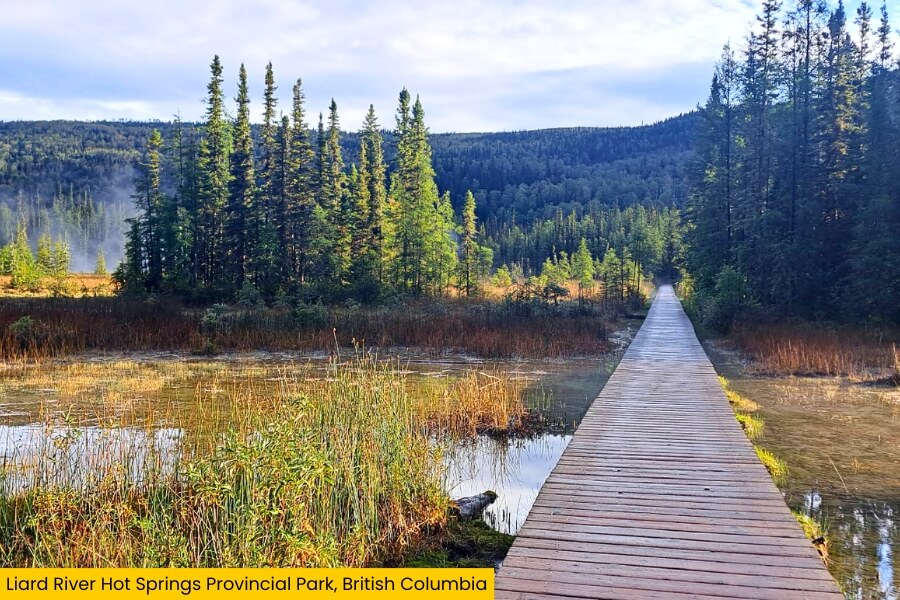
The springs support an unusual ecosystem filled with orchids and other plants that normally grow much farther south, while moose, black bears, and wood bison can also appear around the park.
Located at Historic Mile 496 of the Alaska Highway, Liard River Hot Springs also has a 53-site campground, making it an easy overnight stop before you continue toward the Yukon.
11. Whitehorse, Yukon
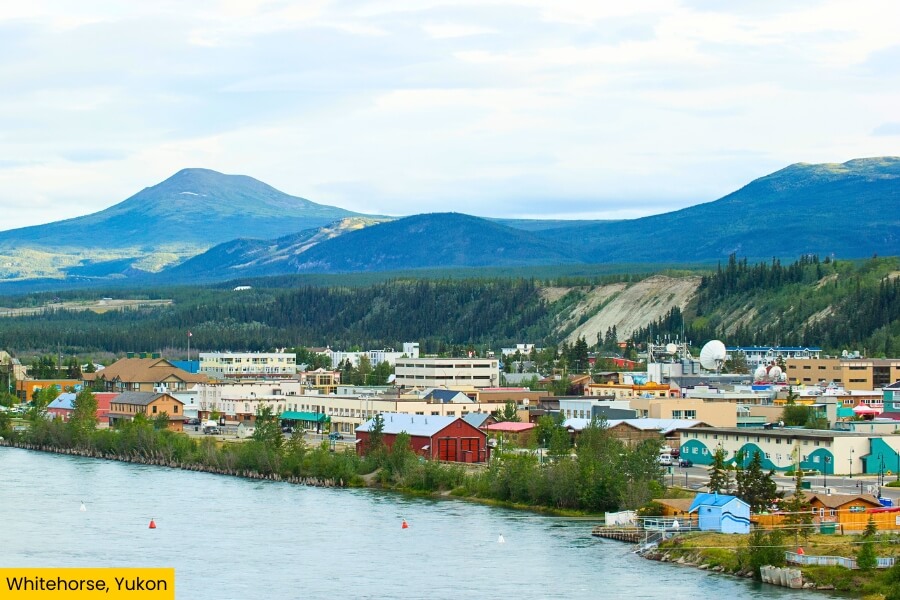
Fresh from your Liard River Hot Springs soak, follow the Alaska Highway into Whitehorse, Yukon’s capital, where the mighty Yukon River cuts through a city surrounded by forests and distant mountains.
Visit the S.S. Klondike National Historic Site, a restored 210-foot sternwheeler that once carried freight and passengers along the Yukon River before highways changed northern travel.
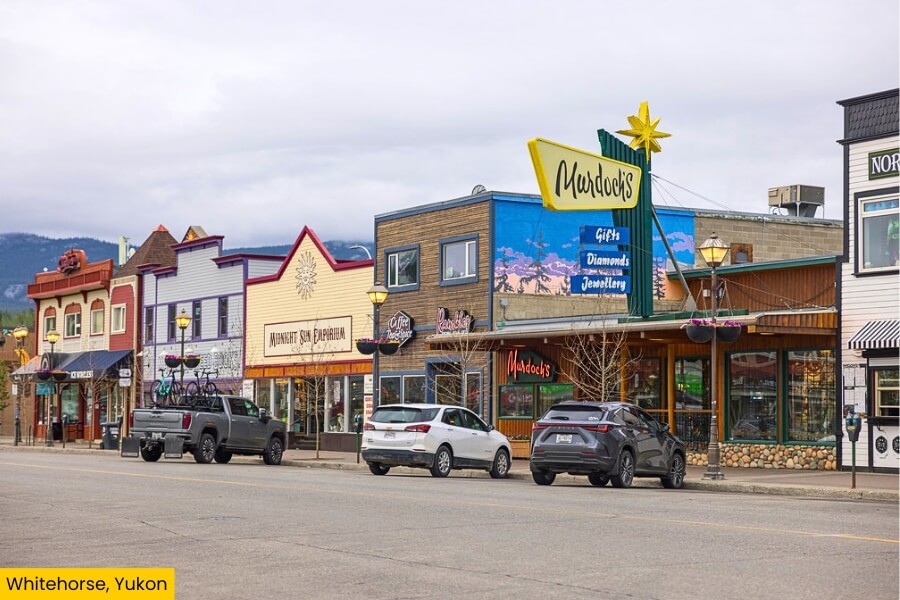
Next, walk part of the Millennium Trail beside the river, then visit the Yukon Beringia Interpretive Centre to see fossils and learn about woolly mammoths, giant beavers, and other Ice Age animals.
Whitehorse also marks Historic Mile 918 of the Alaska Highway, so refuel, grab supplies, and enjoy a final dose of city comforts before the road leads toward some of the Yukon’s smaller communities and wide-open northern scenery.
Please note that as of 2026, the S.S. Klondike National Historic Site’s boat and buildings are closed for a long-term rehabilitation project; however, the grounds remain open for visitors to enjoy.
12. Anchorage, Alaska
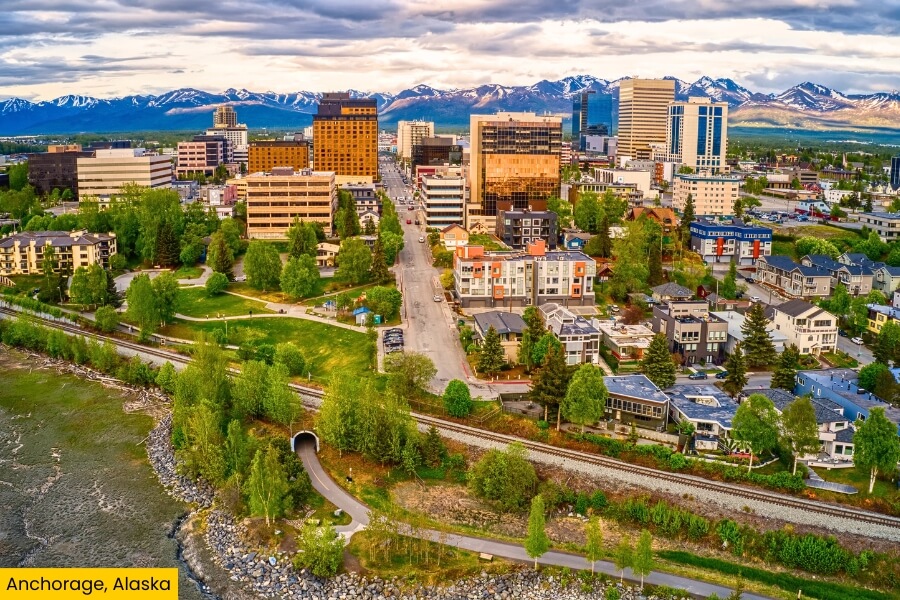
After the long haul through the Yukon and across the Alaska border, reaching Anchorage feels huge, with Alaska’s largest city sitting between the Chugach Mountains and the waters of Cook Inlet.
Hop on the 11-mile Tony Knowles Coastal Trail, which follows the shoreline from downtown past Westchester Lagoon and Earthquake Park, with chances to spot moose, bald eagles, and even beluga whales.
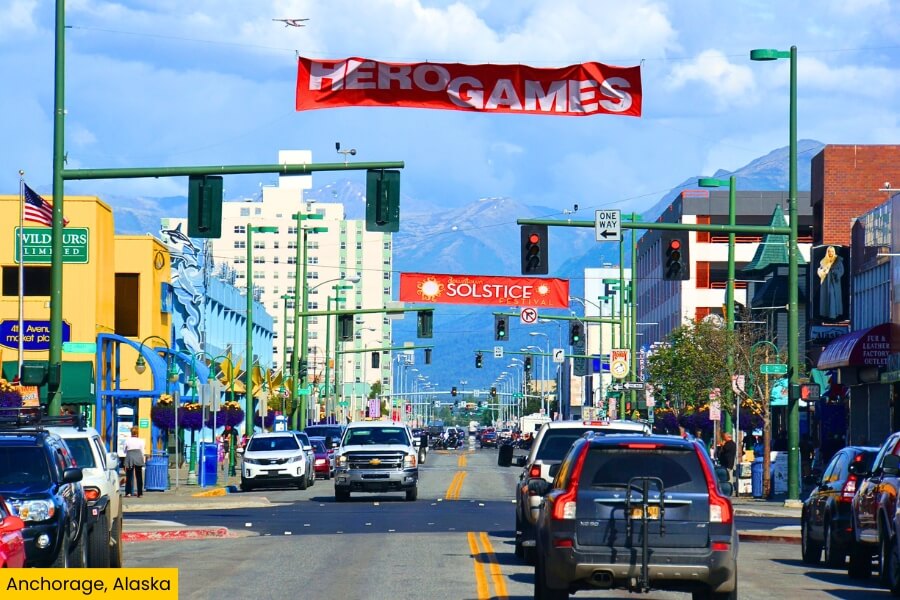
For bigger views, hike the 3.4-mile round-trip Flattop Mountain Trail, gaining about 1,300 feet to a 3,510-foot summit overlooking Anchorage, Cook Inlet, and distant peaks.
Save time for the Alaska Native Heritage Center, where you can explore six traditional village sites and learn about Alaska’s Indigenous cultures through dancing, storytelling, artwork, and hands-on demonstrations.
Related Posts