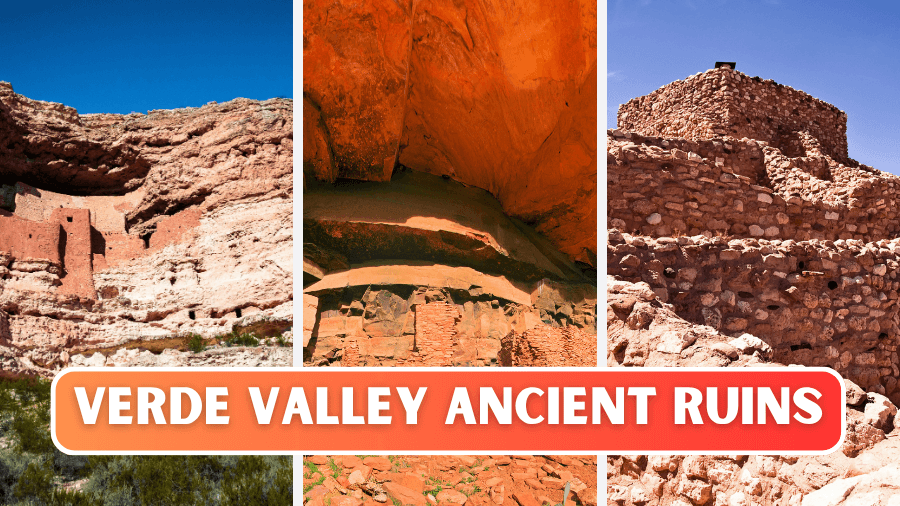
Arizona’s Verde Valley is packed with ancient cliff dwellings, hilltop pueblos, mysterious rock art, and rooms carved straight into limestone walls.
On this road trip, you’ll follow red-rock backroads and quiet desert highways to places where Indigenous communities built homes, grew crops, and created intricate petroglyphs.
You might even get to learn about the clever ways they developed to find and move water hundreds of years ago.
Some ruins sit high above the valley floor, while others hide beneath massive rock overhangs or beside unexpected desert water sources.
You’ll see structures dating back more than 800 years, walk trails to archaeological sites, and discover thousands of symbols carved and painted onto stone.
Best of all, these stops are close enough to connect into one road trip!
Keep reading for the ultimate Verde Valley ancient ruins road trip, including what to see at each stop, helpful travel tips, and the fascinating stories behind these incredible places.
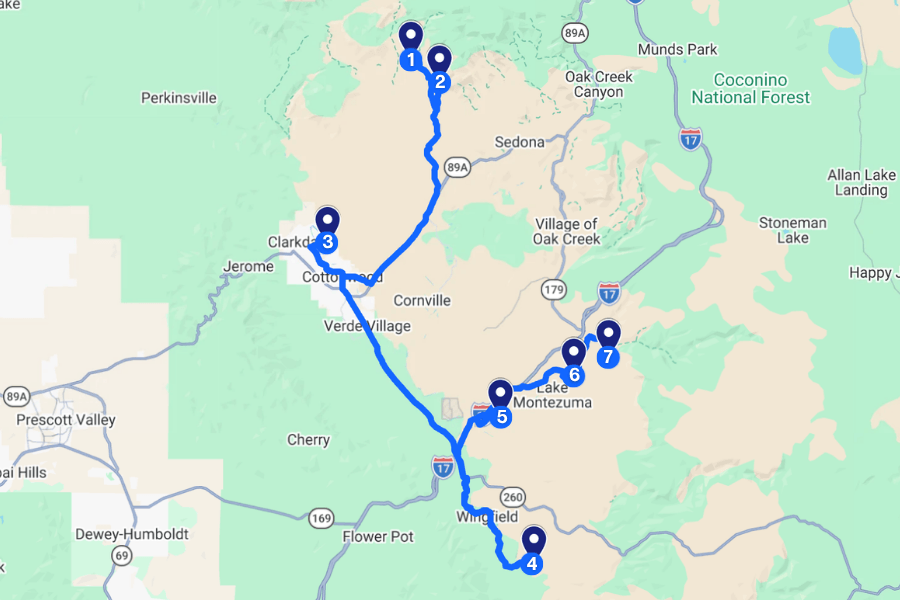
1. Honanki Heritage Site
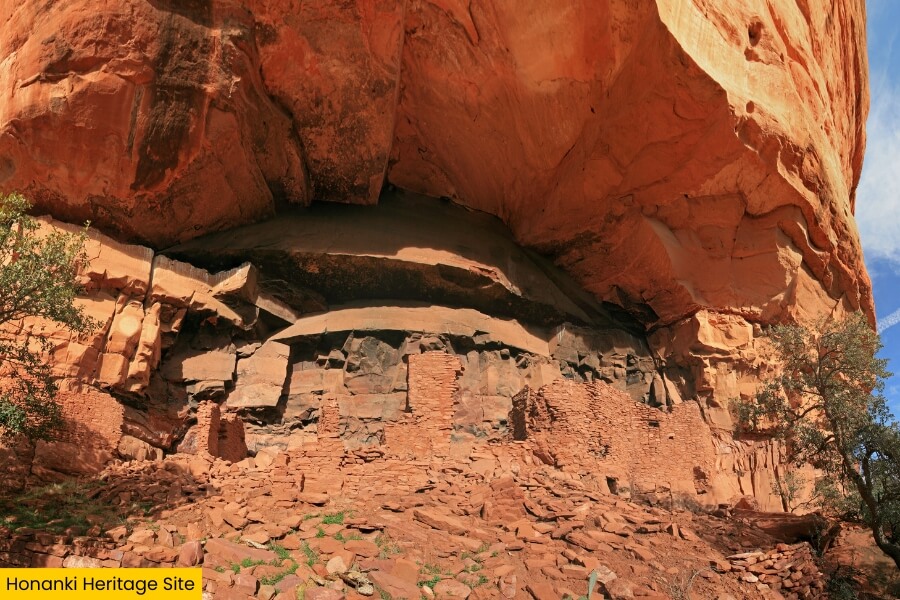
Honanki Heritage Site is located about a 40-minute drive away from Sedona in the Coconino National Forest, where you’ll find ancient Sinagua cliff dwellings built between roughly AD 1100 and 1300.
Getting here will add to your adventure, especially with the final miles following the unpaved Forest Road 525.
Follow the short, approximately 0.6-mile trail to stone rooms tucked beneath a huge rock overhang, once home to one of the Verde Valley’s largest Sinagua communities.
Look closely at the cliff walls for rock art and pictographs created by Indigenous peoples over hundreds of years, featuring human and anthropomorphic imagery.
(Note: You’ll need a Red Rock Pass for parking at the site.)
2. Palatki Heritage Site
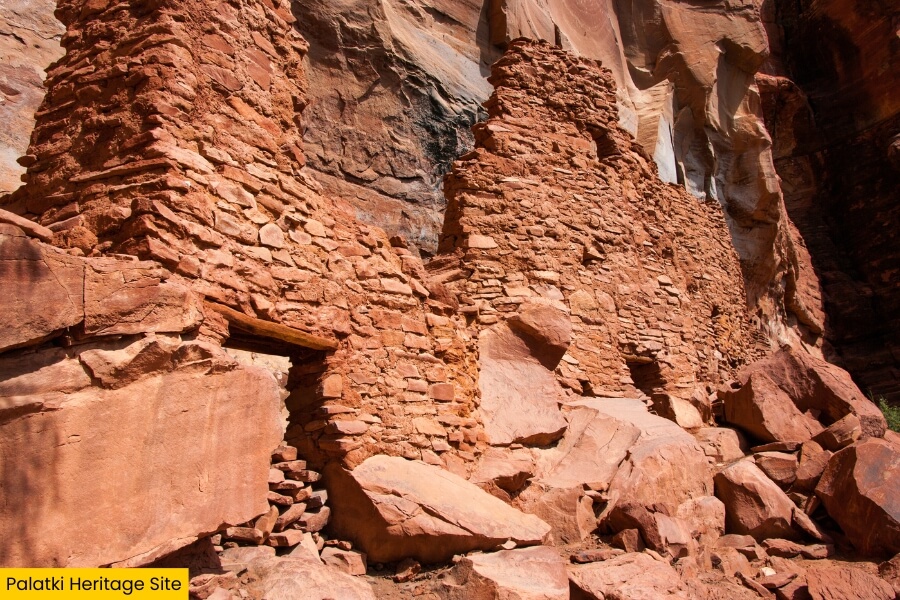
Just a few miles from Honanki, Palatki Heritage Site gives you an even closer look at Sinagua life among the red-rock cliffs northwest of Sedona.
Two short trails lead to cliff dwellings dating from roughly AD 1150 to 1350 and rock-art alcoves covered with pictographs and petroglyphs from several cultures.
The rock art is the big showstopper here, with painted human figures, animals, geometric shapes, and other markings, some of which are believed to be thousands of years old.
(Note: Palatki limits the number of people entering its protected areas, so reservations are required.)
3. Tuzigoot National Monument
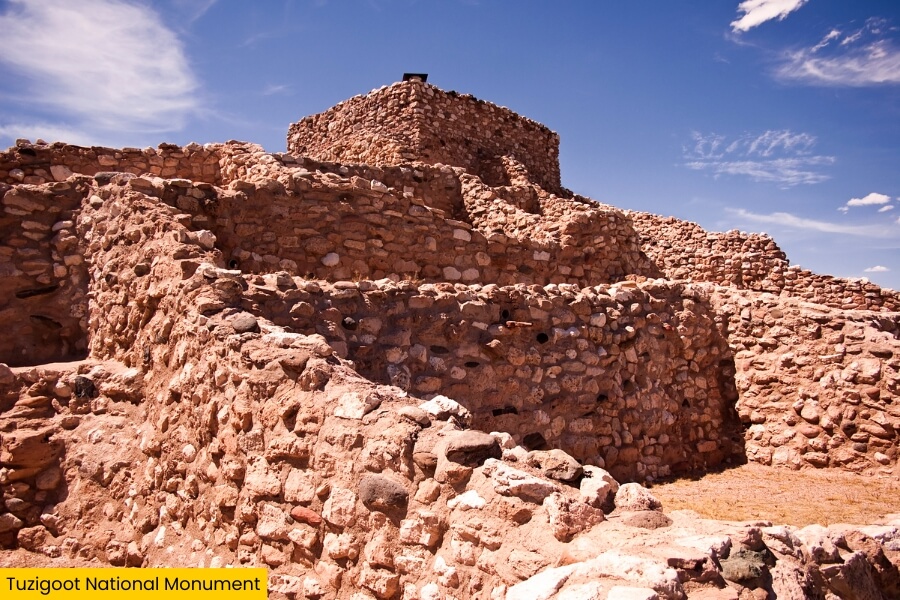
After exploring Palatki’s cliffside rooms, head to Tuzigoot National Monument near Clarkdale, where a huge Sinagua pueblo crowns a limestone ridge above the Verde River floodplain.
Built in roughly AD 1000 and occupied until around 1400, Tuzigoot once contained 110 rooms, including two- to three-story sections, and may have housed several hundred people at its peak.
Walk the paved 0.3-mile loop through the pueblo, climb into a reconstructed room, and check out pottery, tools, textiles, and other artifacts inside the visitor center museum.
The hilltop location also gives you wide-open views across Tavasci Marsh and the Verde Valley, making Tuzigoot a totally different experience from the sandstone alcoves you’ll explore around Sedona.
4. Mindeleff Cavates
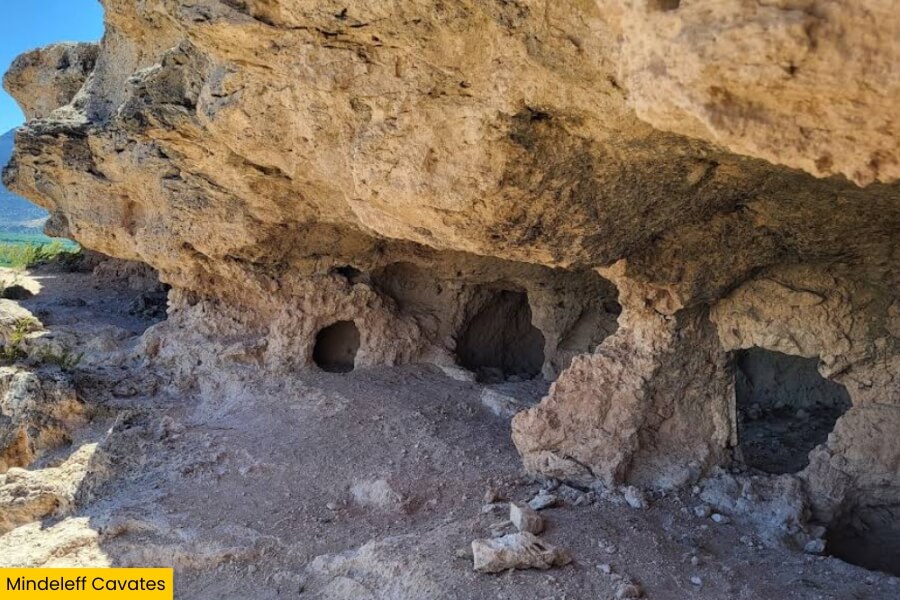
From Tuzigoot, continue toward Camp Verde for the Mindeleff Cavates, a little-known group of ancient rooms carved into soft rock in the cliffs across the Verde River from the Beasley Flat Day Use Area.
Prehistoric Verde Valley inhabitants excavated rooms directly into the sandstone here many, many years ago, creating hundreds of cave-like rooms with masonry walls, storage spaces, and smoke-darkened ceilings still visible in places.
This archaeological area is undeveloped, so although you can enter the cavates, you can also view them from surrounding public areas if you want to avoid the challenging walk along a dirt road and a river crossing.
The site was documented in detail by archaeologist Cosmos Mindeleff in the 1890s, and its unusual cliff-cut architecture shows another clever way Verde Valley communities adapted their homes to the landscape.
5. Montezuma Castle National Monument
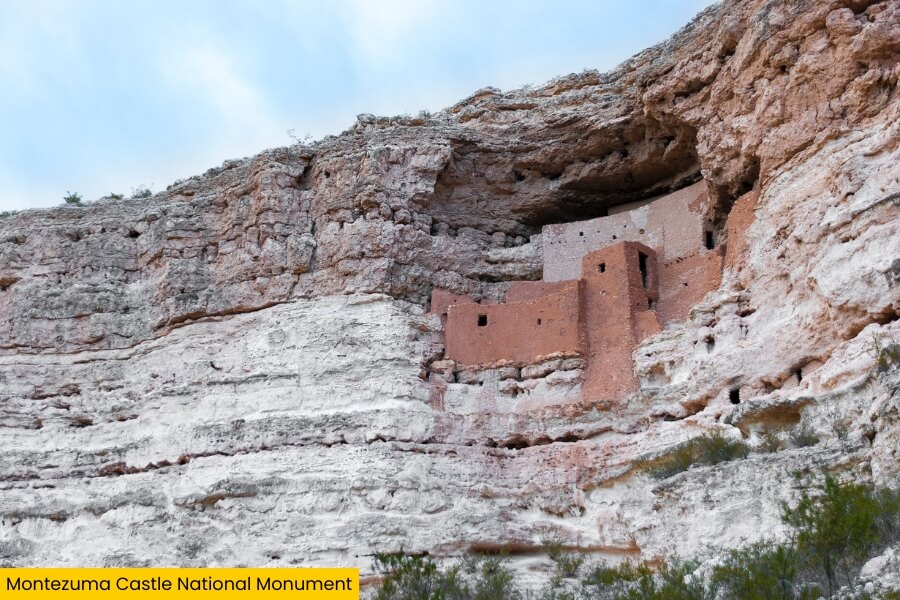
From the lesser-known Mindeleff Cavates, head toward Camp Verde to Montezuma Castle National Monument, where a spectacular five-story Sinagua dwelling rises about 90 feet up a limestone cliff above Beaver Creek.
A flat, paved 0.3-mile loop takes you past a grove of sycamore trees and to a spot with amazing views of the main dwelling.
First constructed in the early 1100s and occupied until around 1400, the remarkably preserved structure contains about 20 rooms and once housed several dozen people, who reached their homes using ladders.
Funnily enough, despite its name, Aztec emperor Montezuma never lived here.
That said, President Theodore Roosevelt still hailed the site as one of America’s first national monuments in 1906.
6. Montezuma Well
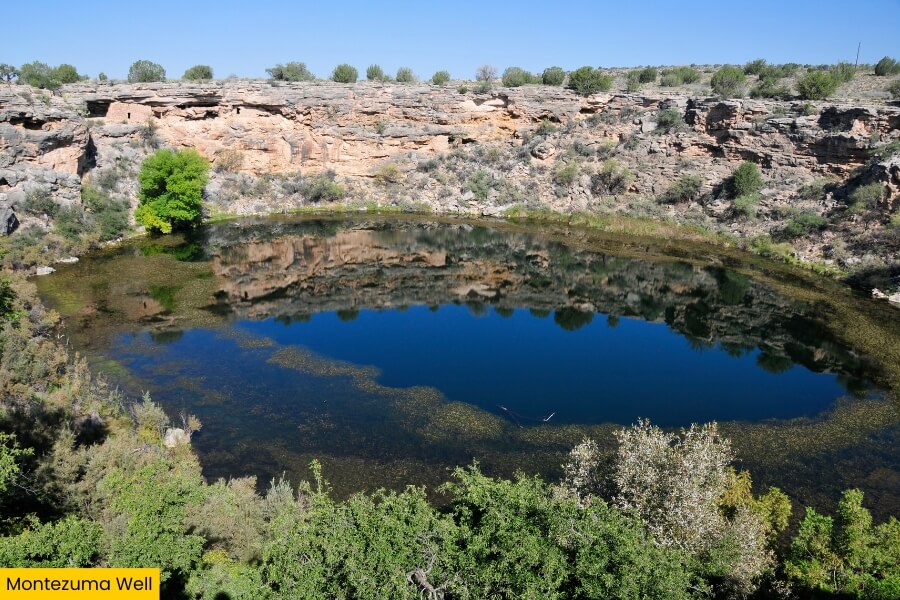
About 15 minutes from Montezuma Castle, Montezuma Well adds a surprising change of scenery: a spring-fed limestone sinkhole measuring roughly 368 feet across and 55 feet deep.
Prehistoric farmers used to channel a steady supply of water through irrigation ditches to grow their crops amid the surrounding desert, and at present, around 1.5 million gallons of water flow through the well each day.
Follow the 0.3-mile trail to a pithouse, as well as a variety of wildlife along the way, including white-tailed deer, over 100 species of birds, and even water scorpions.
With unusual wildlife found nowhere else on Earth and an ancient irrigation system, Montezuma Well offers a fascinating glimpse into how people once turned a rare desert water source into a thriving community.
7. Crane Petroglyph Heritage Site
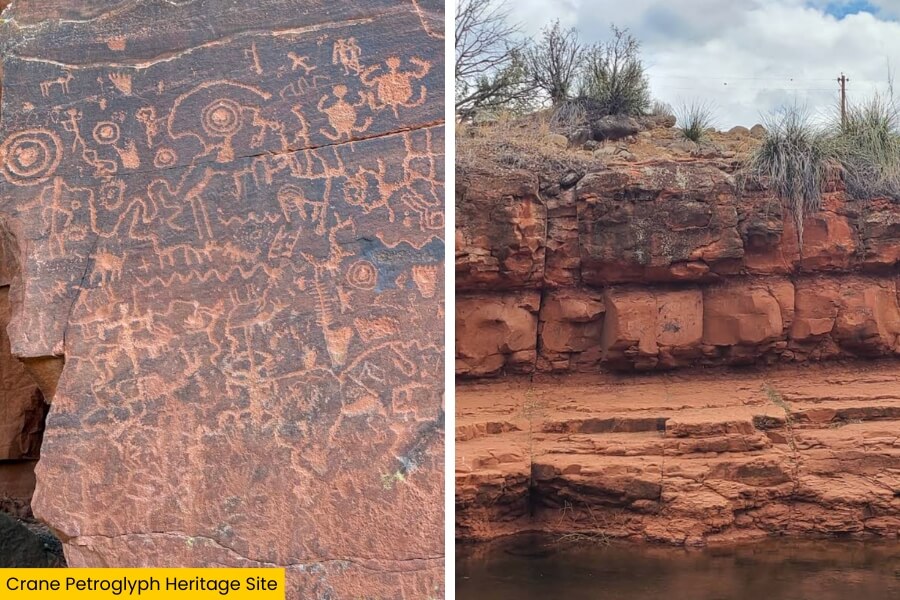
After Montezuma Well, finish your ancient ruins road trip at Crane Petroglyph Heritage Site located off the I-17 at Sedona Exit 298, where over a thousand rock carvings cover a red sandstone cliff near Wet Beaver Creek.
Formerly called V-Bar-V Heritage Site, this protected spot contains 1,032 petroglyphs on 13 rock panels, making it the largest known petroglyph site in the Verde Valley.
A short, mostly level round-trip trail leads to the main panels, where you can spot spirals, animals, human figures, geometric designs, and symbols, many associated with the Southern Sinagua and the distinctive Beaver Creek Rock Art Style.
Time your visit carefully because access days and hours are limited, and on-site volunteers can help you find, or even decode, details you might otherwise walk right past.
Related Posts