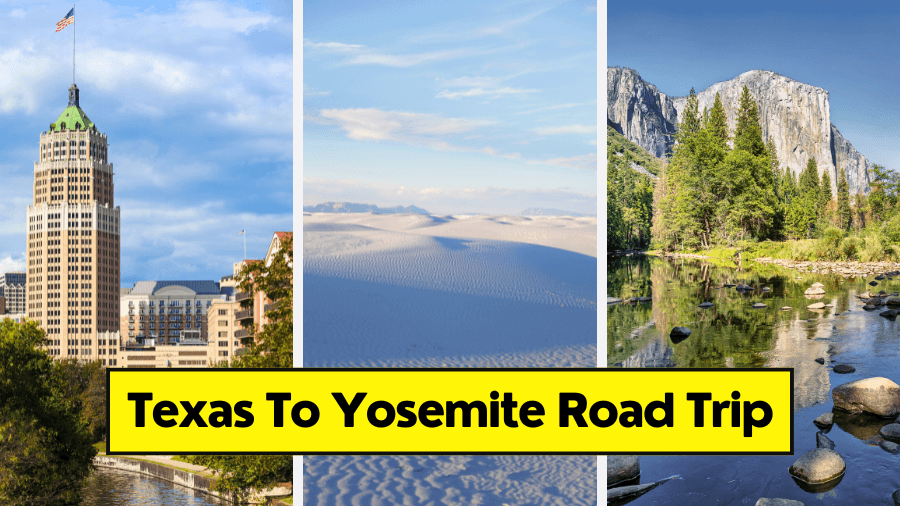
Ready to turn a drive across the American Southwest into one seriously epic adventure?
This Texas to Yosemite road trip takes you through hundreds of miles of changing scenery, from rolling mountains and massive dunes to towering rock walls.
Along the way, you can hike through wild terrain, explore centuries-old landmarks, watch unforgettable sunsets, and stand at viewpoints that make your camera work overtime.
With so much waiting along the way, fill up the tank, load your favorite playlist, and keep reading because the road ahead gets very interesting.
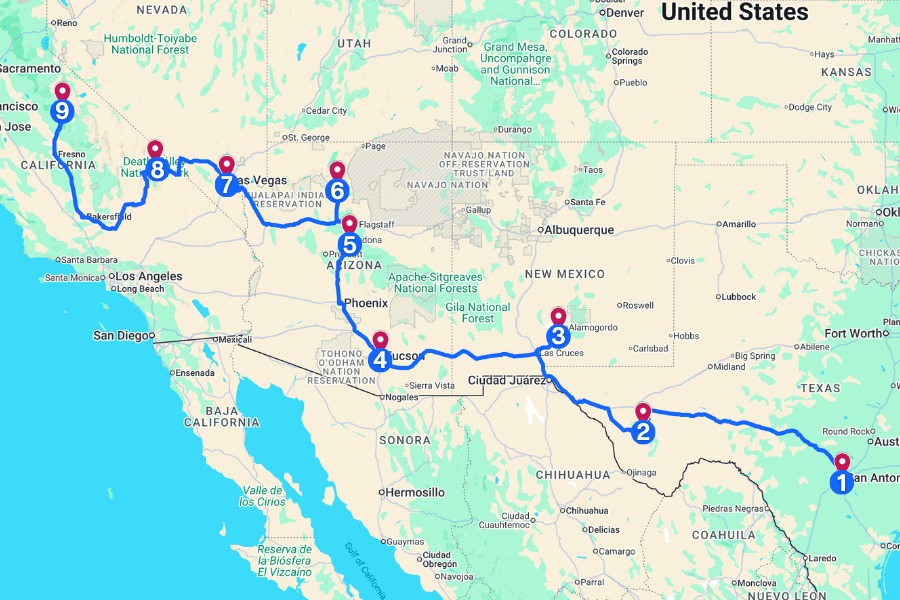
1. San Antonio, Texas

San Antonio, sitting in south-central Texas, is an exciting starting point for your road trip to Yosemite.
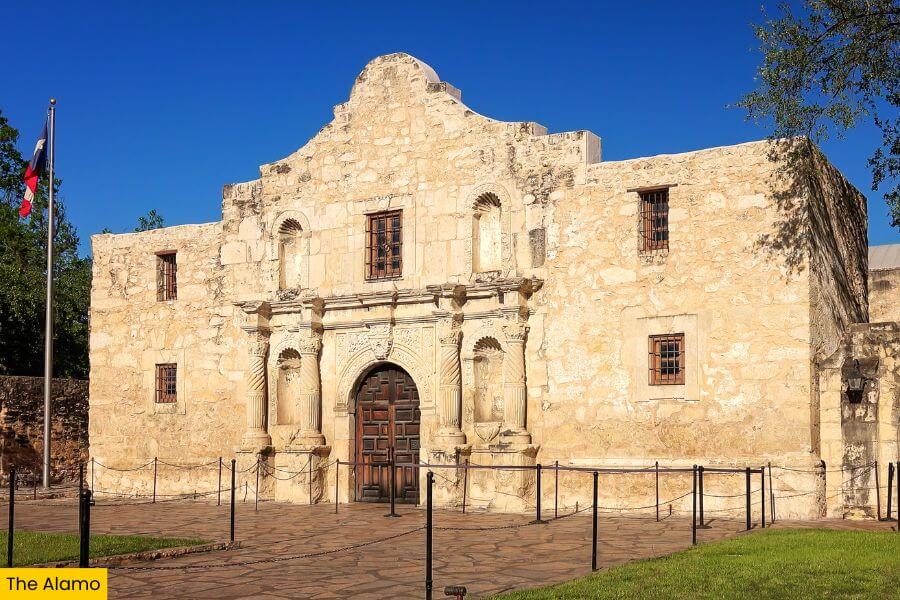
Visit the Alamo first, the famous 18th-century Spanish mission and site of the 1836 Battle of the Alamo, a major chapter in Texas history.
Next, walk the 15-mile San Antonio River Walk, where paths wind past restaurants, shops, bridges, public art, and downtown landmarks including La Villita.
You can also check out the 750-foot Tower of the Americas, or grab tacos at Historic Market Square, one of the largest Mexican markets in the United States.
2. Fort Davis National Historic Site, Texas
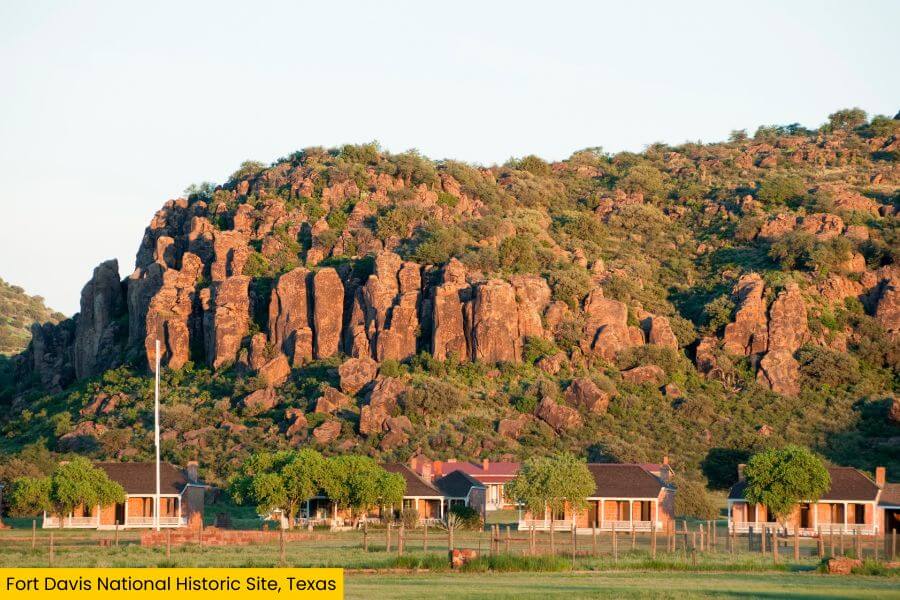
About a 5.5-hour drive from San Antonio, Fort Davis National Historic Site sits in the Davis Mountains of West Texas at roughly 4,830 feet above sea level.
Established in 1854, this place housed troops who protected travelers along the San Antonio-El Paso Road, and Buffalo Soldiers served here after the Civil War.
Today, you can explore more than 20 restored or reconstructed buildings, including barracks, a hospital, and officers’ quarters with period furnishings and exhibits.
Don’t miss the 1.6-mile Tall Grass Loop round trip, where switchbacks and stairs lead to scenic views overlooking the fort and surrounding mountain landscape.
3. White Sands National Park, New Mexico
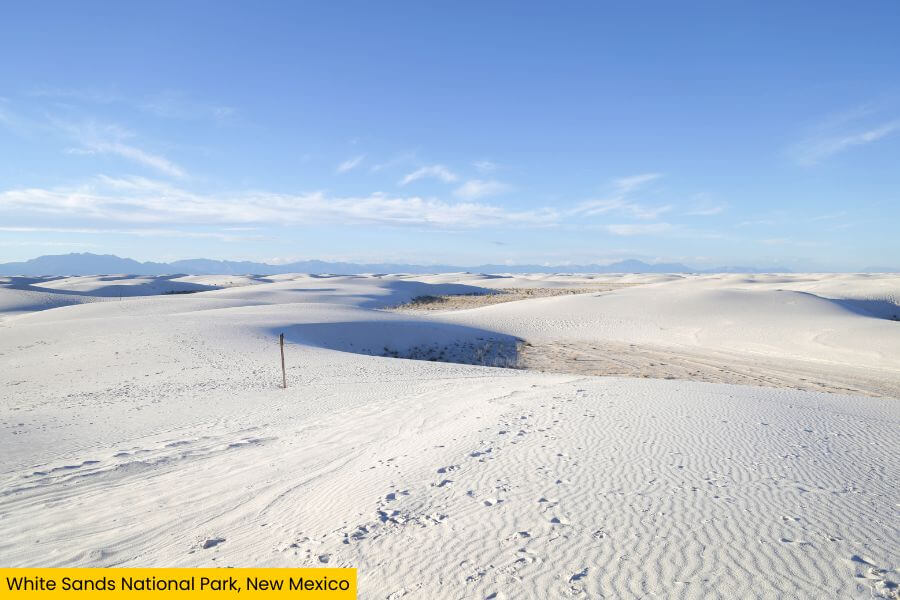
From Fort Davis, continue for 4.5 hours to White Sands National Park, where bright white gypsum dunes cover 145,762 acres of the Tularosa Basin.
Together, these dunes form the largest gypsum dunefield on Earth, creating a sea of wave-like ridges that can rise roughly 60 feet high.
To explore, drive the 8-mile Dunes Drive for awesome views, tackle the 5-mile Alkali Flat Trail, or rent a plastic sled and race down the soft slopes.
Make sure to keep an eye out for bleached earless lizards along the way, and stick around for sunset when the whole place turns shades of pink and gold.
4. Tucson, Arizona
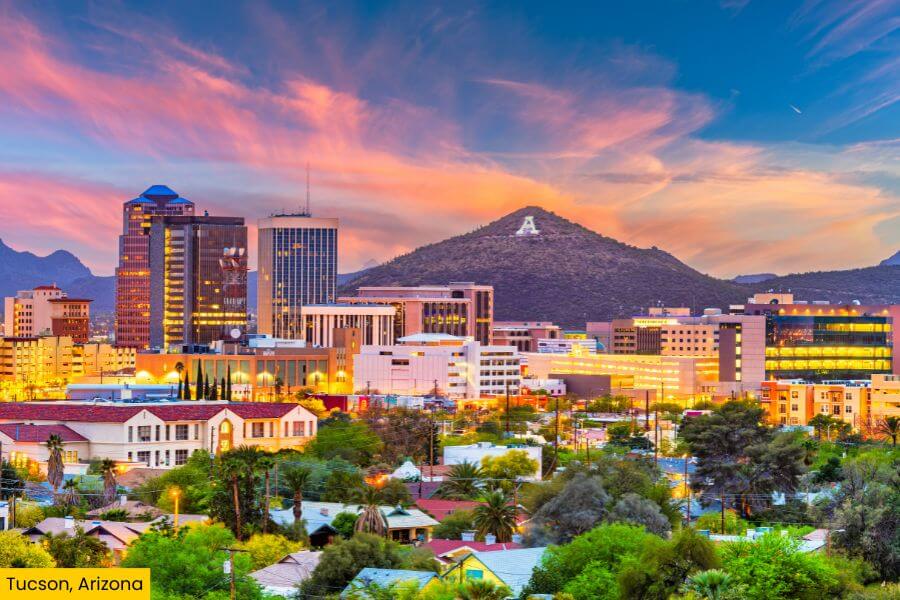
After White Sands, drive roughly 5 hours to Tucson, an Arizona city surrounded by the cactus-covered Santa Catalina, Rincon, Tucson, and Santa Rita Mountains.
A must-see while you’re here is Saguaro National Park, where giant saguaros can grow more than 40 feet tall and live for over 150 years across two desert districts.
Back in town, wander through the colorful Barrio Viejo, explore the 98-acre Arizona-Sonora Desert Museum, or grab a famous Sonoran hot dog at El Güero Canelo.
Fun fact: Tucson became America’s first UNESCO City of Gastronomy in 2015, so come hungry before continuing your road trip west.
5. Sedona, Arizona
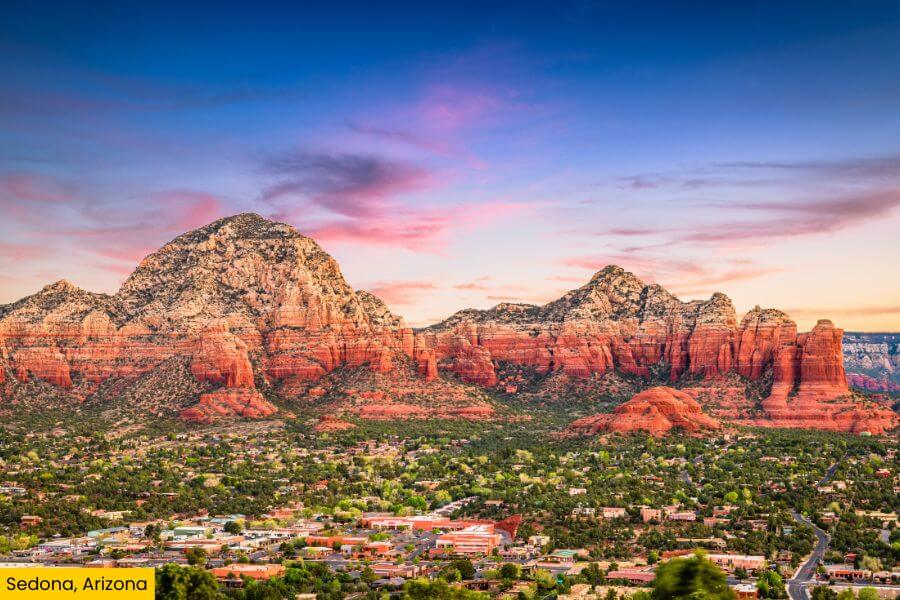
Once you’ve had your fill of Tucson, continue to Sedona, a small desert city about 4,350 feet above sea level surrounded by towering pink sandstone formations.
One of the best ways to see them up close is in Coconino National Forest, where winding trails lead through canyons and stunning red-rock scenery.
You can hike 4.6 miles round trip to Devil’s Bridge, the area’s largest natural sandstone arch, or take on the steep 1.4-mile Cathedral Rock Trail.
If you want to stay in the city, stroll through Uptown Sedona or the courtyards of Tlaquepaque Arts & Shopping Village for local shops, galleries, and restaurants.
6. Grand Canyon South Rim, Arizona
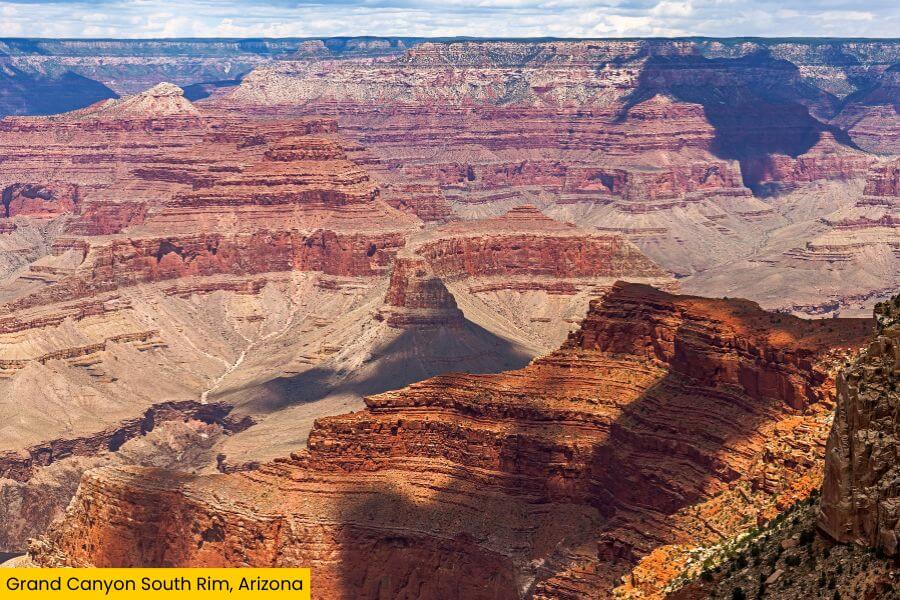
Up next is the Grand Canyon’s South Rim, where scenic overlooks showcase a canyon that reaches up to 18 miles wide and 6,000 feet deep.
Start at Mather Point, then follow the 13-mile Rim Trail, passing Yavapai Point, Hopi Point, and Powell Point for different views of the Colorado River and layered cliffs.
If you want a different challenge, hike part of the 9.5-mile Bright Angel Trail, where switchbacks descend through rock that is almost 2 billion years old.
Remember that South Rim sits at 7,000 feet above sea level and stays open year-round, with varying weather by season, so you can find a time of year that suits you.
7. Las Vegas, Nevada

Now swap quiet overlooks for the bright lights of Las Vegas, about a 4.5-hour drive from the South Rim in southern Nevada’s Mojave Desert.
Here, you can cruise the 4.2-mile Las Vegas Strip to see the Fountains of Bellagio, the 1,149-foot STRAT tower, and the 550-foot High Roller observation wheel.
For classic Vegas neon, head to the five-block Fremont Street Experience, where the 1,375-foot Viva Vision canopy lights up with massive LED shows every night.
You can also tour the Neon Museum’s vintage signs or visit nearby Hoover Dam, a 726-foot-tall engineering landmark on the Nevada-Arizona border.
8. Death Valley National Park, California
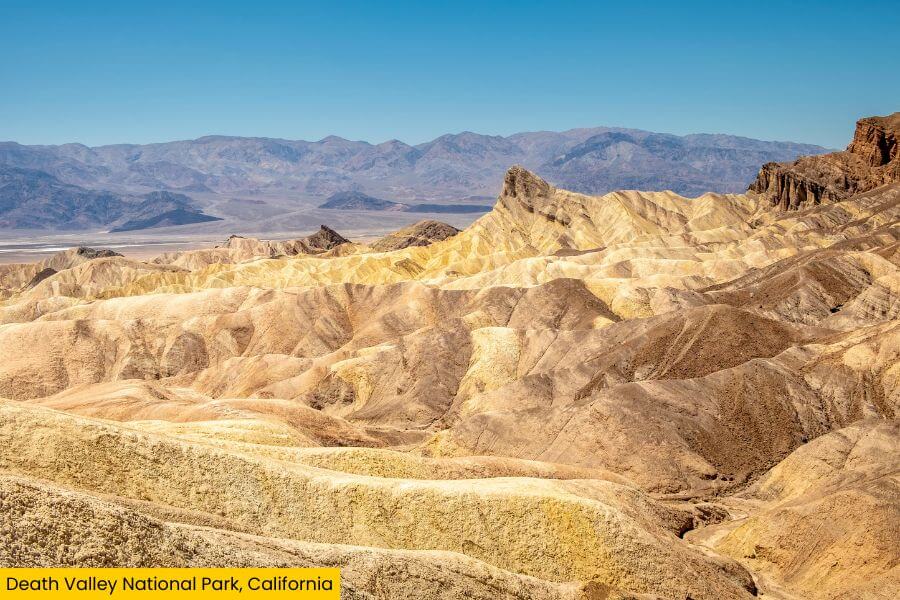
Trade Las Vegas neon for wide-open desert in Death Valley National Park, a 3.4-million-acre stretch filled with salt flats, dunes, canyons, and colorful peaks.
Stop at Badwater Basin, which sits 282 feet below sea level and marks the lowest point in North America, then follow the 9-mile Artist’s Drive past multicolored hills.
For a short adventure, hike 2 miles round trip through the Mesquite Flat Sand Dunes, home to kangaroo rats, or watch the sunset from Zabriskie Point.
Fun fact: Death Valley holds the world record for the highest air temperature ever recorded, a scorching 134°F at Furnace Creek in 1913, so bring plenty of water.
9. Yosemite National Park, California
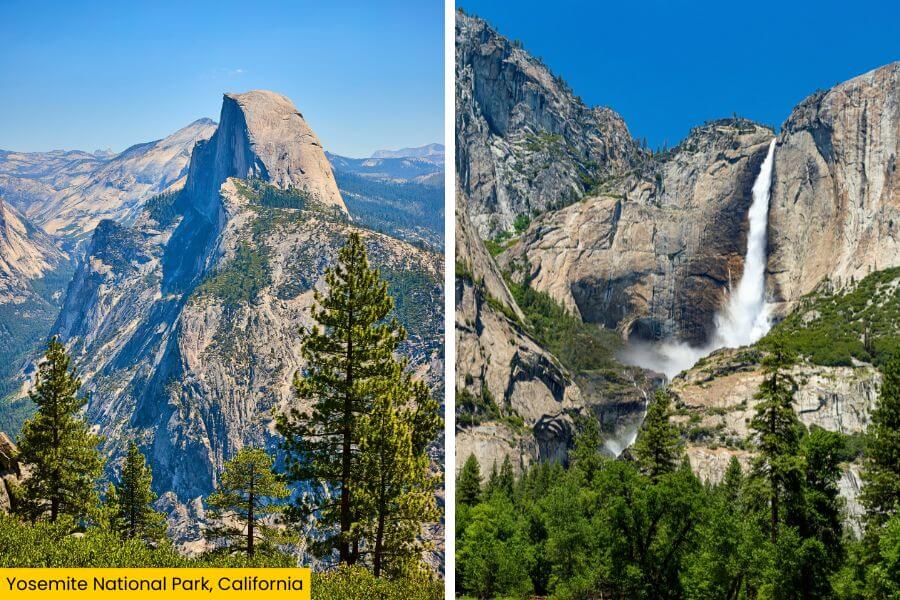
After Death Valley, finish your road trip at Yosemite National Park, where granite cliffs, giant sequoias, waterfalls, and alpine peaks shape the landscape.
You can easily spend a full day in the seven-square-mile valley, packed with iconic sights like 3,000-foot El Capitan, Half Dome, and 2,425-foot Yosemite Falls, North America’s tallest waterfall.
If you have more time to explore, hike the 3-mile round-trip Mist Trail to 317-foot Vernal Fall, or visit Mariposa Grove to see more than 500 mature giant sequoias.
For one last unforgettable view, head to Glacier Point at 7,214 feet, where the sweeping scenery gives your Texas-to-California adventure a memorable finale.
Related Posts