
Get ready for an unforgettable road trip packed with winding mountain roads, breathtaking overlooks, thundering waterfalls, and some of the most beautiful scenery in the Appalachian region.
This scenic drive takes you across Tennessee, Kentucky, and West Virginia, where every stretch of highway leads to another incredible surprise waiting around the next bend.
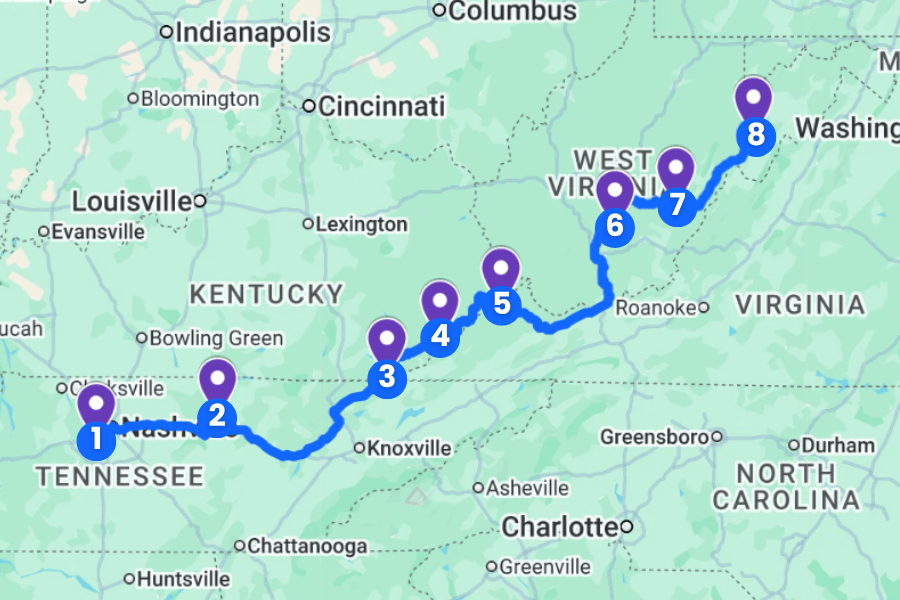
Along the way, you’ll discover natural landscapes, fascinating history, peaceful forests, and unforgettable hiking trails that make it easy to slow down and enjoy the journey.
Fill up the gas tank and get ready for a road trip filled with amazing views, outdoor adventures, and plenty of hidden surprises you’ll be talking about long after you get home.
1. Natchez Trace Parkway, Tennessee
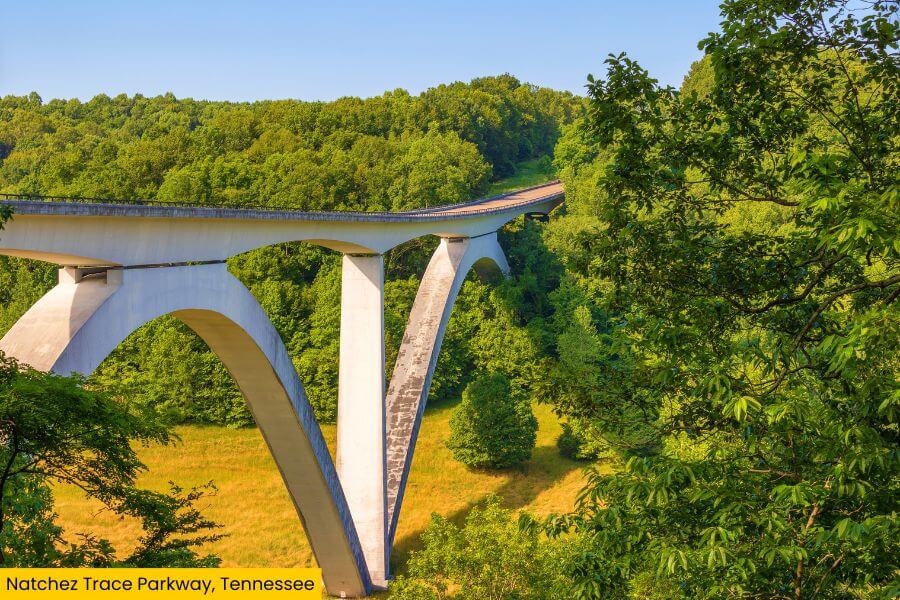
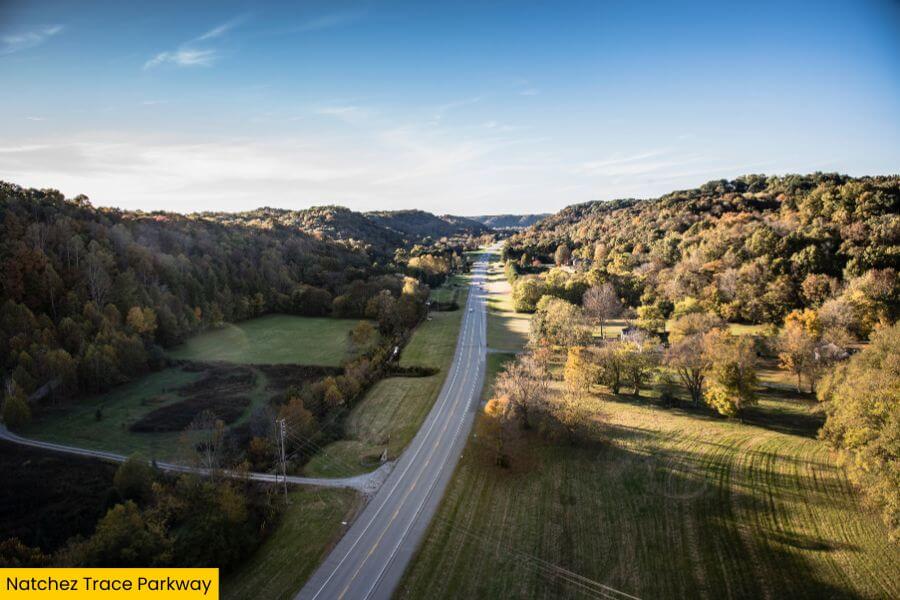
Located just southwest of Nashville, the Tennessee section of the 444-mile Natchez Trace Parkway follows part of an ancient travel route once used by Native Americans, early settlers, traders, and famous explorer Meriwether Lewis.
You can cruise the quiet road while stopping at highlights like Jackson Falls as well as the Double Arch Bridge, one of the parkway’s most photographed landmarks.
If you love hiking, check out the short 0.5-mile Sweetwater Branch Trail or stretch your legs at Fall Hollow, where a short trail leads to a beautiful waterfall.
Keep your eyes open for wild turkeys, white tailed deer, colorful songbirds, and incredible fall leaves that make this scenic drive even more memorable.
2. Cummins Falls State Park, Tennessee
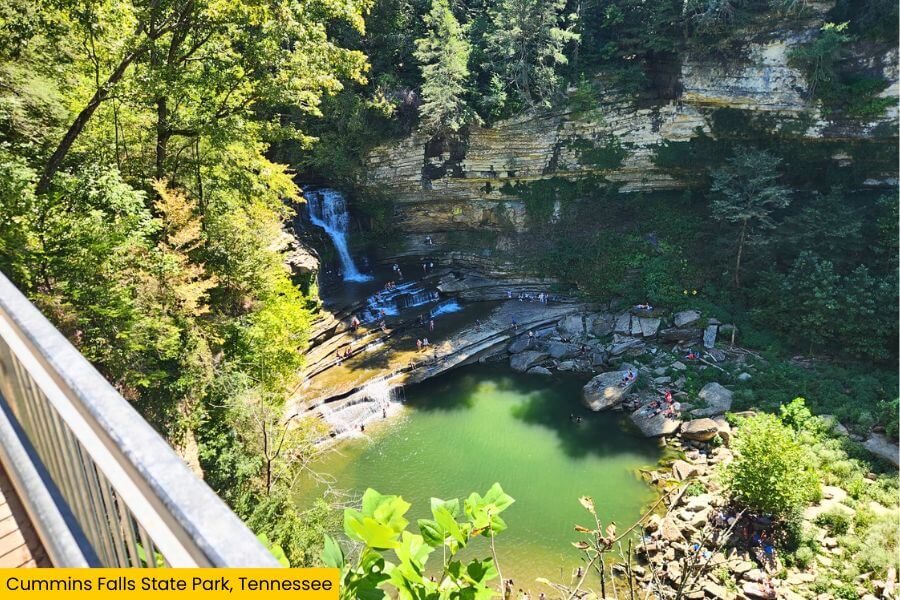
Next, head to Cummins Falls State Park near Cookeville, where the Blackburn Fork State Scenic River tumbles 75 feet over layered rock to create one of Tennessee’s most famous waterfalls.
Reaching the base is an adventure because the Gorge Access Trail crosses streams, climbs over boulders, and requires a permit whenever the gorge is open to visitors.
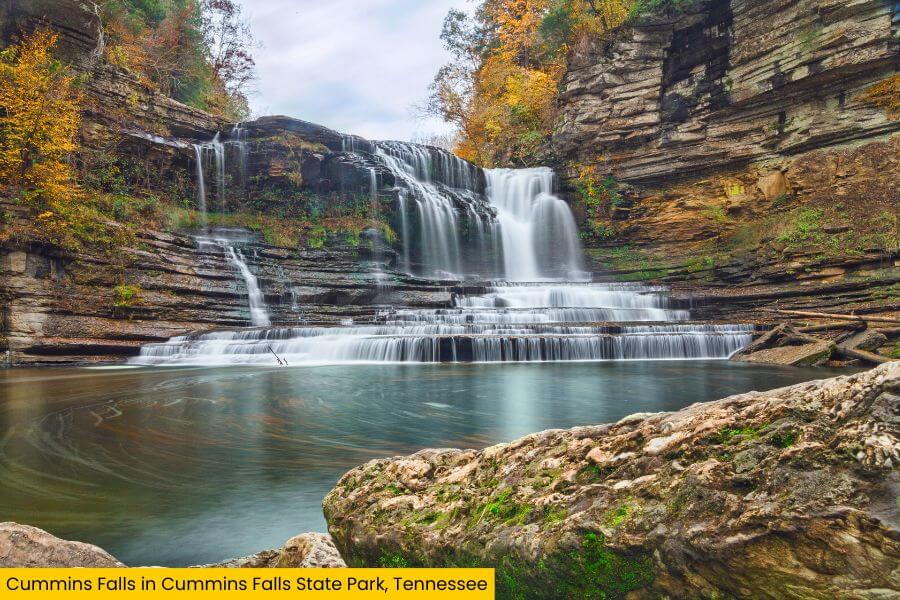
If you would rather keep things easy, the overlook trail gives you an amazing view of the falls without tackling the rocky river crossing, and is a great choice for families or anyone short on time.
Bring water shoes with good grip, plenty of drinking water, and plan extra time because swimming in the clear pool below the waterfall is one of the most popular experiences in the park.
3. Cumberland Gap National Historical Park
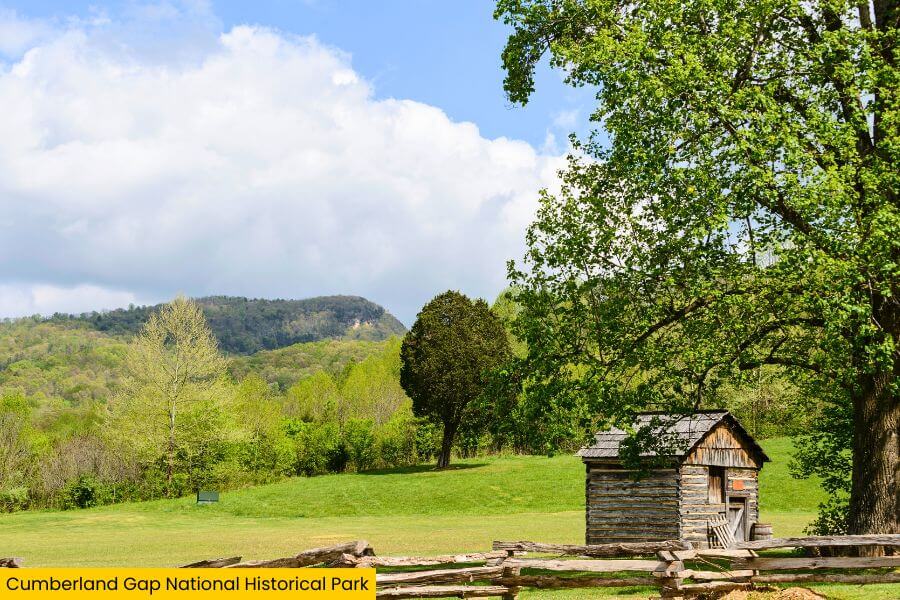
Continue about a 3-hour drive to Cumberland Gap National Historical Park, where Tennessee, Kentucky, and Virginia meet at the famous mountain pass that helped more than 300,000 settlers travel west during the late 1700s and early 1800s.
Drive or hike to Pinnacle Overlook for one of the park’s best views, where you can look across all three states from 2,440 feet above sea level.
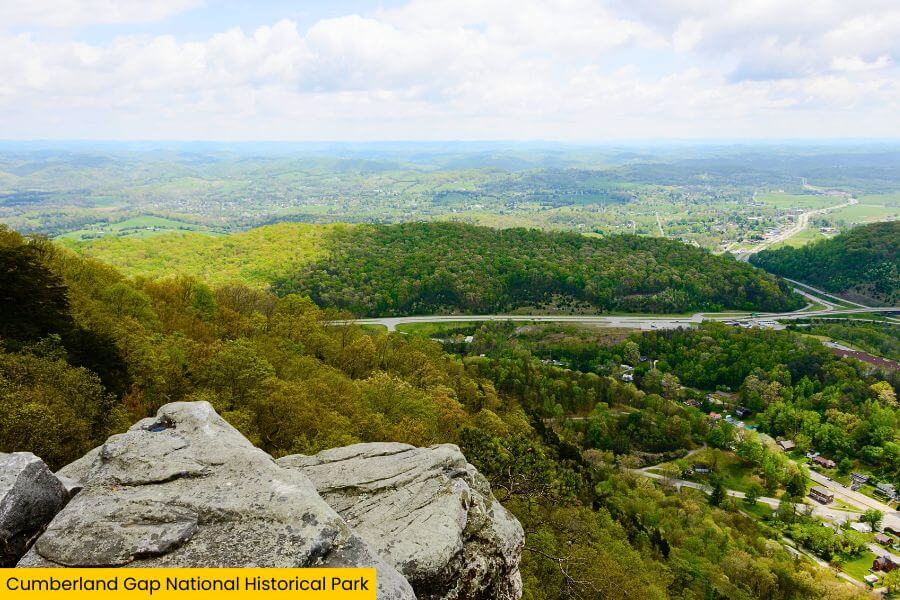
You can also explore Gap Cave on a guided tour, spot bats that call the cave home, or hike part of the famous Cumberland Gap Trail through the same pass once used by Daniel Boone.
With more than 24,000 acres of forests, streams, and mountain scenery, this historic stop combines incredible views, fascinating frontier history, and plenty of chances to stretch your legs before the next scenic drive.
4. Kingdom Come State Park, Kentucky
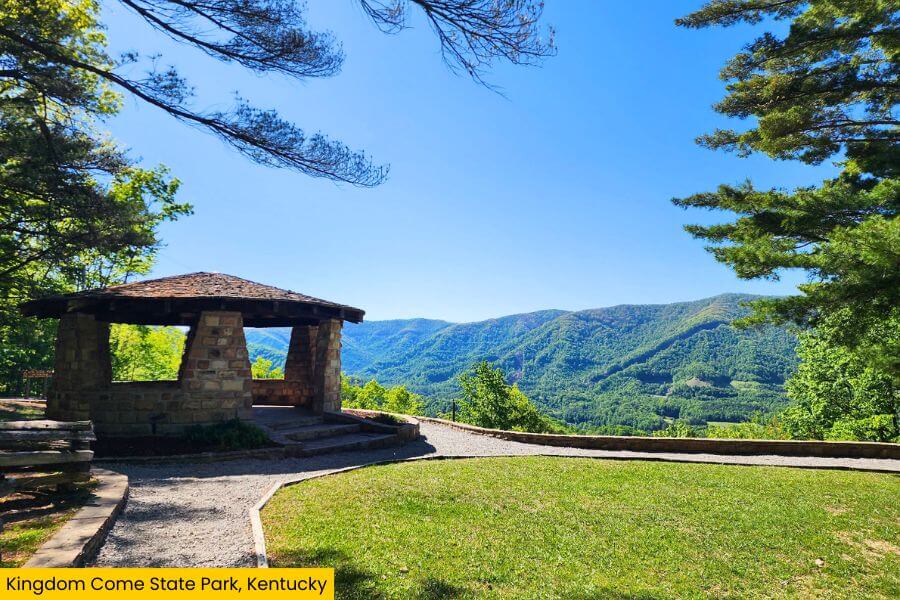
After crossing into Kentucky, make time for Kingdom Come State Park near Cumberland, where dramatic cliffs, towering rock formations, and sweeping mountain views make it one of the state’s most unforgettable scenic stops.
Drive the winding park road to natural landmarks like Raven Rock, where dramatic sandstone cliffs overlook the surrounding mountains, and Log Rock, a striking natural sandstone bridge carved by erosion.
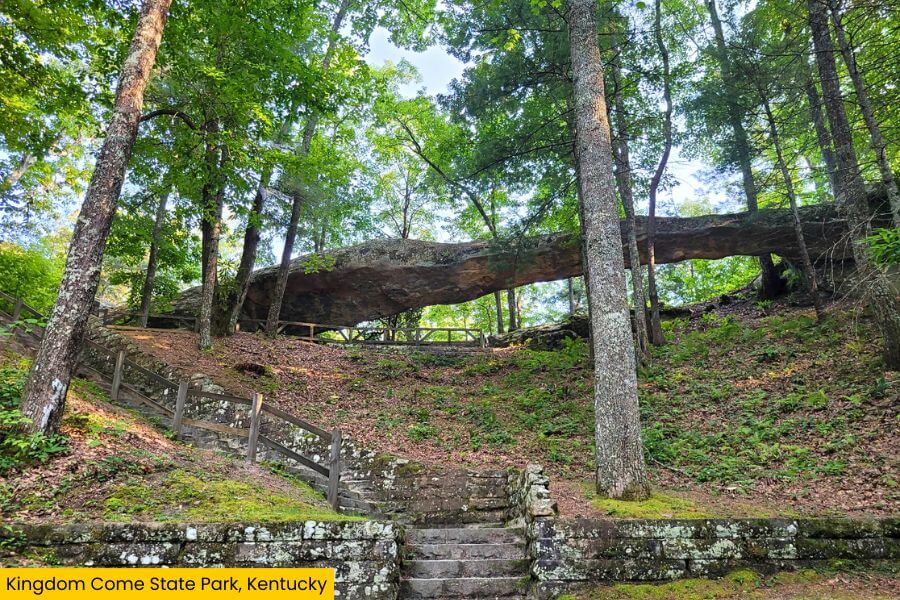
If you want to explore on foot, tackle one of the park’s interconnected hiking trails for even more overlooks, unusual rock formations, and excellent chances to spot white-tailed deer and wild turkeys.
Fall is especially spectacular when the surrounding Appalachian Mountains burst into brilliant shades of red, orange, and gold, turning every overlook into a photo worthy viewpoint.
5. Breaks Interstate Park
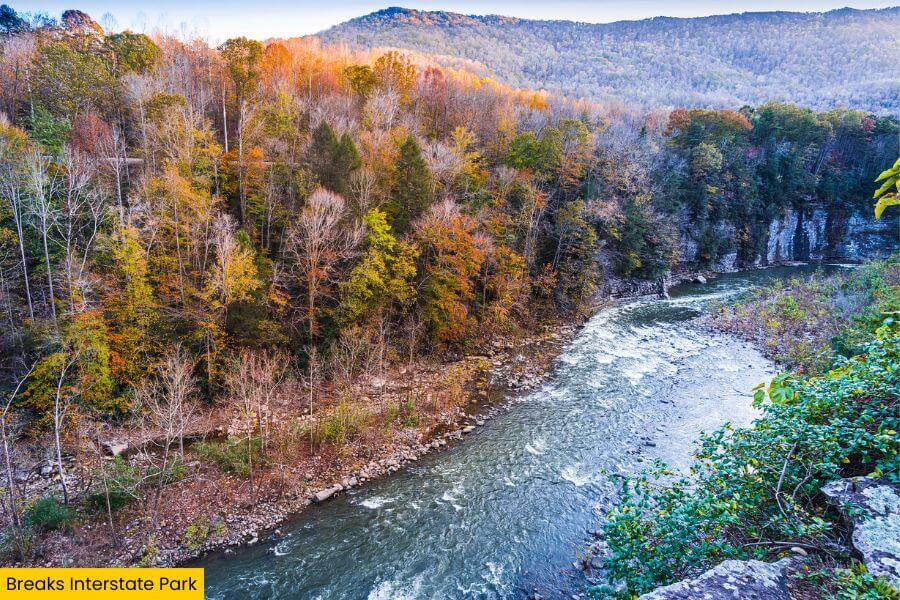
Keep the mountain scenery going at Breaks Interstate Park on the Virginia and Kentucky border, with the spectacular Breaks Canyon, often called the Grand Canyon of the South because it stretches about 5 miles long with depths ranging up to 1,600 feet.
Stop at overlooks like the Stateline Overlook and the Towers Overlook for incredible views of the canyon, especially during sunrise or when autumn colors cover the surrounding mountains.
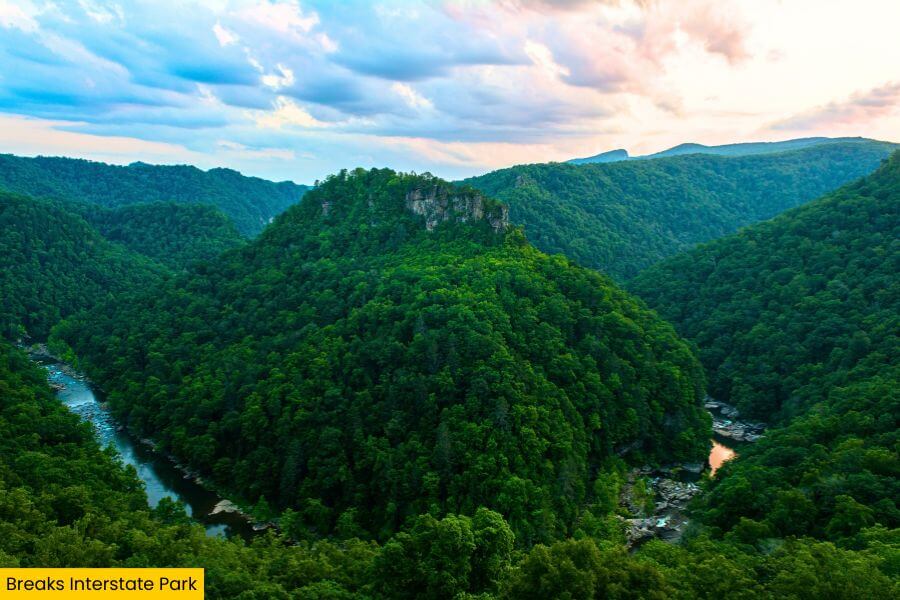
If you’re ready for more adventure, hike the Prospector Trail, paddle the Russell Fork, or visit during the famous fall whitewater releases that attract expert kayakers from across the country.
The park also features Laurel Lake for fishing and kayaking, a zipline, mountain bike trails, and dark night skies that make it a fantastic place to end the day with a little stargazing.
6. Babcock State Park, West Virginia
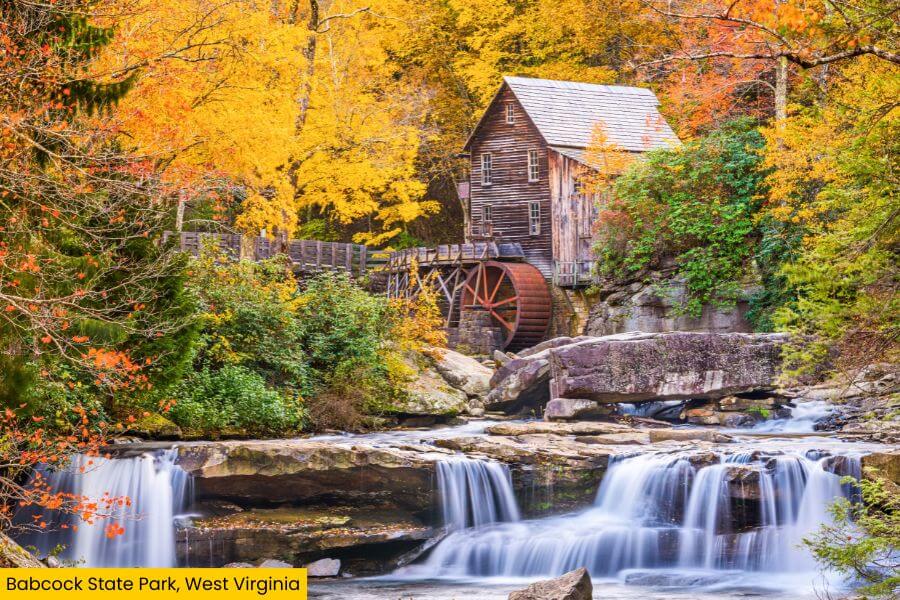
As you continue deeper into West Virginia, stop at Babcock State Park near Clifftop, where the famous Glade Creek Grist Mill has become one of the most photographed landmarks in the entire state.
The working replica mill sits beside Glade Creek with its large waterwheel and peaceful forest setting that looks especially beautiful when colorful fall leaves surround the stream.
Stretch your legs on the 0.5-mile Island in the Sky Trail for scenic overlooks, or hike part of the 2-mile Skyline Trail for even more views of the park’s thick hardwood forest.
With 4,127 acres of woodland, rushing creeks, cozy cabins, and excellent trout fishing, Babcock State Park is a perfect place to slow down and enjoy one of West Virginia’s classic mountain landscapes.
7. Cranberry Glades Botanical Area, West Virginia
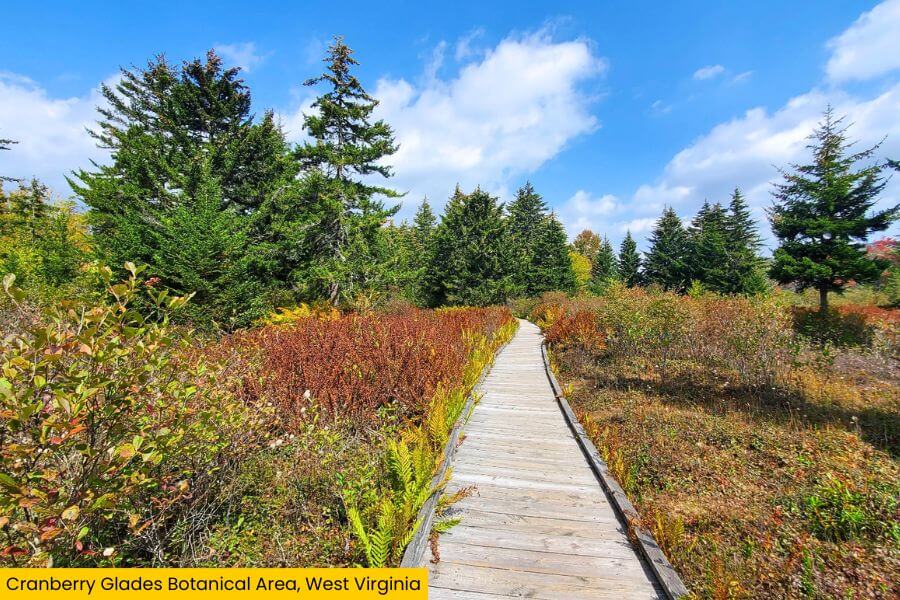
From the mountain forests, continue to Cranberry Glades Botanical Area in Monongahela National Forest, where 750 acres of rare bogs protect plants that are usually found much farther north in Canada.
An easy 0.5 mile boardwalk loop takes you across the wetlands, where you can spot colorful pitcher plants, bright pink bog rosemary, cranberries, cotton grass, and unusual orchids without disturbing the fragile habitat.
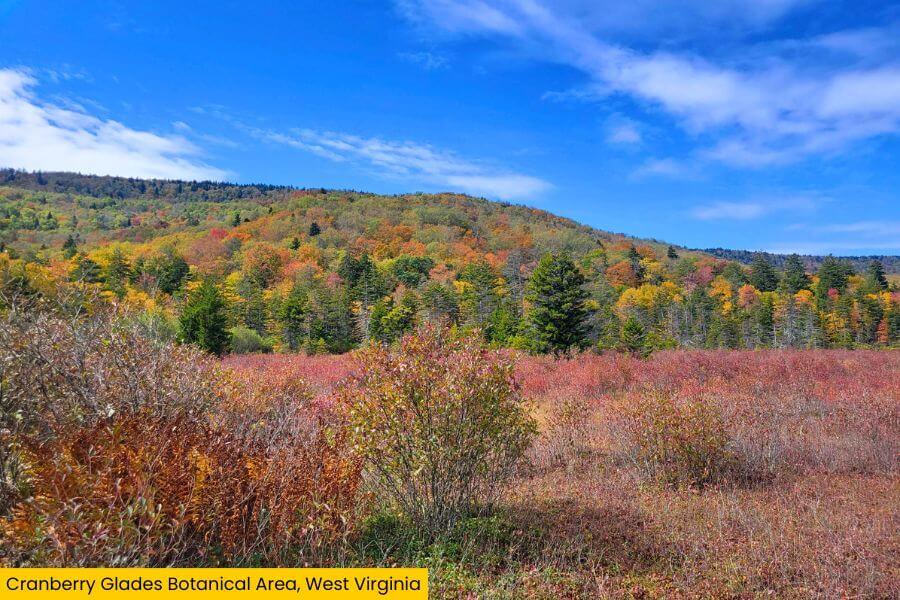
The cool, high elevation landscape sits at more than 3,300 feet above sea level, creating the perfect conditions for this one of a kind ecosystem that has survived since the last Ice Age.
Bring binoculars for birdwatching, watch for butterflies and salamanders along the trail, and stop by the nearby Cranberry Mountain Nature Center to learn more about one of West Virginia’s most fascinating natural areas.
8. Seneca Rocks, West Virginia
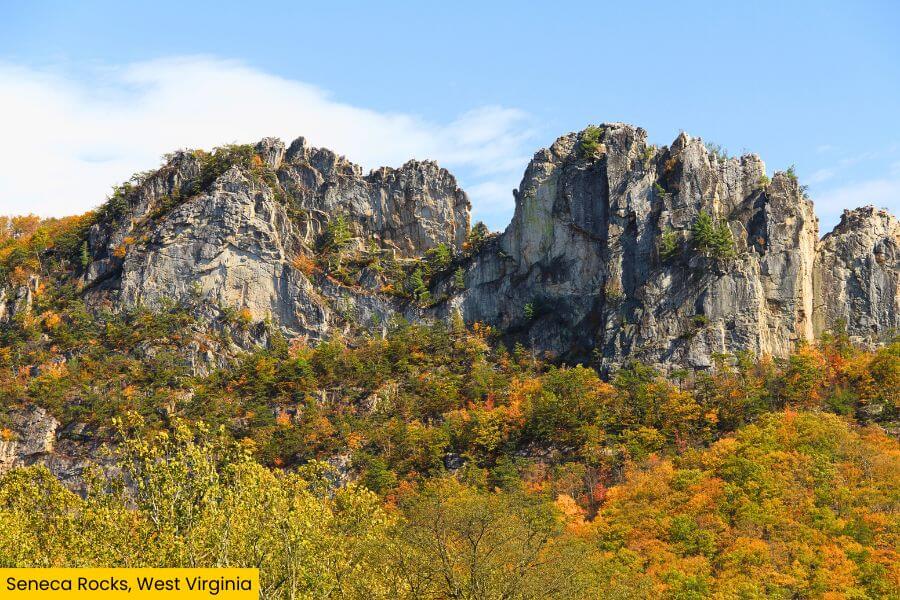
Leave the wetlands behind and head for Seneca Rocks, where a dramatic quartzite formation rises nearly 900 feet above the North Fork River and creates one of West Virginia’s most famous natural landmarks.
The 2.6-mile round trip Seneca Rocks Hiking Trail climbs over 700 feet to an observation platform with incredible views of the sharp rock fins, surrounding mountains, and the valley below.
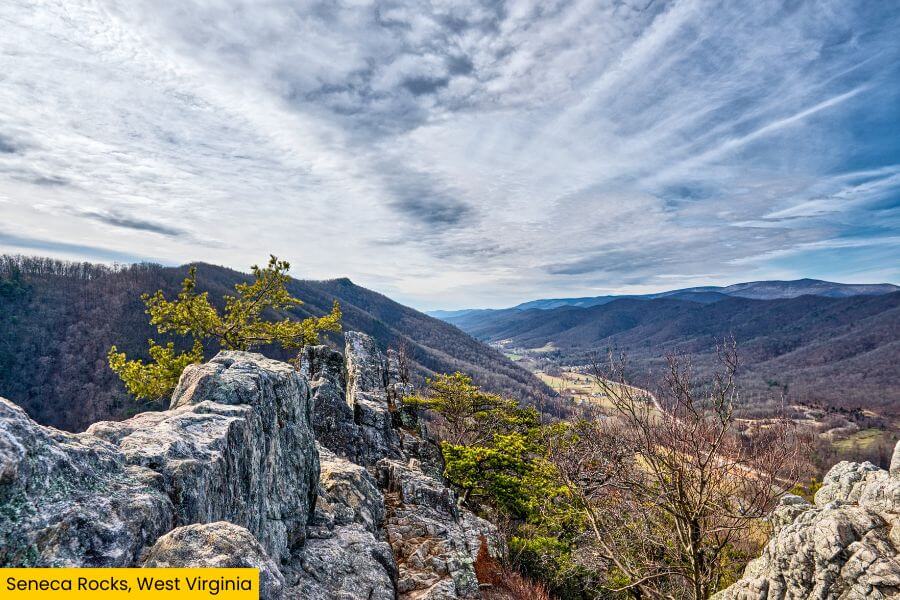
Experienced rock climbers come from around the country to tackle more than 375 established climbing routes on the towering cliffs, while photographers love capturing the rocks glowing at sunrise and sunset.
Before you leave, stop at the Seneca Rocks Discovery Center to learn how these towering peaks formed more than 440 million years ago and pick up maps for nearby scenic drives and hiking trails.
Related Posts