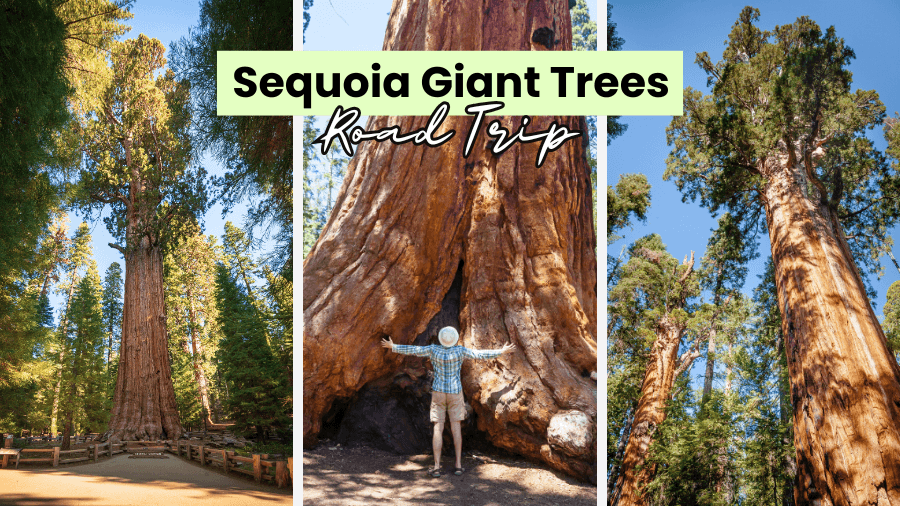
Some road trips are about the destination, but this one is about driving beneath trees so enormous that your car suddenly looks like a toy.
Sequoia National Park protects giant sequoias that can soar more than 250 feet high, measure over 30 feet across at the base, and live for thousands of years.
Along this route, you’ll walk beneath record-breaking trees, wander through groves filled with cinnamon-colored trunks, and even drive through a fallen sequoia.
Keep reading for the ultimate giant trees road trip through Sequoia National Park, including the stops worth making and the cool details you definitely don’t want to miss.
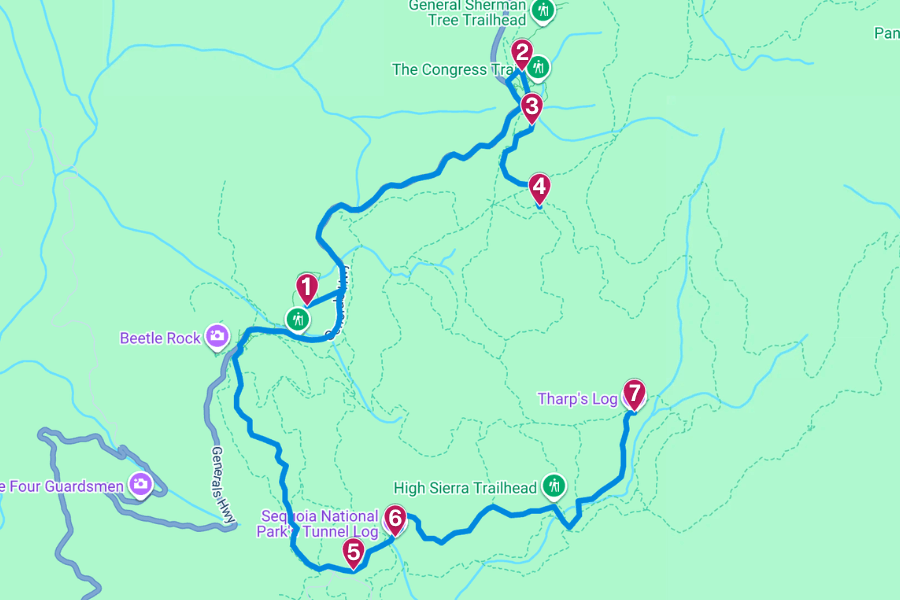
1. Big Trees Trail
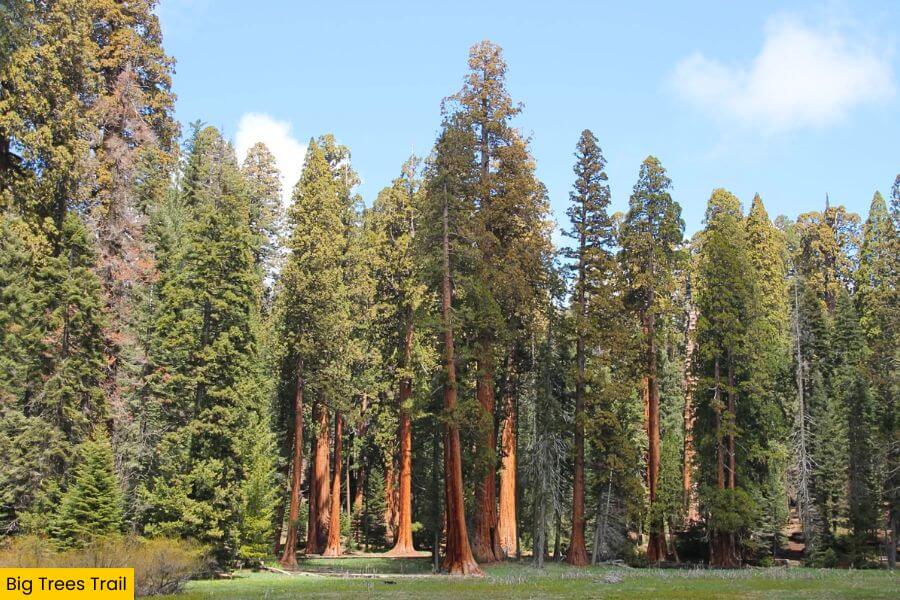
Big Trees Trail is a 1.2-mile paved loop in the heart of Giant Forest, passing Round Meadow, the Clara Barton Tree, and groves of giant and young sequoias.
Along the way, you’ll find educational displays that explain the forest ecosystem and why these massive trees grow and thrive in this part of the park.
You can also use the benches throughout the loop to slow down, admire the towering trees, and take in the peaceful forest around you.
Don’t forget to watch for wildlife as you explore, from yellow-bellied marmots and deer to the occasional black bear roaming through the forest.
2. General Sherman Tree
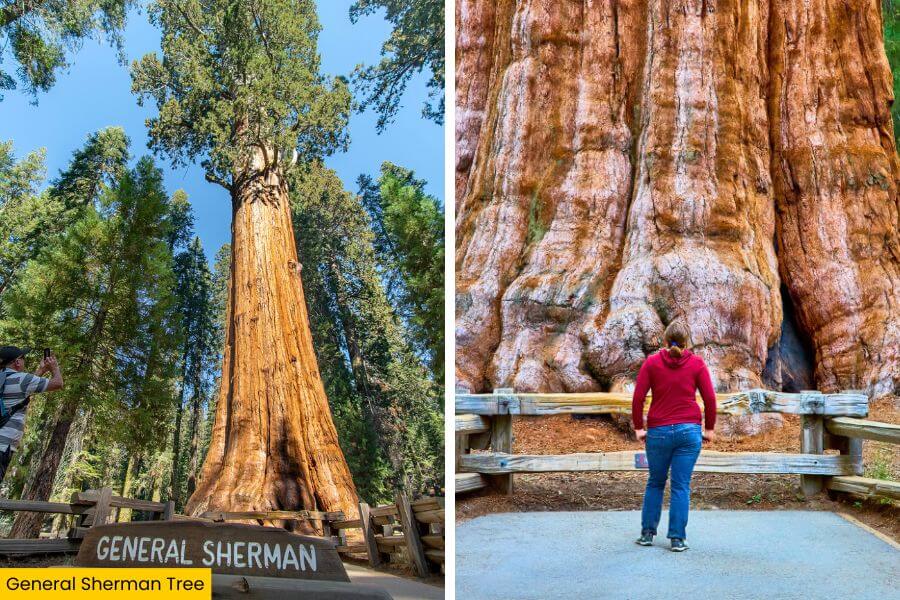
Next up is General Sherman, the world’s largest living single-stem tree by volume, standing about 275 feet tall and measuring 36.5 feet across at its base.
Scientists estimate it’s around 2,200 years old, and with a trunk volume of about 52,500 cubic feet, it makes anyone standing beneath it look seriously small.
You can reach it by following the Main Trail, a paved half-mile walk that winds downhill through Giant Forest, with a few stairs and exhibits along the route.
For an easier visit, take the wheelchair-accessible trail from the Generals Highway parking area, or ride the park shuttle during shuttle season to avoid the uphill walk back.
3. Congress Trail
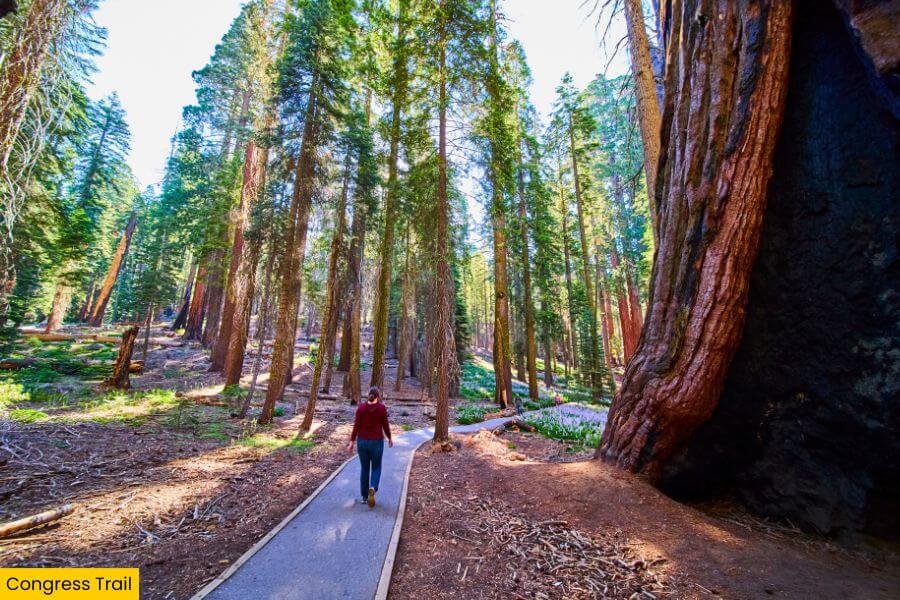
After seeing General Sherman, continue onto the Congress Trail, a 2.7-mile paved loop that starts nearby and quickly takes you away from the busiest crowds.
The route takes you among hundreds of monarch sequoias, with highlights like the President Tree, Chief Sequoyah Tree, Senate group, and House group.
You might also spot Douglas squirrels scrambling through the branches and chewing through cone stems, so have your camera ready to catch them in action.
If you can, save about 1.5 hours for the loop and let this be one of the slower parts of your visit.
4. The President Tree
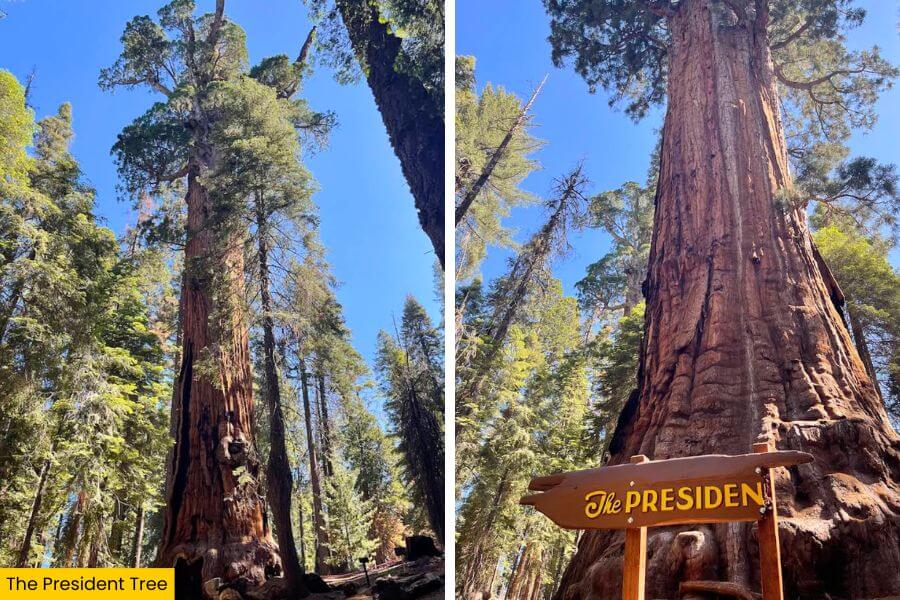
One of Congress Trail’s biggest highlights deserves its own stop: the President Tree, a must-see giant standing about 247 feet tall in Giant Forest.
Named for President Warren G. Harding in 1923, it has a trunk volume of roughly 46,608 cubic feet and ranks as the second-largest tree on Earth.
Researchers estimate President is around 3,240 years old, yet it still adds about one cubic meter of wood each year, so this ancient giant is very much growing.
Look upward at its huge crown of thick branches and green leaves, and just imagine the thousands of years it has spent towering over the forest.
5. Parker Group Sequoias
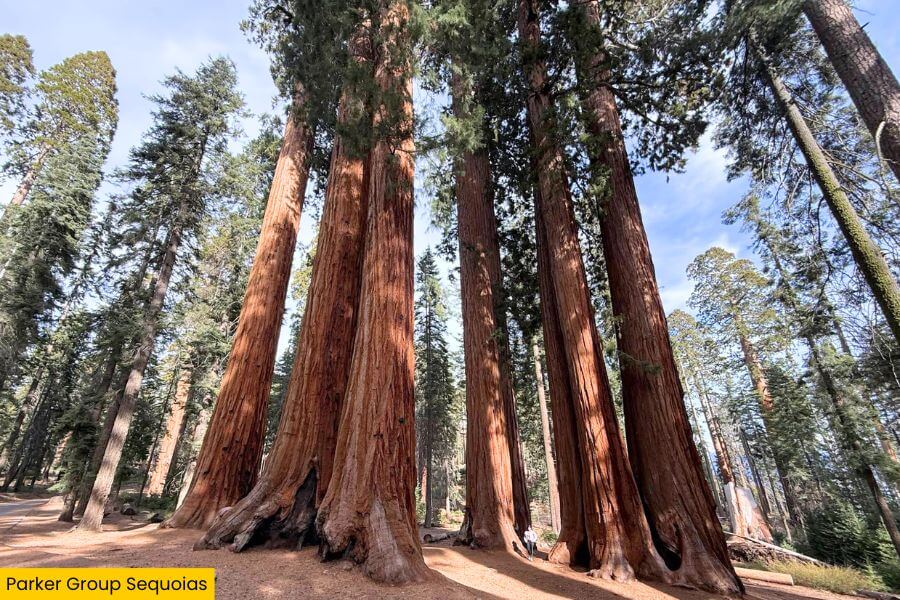
Once you’ve explored Giant Forest, make your way to Parker Group, a photogenic cluster of giant sequoias right along Crescent Meadow Road near Moro Rock.
These trees are named for the eight members of Captain James Parker’s family, who served as the national park’s acting superintendent from 1893 to 1894.
Unlike General Sherman, the whole group is the attraction here, and you can stand among them for a closer look at their massive trunks and fire scars.
You can also snap photos from different angles to capture their incredible height and find a few memorable views to take home with you.
6. Tunnel Log
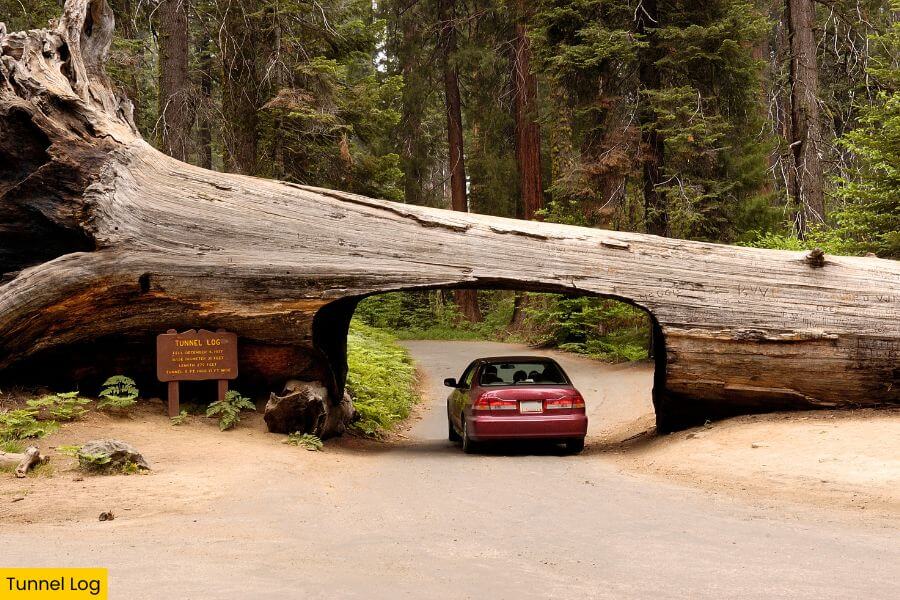
From Parker Group, continue along Crescent Meadow Road to Tunnel Log, a fallen giant sequoia that you can actually drive through.
The tree crashed across the road in 1935, and because it was too large to move, workers carved a 17-foot-wide, 8-foot-high tunnel that’s still used today.
Before falling, it stood roughly 275 feet tall, measured about 21 feet across at its base, and was estimated to be more than 2,000 years old.
No visit to the national park is complete without seeing this spot, so make sure to snap plenty of photos and take in its incredible size up close.
7. Tharp’s Log
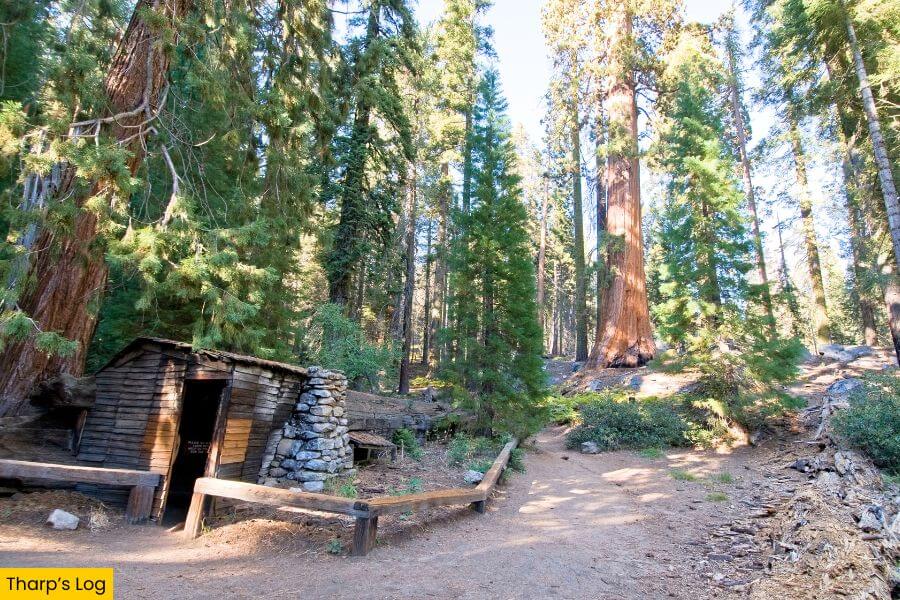
Past Tunnel Log, continue toward Log Meadow and hike to Tharp’s Log, a cabin built inside the hollow trunk of a fallen giant sequoia in the 1860s.
Cattle rancher Hale Tharp used the log as a summer shelter while grazing cattle in the nearby meadows, becoming the first non-Native settler to live in Giant Forest.
One of Tharp’s visitors was John Muir, who stopped here in 1875, the same year he named the surrounding grove Giant Forest.
Today, you can peek inside and see the simple wooden benches, table, bed, and window that show how this unusual backcountry home once worked.
Related Posts