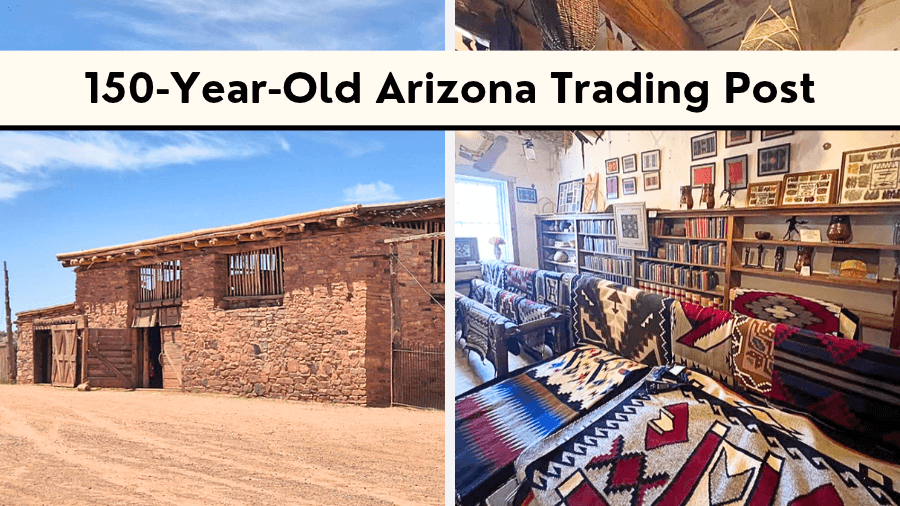
Arizona has plenty of historic buildings, but how many can say they’ve been open for business since 1878?
One remarkable trading post has managed to do just that, serving customers for nearly 150 years.
So if you’re curious how this trading post has stood the test of time, here’s what makes it special and why it’s worth visiting on your next Arizona road trip!
Where Is It?
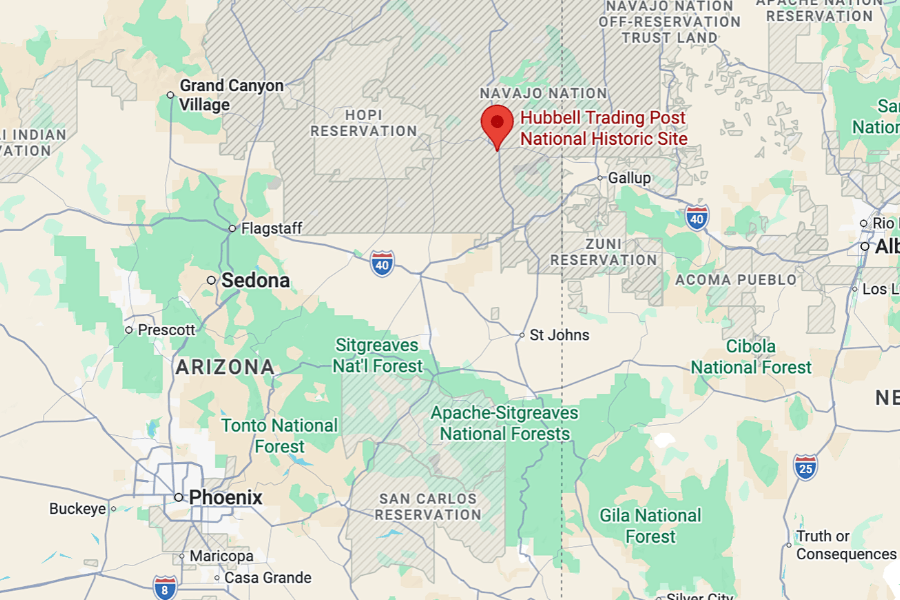
You’ll find Hubbell Trading Post National Historic Site in Ganado, a small community on the Navajo Nation in northeastern Arizona.
It’s right along U.S. Highway 191, about 1 hour and 20 minutes from Holbrook, 2 hours and 20 minutes from Flagstaff, and 4.5 hours from Phoenix.
If you’re coming from New Mexico, expect an hour’s trip from Gallup or 3 hours from Albuquerque.
About
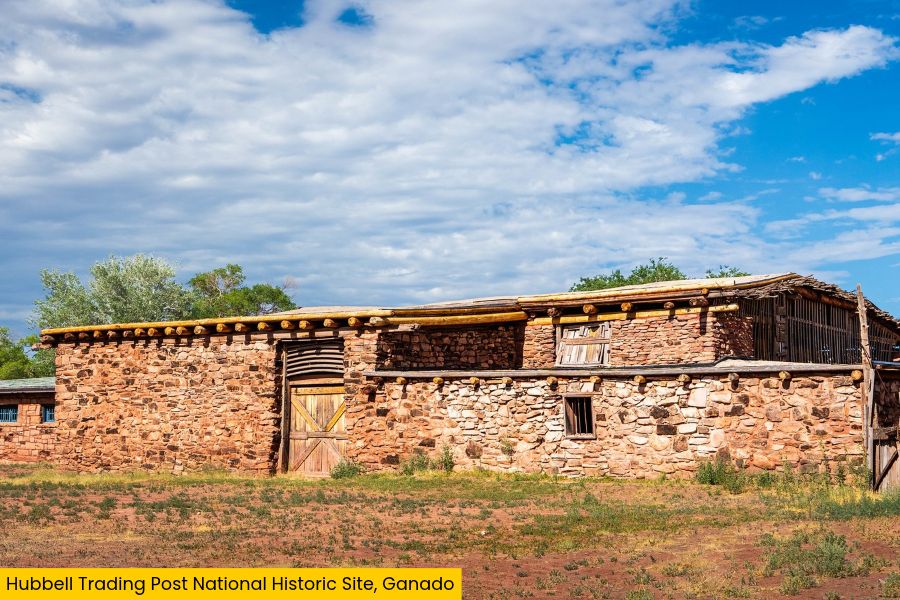
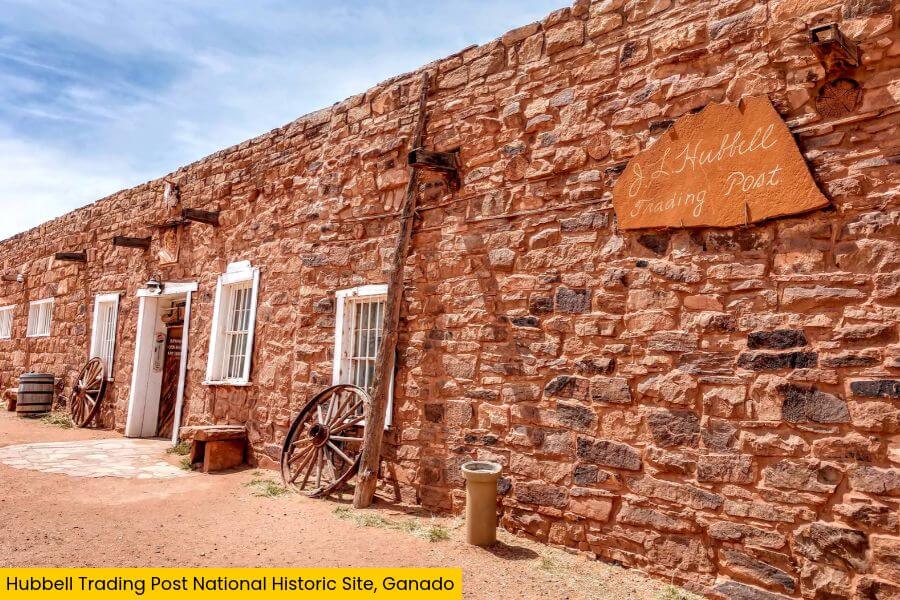
Hubbell Trading Post National Historic Site is the oldest continuously operating trading post on the Navajo Nation, with nearly 150 years of history behind it!
Established in 1878 when John Lorenzo Hubbell purchased an existing trading post, this historic landmark has served the Ganado community for generations.
Back then, it was an essential place where Navajo families could buy everyday supplies and trade wool, livestock, rugs, jewelry, and other handmade goods.
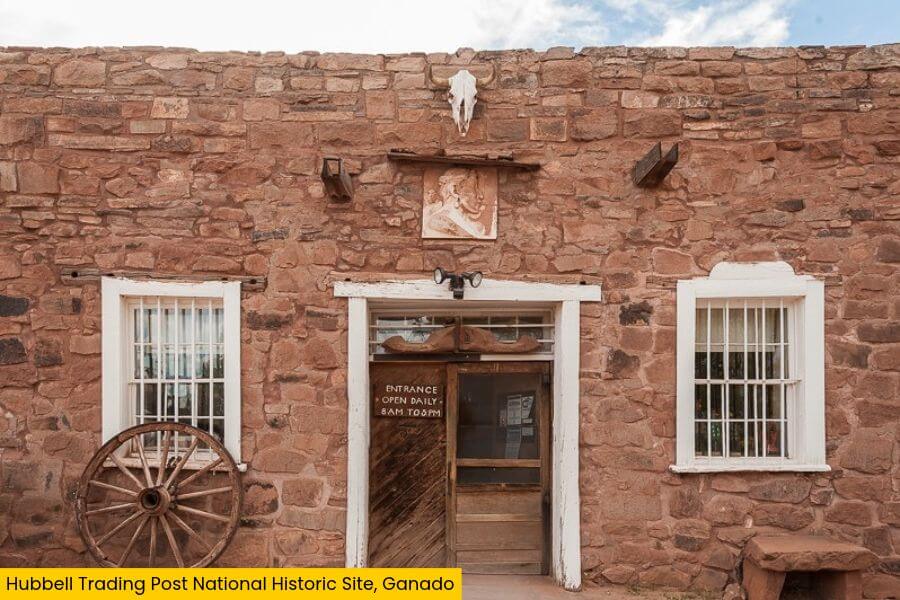
Over the years, the business grew into a bustling center that offered postal services and allowed customers to pawn silver and turquoise jewelry.
Hubbell eventually built a trading business with more than 20 locations, but the original Ganado property remained an important part of his family’s life.
Even after he died in 1930, his family kept the business going for decades.
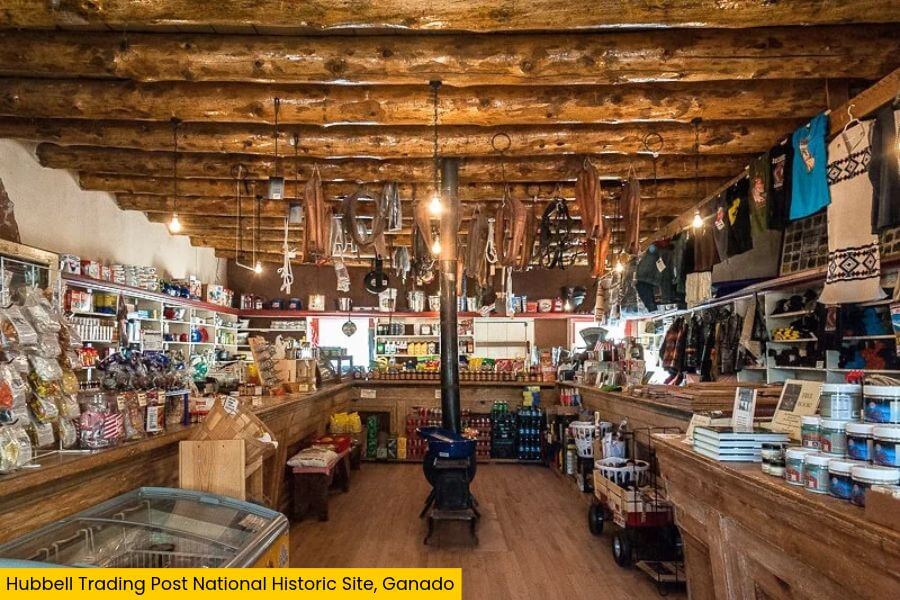
In 1960, the property became a National Historic Landmark, and the National Park Service acquired it seven years later.
Today, it’s still a working trading post, operated by the nonprofit Western National Parks Association.
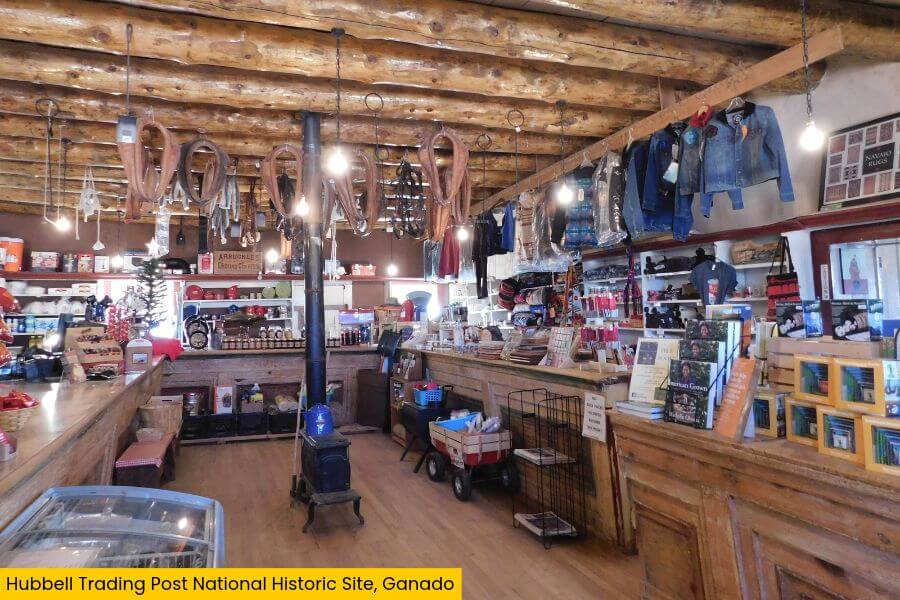
The store has kept its old wooden floors and walls, giving it an authentic, old-fashioned atmosphere you don’t often find anymore.
That combination of preserved history and ongoing trade makes the site such a fascinating piece of Arizona’s past.
Things To Do
Your first stop should be the trading post itself, where wooden counters and stocked shelves offer a glimpse of what shopping here was like years ago.
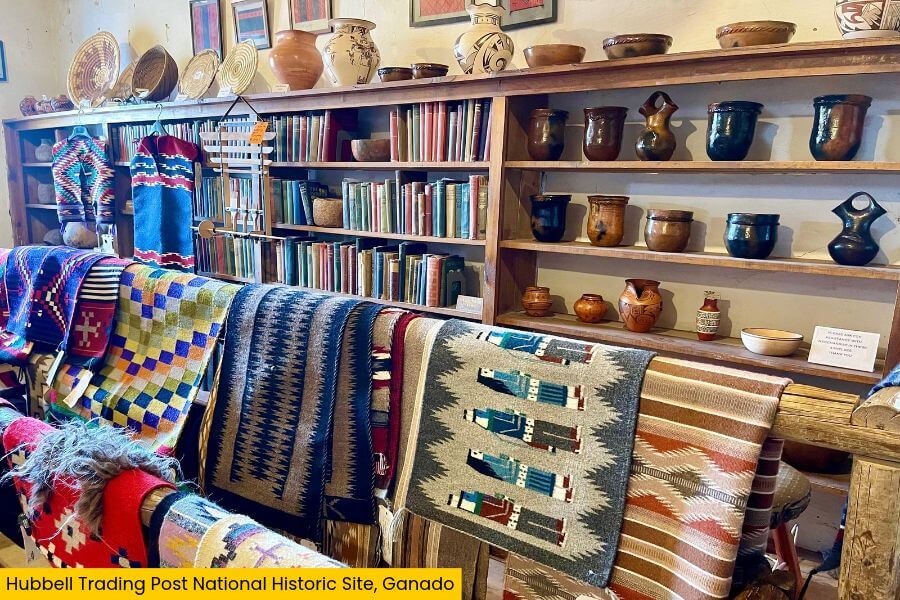
Take your time browsing the colorful handwoven Navajo rugs, handmade jewelry, pottery, baskets, and other traditional crafts displayed throughout the store.
Don’t forget to check out the grocery items, T-shirts, souvenirs, and a huge collection of books about Navajo food, traditions, and culture.
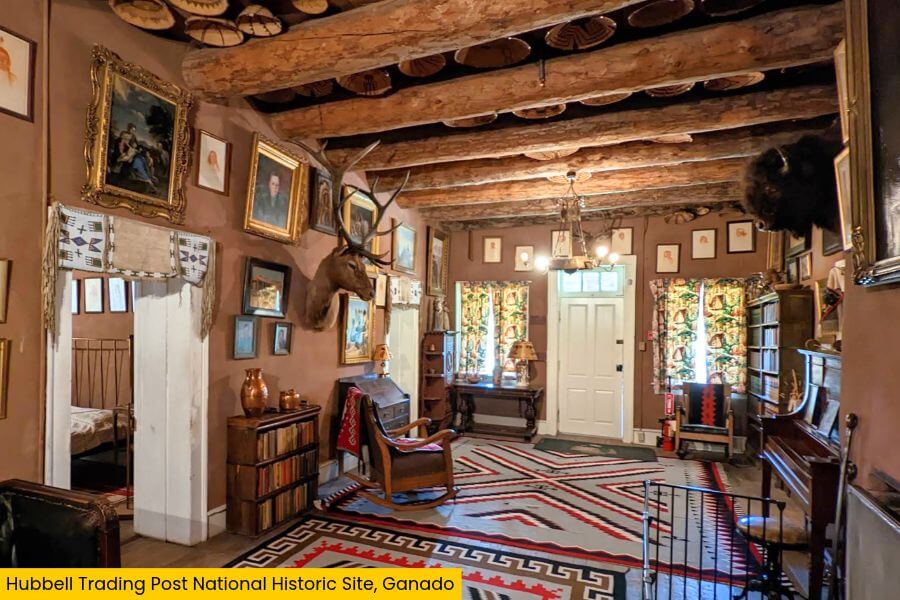
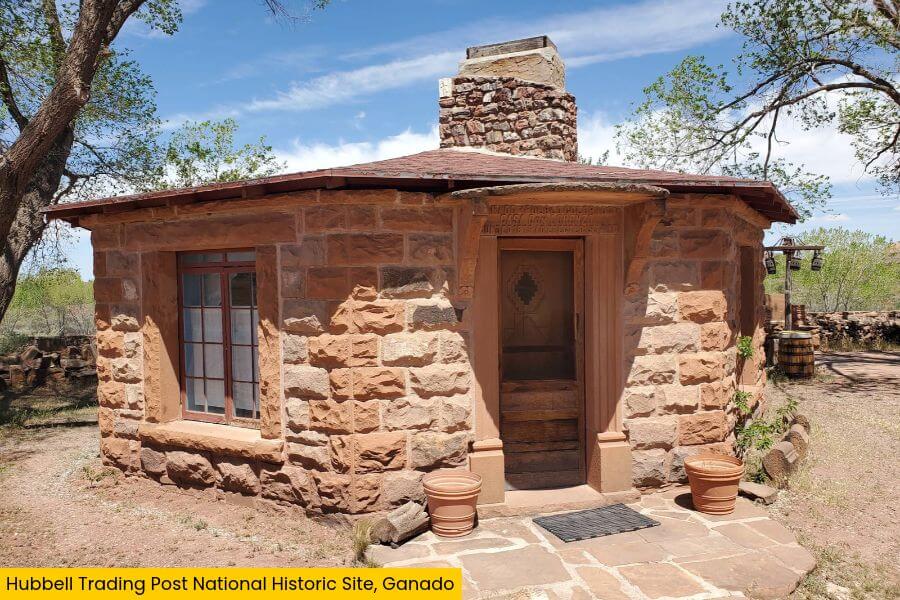
One of the highlights of visiting the national historic site is checking out the Hubbell home, where John Lorenzo Hubbell and his family once lived.
Construction of this spacious adobe home began in 1898, and it features original furnishings and a stunning collection of Southwestern art and Native American crafts.
To see inside, choose a free 15-minute guided peek or a 30-minute tour with park staff, but check availability at the visitor center since spots are limited.
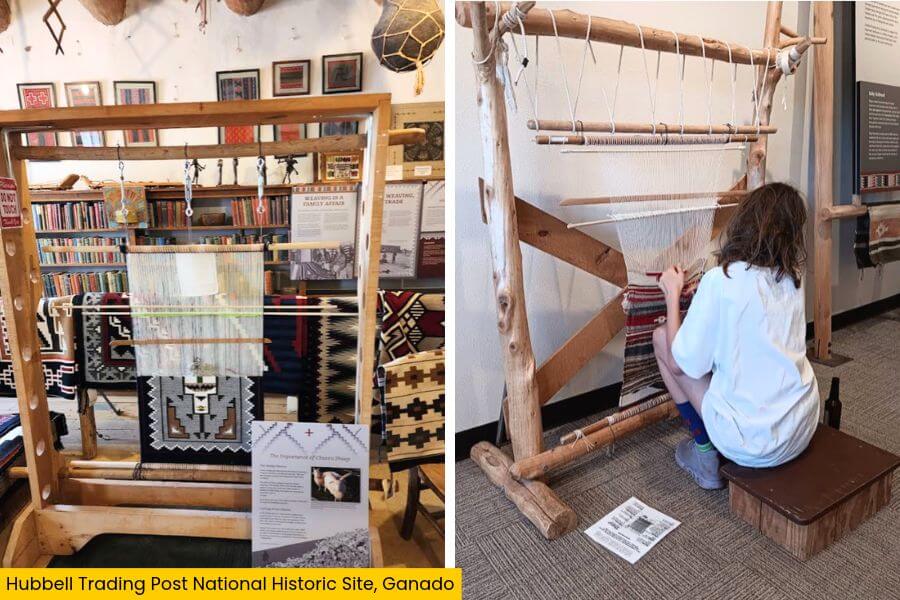
Another interesting experience is watching a skilled Navajo weaver at work in the trading post’s Rug Room, where you can see how traditional rugs are made by hand.
You can also stop by the visitor center to try weaving on a guest loom or ask about special workshops where visitors can learn about spinning, dyeing, and weaving.
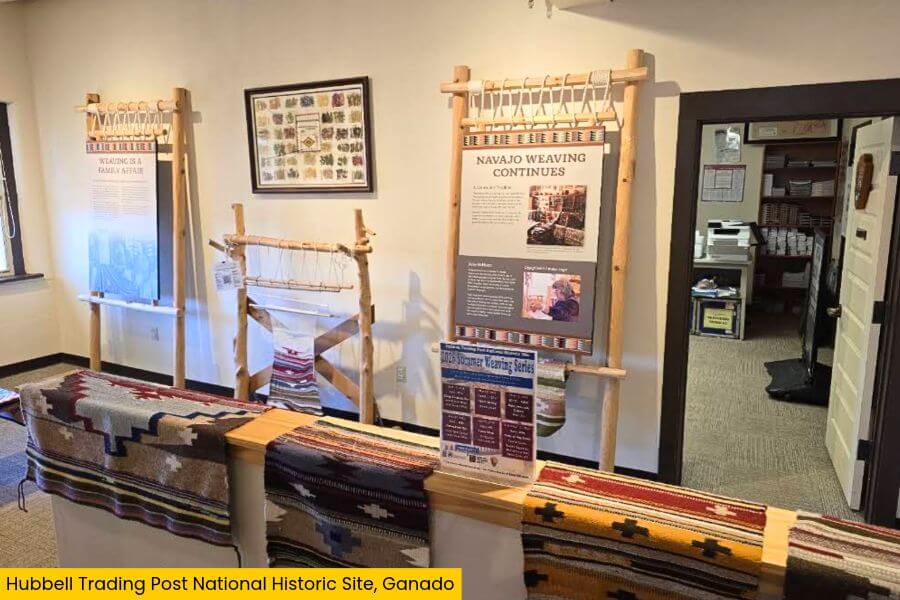
At the visitor center, you can learn more about the trading post and the surrounding Navajo Nation.
You’ll find exhibits and displays that share the site’s history, tell the Hubbell family’s story, and explain the importance of trading posts to Navajo communities.
It’s also a great place to discover traditional weaving techniques and the importance of handmade textiles in the region.
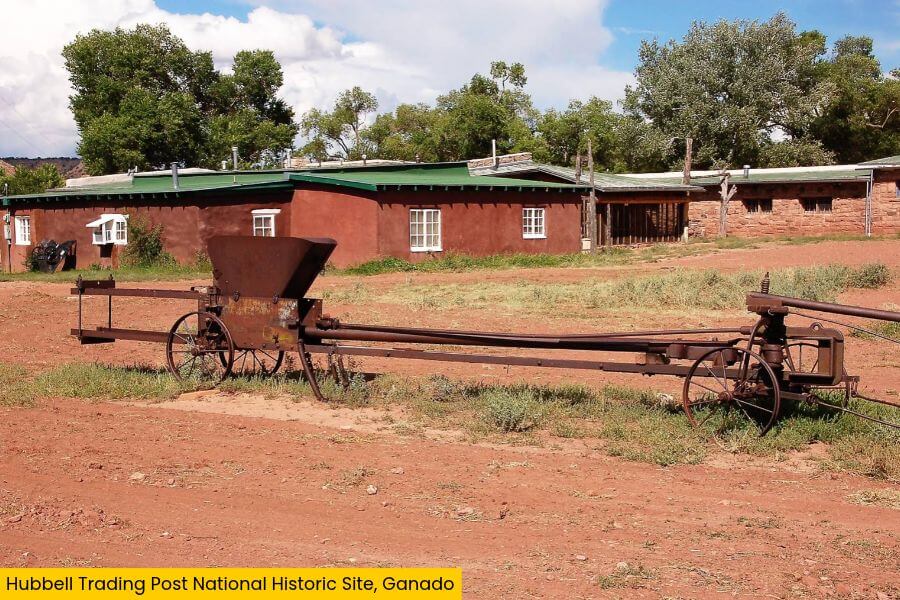
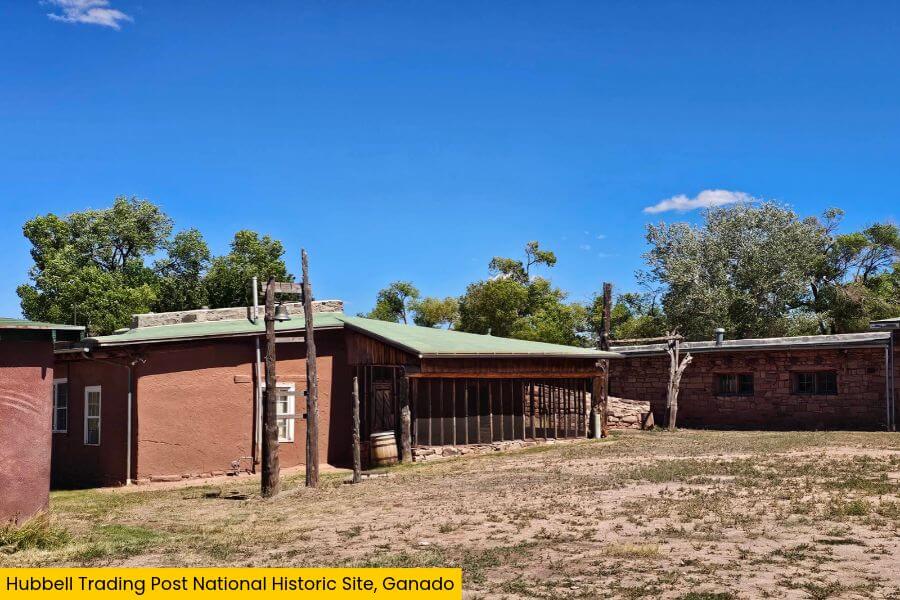
After exploring the main buildings, take some time to wander around the historic grounds and see what life was like beyond the trading post.
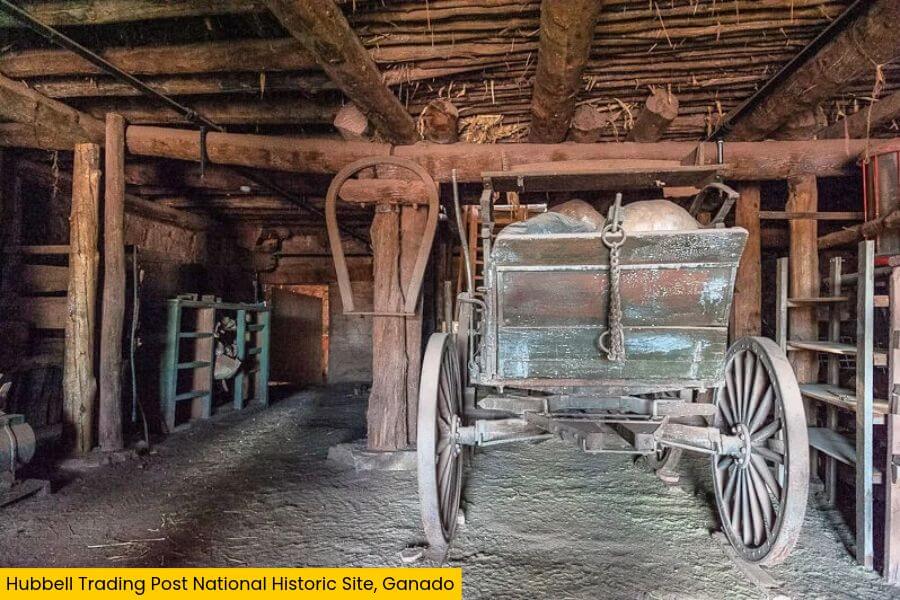
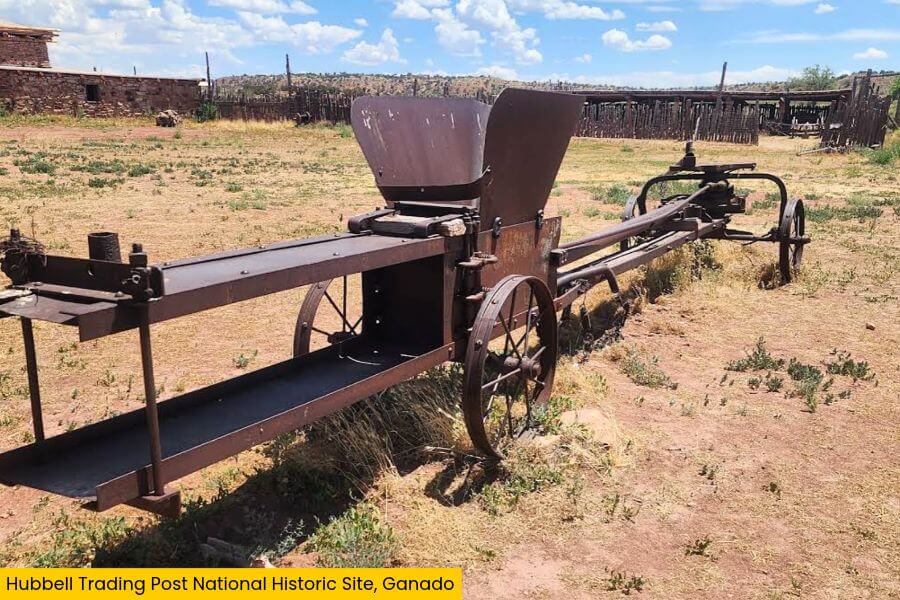
You’ll find an old barn, a bunkhouse, corrals, farm buildings, and other structures that show how the property once supported farming, ranching, and everyday life.
Along the way, you’ll also enjoy views of the open grasslands and mesas that make this part of northeastern Arizona so distinctive.
Know Before You Go
Opening Hours
Hubbell Trading Post National Historic Site is open daily from 8:00 AM to 5:00 PM, with the entrance gates closing promptly at 5:00 PM.
The site is typically closed on Thanksgiving, Christmas Day, and New Year’s Day.
And keep in mind that the Navajo Nation observes daylight saving time from March through November, unlike most of Arizona, so double-check the local time before visiting.
Admission
Entrance to the trading post is completely free, including access to the visitor center, historic buildings, and surrounding grounds.
Ranger-led tours of the Hubbell family home are also free, although availability may vary.
Best Time to Visit
Spring (April through May) and fall (September through October) are excellent times to explore, with daytime temperatures often ranging from the 60s to 70s°F.
Try to visit in the morning when temperatures are cooler, especially during summer when daytime highs can reach the 80s and 90s°F.
Respect Navajo Culture
Remember that you’re visiting a historic site within the Navajo Nation.
Always ask permission before photographing people, respect any restricted areas, and follow posted signs.
If you’re buying handmade jewelry or rugs, don’t be afraid to ask questions about the artist and the techniques used to create them.
Things To Do Nearby
If you have some extra time, there are several nearby attractions worth checking out.
The Navajo Nation Museum is about a 30-minute drive away, where you can explore exhibits featuring Navajo history, traditional crafts, and cultural artifacts.
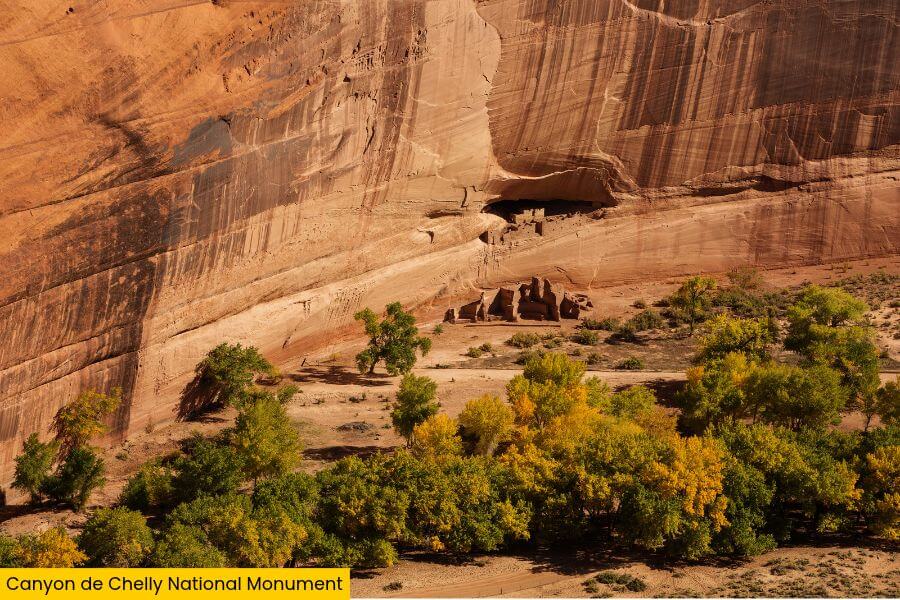
If you love incredible scenery, drive 40 minutes to Canyon de Chelly National Monument to see ancient cliff dwellings and the famous 750-foot Spider Rock.
For more outdoor adventures, head to Petrified Forest National Park, about an hour away, and hike the Blue Mesa Trail and see colorful petrified wood that’s millions of years old.
Related Posts