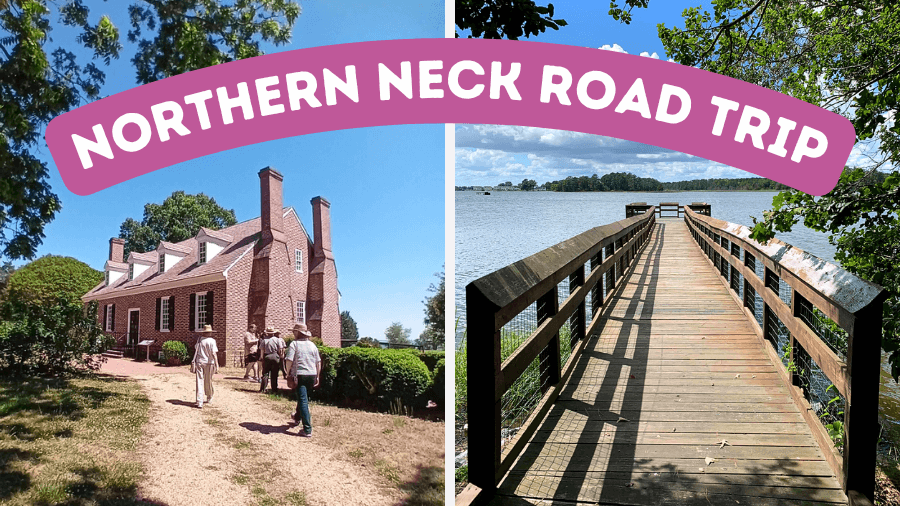
Hidden along Virginia’s quiet back roads is a centuries-old brick house with more stories than you might expect.
Behind its towering chimneys and unusual design are tales of rebellion, surprising connections, and generations of people who once called this place home.
Today, you can step inside, wander the historic grounds, and uncover pieces of its fascinating past for yourself.
Best of all, this hidden piece of American history is well worth a visit, so keep reading to see what makes it so special.
Where Is It?
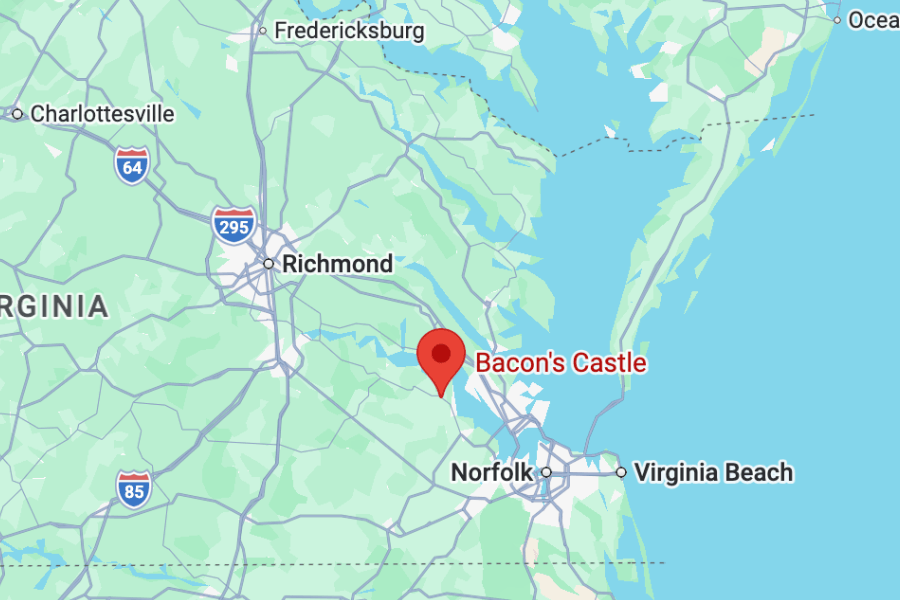
Bacon’s Castle is located at 465 Bacon’s Castle Trail in rural Surry County, Virginia.
It’s about a 10-minute drive from downtown Surry and roughly 40 minutes from Williamsburg if you take the Jamestown-Scotland Ferry across the James River.
If you’re coming from farther away, Richmond is around 70 minutes away, Norfolk about 50 minutes, and Virginia Beach roughly 65 minutes.
About
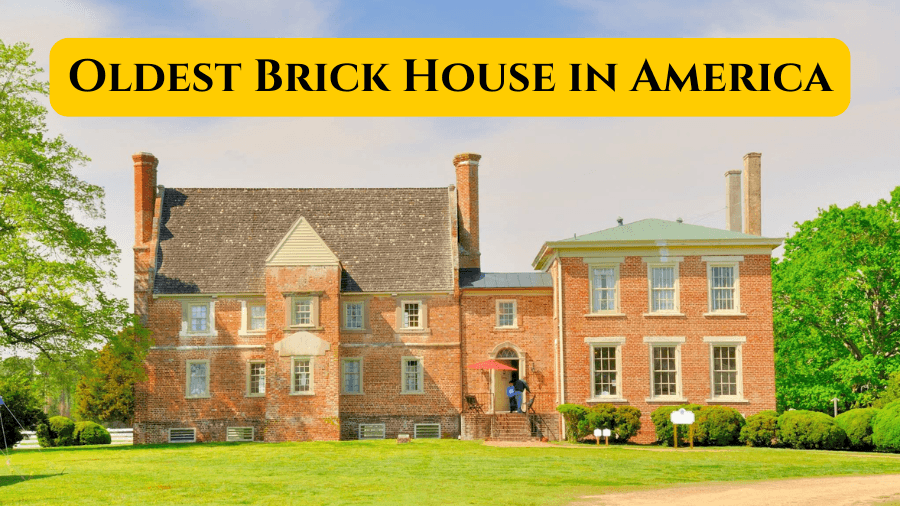
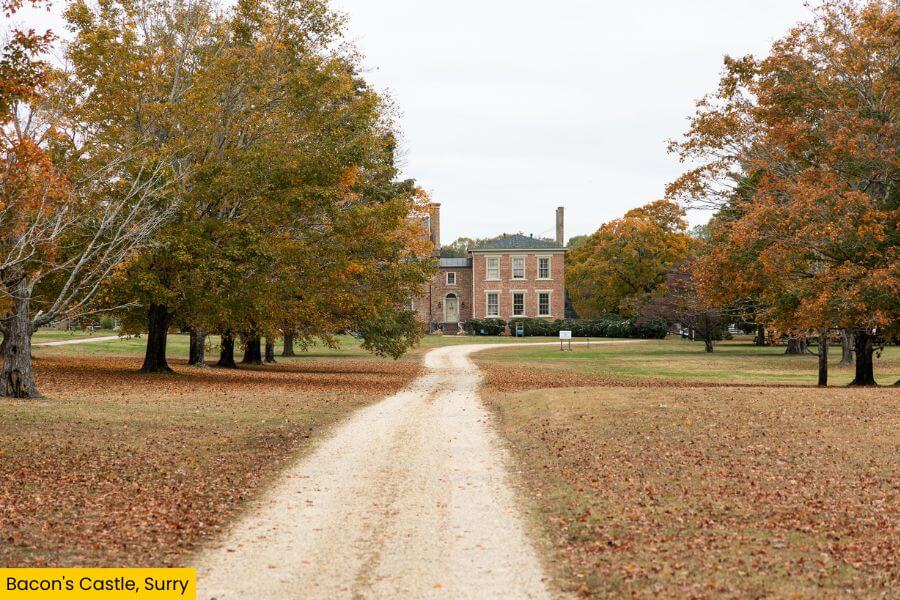
Bacon’s Castle is famous for one seriously impressive claim to fame: it’s the oldest documented brick dwelling in North America.
Built in 1665 for Arthur Allen and his family, the property was originally known as Allen’s Brick House.
Allen was a wealthy merchant and local Justice of the Peace, and his large brick home stood out at a time when many Virginia houses were still built from wood.
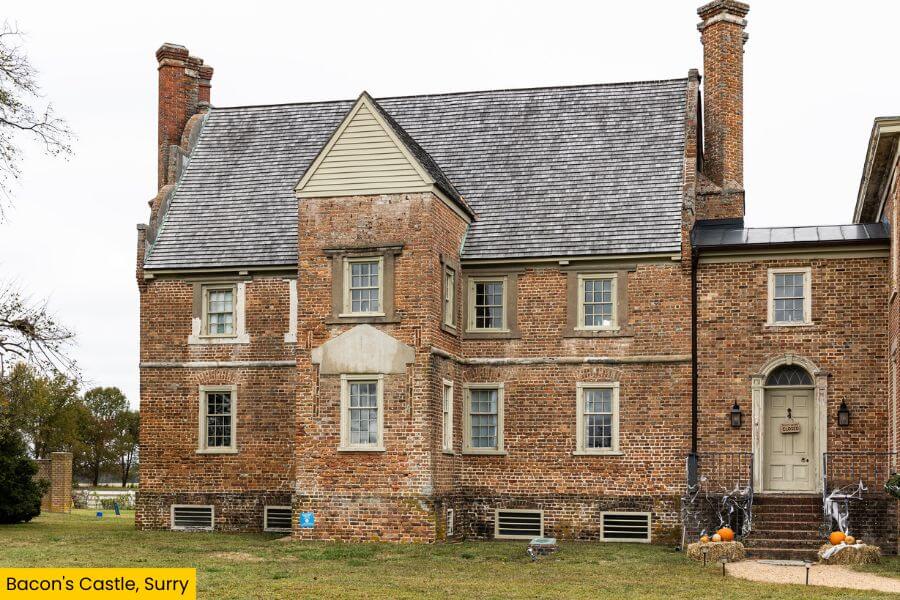
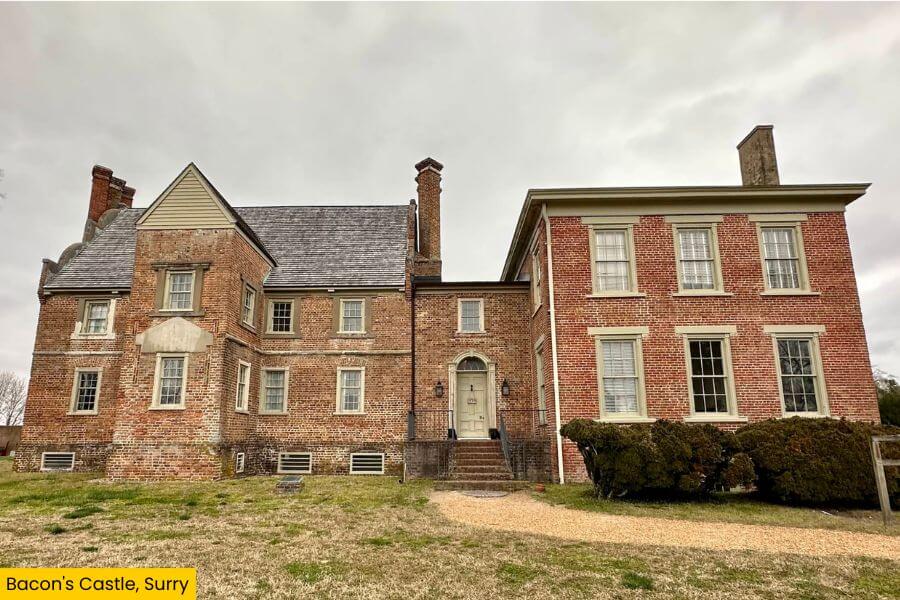
That impressive design has survived for centuries, making it a rare example of High Jacobean architecture with steep gables and distinctive triple-stacked chimneys.
Beyond that, the property has an interesting story behind its famous name.
During Bacon’s Rebellion in 1676, Nathaniel Bacon’s followers took control of the Allen family’s home and used it as a fort, or “castle.”
It then became known as Bacon’s Castle because of this connection, even though Bacon himself never lived here or is known to have visited.
Over the centuries, the building remained privately owned until Preservation Virginia purchased it at auction in the 1970s.
The organization later researched and restored the house, helping preserve its architecture and the stories of the many people connected to the property.
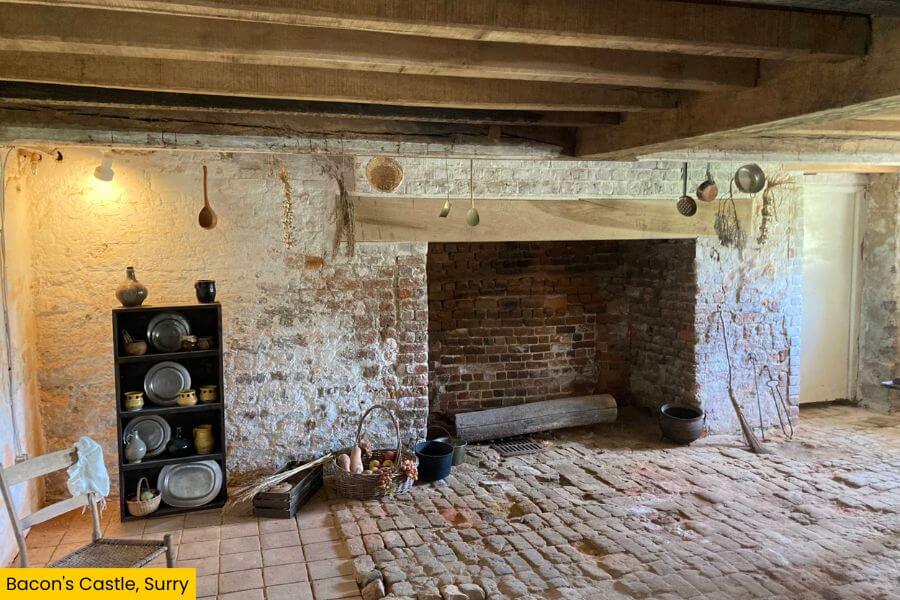
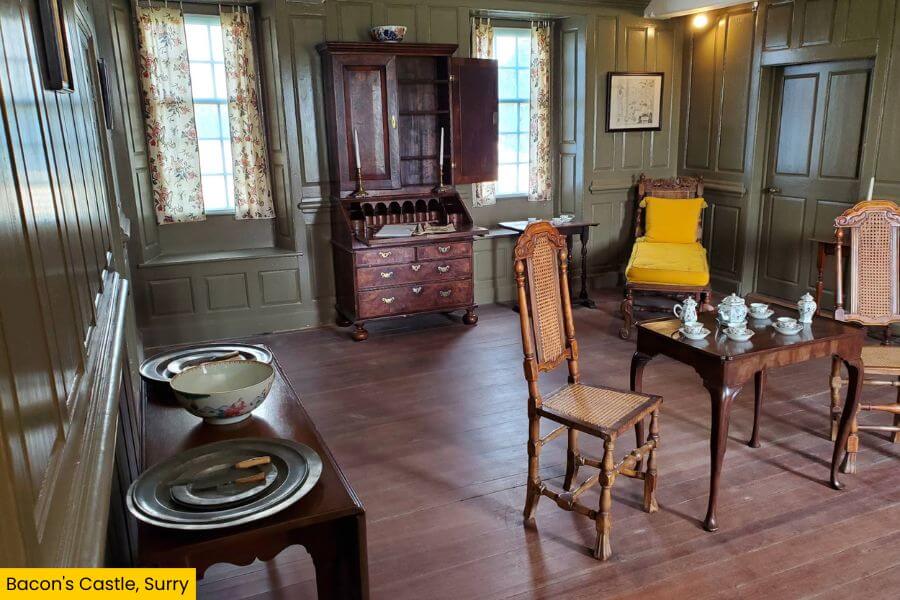
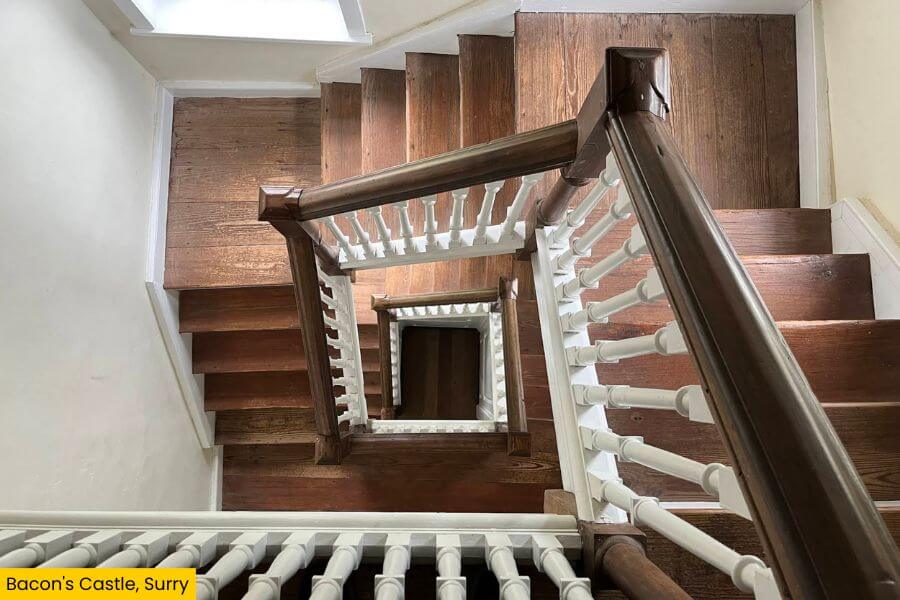
Today, you can take a guided tour inside and get a closer look at the rooms, 18th-century furnishings, and stories that bring its past to life.
Along the way, you’ll also learn about the enslaved and free Africans and African Americans who lived and worked here over generations.
Once the tour wraps up, continue your visit by exploring the historic grounds.
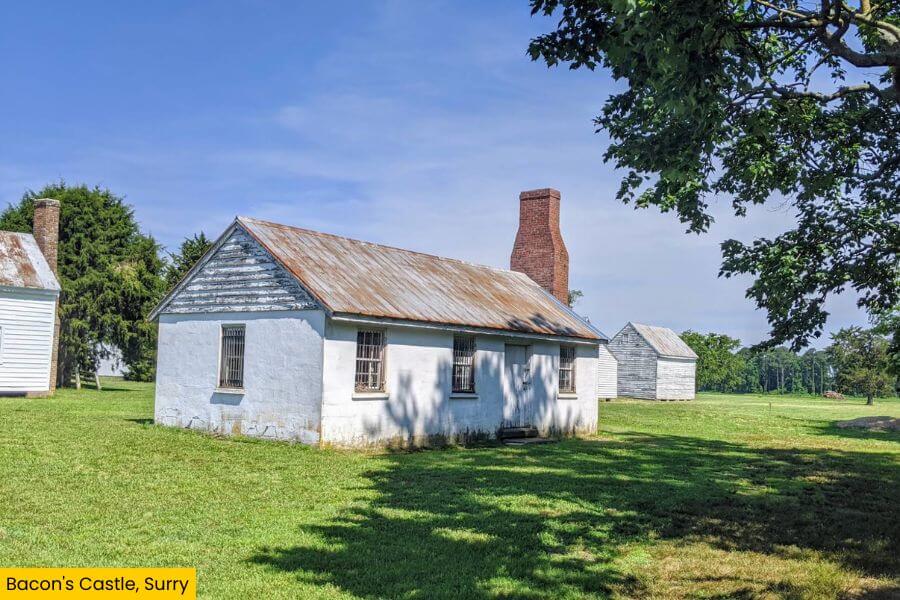
You can walk through the 17th-century English formal garden and see several surviving historic outbuildings scattered around the site.
Among them are an 1820s smokehouse, an 1830 slave dwelling, and a barn dating back to around 1700.
Altogether, Bacon’s Castle offers plenty to explore while giving you a deeper look at how this corner of Virginia has changed over more than 350 years.
Know Before You Go
Hours and Admission
You can tour the inside of Bacon’s Castle from March through December on Fridays and Saturdays from 10 a.m. to 5 p.m. and Sundays from noon to 5 p.m.
During June, July, and August, you can also visit on Thursdays from 10 a.m. to 5 p.m.
Guided tours of the house last about 45 minutes and are available during regular operating hours, while group and private tours can be arranged year-round.
Admission is $15 for adults, with discounts for seniors 60+, military members, and students, while children under 6 and Preservation Virginia members enter free.
How Long to Spend and Visit Tips
Plan on spending about 1.5 hours at Bacon’s Castle if you want enough time to tour the house, explore the grounds, and photograph that fantastic 1665 brick exterior.
Since part of your visit will be outdoors, comfortable walking shoes are a good idea, especially if you plan to explore everything at a relaxed pace.
It’s also worth coming prepared since Surry County is very rural, with limited restaurants, gas stations, and shops near the site.
Consider grabbing food, filling up your tank, and picking up anything else you need before heading into the countryside, especially later in the day.
Things to Do Nearby
If you have more time to explore, several nearby attractions are worth adding to your trip.
About a 10-minute drive away, Chippokes State Park offers hiking trails, picnic areas, a swimming pool, and the Chippokes Farm and Forestry Museum.
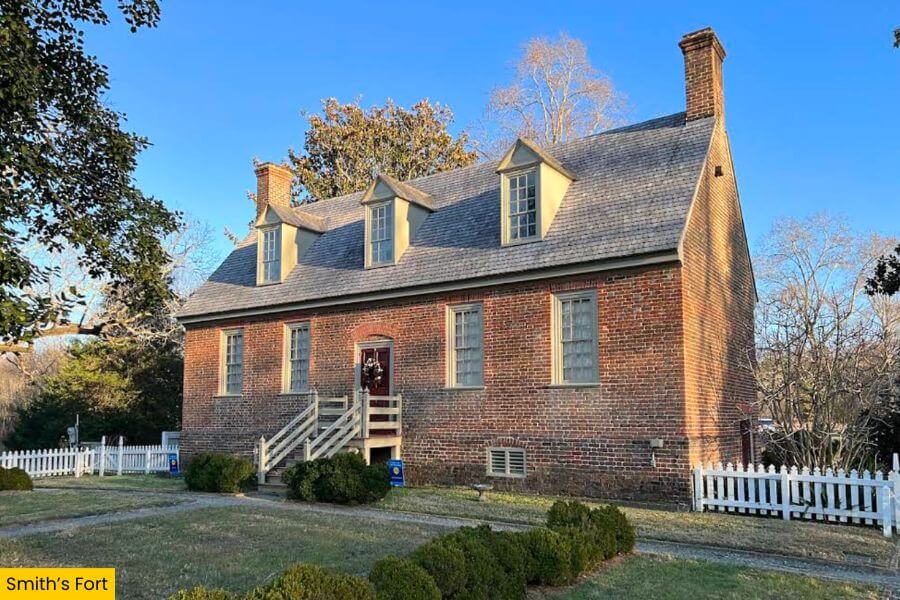
Another great stop is Smith’s Fort, just 15 minutes away, where you can tour the circa-1765 house and see the remains of Captain John Smith’s unfinished fort from 1609.
For a longer side trip, cross the James River by ferry to Historic Jamestowne, where you can explore James Fort, the Memorial Church, and the Archaearium museum.
Related Posts