Some places change so much that it’s hard to recognize what made them special in the first place.
But one small Maryland town has managed to hold onto the traditions, waterfront culture, and way of life that many locals say has disappeared from much of the state.
Instead of crowded tourist attractions and flashy new developments, you’ll find working docks, fresh seafood pulled straight from the Chesapeake Bay, and generations of families whose lives still revolve around the water.
It feels like stepping into a part of Maryland that refuses to be left behind.
If you’ve been searching for a place that still captures the state’s true character, this hidden corner of the Eastern Shore might surprise you.
Where Is It?
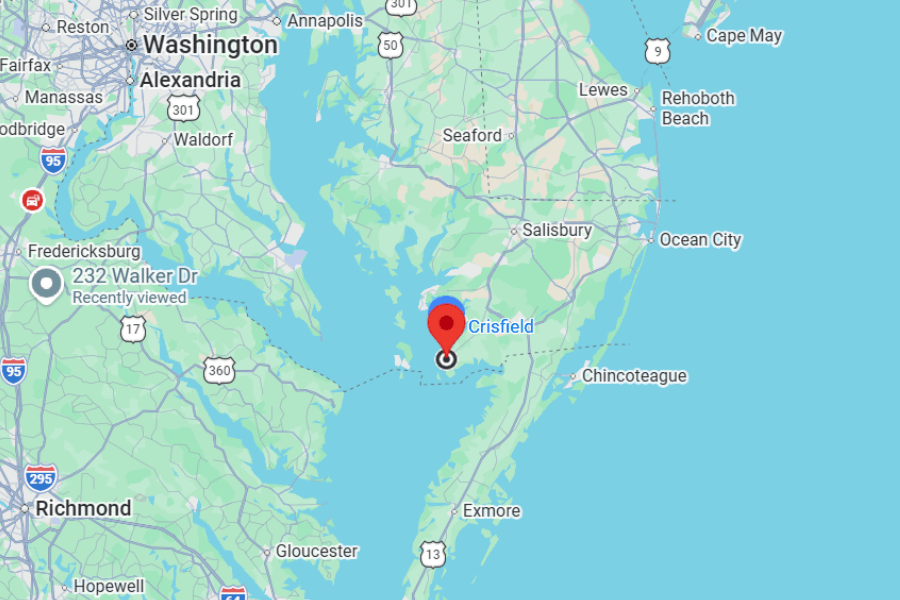
Crisfield is located on Maryland’s lower Eastern Shore in Somerset County, right along the Tangier Sound at the edge of the Chesapeake Bay.
You’ll find it about 2 hours and 45 minutes from Baltimore, around 3 hours from Washington, D.C., about 2 hours and 20 minutes from Annapolis, and roughly 40 minutes from Salisbury.
Its remote location is a big reason it still feels so different from much of the rest of Maryland, with miles of marshland, working waterfronts, and water in nearly every direction.
About
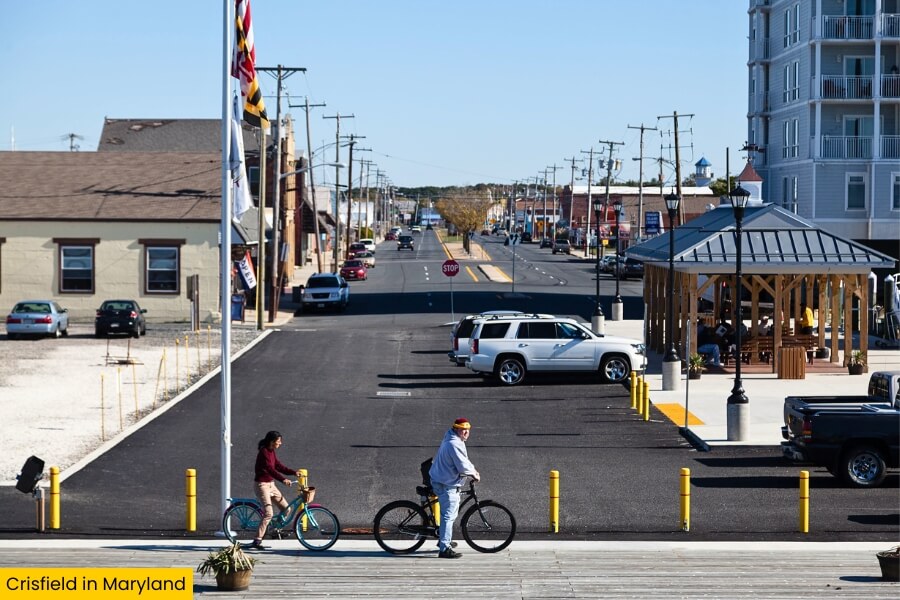
Crisfield is a small waterfront town that has earned the nickname “The Crab Capital of the World” thanks to its long connection to the Chesapeake Bay’s blue crab industry.
For generations, watermen have headed out before sunrise to harvest blue crabs, oysters, and fish from the surrounding waters, and commercial seafood is still a huge part of daily life here.
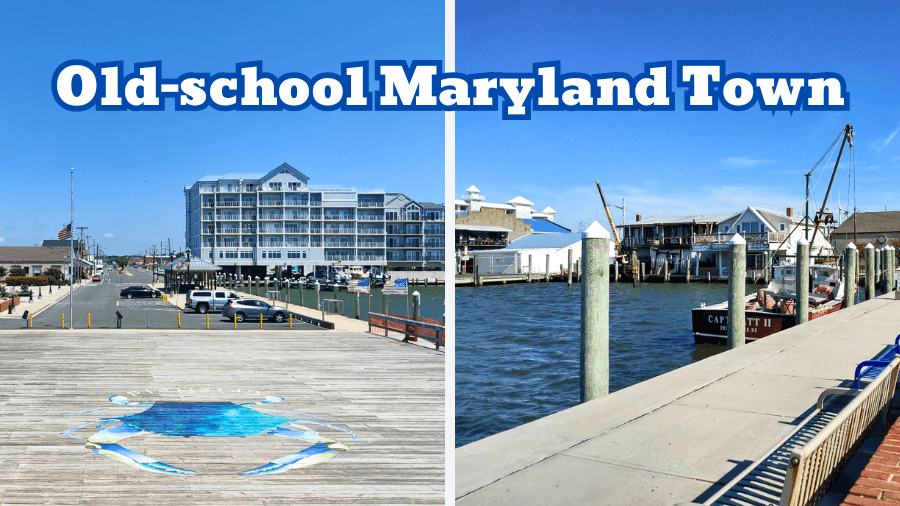
Unlike many Chesapeake Bay towns that have shifted toward resorts, upscale marinas, or busy vacation developments, Crisfield remains a working fishing community where you’ll still see crab boats tied up along the docks and locals unloading fresh catches.
The downtown area is compact and easy to explore, with marinas, seafood restaurants, historic buildings, and small local businesses sitting just a short walk from the waterfront.
You’ll quickly notice that life moves at a slower pace here.
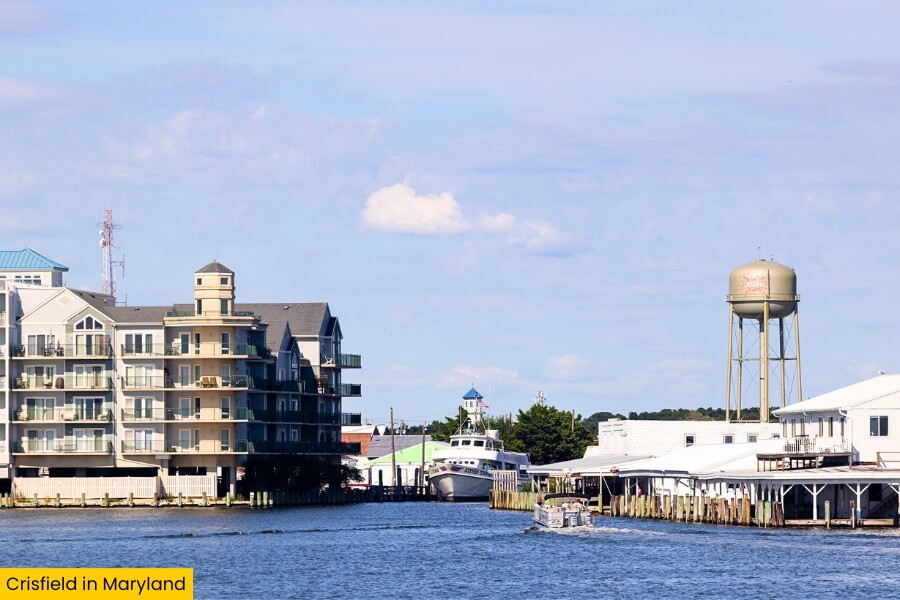
Instead of crowded boardwalks or busy shopping districts, you’ll find quiet streets, fishing boats coming and going, and waterfront views that stretch across the Tangier Sound.
The town also serves as the main gateway to Smith Island, Maryland’s only inhabited offshore island that can only be reached by boat.
Passenger ferries leave from Crisfield’s harbor, making the town the starting point for one of the state’s most unique day trips.
Crisfield has deep roots dating back to the 1600s, although it grew rapidly during the 1800s when expanding rail service and a booming seafood industry transformed it into one of the busiest seafood ports on the East Coast.
At its peak, millions of oysters were processed here each year, and the waterfront was lined with oyster houses, packing plants, and shipping businesses sending seafood across the country.
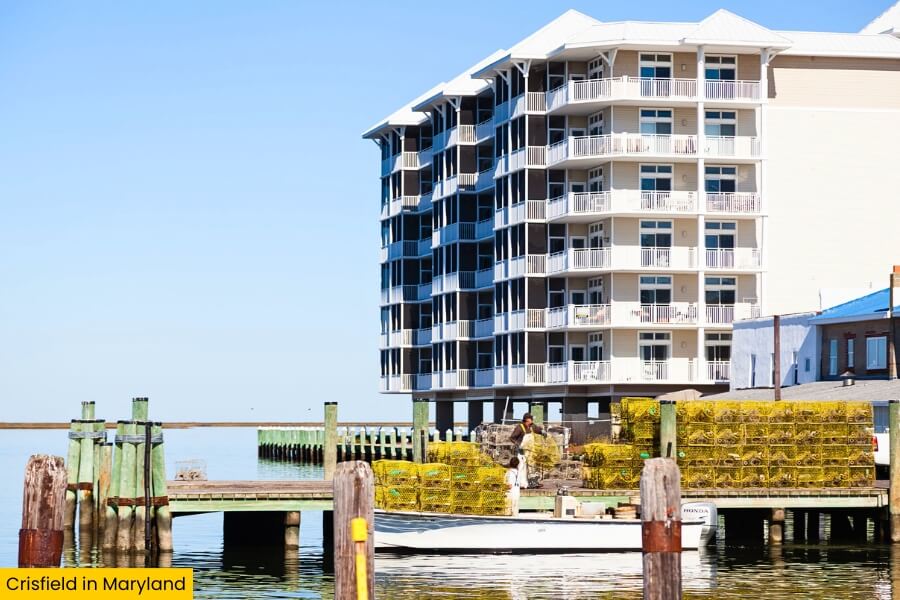
Although the seafood industry is smaller than it once was, it still shapes the town’s identity in a way that’s becoming increasingly rare around the Chesapeake Bay.
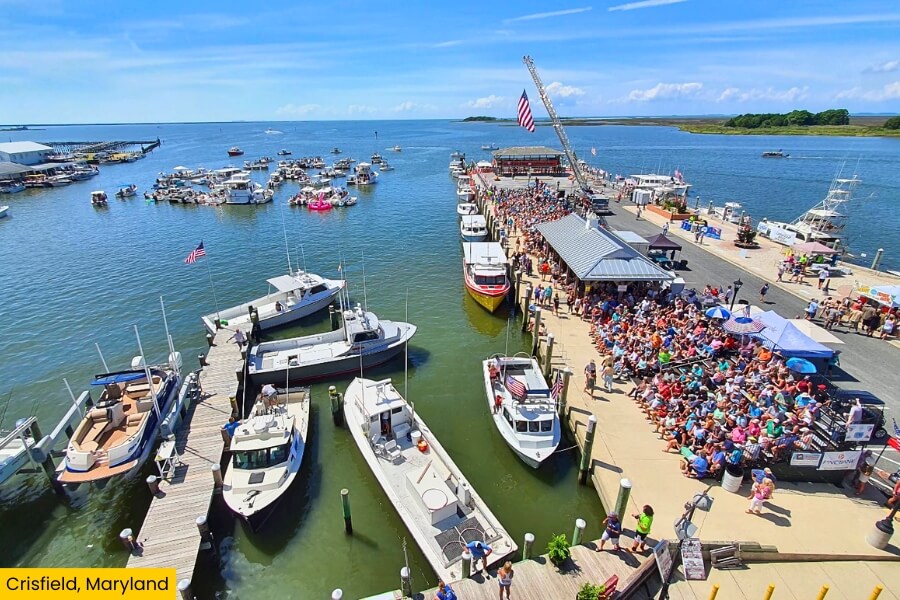
If you visit in late summer, you’ll catch one of Crisfield’s biggest traditions, the National Hard Crab Derby.
Held every Labor Day weekend since 1947, the festival features crab races, crab picking contests, boat docking competitions, parades, live music, carnival rides, fireworks, and plenty of fresh local seafood.
You’ll also find that water is never far away.
The Tangier Sound borders much of the town, and marshes, creeks, and small harbors create constantly changing views filled with sailboats, fishing vessels, and seabirds.
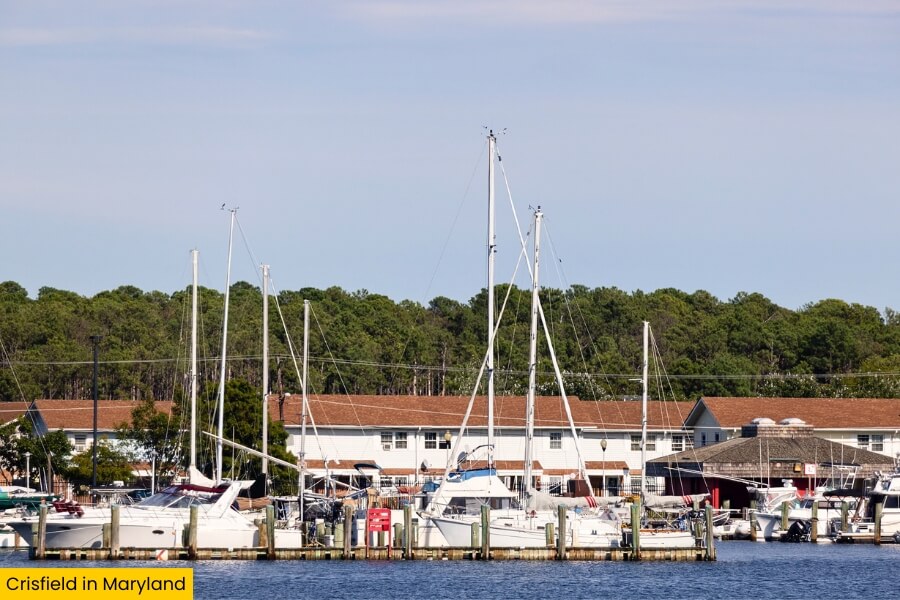
Don’t expect a polished tourist destination packed with attractions on every corner.
Crisfield feels authentic because it still revolves around the bay, the people who make a living from it, and traditions that have been passed down for generations.
If you’re looking for a place that shows what Maryland’s Eastern Shore has been like for decades, Crisfield delivers one of the most genuine experiences you’ll find anywhere in the state.
Things To Do
Start your visit at the Crisfield City Dock, where you’ll get the best look at the town’s working waterfront.
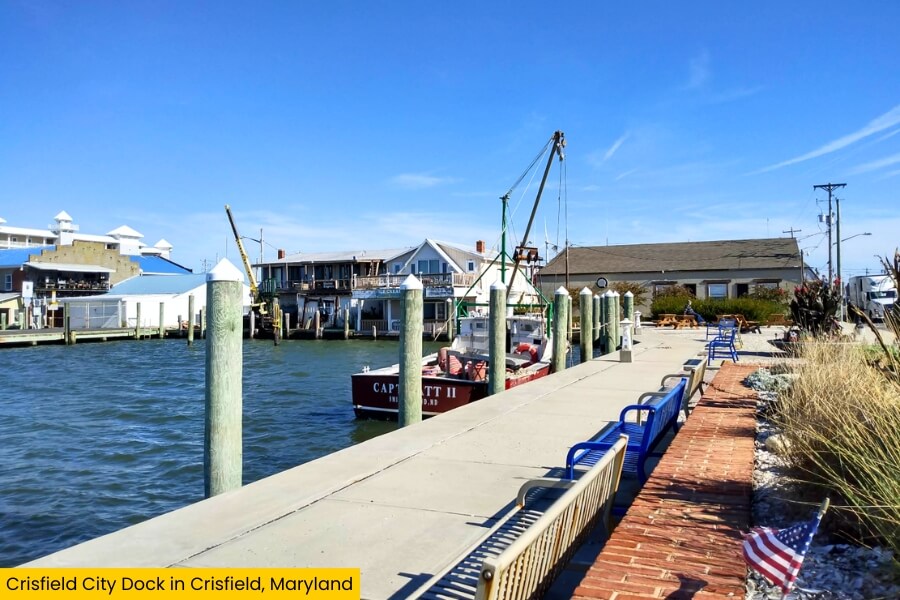
Fishing boats, charter boats, and private vessels come and go throughout the day, giving you a front row seat to one of Maryland’s busiest working seafood harbors on the Chesapeake Bay.
If you have time for just one adventure, hop aboard the Smith Island Ferry.
The trip across the Tangier Sound takes about 45 to 60 minutes each way and brings you to Maryland’s only inhabited offshore island.
Once there, you can explore tiny fishing villages, ride a bike along quiet roads, and grab a slice of the state’s famous Smith Island Cake.
Also in Crisfield, walk the J Millard Tawes Historical Museum if you want to learn how the seafood industry shaped the town.
The museum features exhibits on local watermen, oyster harvesting, blue crabbing, and the history of Somerset County.
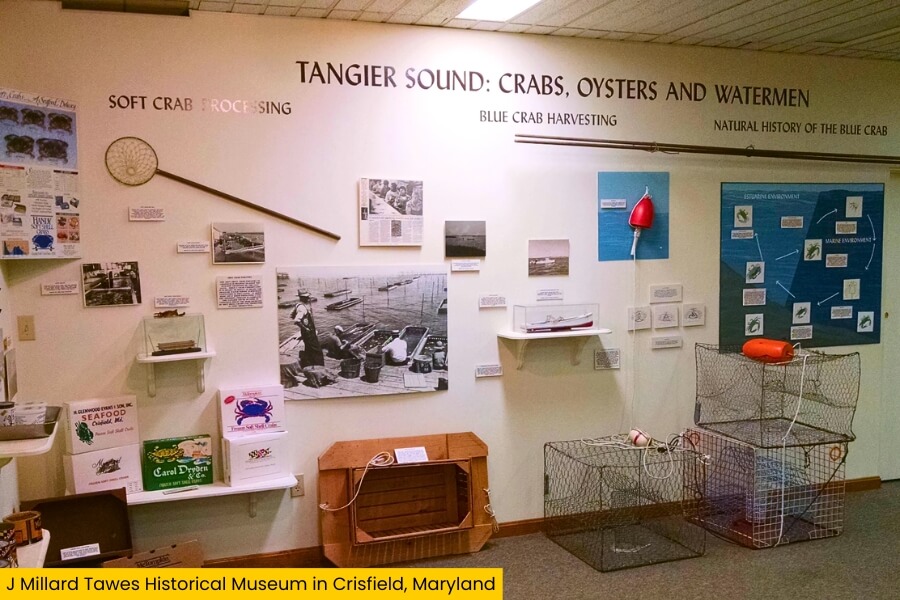
Spend some time strolling through downtown, where you’ll find locally owned shops, seafood markets, murals, and historic buildings just a few blocks from the harbor.
Stop by one of the seafood markets to pick up fresh blue crabs, oysters when they’re in season, soft-shell crabs, or locally caught fish.
If you’d rather let someone else do the cooking, order a traditional Maryland crab feast or a crab cake made with local blue crab at one of the waterfront restaurants.
Nature lovers should head to Janes Island State Park, located just a few minutes from downtown.
The park protects more than 2,900 acres of salt marsh and over 30 miles of water trails that weave through narrow creeks and open bays.
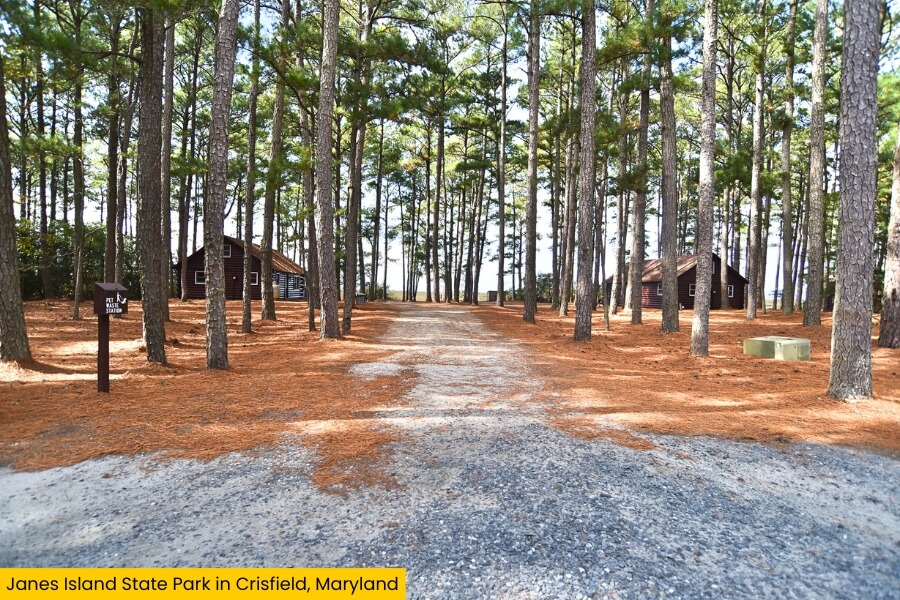
Rent a kayak or canoe and paddle through the winding marsh channels, where you’re likely to spot great blue herons, egrets, osprey, bald eagles, and diamondback terrapins.
If you’d rather stay on land, the park also has several short hiking trails, picnic areas, a campground, and a small beach overlooking the bay.
Book a fishing charter if you want to experience the Chesapeake Bay like a local.
Depending on the season, you can target striped bass, speckled trout, flounder, croaker, and other popular species in the surrounding waters.
If you’re interested in crabbing, several local captains also offer trips where you can learn about traditional Chesapeake Bay crabbing methods, including trotlines and crab pots.
Bring your binoculars for birdwatching around the marshes and waterfront.
The surrounding wetlands attract hundreds of species throughout the year, making this one of the best birding areas on Maryland’s Eastern Shore.
Plan your trip around Labor Day weekend if you can.
The National Hard Crab Derby fills the town with crab races, boat docking contests, live music, carnival rides, seafood vendors, parades and fireworks.
Before you leave, stop by a local bakery or restaurant for a slice of Smith Island Cake.
Maryland’s official state dessert features eight to ten thin layers of yellow cake separated by rich chocolate frosting, making it the perfect sweet ending to a day on the Eastern Shore.
Related Posts