
North Carolina’s coast has plenty of famous stops, but one tiny waterfront town has been quietly sitting here for more than 300 years.
Founded in 1705, it holds the title of the state’s oldest incorporated town, yet its population is still measured in the hundreds.
You won’t find packed boardwalks, towering hotels, or busy shopping streets here.
Instead, you’ll find 18th-century buildings, peaceful creeks, centuries-old churches, and stories involving pirates, colonial merchants, and even a legendary curse.
It’s the kind of place you could easily pass on the way to a bigger destination without realizing just how much history is hiding beside the water.
Keep reading, because this tiny coastal community has some seriously cool stories waiting around its quiet streets.
Where Is It?
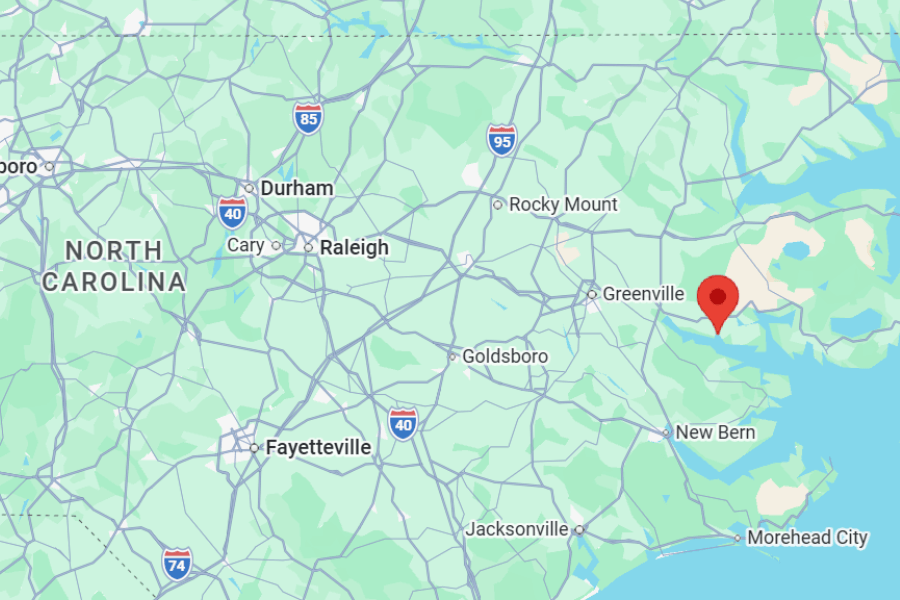
Bath is located in Beaufort County in eastern North Carolina, right along Bath Creek near the Pamlico River.
This tiny waterfront town sits about 20 minutes from Washington, North Carolina, roughly 1 hour and 55 minutes from Raleigh, and about 2.5 hours from Wilmington by car.
Greenville, the closest larger city, is around 45 minutes away, making Bath an easy detour if you’re exploring North Carolina’s Inner Banks.
About
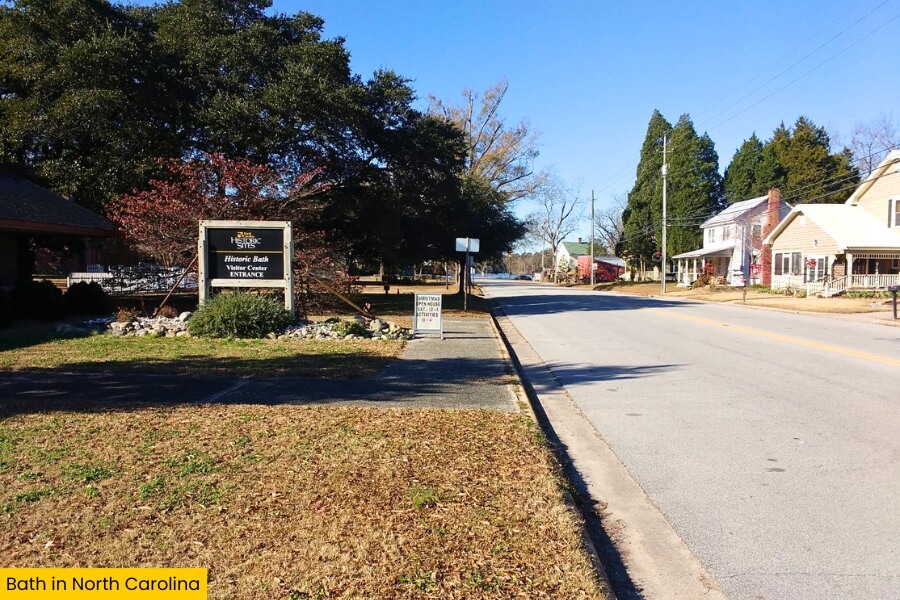
Bath may be tiny today, but this little waterfront town has a seriously big place in North Carolina history.
Founded in 1705, Bath is recognized as the oldest incorporated town in North Carolina and was the colony’s first official port of entry in 1716.
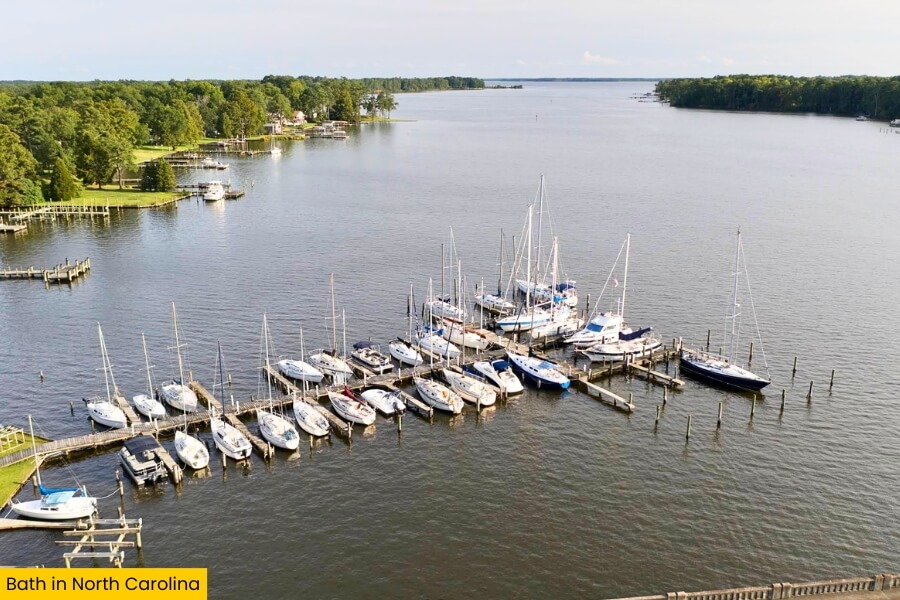
The town developed along Bath Creek, which connects with the Pamlico River and gave early settlers access to the waterways that served as eastern North Carolina’s main transportation routes.
Bath even became North Carolina’s first incorporated town in 1705, back when the surrounding region was still part of the Province of Carolina.
For a short time, it looked like Bath might grow into one of the colony’s major towns.
Its location made it useful for trade, government business, and shipping, but Bath never developed into a large city.
That turned out to be great news for anyone who loves historic places that still look and feel small.
Bath covers less than 1 square mile, and the 2020 U.S. Census counted just 245 residents.
Instead of busy commercial streets, you’ll find quiet roads, historic homes, huge trees, grassy properties, and views across Bath Creek.
There are no traffic-packed downtown blocks or rows of chain restaurants here.
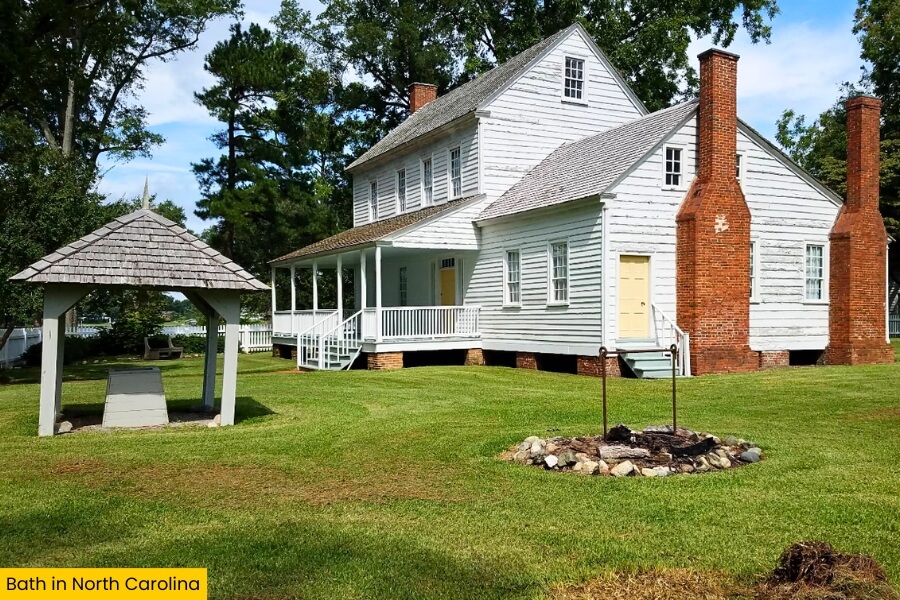
The town’s biggest claim to fame is its collection of buildings and sites connected to colonial North Carolina.
Some structures date to the 1700s, giving you a chance to see architecture from a period when Bath was still a young port settlement.
The Bath Historic District is listed on the National Register of Historic Places and includes dozens of historic buildings spread throughout the compact community.
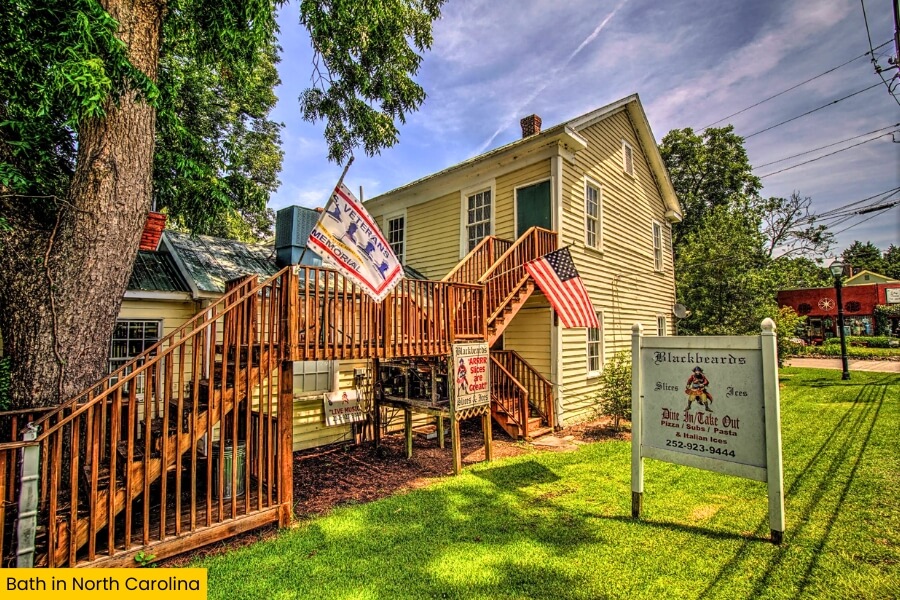
Bath also has a connection to Edward Teach, better known as Blackbeard.
The famous pirate operated along the North Carolina coast during the early 1700s and received a royal pardon in Bath in 1718.
According to historical accounts, Blackbeard spent time in and around the town before returning to piracy.
His story ended later that same year when he was killed during a battle with British naval forces near Ocracoke Island on November 22, 1718.
Bath has another fascinating connection to colonial-era controversy through Reverend George Whitefield, one of the best-known preachers of the Great Awakening.
Local legend claims Whitefield was frustrated by the town’s reception to his preaching and placed a curse on Bath, declaring that it would never prosper.
The details of that story have been debated, but the legend has stuck around for generations and has become part of Bath folklore.
And Bath certainly stayed small.
More than 300 years after its founding, you can still cross the community in just a few minutes.
It sits on the Inner Banks rather than directly on the Atlantic Ocean, so you won’t find an oceanfront beach here either.
What you do get is a remarkably quiet look at colonial North Carolina, with historic buildings standing just a few blocks from the water.
You can hear birds along Bath Creek, watch boats move through the surrounding waterways, and walk streets that follow the footprint of a town established more than three centuries ago.
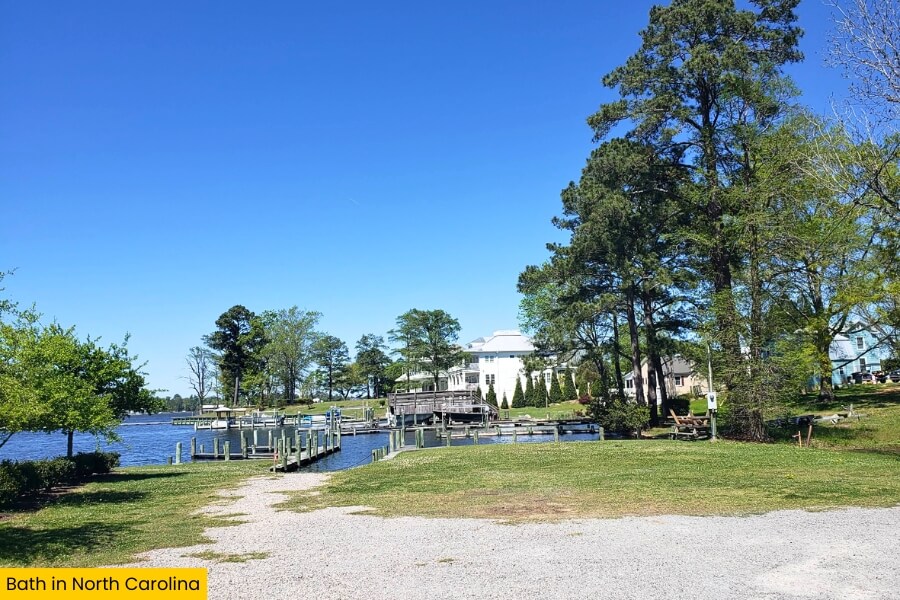
For such a tiny dot on the map, Bath packs more than 300 years of pirates, colonial politics, waterfront history, old architecture, and local legends into an impressively small space.
Things To Do
Once you’re ready to start exploring, head straight for Historic Bath State Historic Site, which brings several of the town’s most important landmarks together within an easy-to-walk area.
Start at the Historic Bath Exhibit Center at 100 Harding Street, where you can pick up information about the historic district, check current tour availability, and get your bearings before wandering around town.
Admission to the historic site is free, but guided historic-house tours require a ticket, and access to individual buildings may depend on staffing and operating hours.
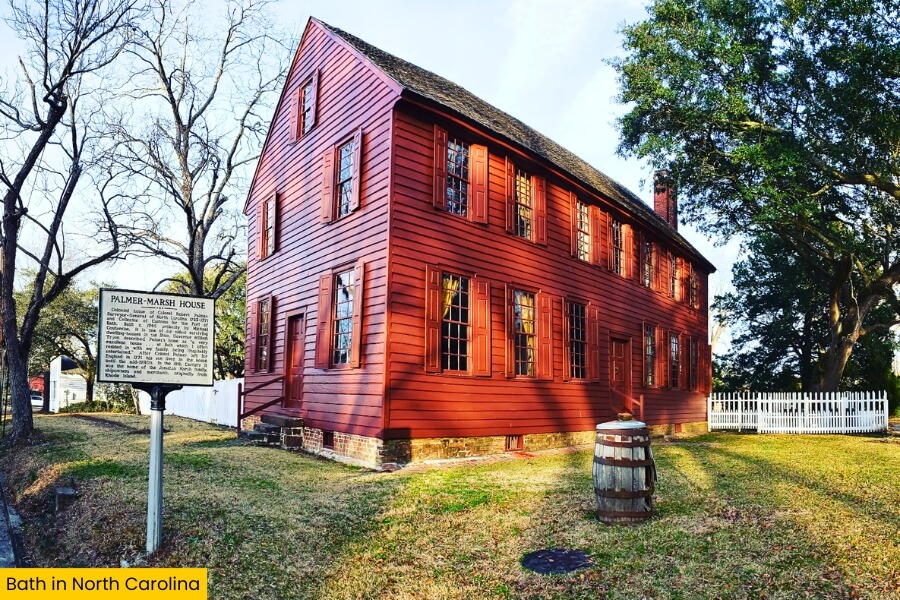
One of the biggest highlights is the Palmer-Marsh House, an impressive colonial home built around 1751.
The two-story house was built by merchant Michael Coutanch, and Robert Palmer later made it his home.
Palmer went on to serve as a colonial official, while the house’s size gives you a pretty good idea of just how successful Bath’s merchants could become.
Inside, period furnishings and exhibits help show what domestic life looked like for a wealthy family in colonial North Carolina.
Next, check out the Bonner House, which was built around 1830 and overlooks Bath Creek.
The house is connected to the Bonner family, whose members played an important role in the community for generations.
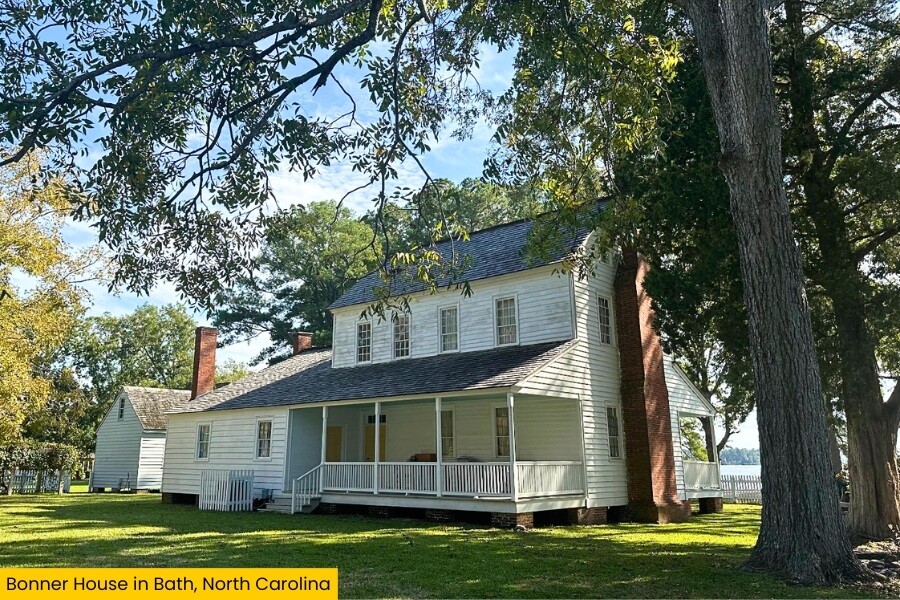
Its waterfront setting is especially pretty, so give yourself a few extra minutes to walk around the grounds and look across the creek.
The Van Der Veer House is another historic building worth seeing while you’re in the area.
Dating to around 1790, it adds another chapter to Bath’s architectural story and helps show how homes changed as the community moved beyond the colonial period.
Then make your way to St. Thomas Episcopal Church at 101 Craven Street.
Built in 1734, St. Thomas is the oldest surviving church building in North Carolina, so this little brick church is a pretty big deal.
Step inside when the church is open, then walk through the adjoining cemetery to see old gravestones connected to generations of Bath residents.
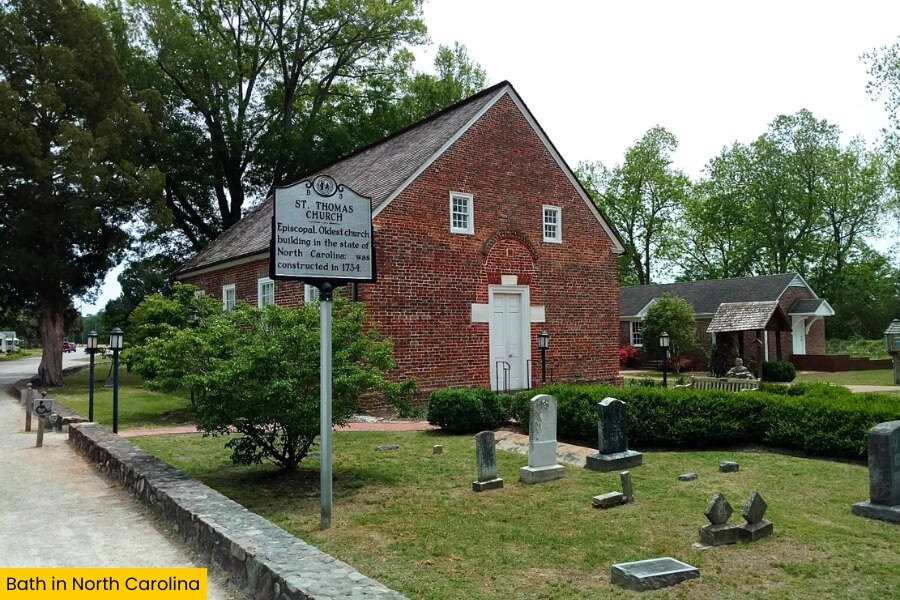
The churchyard also contains a bell cast in 1732 and purchased for the church through Queen Anne’s Bounty, adding another small but fascinating detail to the stop.
From there, take a self-guided walk through the Bath Historic District.
Keep an eye out for historical markers along the way because they fill in stories that are easy to miss when you’re simply admiring the old buildings.
Make time for the waterfront, too.
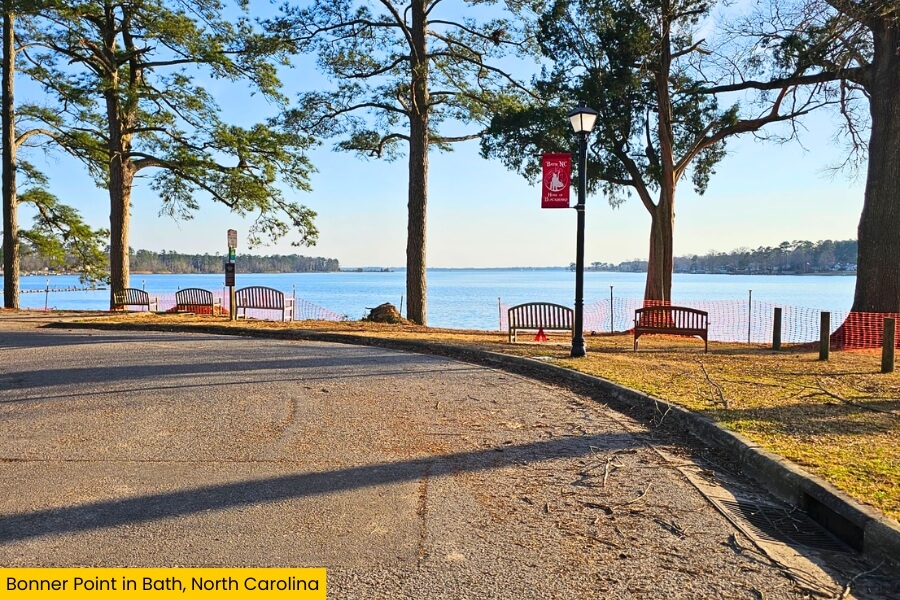
Bonner Point is a small public park at the end of Main Street where Bath Creek meets Back Creek, and it’s one of the best spots in town to sit near the water.
Bring lunch, grab a bench, or simply hang out for a while and watch fishing boats and recreational boats pass through the creek.
If you have a kayak, canoe, or paddleboard, Bath Creek offers you another way to see the community.
Launching onto Bath Creek puts you on the same network of waterways that connects with the much larger Pamlico River.
Conditions can change with wind, tides, and boat traffic, so check the weather before heading out and wear a personal flotation device.
Fishing is another easy way to spend time around Bath.
The brackish waters of Bath Creek and the nearby Pamlico River support species such as striped bass, red drum, speckled trout, and flounder, although catches vary by season and location.
Check current North Carolina Wildlife Resources Commission and Division of Marine Fisheries regulations before casting because license requirements, seasons, and size limits can change.
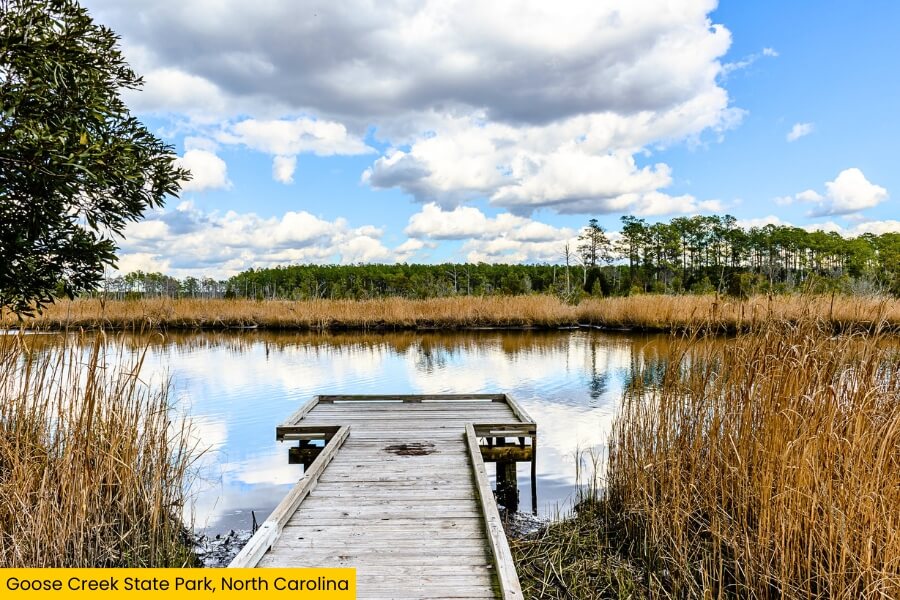
If you have extra time and a car, Goose Creek State Park is an excellent addition to your Bath trip.
The park is less than 15 minutes away from Bath and protects more than 1,600 acres along the Pamlico River and Goose Creek.
You can explore several short hiking trails through wetlands, pine forest, and areas lined with Spanish moss.
The 2.5-mile Goose Creek Trail is one of the longer walking options in the park, while shorter routes such as the 0.5-mile Palmetto Boardwalk Trail make it easy to squeeze in a quick nature walk.
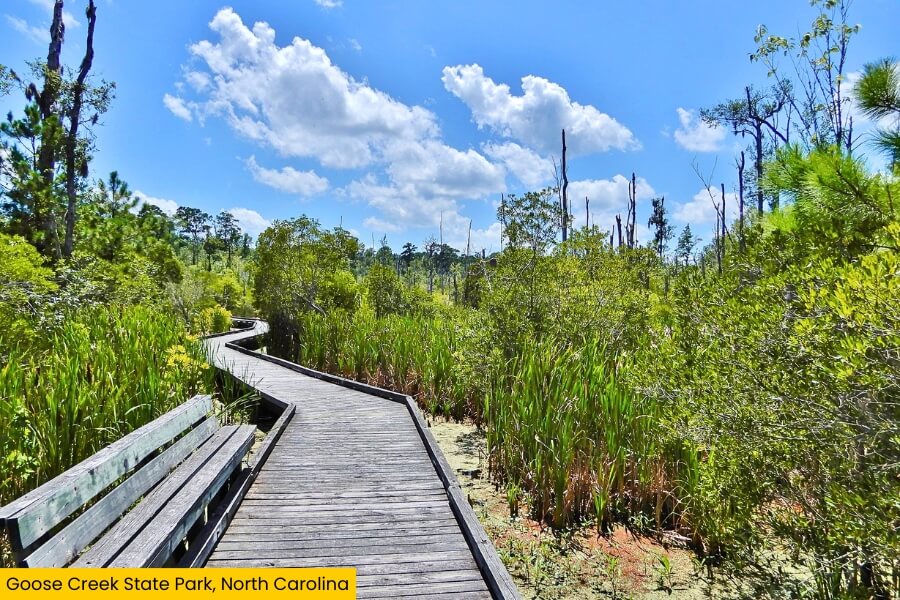
The park also has a sandy swimming area on the Pamlico River, paddling access, picnic facilities, and a visitor center with exhibits about the local ecosystem.
Bath is small enough to explore in a few hours, but adding Goose Creek State Park, paddling, or fishing can easily turn your visit into a full-day eastern North Carolina adventure.
Related Posts