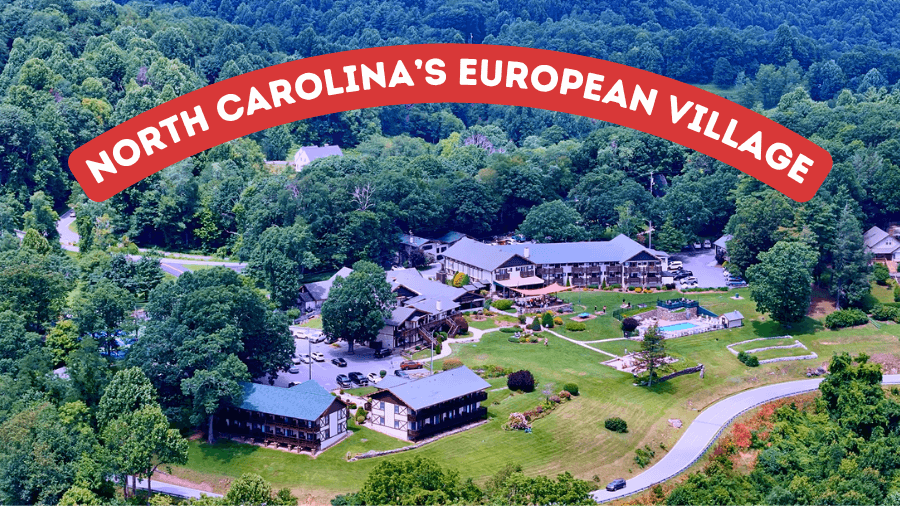
You don’t need a passport or an expensive plane ticket to find a little taste of Europe in the North Carolina mountains.
High in the Blue Ridge Mountains, there’s a tiny village where winding roads, sweeping mountain views, and European-inspired touches make an ordinary road trip much more interesting.
The community has been drawing travelers for more than 100 years, yet it’s still small enough that plenty of people drive right past without knowing what they’re missing.
Come for the mountain scenery, and you can spend your day exploring, tackling a road with nearly 200 curves, and stopping for some seriously good food.
So, where exactly is this unusual little mountain village, and what makes it worth pulling off the highway to explore?
Where Is It?
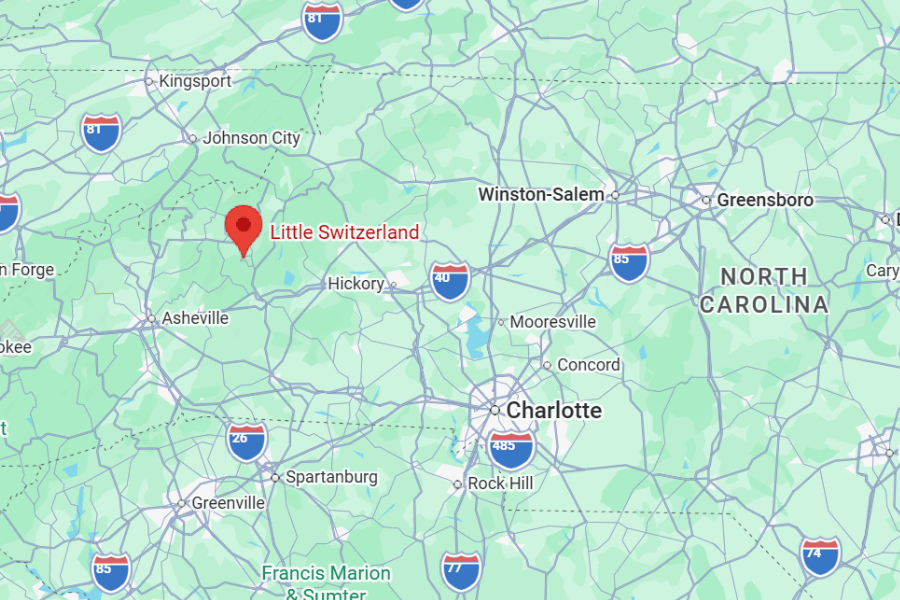
Little Switzerland is a tiny mountain village in western North Carolina, located along the Blue Ridge Parkway at Milepost 334 in McDowell and Mitchell counties.
It sits about a 1-hour drive from Asheville and nearly 2 hours from Charlotte.
From Boone, you’re looking at a drive of about 1 hour, making Little Switzerland an easy stop on a Blue Ridge Mountains road trip.
About
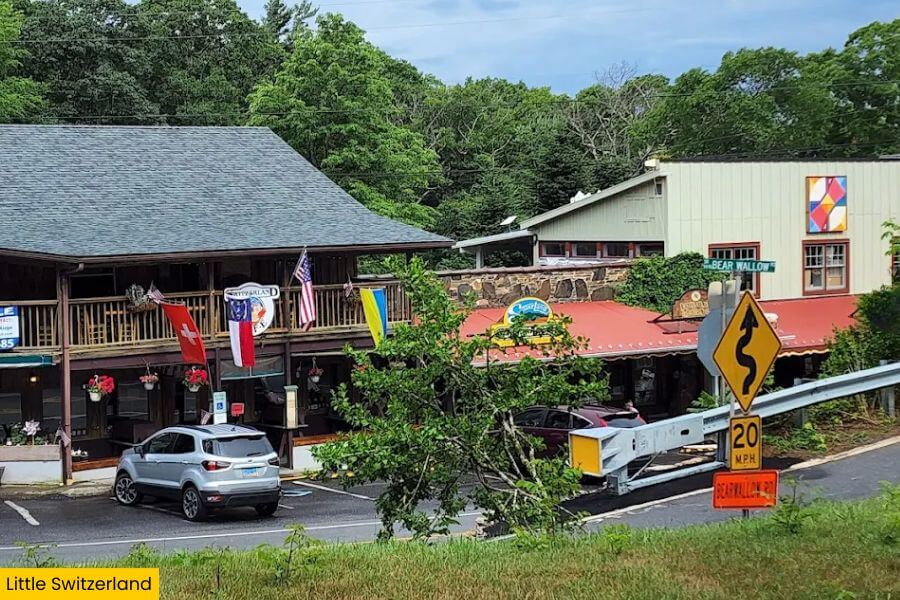
Little Switzerland may be tiny, but this mountain village has been catching the attention of Blue Ridge travelers for more than a century.
The community sits at an elevation of nearly 3,500 feet, with steep mountains, deep valleys, and long-distance views stretching across western North Carolina.
Its high elevation also means temperatures are often cooler than in Asheville, Charlotte, and other lower-elevation parts of the state, especially during summer evenings.
The village dates back to 1909, when North Carolina Supreme Court Justice Heriot Clarkson began developing the area as a summer retreat.
Clarkson thought the surrounding mountains looked similar to the foothills of the Swiss Alps, which inspired the name Little Switzerland.
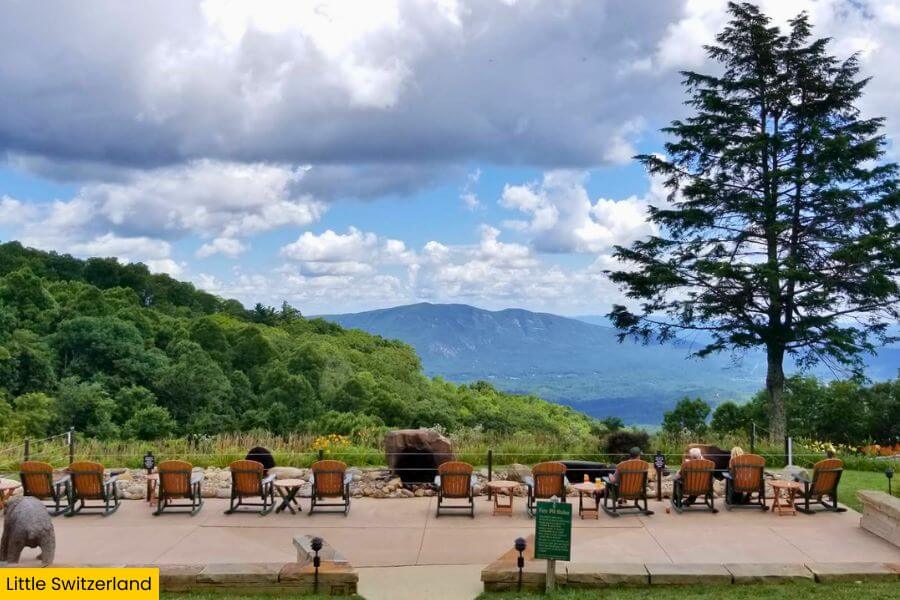
The European connection stuck, and the distinctive name still catches the attention of road-trippers who pull off the Blue Ridge Parkway today.
Don’t expect an actual Swiss town packed with centuries-old chalets and cobblestone streets.
Little Switzerland is a small North Carolina mountain community with Swiss-inspired touches, historic inns, and some seriously impressive Blue Ridge scenery.
There’s no sprawling downtown or endless rows of shops here, and that compact size is a huge part of its appeal.
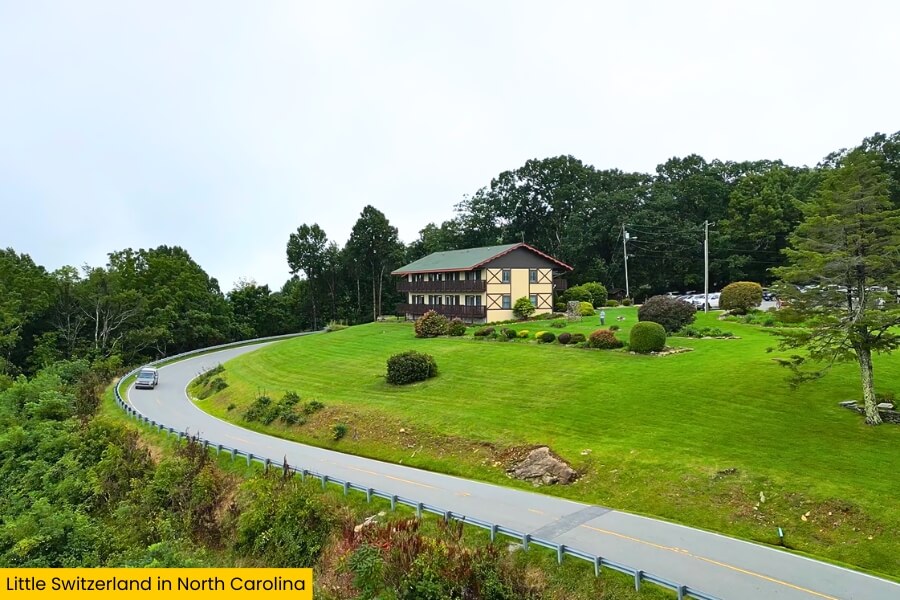
Little Switzerland is especially well known for its location directly beside the Blue Ridge Parkway at Milepost 334.
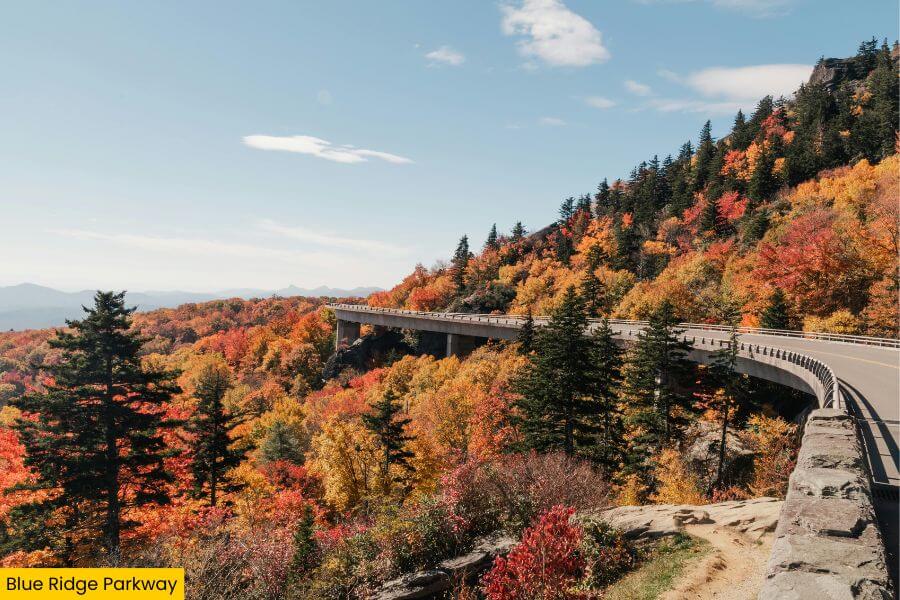
The 469-mile parkway connects Shenandoah National Park with Great Smoky Mountains National Park, putting the village right along one of America’s most famous scenic drives.
Mountain ridges seem to roll toward the horizon from this part of the parkway, so you’ll want your camera within easy reach.
The community is also closely tied to the historic Switzerland Inn, which traces its beginnings to the village’s early development in the 1910s.
The inn helped establish Little Switzerland as a mountain getaway long before modern tourism transformed western North Carolina.
That history still gives the village much of its identity today.
Another thing to know before visiting is that Little Switzerland is very small.
This isn’t the kind of destination where you park downtown and spend six hours wandering from block to block.
Instead, you’ll find a compact collection of accommodations, restaurants, shops, and mountain attractions surrounded by miles of Blue Ridge scenery.
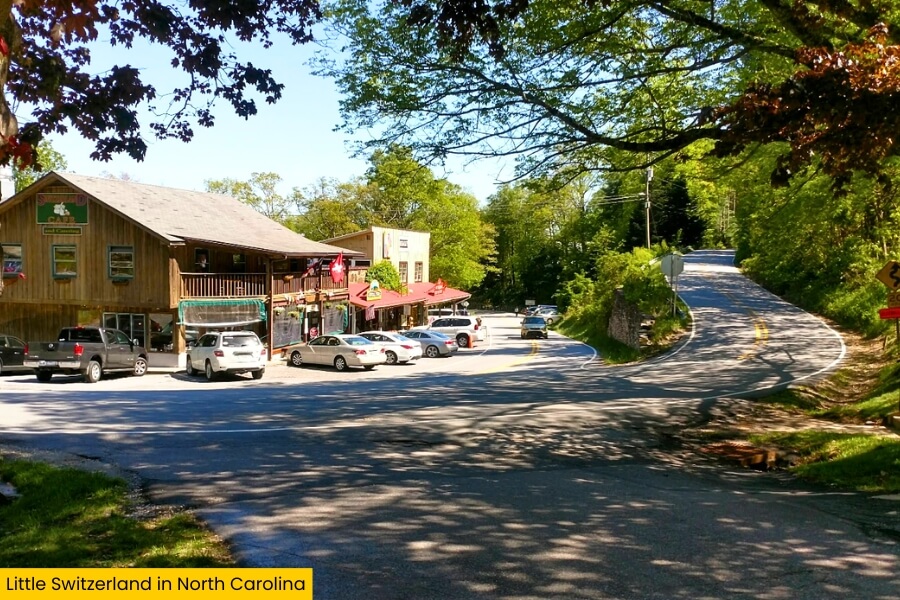
Fall is one of the most popular times to visit, when the surrounding forests turn shades of orange, yellow, and red.
Summer brings cooler mountain temperatures and long days for exploring, while spring adds blooming wildflowers and fresh green leaves to the surrounding slopes.
Some local businesses operate seasonally or keep reduced hours outside the main tourism season, so checking current opening dates before your trip is a smart move.
The mountain location also means the weather can change quickly.
Fog can cover sections of the Blue Ridge Parkway, and winter weather can lead to temporary parkway closures, particularly when snow and ice make higher-elevation roads unsafe.
If you’re visiting outside the warmer months, check National Park Service road conditions before heading out.
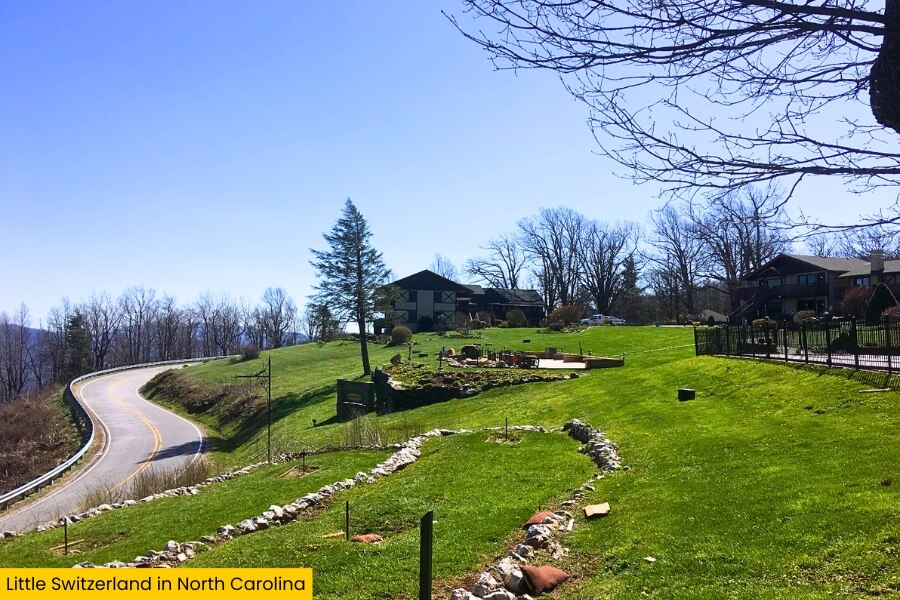
Little Switzerland works especially well as a scenic road-trip stop, a quiet overnight base, or a weekend escape into the Blue Ridge Mountains.
You get dramatic mountain views, an unusual Swiss-inspired backstory, and one of North Carolina’s most distinctive little communities without the crowds and development of a larger mountain town.
Things To Do
Once you’ve gotten your bearings, it’s time to see why such a small village can easily fill a full day or weekend.
Drive the Diamondback
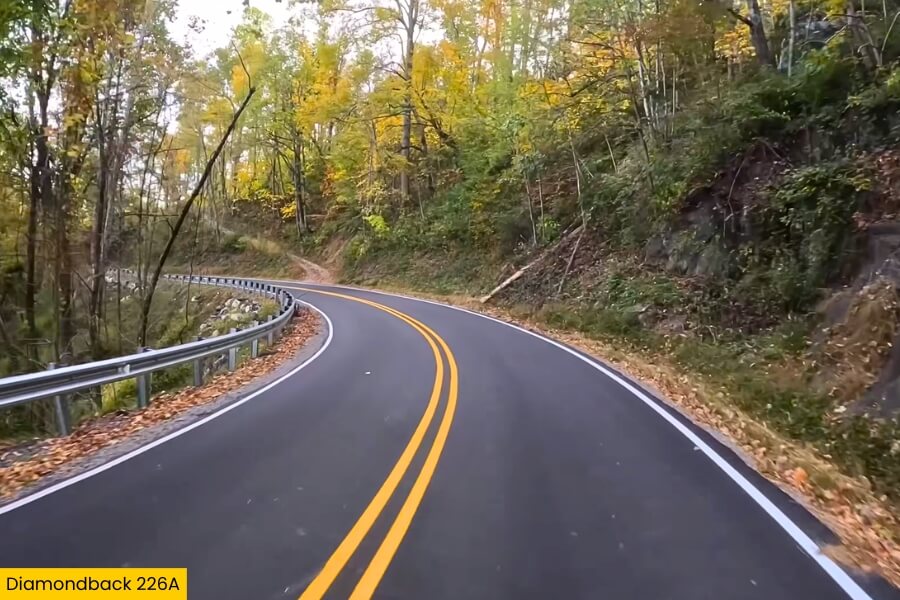
If twisting mountain roads are your idea of a good time, put the Diamondback 226A at the top of your list.
This famous driving route follows an approximately 12-mile stretch of NC Highway 226A between Little Switzerland and Marion.
The road packs in more than 190 curves, including tight switchbacks and steep elevation changes that make it especially popular with motorcyclists and sports-car drivers.
Take your time, watch for cyclists and motorcycles, and use designated pull-offs rather than stopping along the roadway for photos.
The curves demand your attention, but the forested mountains and occasional long-range views make the drive worth slowing down for.
Explore Emerald Village
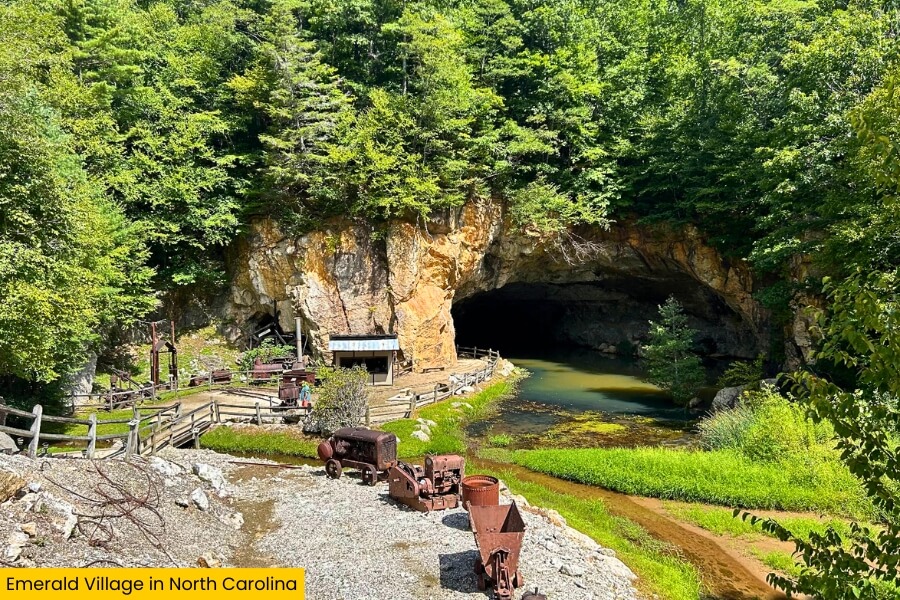
Take a short drive from Little Switzerland to Emerald Village, a collection of historic mining sites that shows off the area’s fascinating mineral-mining past.
The centerpiece is the Bon Ami Mine, where feldspar was once mined for use in Bon Ami cleaning powder.
You can take an underground mine tour and see old mining equipment, unusual rock formations, and displays explaining how minerals were extracted from these mountains.
The site also has an extensive collection of minerals and gems, including specimens that glow under ultraviolet light.
If you want something more hands-on, try gem mining and sift through buckets of material for colorful stones you can take home.
Emerald Village is particularly handy on a hot summer afternoon because heading underground gives you a break from the sun.
Check the current tour schedule before visiting because operating days and hours can change seasonally.
Browse the Shops in Little Switzerland
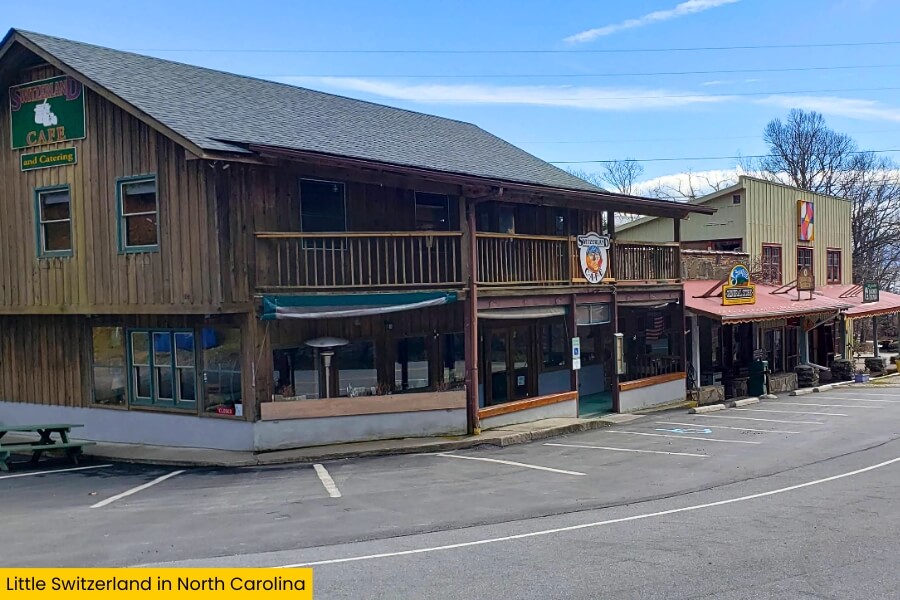
Little Switzerland has a handful of small shops where you can browse locally themed gifts, crafts, books, and souvenirs.
The Switzerland Cafe and General Store area is an easy place to stop while exploring the village.
Because the shopping area is compact, you can browse without turning it into an all-day mission.
It’s also a good chance to pick up a Little Switzerland souvenir, because explaining the name when you get home is half the fun.
Eat at Switzerland Cafe
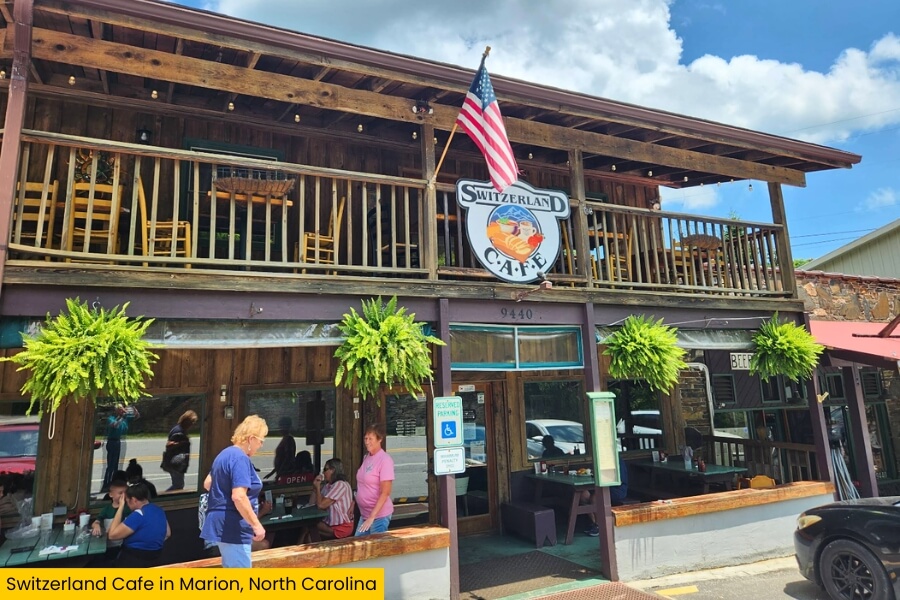
Switzerland Cafe is one of the best-known places to eat in the village and has been serving travelers for decades.
Barbecue is a major draw here, with meats cooked over wood for that smoky flavor that will have you drooling at the mouth.
Seasonal hours are common in this part of the mountains, so confirm that the cafe is open before building your entire lunch plan around it.
Relax at Switzerland Inn
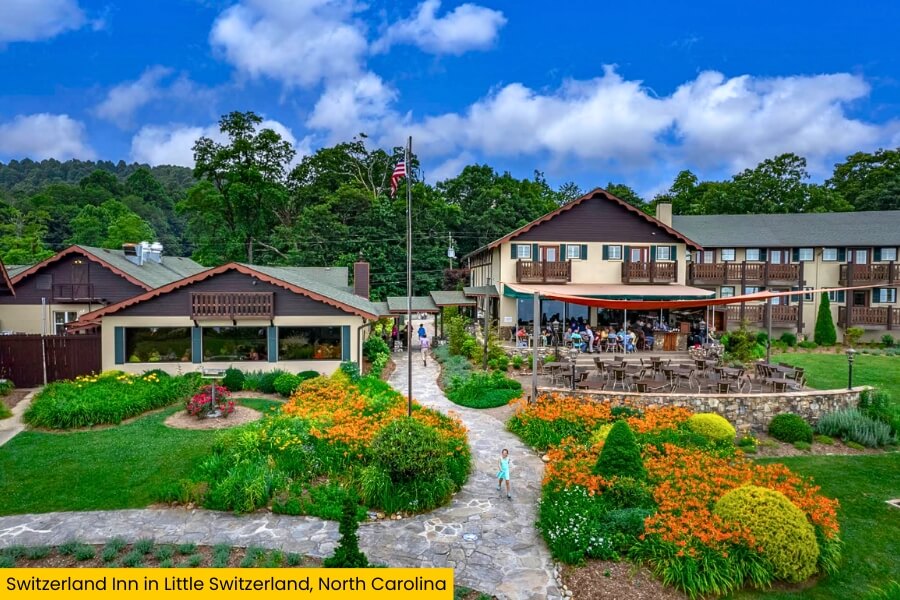
If you’re staying overnight, Switzerland Inn gives you a chance to slow the trip down instead of immediately jumping back in the car.
Grab a meal, find a spot overlooking the mountains, and give yourself some time to enjoy the scenery without rushing.
The property has long-range mountain views that are particularly good around sunset.
Even if you pack your day with winding roads, mines, and overlooks, leaving a little unscheduled time here is a very good idea.
Visit Linville Falls
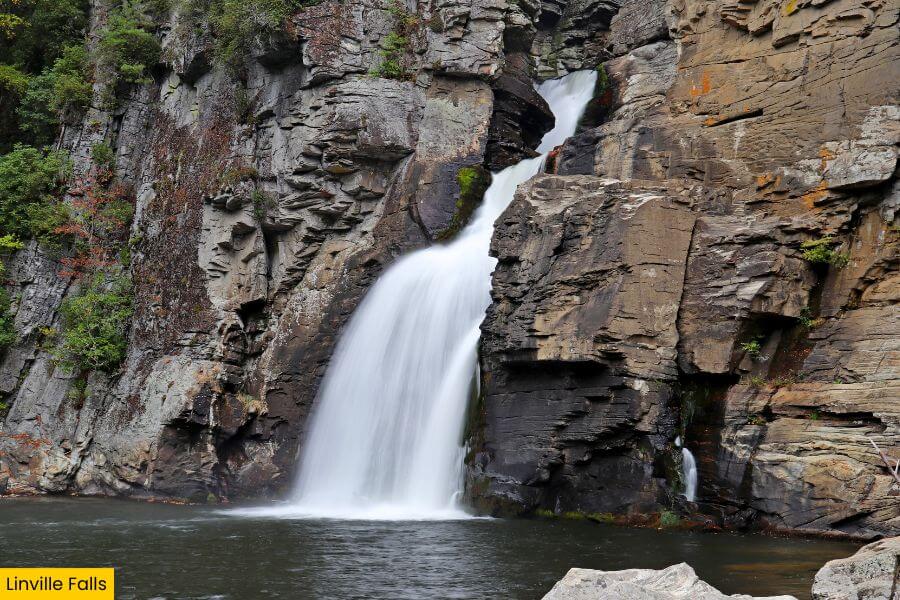
It’s just a 30 minute drive to Linville Falls, one of the most famous waterfalls in North Carolina.
The Linville River plunges roughly 90 feet through a narrow gorge before continuing into Linville Gorge, which reaches depths of around 1,400 feet in places.
Several trails lead to different viewpoints, so you can choose your adventure based on how much walking you want to do.
The Erwins View Trail is about 1.6 miles round trip and passes multiple overlooks with increasingly dramatic views of the falls and gorge.
The Linville Gorge Trail is much steeper and takes you toward the river below, so save that option for when you’re prepared for a tougher hike.
Related Posts