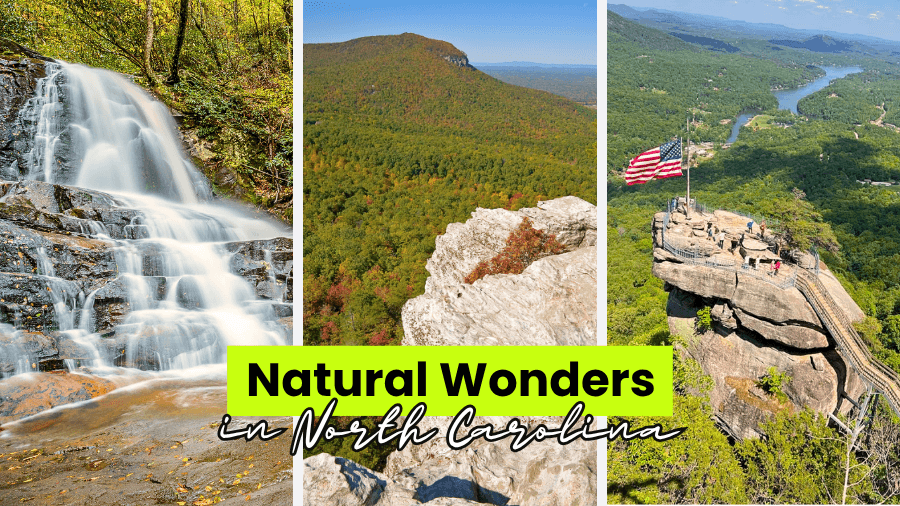
North Carolina knows how to show off, with towering mountain peaks, thundering waterfalls, giant sand dunes, and forests that stretch farther than you can see.
One minute you could be standing above the clouds, and the next you’re following a trail to a waterfall or climbing across sand shaped by powerful coastal winds.
Some of these natural wonders have been forming for hundreds of millions of years, while others continue to change with every storm, flood, and gust of wind.
Ready to see just how wild North Carolina can get?
These eight jaw-dropping spots deserve a place on your bucket list.
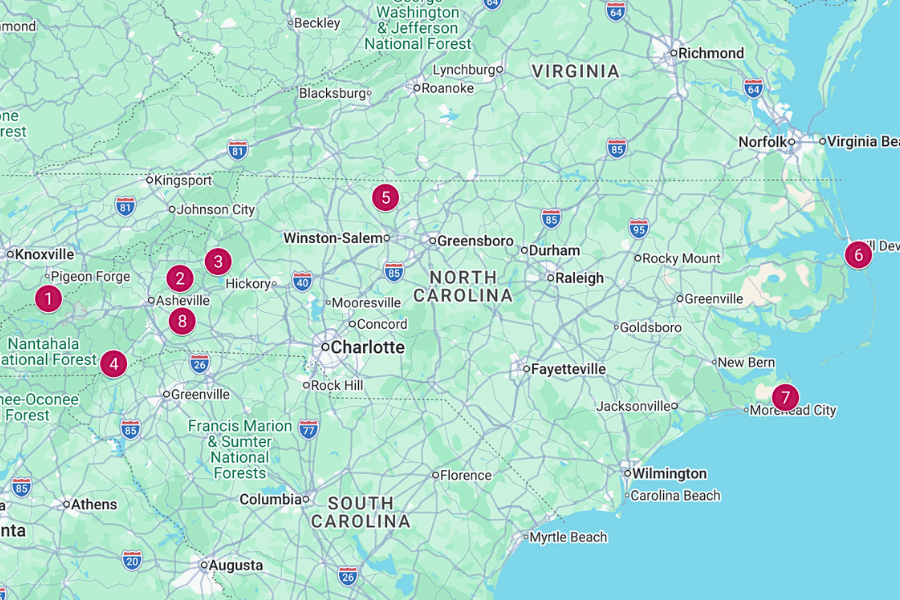
1. Great Smoky Mountains National Park
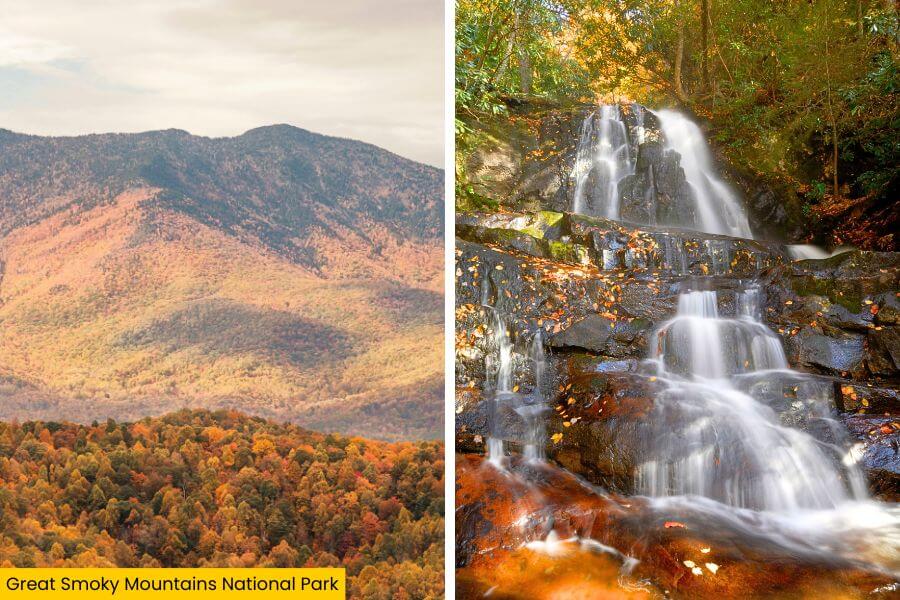
Great Smoky Mountains National Park stretches across North Carolina and Tennessee, covering 522,419 acres of forests, mountains, waterfalls, and wildlife.
Start near Cherokee and drive Newfound Gap Road to the 5,046-foot Newfound Gap or hike to the 6,643-foot Clingmans Dome, the park’s highest point.
You can also chase waterfalls on the 2.6-mile round-trip trail to 80-foot Laurel Falls or explore over 800 miles of trails while keeping an eye out for black bears.
With no entrance fee required, you can explore at your own pace and enjoy mountain views made even more memorable by the park’s famous blue haze.
2. Mount Mitchell State Park
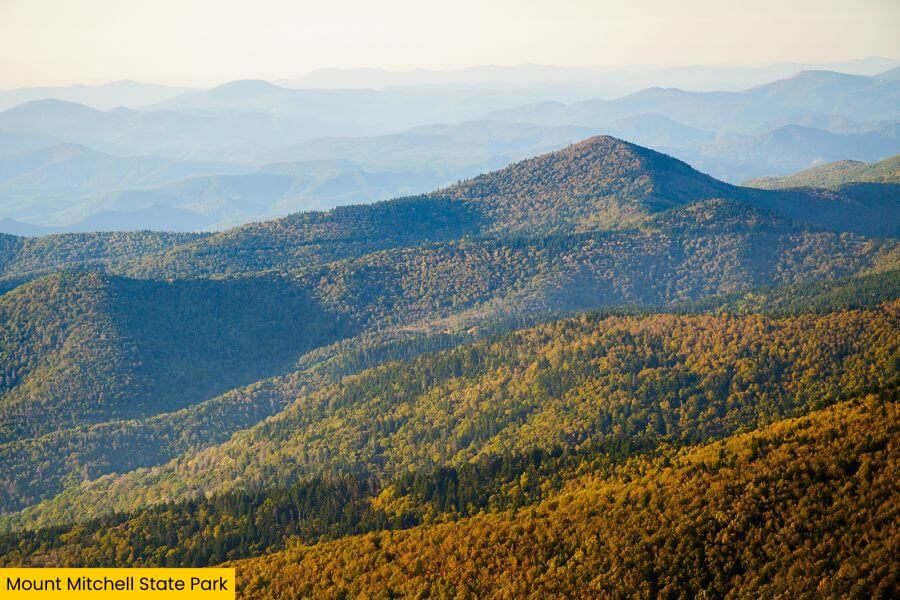
Next up, Mount Mitchell State Park spans 4,789 acres of mountain scenery, about an hour’s drive from Asheville along the Blue Ridge Parkway.
Here you’ll find Mount Mitchell, the highest peak east of the Mississippi River at 6,684 feet, and you can follow the 0.4-mile paved Summit Trail for an easy walk.
For more of a challenge, follow the 5.6-mile one-way Mount Mitchell Trail, climbing 3,700 feet from Black Mountain Campground through thick Fraser fir forest.
Both routes bring you to the top, where an observation deck offers views stretching up to 85 miles on a clear day, along with a museum and gift shop nearby.
3. Linville Gorge Wilderness Area
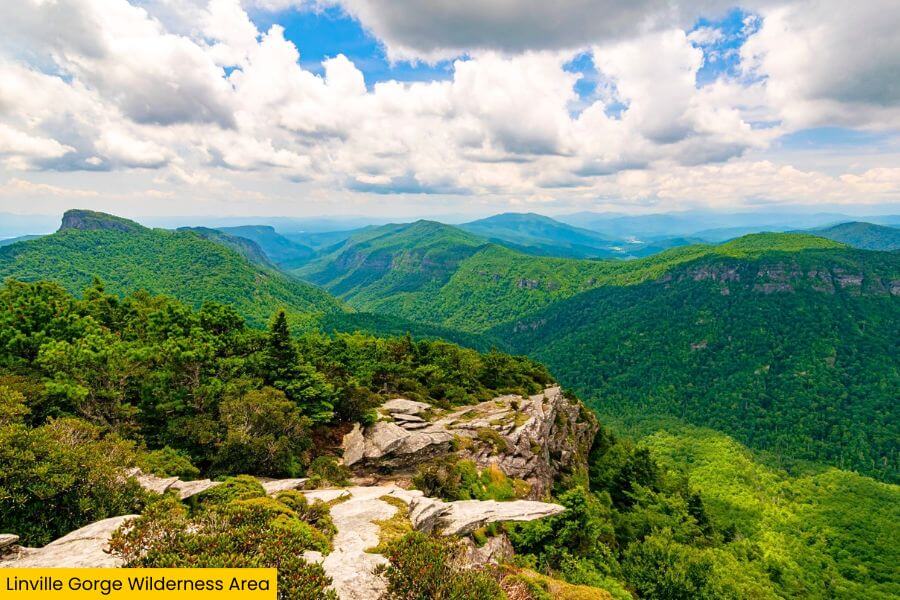
Another dramatic wonder awaits at Linville Gorge Wilderness Area, where the Linville River drops 2,000 feet into the valleys of Pisgah National Forest.
Nicknamed the “Grand Canyon of North Carolina,” this 12,000-acre area features steep cliffs and over 39 miles of challenging trails with few signs or markers.
If you want unforgettable views, follow the 1.8-mile out-and-back Erwins View Trail, where several overlooks showcase Linville Falls and the gorge below.
You can also make your way to Wiseman’s View, where a 0.2-mile paved trail leads to stone platforms facing Hawksbill Mountain and Table Rock Mountain.
4. Gorges State Park
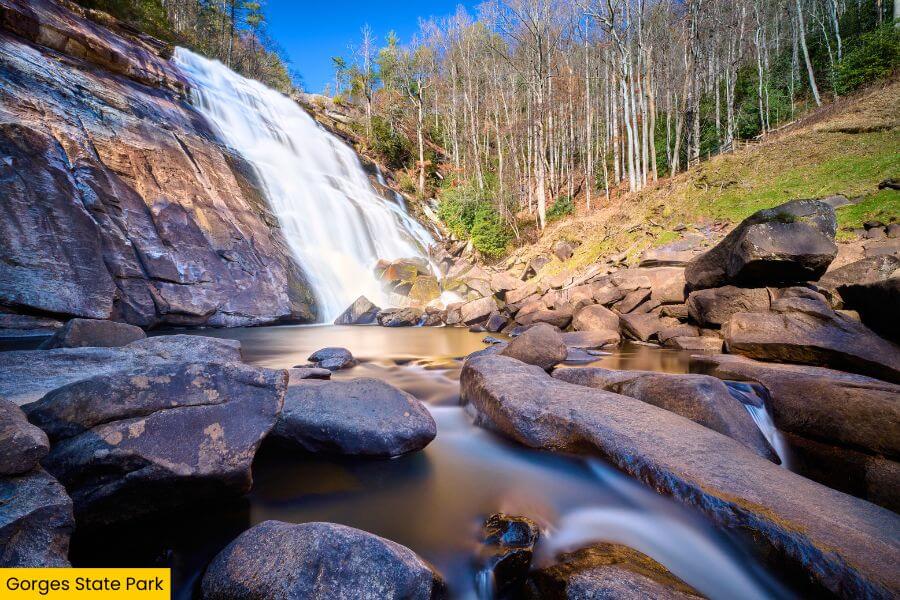
After Linville Gorge’s cliffs, Gorges State Park brings the waterworks, with more than 7,700 acres of forests shaped by heavy rainfall, rushing rivers, and waterfalls.
The star here is the 3.9-mile trail along the Horsepasture River, where you’ll pass 150-foot Rainbow Falls and Turtleback Falls before catching a view of Drift Falls.
The 1.9-mile Bearwallow Valley Trail is also worth exploring, or you can slow things down with some trout fishing along the park’s rivers and streams.
If you want to learn more about the area, head inside the visitor center for exhibits, maps, and a gift shop, making it easy to find ideas for your next visit.
5. Hanging Rock State Park
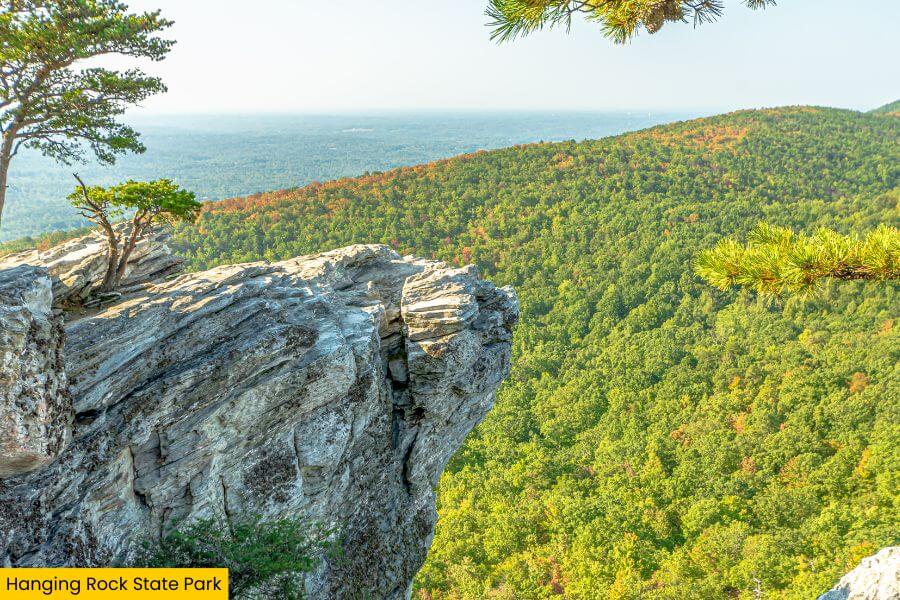
Trading cascades for rocky peaks, Hanging Rock State Park sits in the ancient Sauratown Mountains, just 40 minutes from downtown Winston-Salem.
The park’s highlight is quartzite Hanging Rock, reached by a 3.7-mile round-trip trail that climbs over 600 feet to jaw-dropping views toward the Blue Ridge Mountains.
For a bit of history, take the 0.4-mile Tory’s Den Cave trail to a 20-foot-deep rock shelter where British Loyalists reportedly hid during the American Revolution.
To mix things up, check out the 12-acre Hanging Rock Lake, which offers summer swimming, kayak and canoe rentals, fishing, and plenty of space for a picnic.
6. Jockey’s Ridge State Park
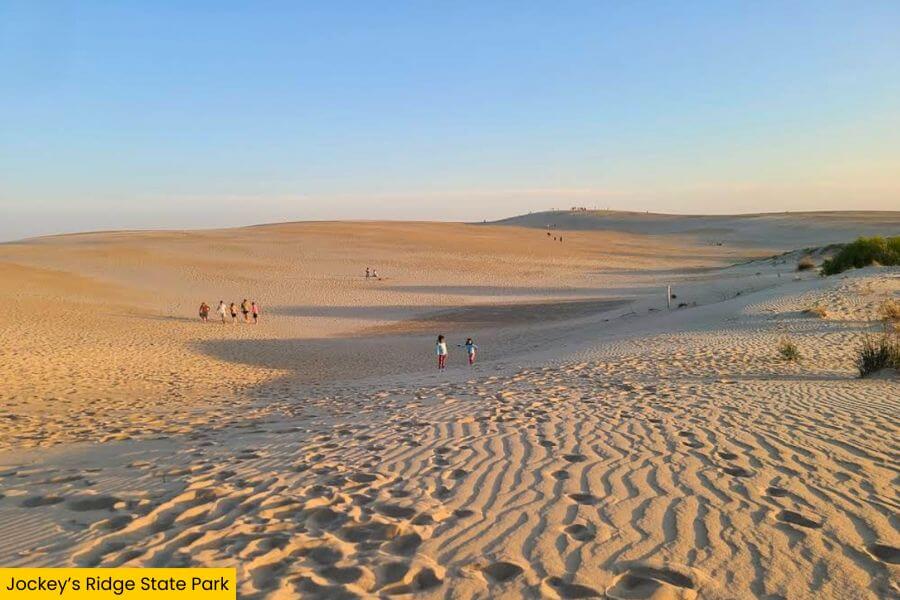
Now things get a little sandy at Jockey’s Ridge State Park in Nags Head, where giant dunes create an impressive landscape along North Carolina’s Outer Banks.
It protects about 427 acres and contains the tallest natural dune system in the eastern United States, with shifting peaks that can reach around 60 feet high.
With all that space to explore, climb the 1.2-mile Tracks in the Sand Trail, fly a kite in the steady coastal winds, or take a hang-gliding lesson with Kitty Hawk Kites.
You can also follow the 0.8-mile Soundside Nature Trail for some birdwatching, then stay for sunset as the sand glows orange and the water reflects the sky.
7. Cape Lookout National Seashore
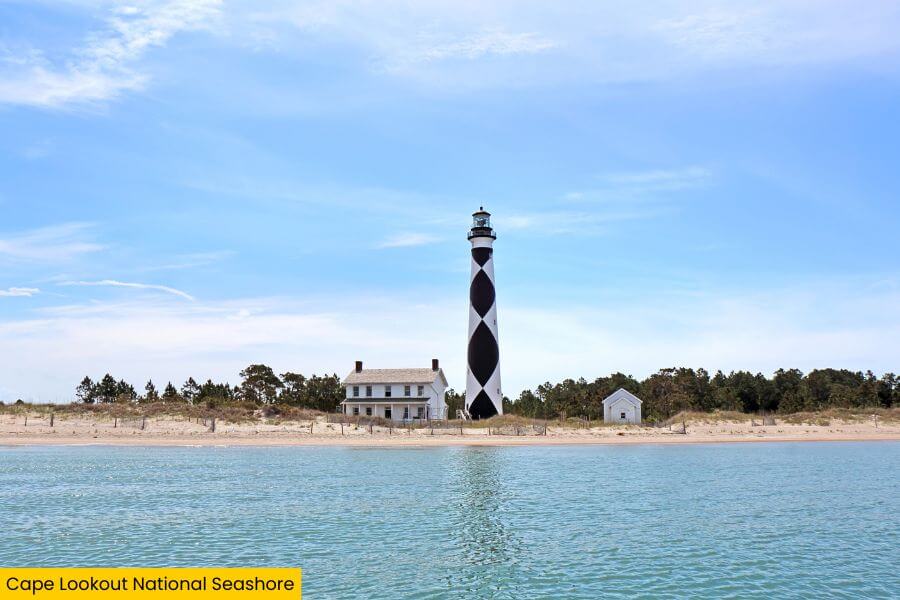
Up next is Cape Lookout National Seashore, a 56-mile stretch of mostly undeveloped barrier islands along the Southern Outer Banks.
Reach the islands by boat or passenger ferry, then snap a photo of the 163-foot Cape Lookout Lighthouse with its famous black-and-white diamond pattern.
If you want to see wild horses, visit Shackleford Banks, where around 100 of them roam freely across eight miles of beaches and coastal landscape.
And for a dose of history, head to Portsmouth Village, a former port town established in 1753 where more than two dozen historic buildings and cemeteries still stand.
8. Chimney Rock State Park
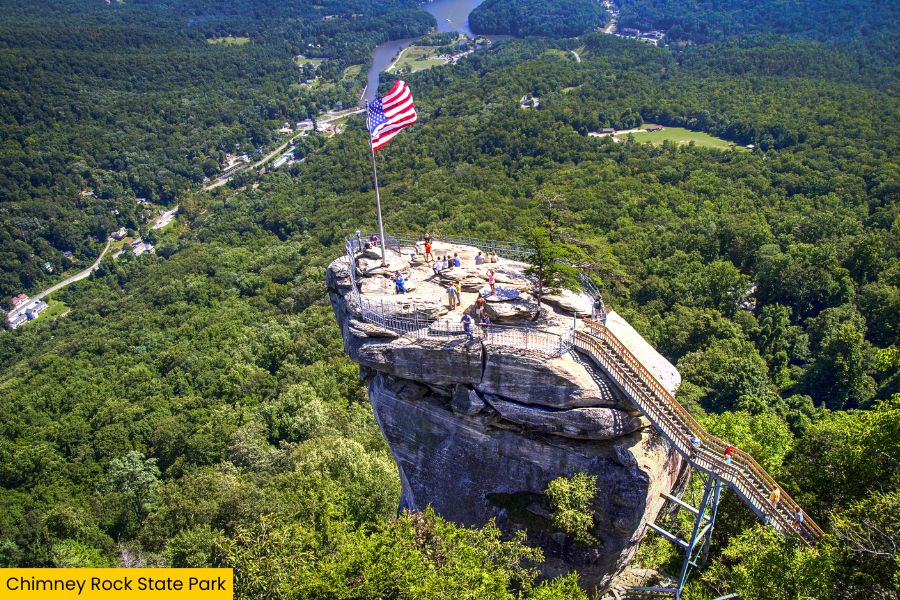
Last but definitely not least is Chimney Rock State Park, home to the popular 315-foot gneiss monolith that rises 2,280 feet above sea level.
To reach the top, climb 494 steps on the Outcroppings Trail or ride the 26-story elevator for sweeping views across Hickory Nut Gorge and Lake Lure.
Next, take the 1.4-mile round-trip Hickory Nut Falls Trail to its namesake 404-foot waterfall, which ranks among the tallest east of the Mississippi River.
While exploring, keep an eye out for peregrine falcons soaring above, and check out the caves and overlooks featured in movies like The Last of the Mohicans.
Related Posts