Hidden in Michigan’s Lower Peninsula is a state park protecting something you definitely don’t see on an average walk through the woods.
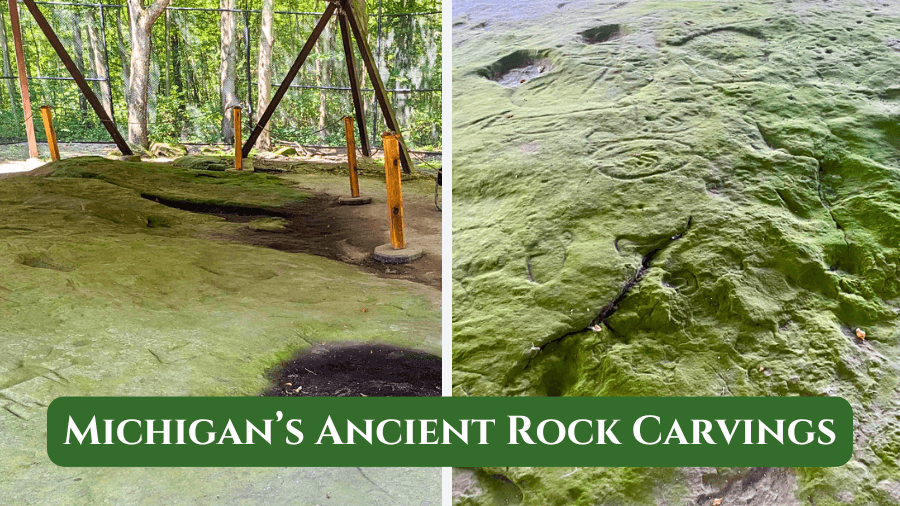
Here, more than 100 figures have been carved directly into a sandstone outcrop, including people, animals, tracks, and mysterious symbols.
Some of these Native American petroglyphs may be around 1,000 years old, connecting you to stories and traditions that existed centuries before Michigan became a state.
Even more incredible, the carvings remained hidden beneath vegetation until a massive wildfire in the 1800s helped expose them.
Today, you can stand just feet from these ancient markings and see details that have survived hundreds of Michigan winters.
And that’s only part of what makes this little-known park worth the drive.
Where Is It?
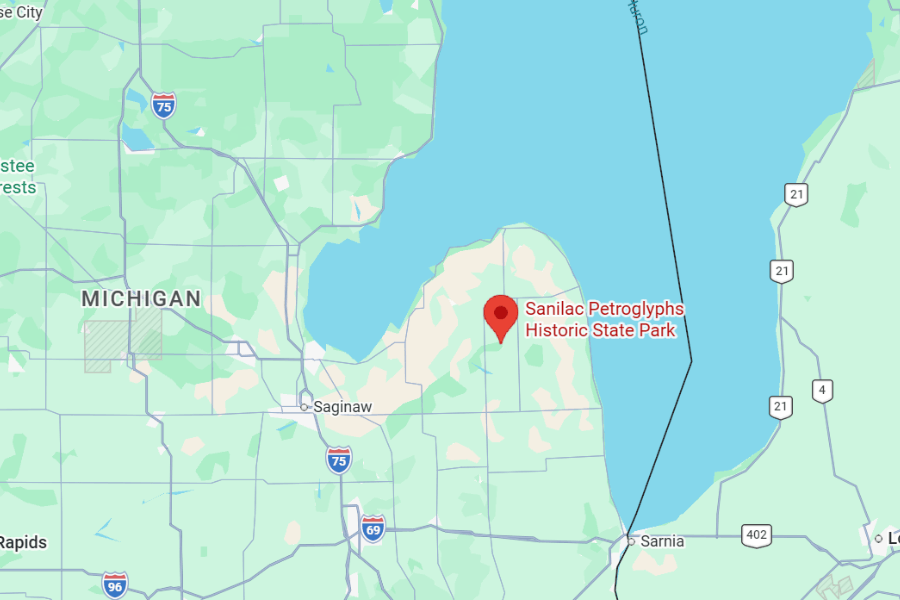
Sanilac Petroglyphs Historic State Park is located in Michigan’s Thumb region, near the small community of Cass City in Sanilac County.
The park sits along the Cass River at 8251 Germania Road, about 15 minutes from Cass City.
You’re looking at nearly a 2-hour drive from Detroit, about 1 hour and 20 minutes from Flint, and around 2 hours from Lansing.
About
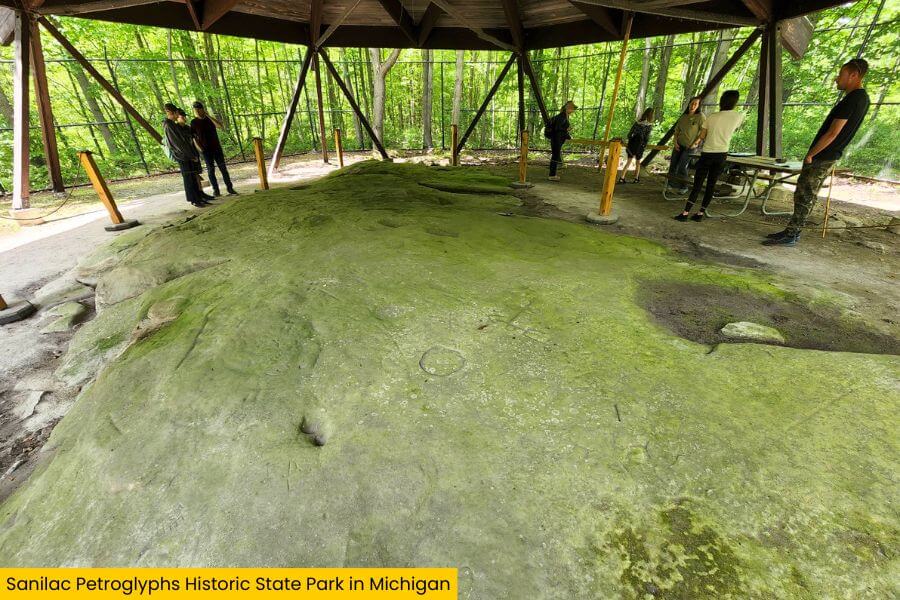
Sanilac Petroglyphs Historic State Park protects the largest known collection of Native American rock carvings in Michigan, with more than 100 figures carved into a sandstone outcrop.
Known as ezhibiigadek asin, which means “written on stone” in Anishinaabemowin, the carvings include human figures, animals, tracks, and other symbols connected to Anishinaabe culture and teachings.
Some of the petroglyphs are believed to be hundreds to around 1,000 years old, although their exact age is unknown because rock carvings are difficult to date.
The carvings survived for centuries partly because they were covered by vegetation, which helped protect the soft sandstone from Michigan’s weather.
They became widely known after the Great Thumb Fire of 1881 swept through the region, burning away much of the vegetation and exposing the sandstone surface.
Today, a protective pavilion covers the petroglyphs to help shield them from rain, snow, frost, and other weather that can gradually wear away the carvings.
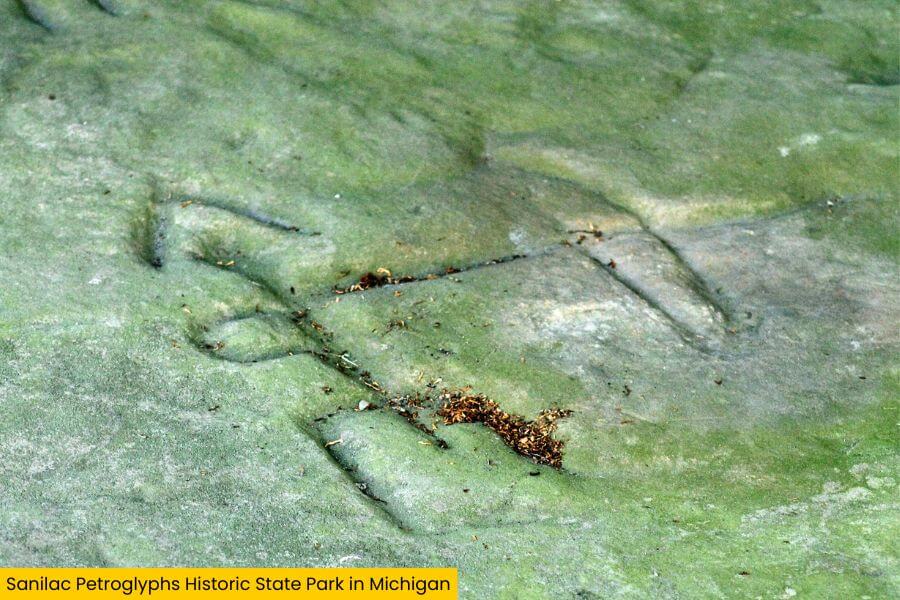
The site is especially important because these markings are not simply old artwork or an archaeological curiosity.
They hold deep cultural and spiritual significance for Anishinaabe people, and the park is jointly managed by the Michigan Department of Natural Resources and the Saginaw Chippewa Indian Tribe of Michigan.
That partnership shapes the way you experience the site, with a strong focus on respecting the carvings, understanding their cultural meaning, and preserving them for future generations.
The park itself covers about 240 acres along the Cass River, so there’s much more surrounding the petroglyph site than you might expect from its name.
You’ll find forest, river habitat, and sandstone formations around the protected carving area, giving you a glimpse of the landscape that has surrounded this culturally important place for generations.
This is also a relatively quiet historic site rather than a large state park packed with campgrounds, beaches, and busy recreation areas.
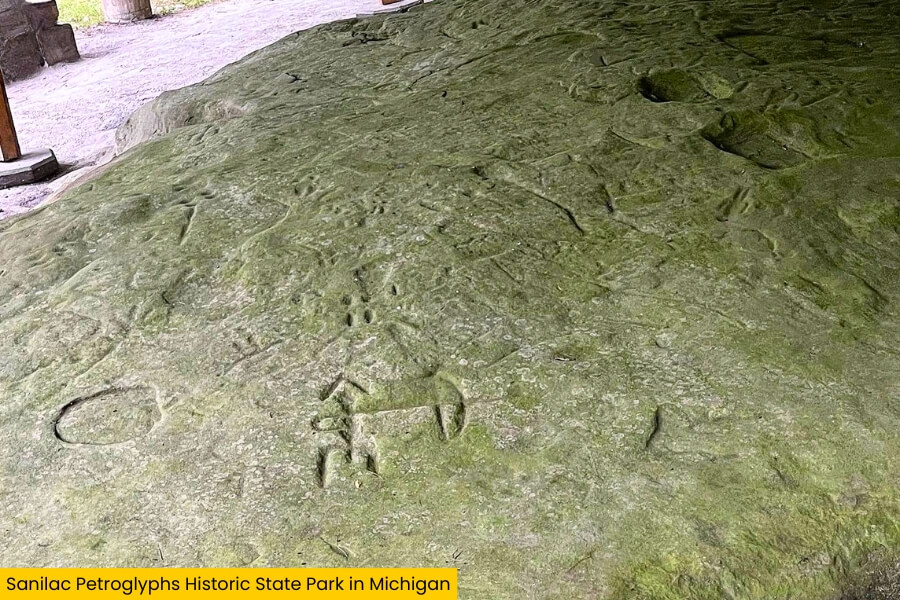
The petroglyphs are the star of the show, and your visit is centered on learning about the carvings, the Anishinaabe stories connected to them, and the natural landscape surrounding the site.
One important thing to know is that you cannot simply walk onto the sandstone and inspect the carvings up close.
Access is carefully managed because sandstone is soft, and touching, walking on, tracing, or making rubbings of the petroglyphs can permanently damage them.
That protection matters when you’re looking at markings that have already survived centuries of Michigan winters, fires, erosion, and human activity.
It’s a small site with a seriously big story, connecting you to Native American culture in Michigan through carvings that were made long before Michigan became a state.
Things To Do
Once you’ve got the story behind the site, it’s time to see what you can actually do while you’re here.
See the Sanilac Petroglyphs
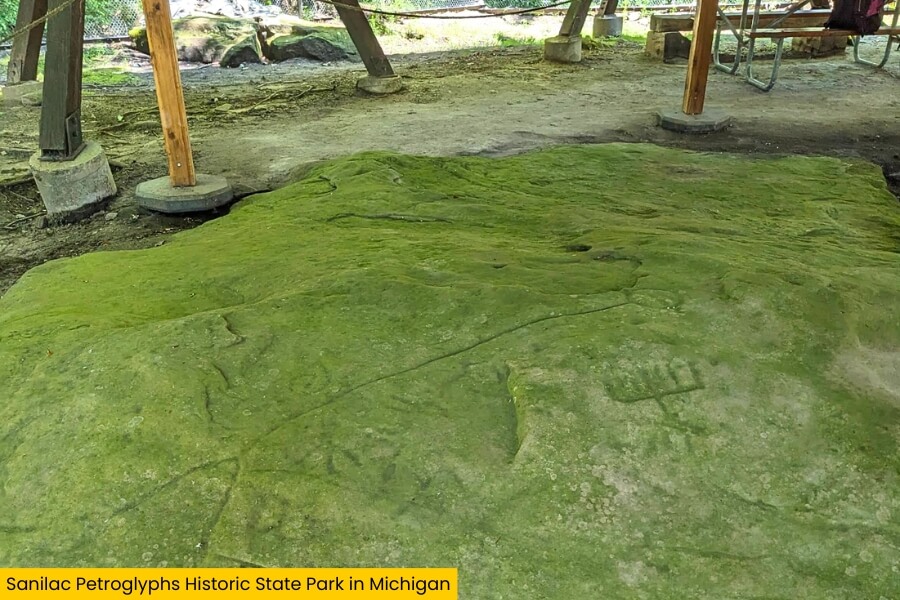
The main event is getting a close look at the carvings beneath the protective pavilion.
You can spot images of human figures, animals, animal tracks, and other symbols cut directly into the sandstone.
One of the best-known carvings is the Archer, a human figure shown with a bow and arrow.
Another recognizable figure is often called the Water Panther, a powerful underwater being that appears in Anishinaabe traditions.
Rather than rushing from carving to carving, spend some time looking closely at the details because many of the lines are shallow and surprisingly easy to miss at first glance.
Interpretive information at the site helps explain what you’re seeing and adds important cultural context to the symbols.
If an interpreter or scheduled program is available during your visit, it’s well worth joining because you’ll get far more from the carvings than you would by simply looking at the rock surface.
Walk the Park’s Trails
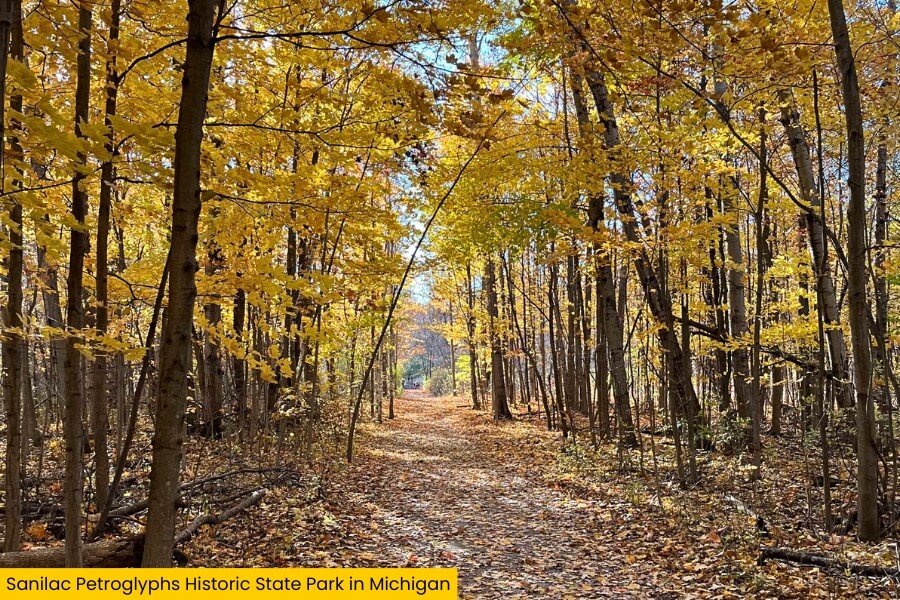
After seeing the petroglyphs, head into the woods and explore the park on foot.
The trail system follows paths through the forest and near the Cass River, giving you a chance to see more of the landscape surrounding the archaeological site.
Keep an eye out for sandstone along the trail, including the large sandstone outcrop, mature trees, and small streams as you walk.
Conditions can change quickly after rain, so expect roots, mud, and potentially slippery sections rather than smooth paved paths.
Visit the Cass River
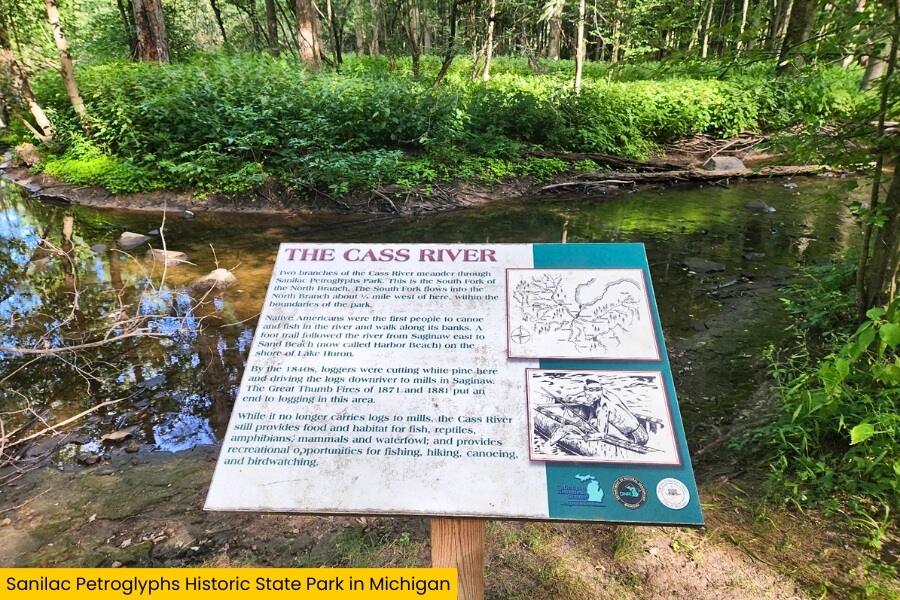
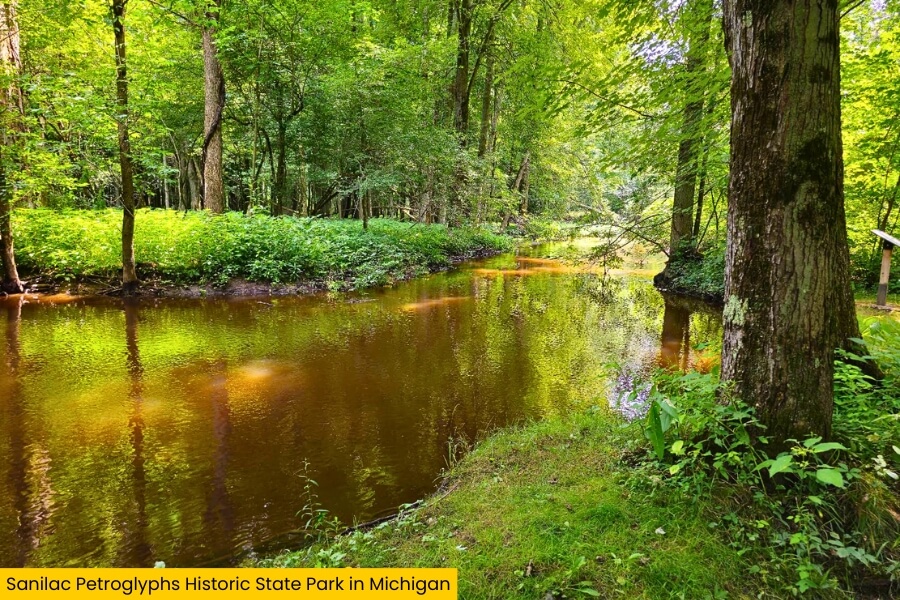
The Cass River runs through the park and adds another scenic stop to your visit.
You can walk near the river, listen for birds in the surrounding woods, and take a break from exploring the historic site.
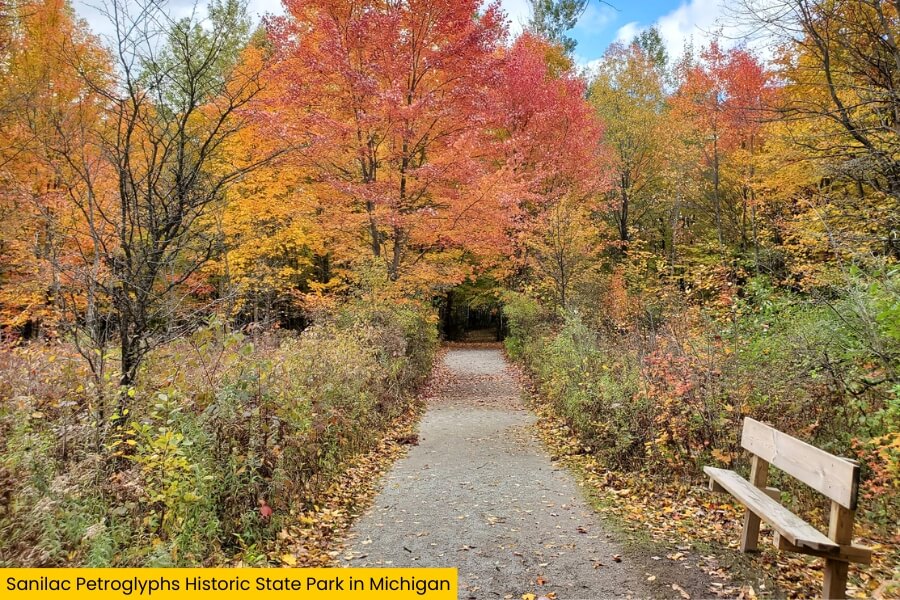
The river is particularly pretty when the surrounding hardwood forest turns shades of yellow, orange, and red in fall.
Just remember that this is a natural riverbank, so watch your footing around steep, muddy, or wet areas.
Look for Wildlife
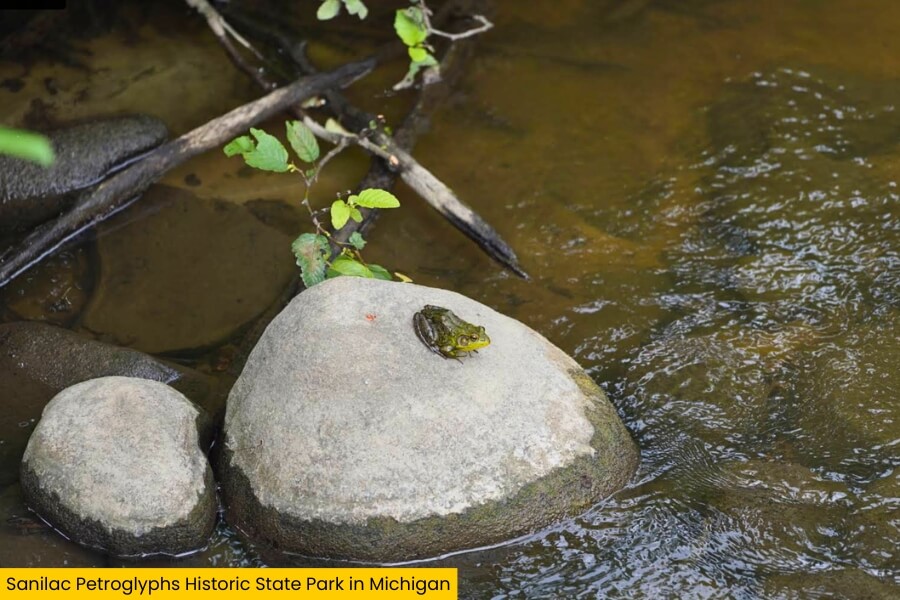
The park’s forest and river corridor make it a good place to keep your eyes open for Michigan wildlife.
You may spot white-tailed deer, squirrels, frogs, turtles, and a variety of woodland birds while exploring.
The Cass River corridor is also a good place to watch for birds moving between the water and surrounding trees.
Bring binoculars if you enjoy birding, especially if you’re visiting early in the day when the woods tend to be quieter.
Pack a Picnic
If you want to turn your petroglyph visit into a slower half-day outing, bring lunch and use the park’s picnic area.
There aren’t restaurants or snack stands waiting beside the carvings, so packing food and water is a smart move.
It also gives you an excuse to stick around after seeing the main site instead of immediately hopping back in the car.
Know Before You Go
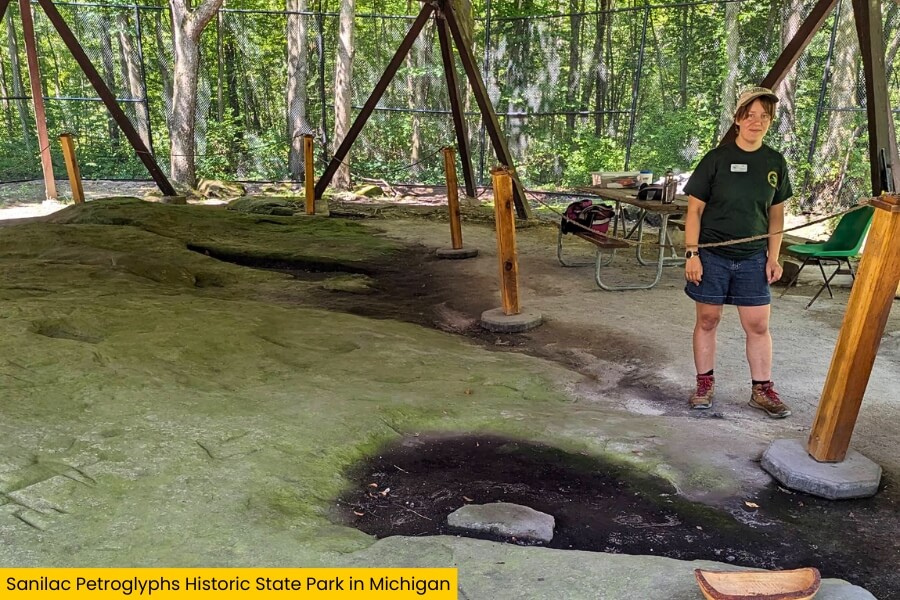
Before you point the car toward Michigan’s Thumb, a little planning will save you from arriving when the petroglyph area is closed.
The petroglyph viewing pavilion has seasonal hours, with the viewing area open to the public for guided tours Wednesday through Sunday from May through September.
Access to the carvings is more limited than you might expect at a typical Michigan state park.
Hours, tour availability, and seasonal opening dates can change, so check the Michigan Department of Natural Resources listing for Sanilac Petroglyphs Historic State Park before making the drive.
Summer is generally the best time to visit, especially if seeing the carvings is your main reason for coming.
Late spring and summer bring greener trails and comfortable conditions for exploring the forest, while September and October add fall color around the Cass River.
Try to visit on a dry day if you plan to explore beyond the pavilion.
Rain can leave the wooded trails muddy and slippery, so sturdy walking shoes are a much better choice than sandals.
There is no separate admission charge to view the petroglyphs.
Plan to bring drinking water, bug spray, and anything you want to eat, especially since this is a small historic site rather than a park filled with concessions and visitor services.
Mosquitoes and other insects can be active around the woods and river during warmer months, so bug spray can make a summer visit much more comfortable.
Most importantly, treat the petroglyph area with care.
Never touch, trace, chalk, make rubbings of, or walk on the carvings, even if a particular figure is difficult to see.
These markings have survived for centuries, and following the park’s rules helps keep them visible for the next person who makes the trip to Michigan’s Thumb.
Related Posts