A road trip from Maryland to Alaska is not your average drive.
This is a journey packed with towering mountains, wildlife-filled wilderness, scenic highways, and some of the most unforgettable landscapes in North America.
Along the way, you’ll travel from busy city streets to remote stretches of road where forests, rivers, and snow-capped peaks seem to go on forever.
You’ll discover fascinating pieces of history, soak in natural hot springs, spot incredible wildlife, and encounter experiences that make every day feel completely different from the last.
Get ready for an unforgettable drive as we break down the ultimate Maryland to Alaska road trip, one amazing stop at a time.
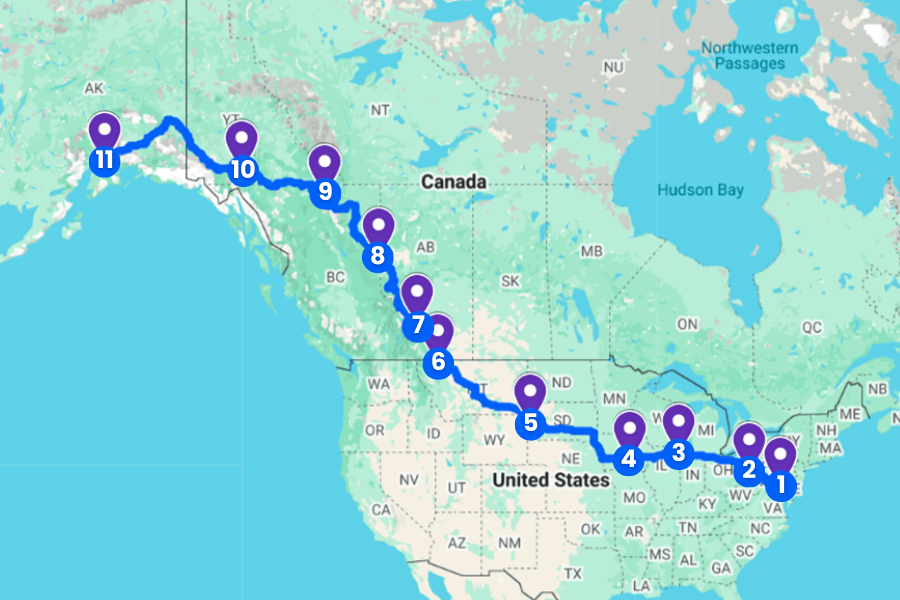
1. Baltimore, Maryland
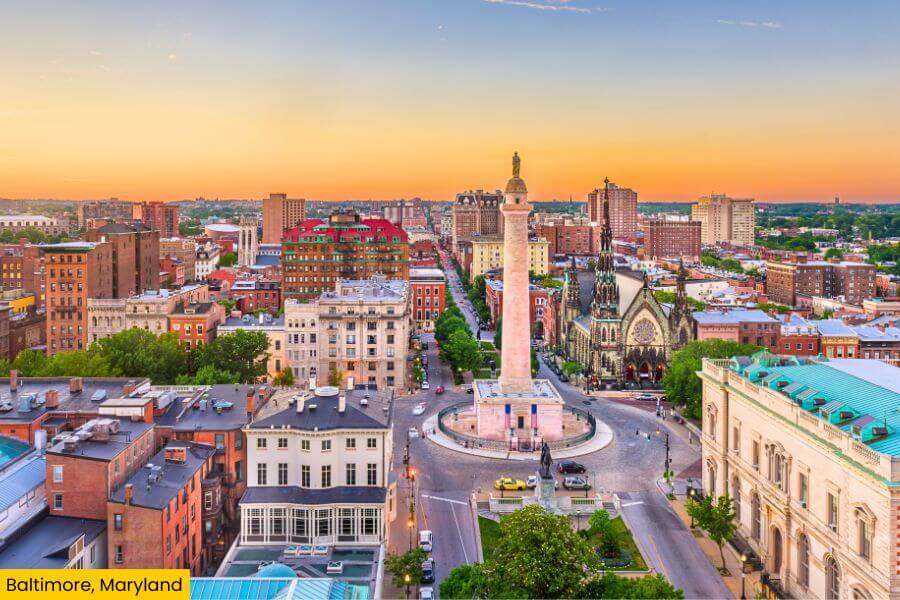
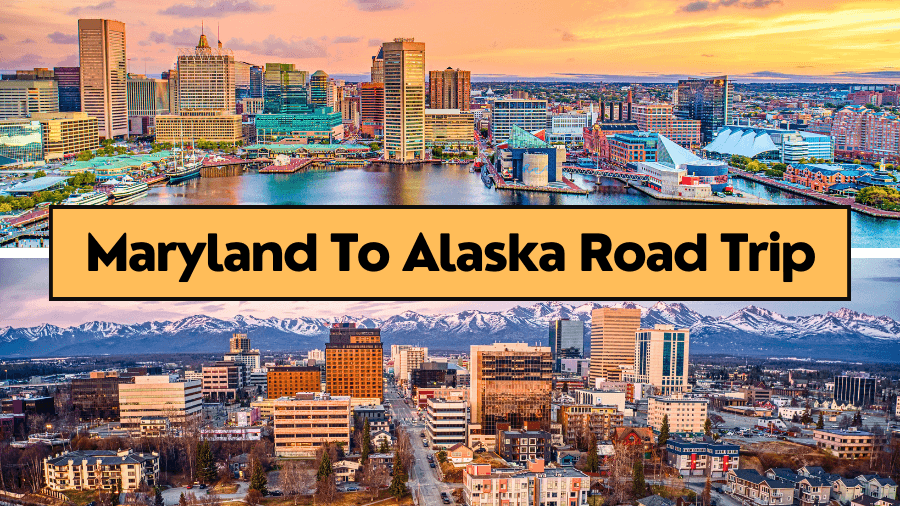
We’re starting our road trip in Maryland’s largest city, Baltimore.
You can stroll the famous Inner Harbor, tour the historic USS Constellation, visit the National Aquarium, and catch a game at Oriole Park at Camden Yards, one of baseball’s most celebrated stadiums.
History is a huge draw here because nearby Fort McHenry inspired Francis Scott Key to write “The Star-Spangled Banner” during the War of 1812, and the fort still welcomes visitors year-round.
For something fun, explore the colorful rowhouses of Fell’s Point, grab Maryland blue crab dishes along the waterfront, and check out the Baltimore Museum of Art, home to one of the world’s largest collections of works by Henri Matisse.
2. Pittsburgh, Pennsylvania
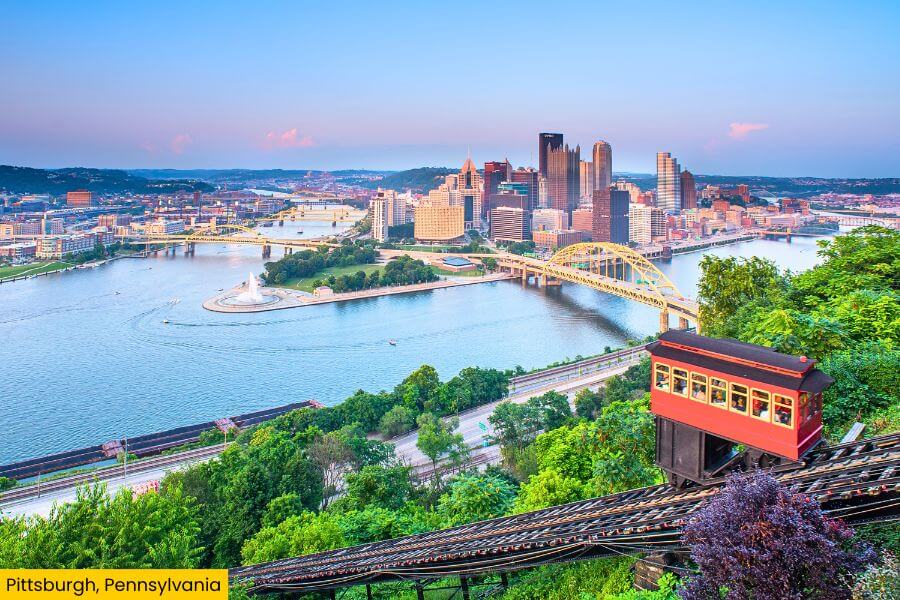
From Baltimore, it’s about a 4-hour drive to Pittsburgh, a city where three rivers meet at Point State Park, creating one of the most recognizable skylines in the country.
Pittsburgh is famous for its 446 bridges, its steelmaking past, and the Duquesne Incline, which has carried passengers up Mount Washington since 1877 for sweeping views of the city below.
You can explore the Carnegie Museums, walk the riverfront trails, catch a Pirates game at PNC Park, or visit the Andy Warhol Museum, which holds the largest collection of Warhol’s work anywhere in the world.
You can also head to the Strip District for local food markets and specialty shops, then watch boats glide along the Allegheny, Monongahela, and Ohio Rivers that helped shape Pittsburgh into a major American industrial powerhouse.
3. Chicago, Illinois
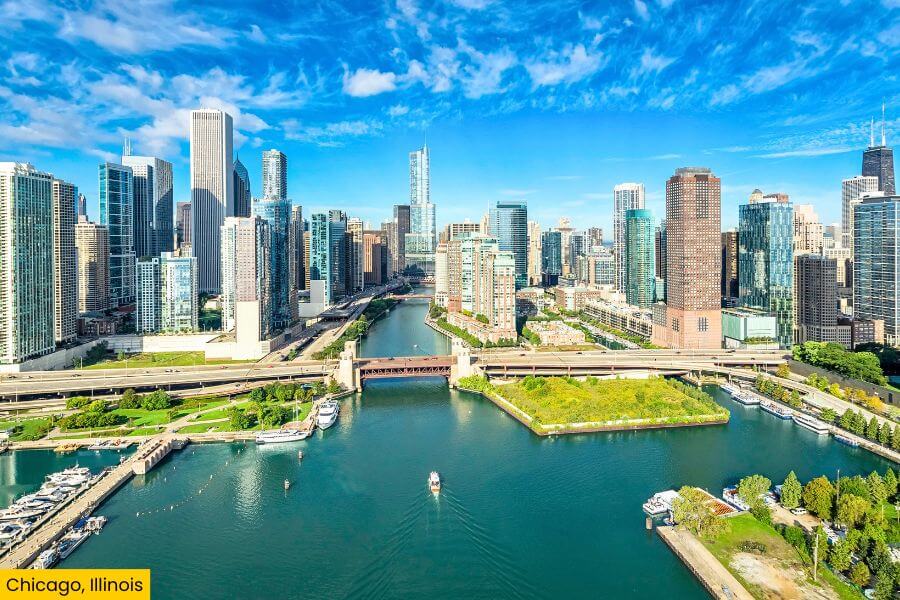
Next, you’ll arrive in Chicago, a massive city on the shore of Lake Michigan that is known for its striking architecture and world-famous skyline.
One of the top things to do here is stroll Millennium Park to see “The Bean,” then head up to Skydeck Chicago on the 103rd floor of Willis Tower for views stretching up to 50 miles on clear days.
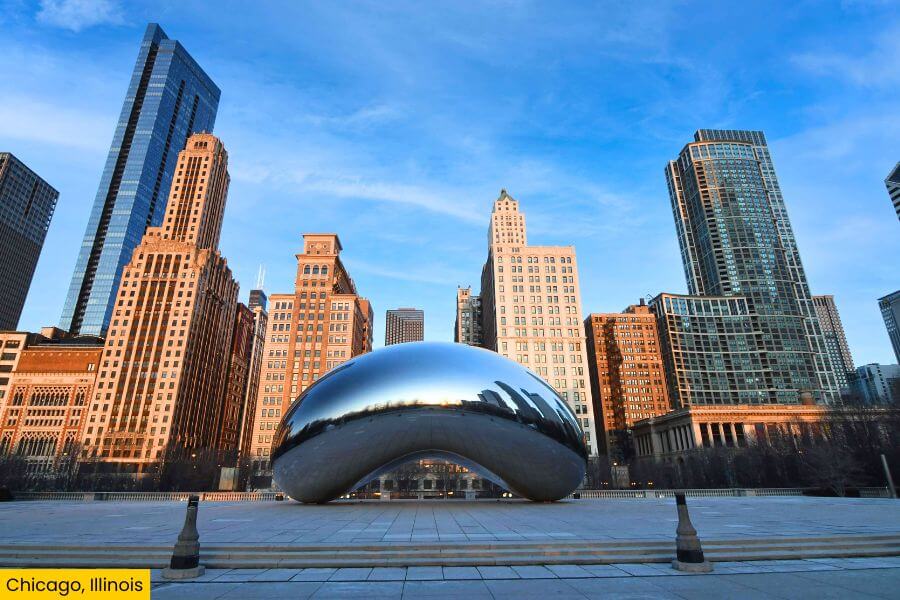
Chicago is also packed with standout attractions, including the Art Institute of Chicago, Navy Pier, the 18.5-mile Lakefront Trail, and Wrigley Field, which has been home to the Cubs since 1916.
When you’re ready for a bite, grab a deep-dish pizza, take a boat cruise along the Chicago River, and enjoy a city that reversed the flow of its river in 1900 through one of the most impressive engineering projects in American history.
4. Pella, Iowa
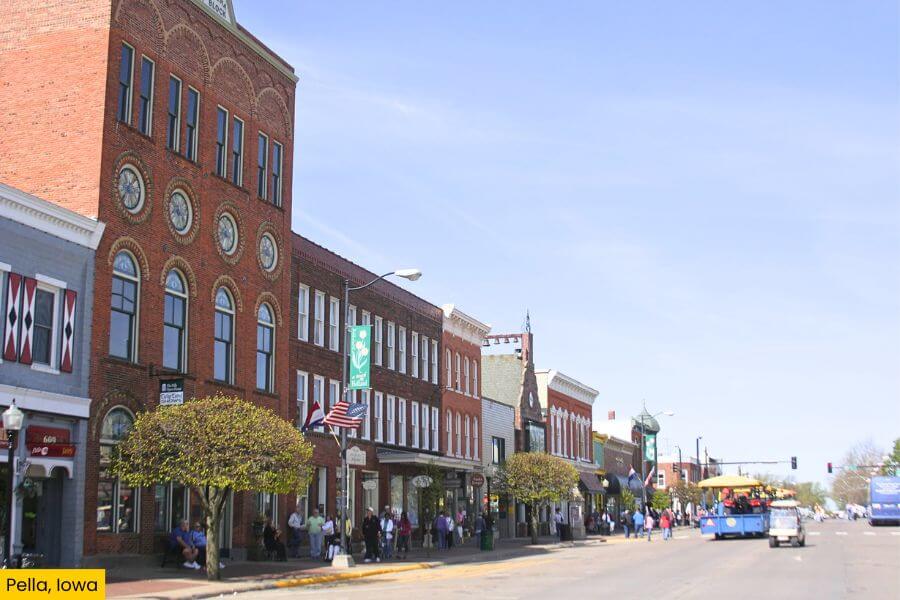
After the big-city energy of Chicago, the road trip takes a charming turn in Pella, Iowa, a town about 50 minutes from Des Moines that proudly celebrates its Dutch roots.
You can wander through the Molengracht Plaza, tour the Vermeer Windmill, the tallest working grain windmill in the United States, and explore the Historical Village with its authentic Dutch architecture and exhibits.
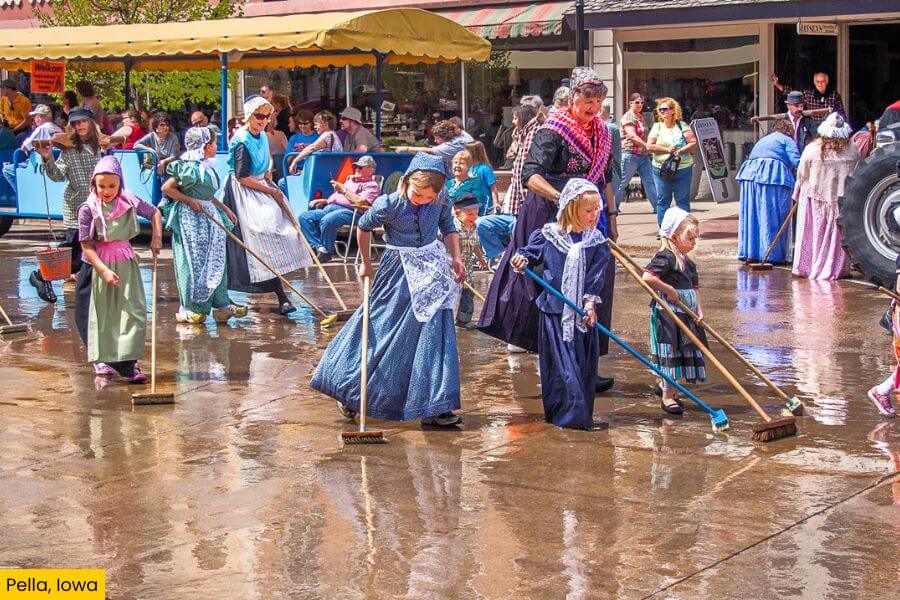
Pella is best known for the annual Tulip Time Festival each spring, when more than 300,000 tulips bloom across town and residents fill the streets in traditional Dutch clothing, wooden shoes, and colorful parades.
For a sweet treat, stop by Jaarsma Bakery for Dutch letters, a flaky pastry filled with almond paste, then stroll along the canal and flower-lined streets.
5. Deadwood, South Dakota
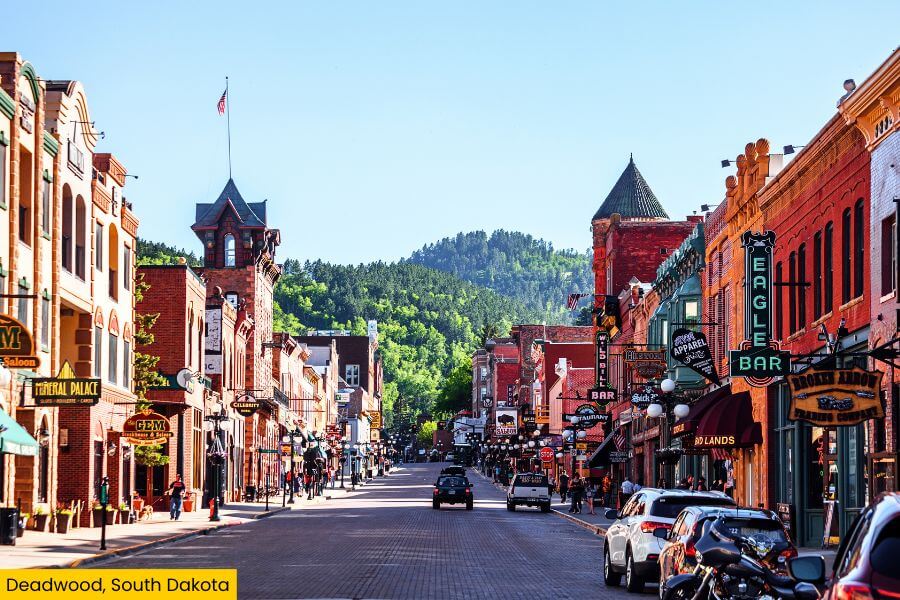
Leaving the Dutch windmills and tulip-lined streets of Pella behind, you’ll head into the Black Hills of South Dakota and arrive in Deadwood, one of the most famous Wild West towns in America.
Deadwood exploded during the 1876 Black Hills Gold Rush, and today you can walk historic Main Street, visit the Adams Museum, and visit Saloon No. 10 to see exhibits commemorating the spot where Wild Bill Hickok was killed during a poker game.
The entire town is a National Historic Landmark District, with restored 19th-century buildings, old saloons, and guided tours that bring its gold rush past to life.
For even more adventure, explore nearby Spearfish Canyon with its 60-foot Bridal Veil Falls, or visit Mount Moriah Cemetery, where Wild Bill Hickok and Calamity Jane are buried.
6. Glacier National Park, Montana
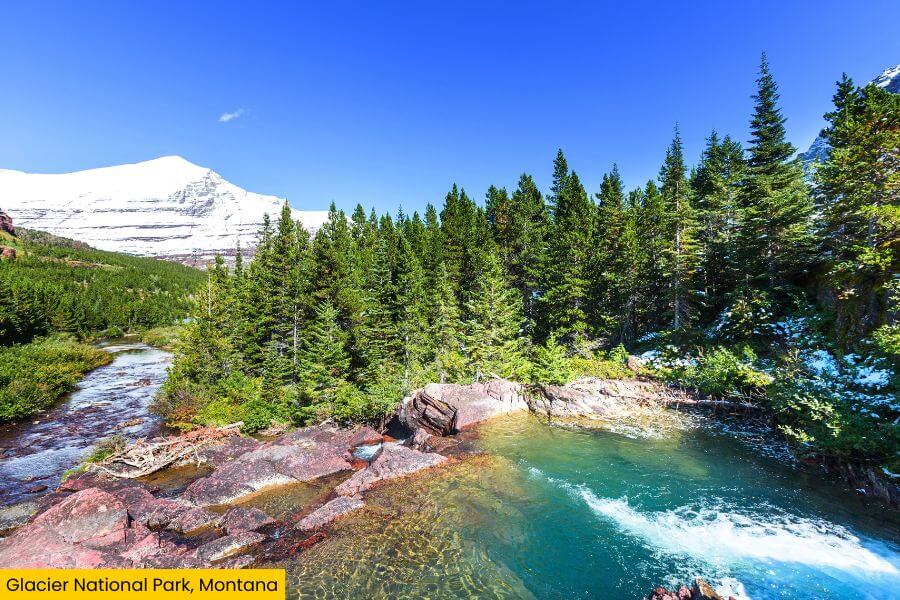
After the gold rush stories of Deadwood, the journey climbs into Glacier National Park in Montana, a spectacular wilderness spanning more than 1 million acres along the Canadian border.
The park is famous for Going-to-the-Sun Road, a 50-mile scenic drive that crosses Logan Pass at 6,646 feet and delivers nonstop views of towering peaks, alpine meadows, and crystal-clear lakes.
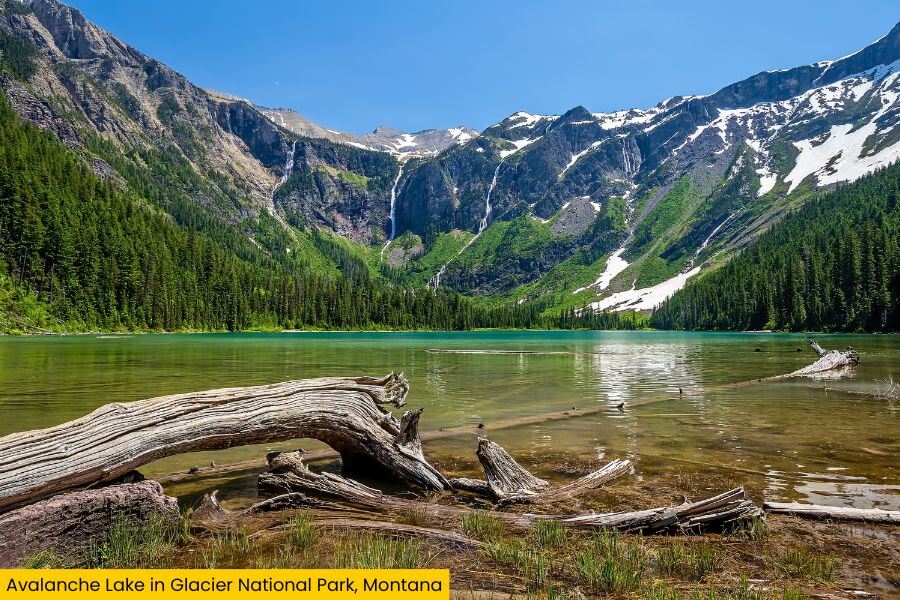
You can hike to Avalanche Lake on a 5-mile round-trip trail, visit the turquoise waters of Lake McDonald, or spot mountain goats, bighorn sheep, moose, and even grizzly bears throughout the park.
Glacier contains more than 700 miles of trails and is home to some of the most dramatic scenery in the Rocky Mountains, with glacially carved valleys, waterfalls, and around 25 remaining active glaciers.
7. Banff National Park, Alberta
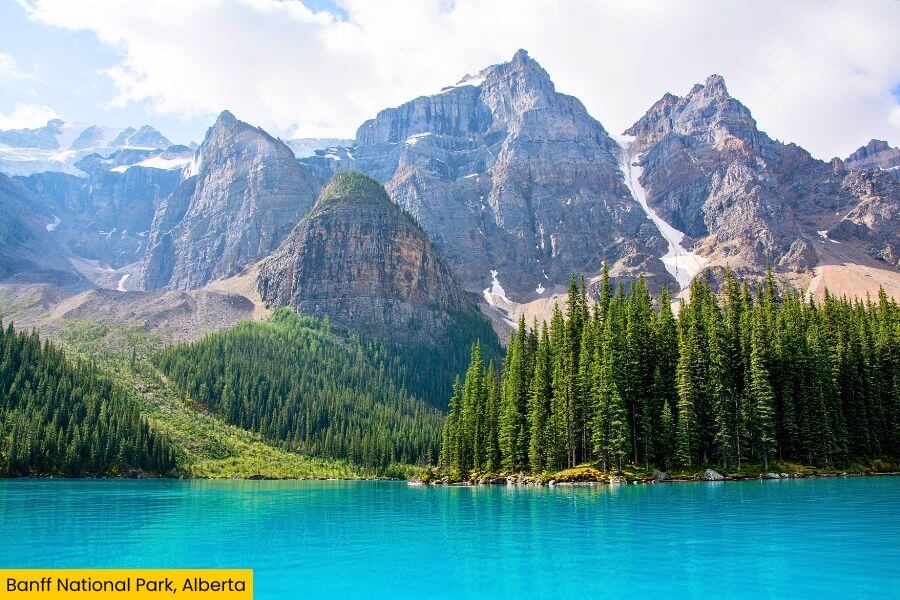
Drive roughly 4 hours and you’ll reach Banff National Park in Alberta, Canada’s oldest national park and one of the most breathtaking mountain destinations in North America.
Located in the Canadian Rockies, the park is home to famous sights like Lake Louise, where turquoise water reflects towering peaks, and Moraine Lake, framed by the dramatic Valley of the Ten Peaks.
You can drive sections of the Icefields Parkway, ride the Banff Gondola to the 7,486-foot summit of Sulphur Mountain, or hike trails such as the Johnston Canyon route to its thundering waterfalls.
Keep an eye out for elk, bighorn sheep, black bears, and grizzlies as you explore a landscape filled with glaciers, emerald lakes, snow-capped mountains, and some of the most photographed scenery anywhere in Canada.
8. Dawson Creek, British Columbia

Leaving Banff behind, you’ll continue northwest to Dawson Creek in British Columbia, the official starting point of the legendary Alaska Highway.
This small city is best known for Mile 0, where travelers snap photos beside the famous Alaska Highway sign marking the beginning of the historic route built in 1942 during World War II.
You can learn more about the highway’s remarkable construction at the Dawson Creek Visitor Centre, which features exhibits, artifacts, and stories from the road’s early days.
Before heading deeper into northern Canada, take time to explore the city’s murals, public art, and historic sites while stocking up on supplies, because from here the journey starts feeling much wilder and far more remote.
9. Liard River Hot Springs Provincial Park, British Columbia
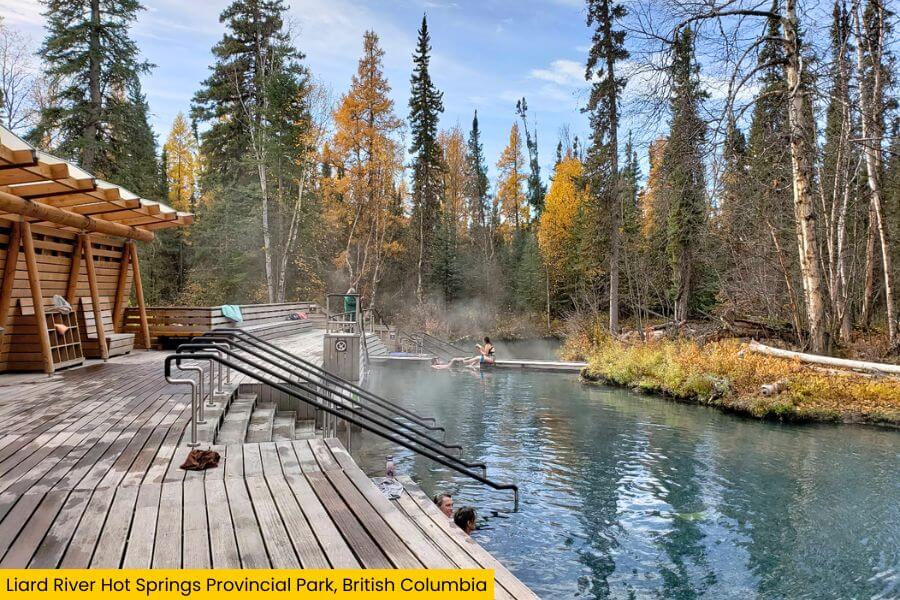
Liard River Hot Springs Provincial Park offers one of the most memorable stops in northern British Columbia, surrounded by forests, mountains, and abundant wildlife.
The park is famous for its natural hot springs, where mineral-rich water flows into large pools that stay warm year-round, with temperatures often ranging from about 42°C to 52°C at the source before cooling in the soaking areas.
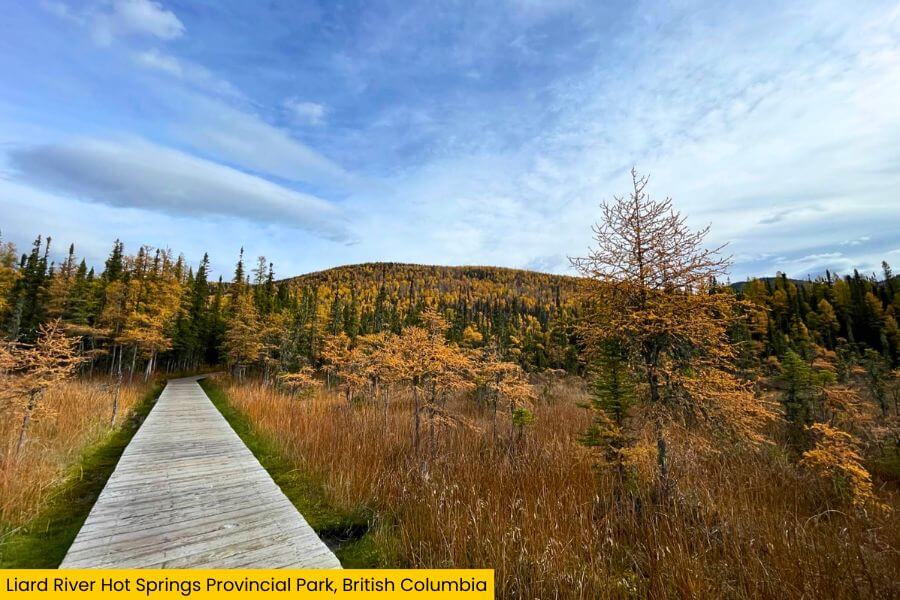
A boardwalk leads through one of Canada’s largest northern boreal swamps, giving you a chance to spot moose, waterfowl, and other wildlife before reaching the steaming pools.
After a long day on the road, few places feel better than soaking in these naturally heated waters while surrounded by towering spruce trees.
10. Whitehorse, Yukon
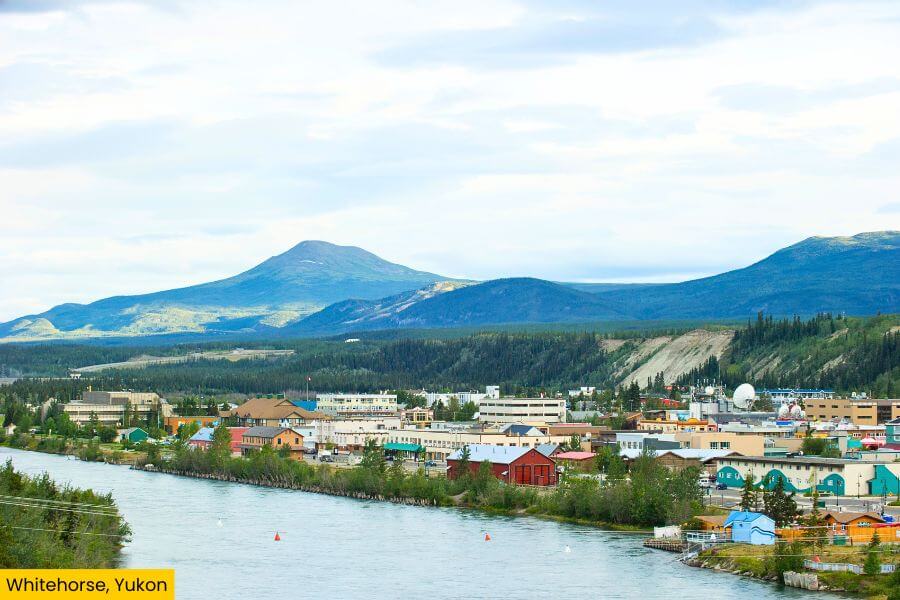
Continue driving and the Alaska Highway leads you to Whitehorse, the capital of Yukon and the largest community in northern Canada, set along the Yukon River.
Whitehorse played an important role during the Klondike Gold Rush and today you can explore the grounds of SS Klondike National Historic Site, a restored sternwheeler that once carried cargo and passengers along the river system.
You can also walk the waterfront trails, explore the Yukon Wildlife Preserve’s 700-acre habitat, or stop at Miles Canyon, where the Yukon River rushes through dramatic basalt cliffs formed by ancient lava flows.
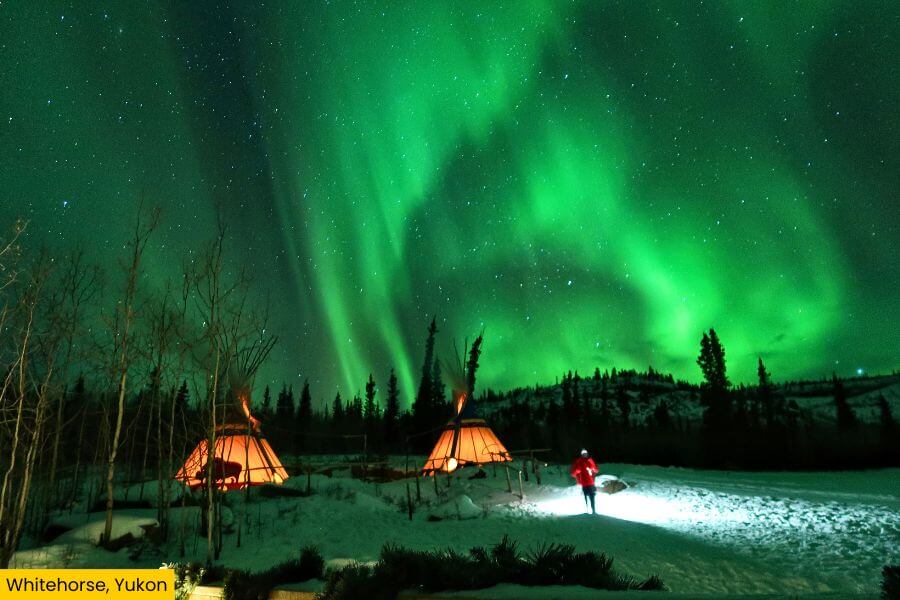
For a memorable evening, visit between late August and April for a chance to see the Northern Lights dancing across the sky, adding another unforgettable experience to this northern gateway city before the final push toward Alaska.
Please note that at the time of writing, SS Klondike National Historic Site is currently closed for tours inside the vessel due to rehabilitation work, though the grounds remain open for visitors.
11. Anchorage, Alaska
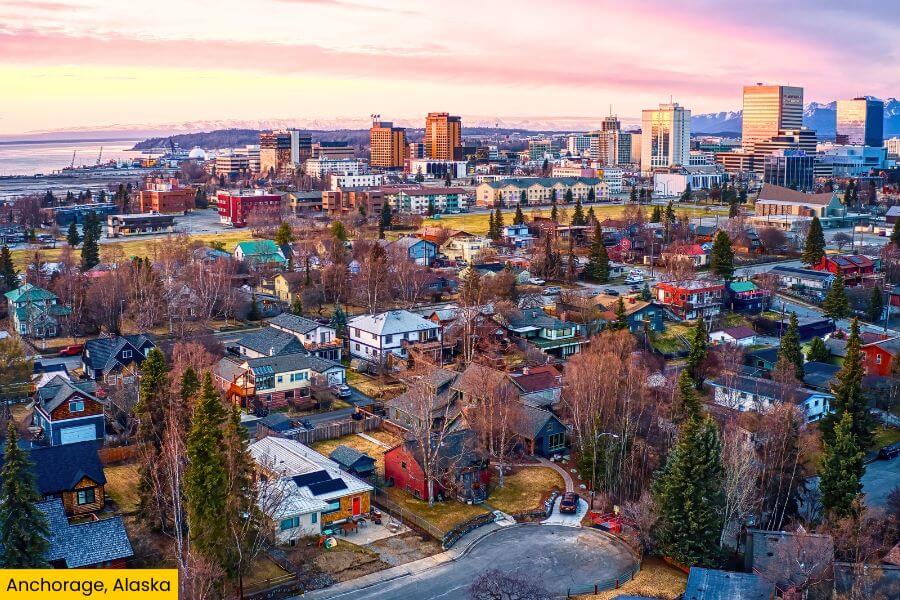
Crossing the border into Alaska, you’ll arrive in Anchorage, the state’s largest city, where modern neighborhoods sit between the waters of Cook Inlet and the snow-covered peaks of the Chugach Mountains.
Anchorage is a fantastic base for adventure, with highlights including the 11-mile Tony Knowles Coastal Trail, the Alaska Native Heritage Center, and the Alaska Wildlife Conservation Center, where you can see bears, moose, wood bison, and musk oxen up close.
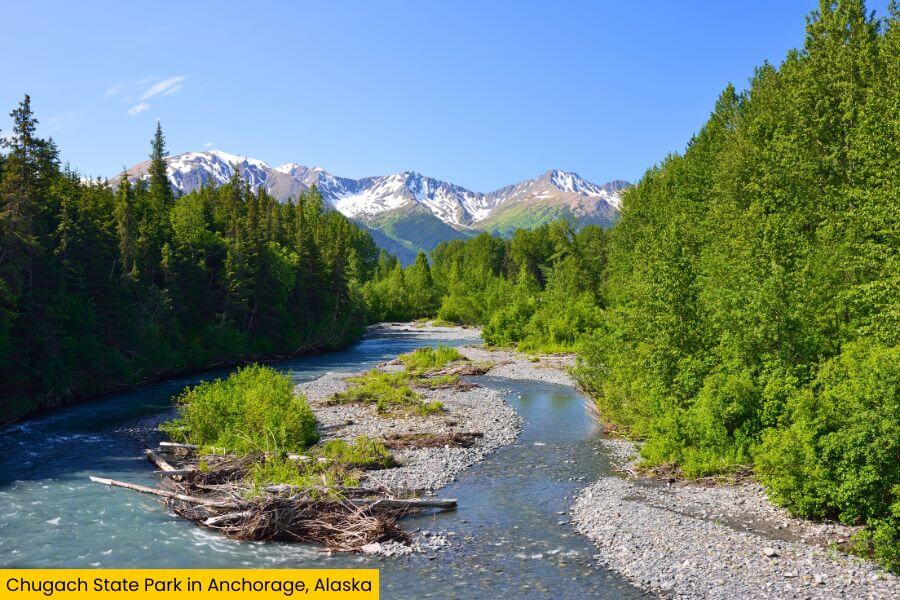
You can also explore Chugach State Park, one of the largest state parks in the United States at about 495,000 acres, offering hundreds of miles of trails and spectacular mountain scenery just minutes from downtown.
Keep an eye out for beluga whales in Cook Inlet, enjoy summer days with nearly 19 hours of daylight, and experience a city where wilderness and urban life come together in a way few places on Earth can match.
Related Posts