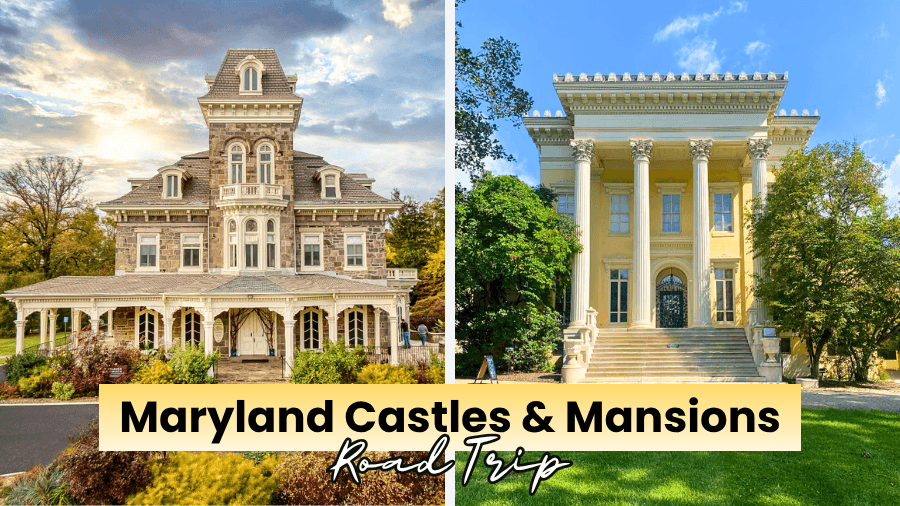
Who knew you could find grand mansions, castle-like towers, secret gardens, Gilded Age rooms, and even medieval knights without leaving Maryland?
This road trip takes you through centuries of architecture, from elegant estates and sprawling historic grounds to stone buildings that look like they belong in a storybook.
Along the way, you’ll step inside historic rooms, wander through carefully restored gardens, uncover surprising connections to American history, and discover some seriously unusual buildings hiding in plain sight.
There’s even a stop where sword fights, horseback jousting, and a four-course feast turn the castle theme into a full-blown experience.
So grab your road trip snacks and keep your camera handy, because Maryland has way more castles and magnificent mansions than you might expect.
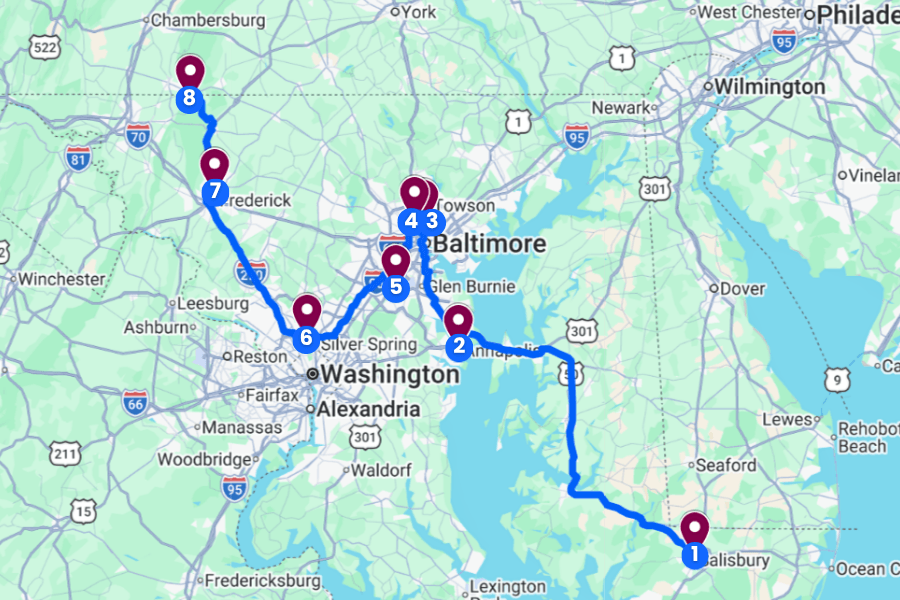
1. Poplar Hill Mansion
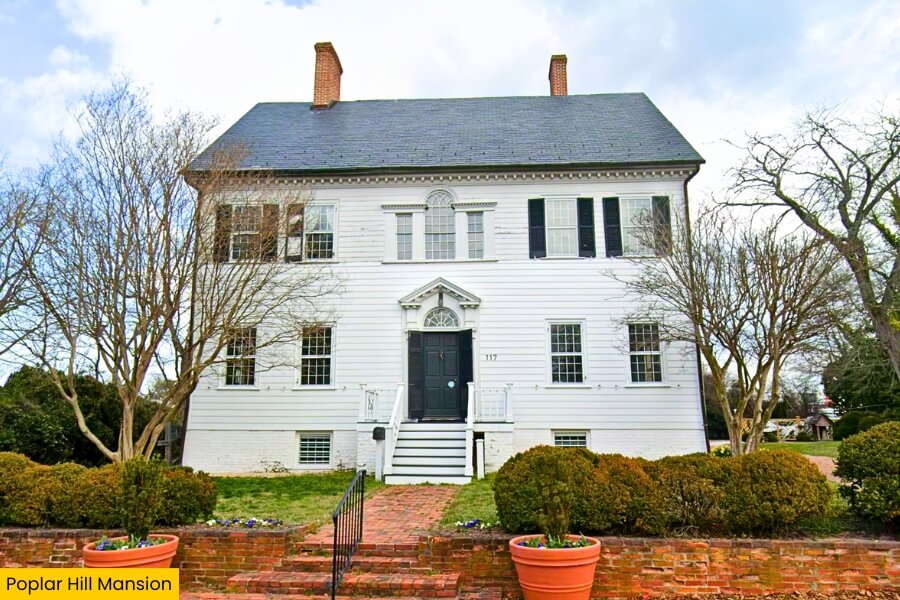
Poplar Hill Mansion in Salisbury is a stately Federal-style home built between 1795 and 1805 on land once part of a 357-acre plantation owned by Major Levin Handy.
Today, you can tour the restored mansion and check out period furniture, family belongings, and exhibits that show how wealthy Eastern Shore families lived during the early 1800s.
The house stands out for its symmetrical white clapboard exterior, tall windows, elegant central hallway, and carefully preserved rooms, while the surrounding grounds add gardens and shady trees to your road trip stop.
Poplar Hill Mansion is also one of Salisbury’s oldest surviving homes, and guided tours share stories about the Handy family, the property’s enslaved workers, and more than two centuries of local history.
2. William Paca House & Garden
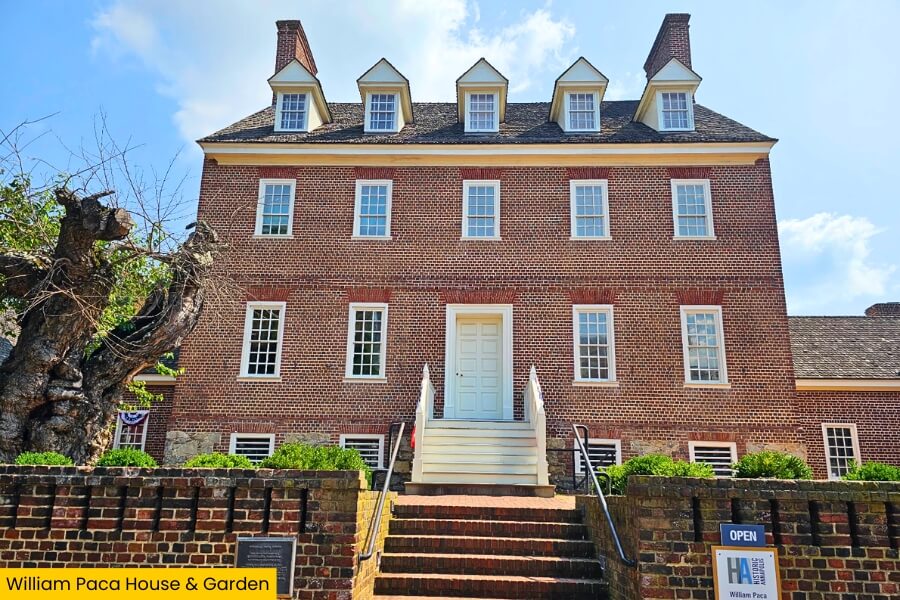
Next, head to Annapolis for the William Paca House & Garden, a five-part Georgian mansion built in the 1760s for William Paca, one of Maryland’s four signers of the Declaration of Independence.
Step inside the restored home to explore period rooms filled with 18th-century furniture, paintings, and details that show how Paca’s household operated before the American Revolution.
Out back, the two-acre garden steals the show with geometric flower beds, terraced paths, a reconstructed summerhouse, and a fish-shaped pond crossed by a small wooden bridge.
Located at 186 Prince George Street near the Maryland State House, the property is a National Historic Landmark and offers guided tours covering Paca, colonial Annapolis, and the enslaved people who lived and worked here.
3. Evergreen Museum & Library
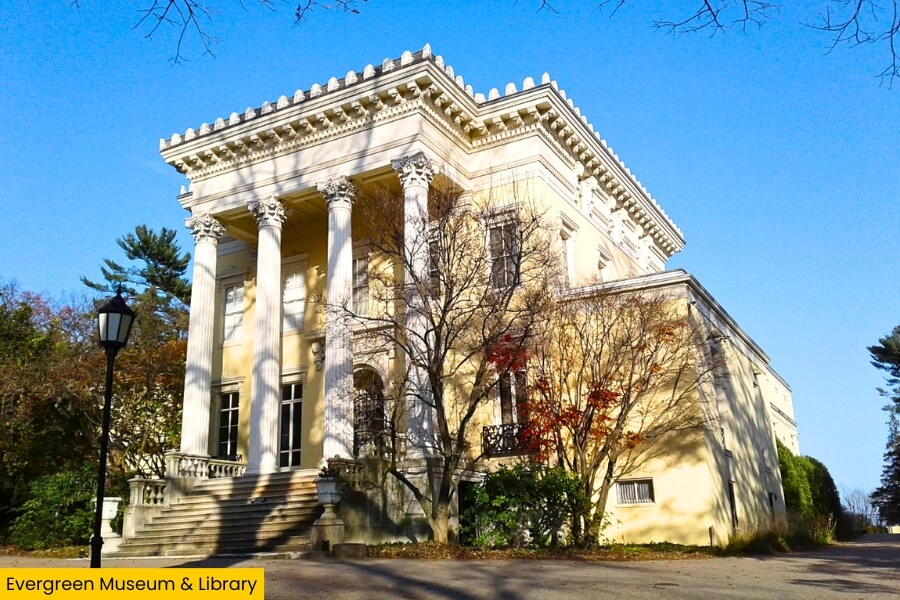
From Annapolis, keep the mansion tour rolling toward Baltimore, where Evergreen Museum & Library fills a grand 48-room Gilded Age home on the 26-acre former Garrett family estate.
The Garretts, who made their fortune through the Baltimore & Ohio Railroad, packed the house with Tiffany glass, Asian ceramics, rare books, paintings, and works by artists including Pablo Picasso and Amedeo Modigliani.
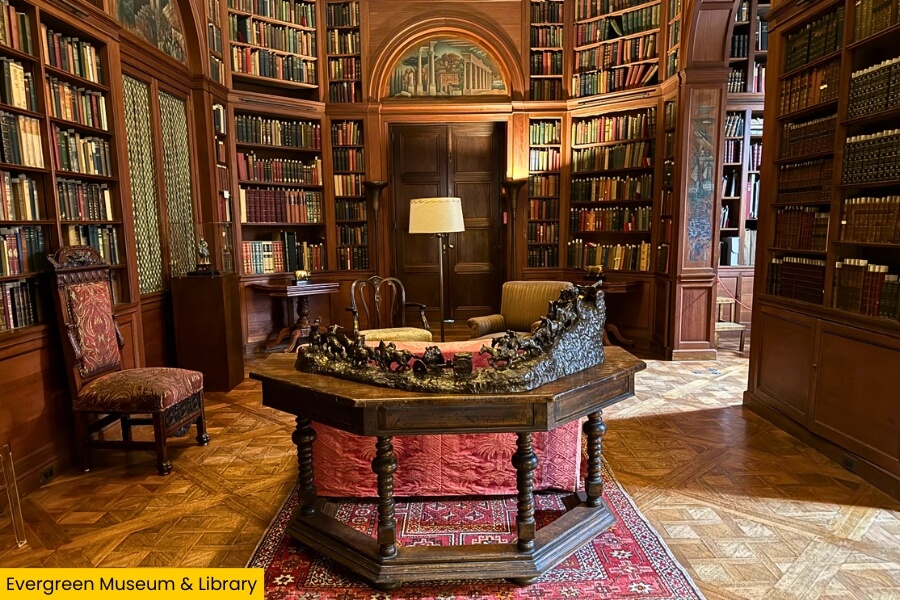
Guided tours take you through elaborate rooms such as the Main Library and Gold Bathroom, while outside you can explore formal gardens, sculptures, and the estate’s historic Bakst Theatre.
Now part of Johns Hopkins University, Evergreen stands at 4545 North Charles Street and mixes over-the-top architecture with about 50,000 objects, making every room feel like another surprise waiting behind the door.
4. Cylburn Mansion
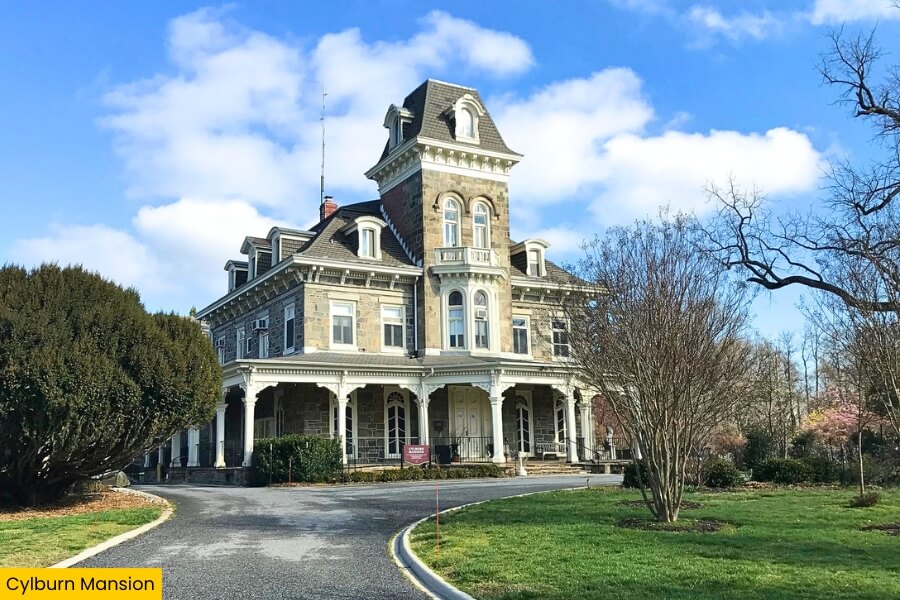
You won’t have to leave Baltimore for the next stop, because Cylburn Mansion is located inside the 200-acre Cylburn Arboretum at 4915 Greenspring Avenue.
Built in 1863 for businessman Jesse Tyson, the Italianate stone mansion features a mansard roof, tall arched windows, decorative plasterwork, and locally quarried gneiss that gives the exterior its distinctive gray color.
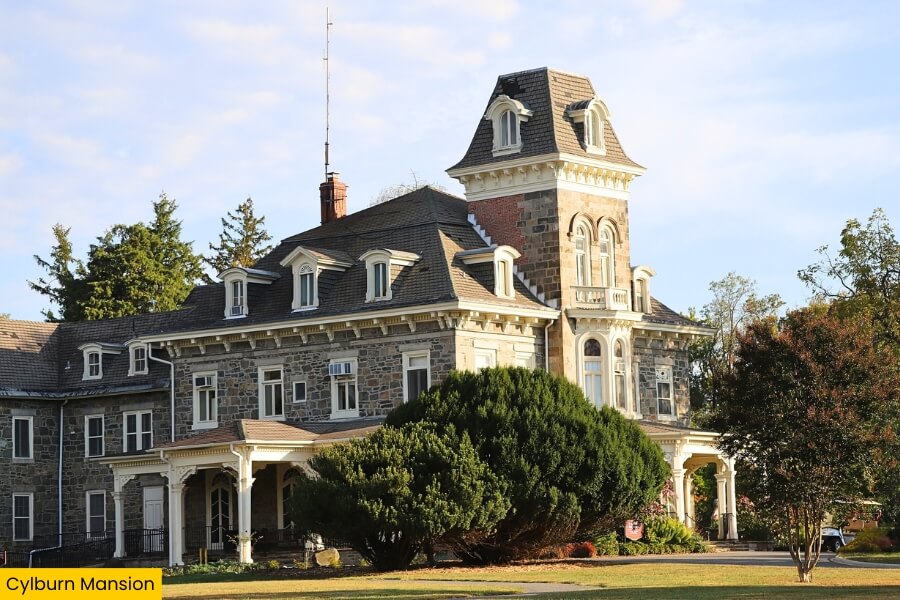
After checking out the mansion, wander through the arboretum’s gardens, wooded paths, and plant collections, including Japanese maples, magnolias, hollies, and hundreds of specimen trees spread across the grounds.
Cylburn also hosts seasonal events and nature programs, so this road-trip stop gives you an easy mix of 19th-century architecture, garden exploring, and peaceful walking without leaving the city.
Please note that the Cylburn mansion is not open year-round. It is usually open to the general public on the second Saturday and Sunday of each month.
5. Medieval Times Dinner & Tournament (Hanover)
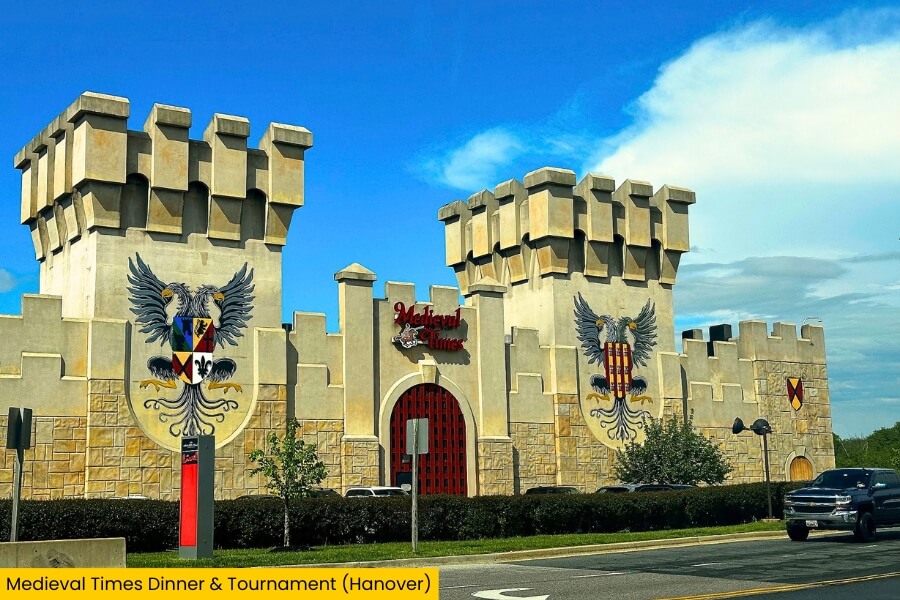
After touring Maryland’s historic mansions, get ready for a castle at Medieval Times Dinner & Tournament in Hanover, located at Arundel Mills.
Inside the castle-style venue, you’ll watch armored knights compete in horseback games, sword fights, hand-to-hand combat, and full-speed jousting while a queen oversees the roughly two-hour tournament.
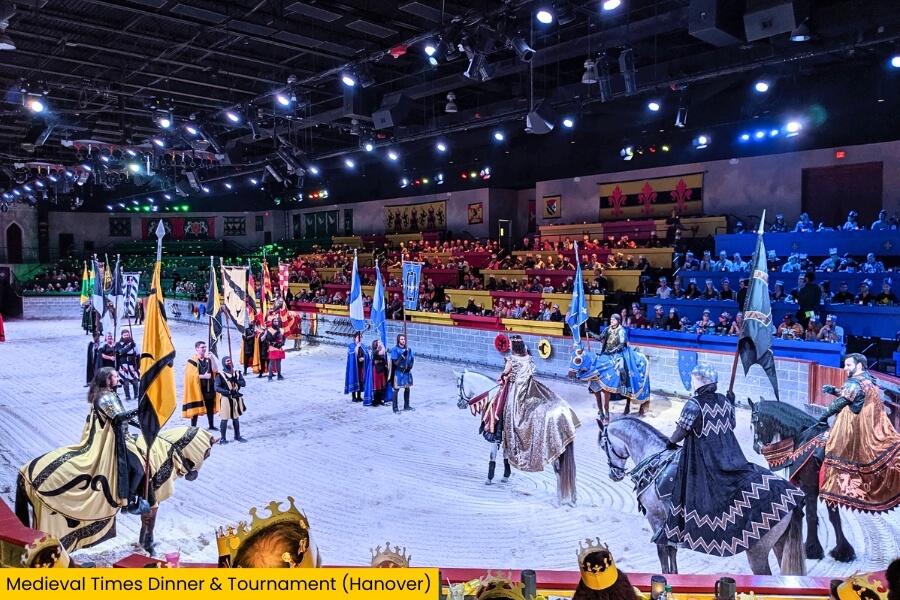
Your ticket also includes a four-course feast traditionally eaten without utensils, with roasted chicken, garlic bread, sweet buttered corn, herb-basted potato, and dessert served as the action unfolds.
This stop may be modern rather than historic, but cheering for your assigned knight, watching horses racing through the arena, and eating medieval-inspired food will make you feel like you’re inside a real castle.
6. National Park Seminary Historic District
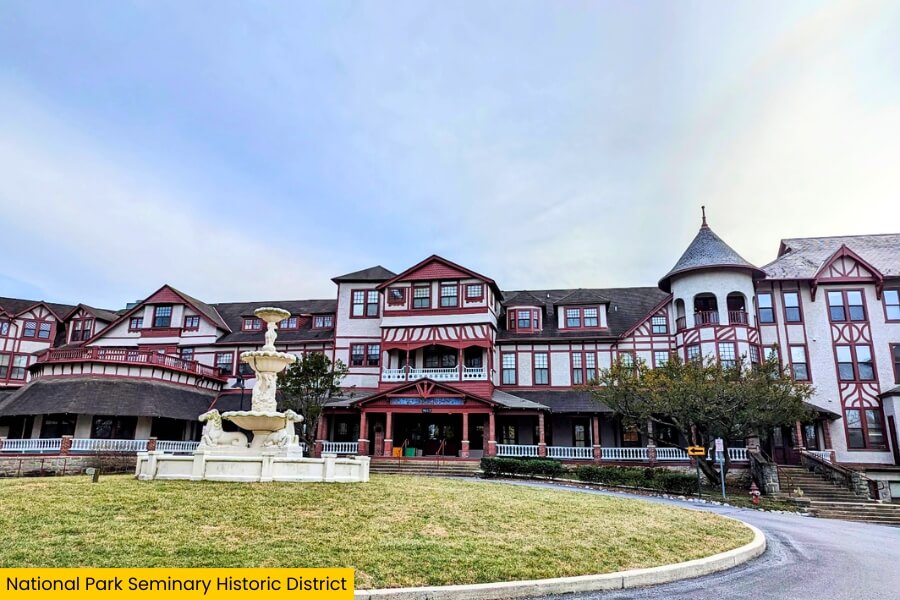
After all that jousting in Hanover, head to Silver Spring for the National Park Seminary Historic District, where an unusual collection of buildings makes this stop look straight out of a storybook.
The property began as a resort in 1887 and later became a women’s school, with students living among eye-catching structures inspired by a Japanese pagoda, Dutch windmill, Swiss chalet, Italian villa, and English castle.
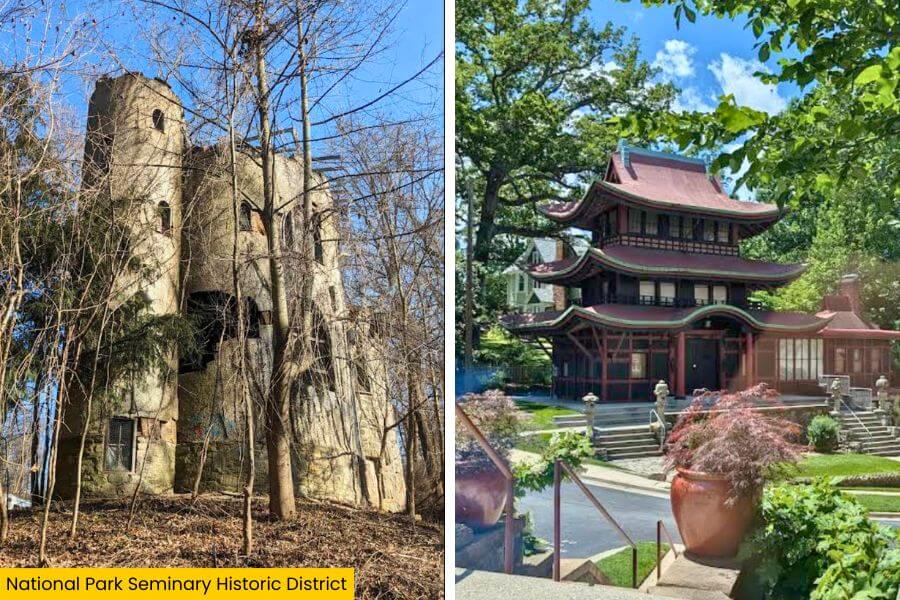
The star is the grand stone ballroom, but you’ll also spot towers, arches, balconies, decorative brickwork, and winding paths as you explore the grounds at 9615 Dewitt Drive.
Much of the complex has been turned into private residences, so make sure to admire the buildings respectfully while checking out one of Maryland’s strangest and most photogenic historic districts.
7. Rose Hill Manor Park & Museums
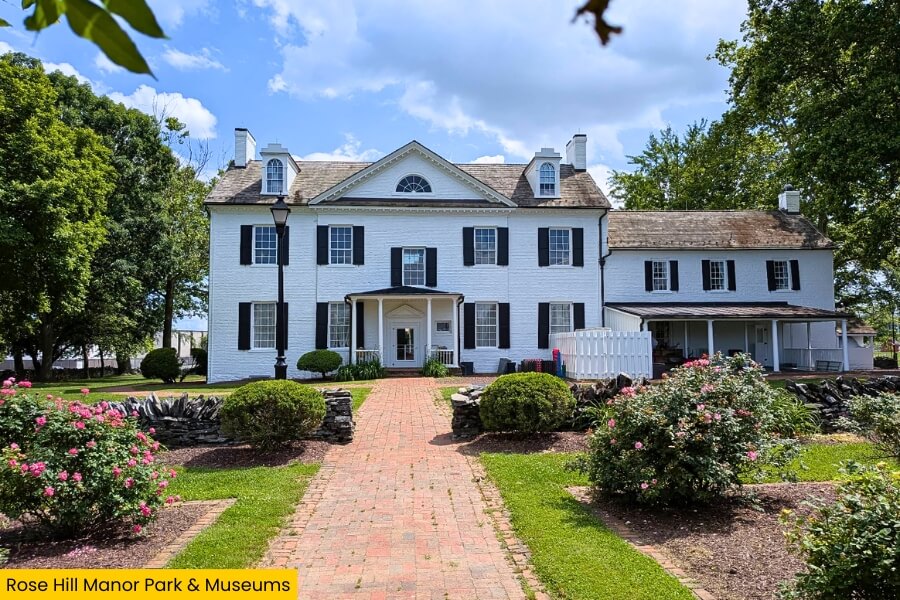
Explore Revolutionary-era stories at Rose Hill Manor Park & Museums in Frederick, where a stately brick manor sits on 46 acres at 1611 North Market Street.
Built in the 1790s, the house was home to Thomas Johnson, Maryland’s first elected governor, and today its furnished rooms and exhibits explore early American life, farming, transportation, and local history.
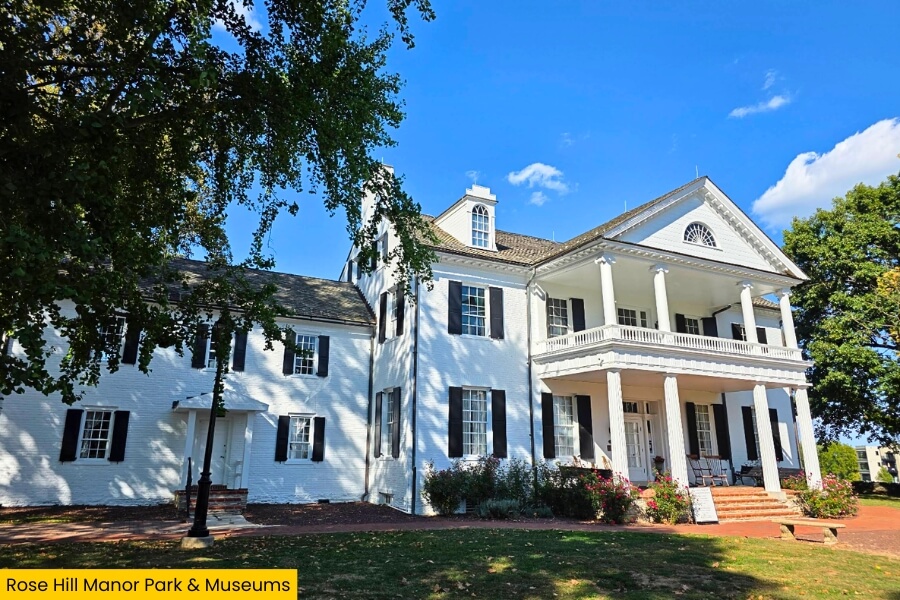
You can tour the manor, peek inside historic outbuildings, see antique carriages and farm equipment, and learn about the enslaved people who lived and worked on the property.
With its gardens, lawns, and hands-on museum displays, this stop is perfect for the whole family.
8. Ritchie Revival (Fort Ritchie)
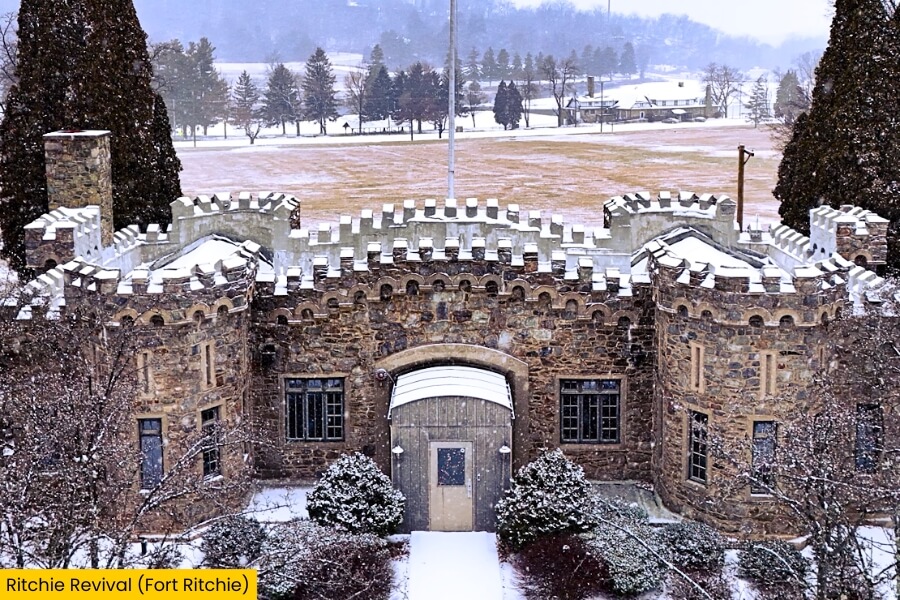
Finish your Maryland road trip in the mountains at Ritchie Revival, the ongoing transformation of historic Fort Ritchie in Cascade, near the Pennsylvania border.
The site became a Maryland National Guard training camp in 1926 and later trained the famous “Ritchie Boys” during World War II, while its stone buildings, castle-like architecture, and 19-acre Lake Royer create a finale unlike any earlier stop.
You can walk around the lake, grab food and drinks, and watch as old military buildings find new life through restoration and redevelopment.
It’s a fitting final stop because Fort Ritchie mixes military history with mountain scenery, wrapping up this adventure with one seriously unexpected Maryland landmark.
Related Posts