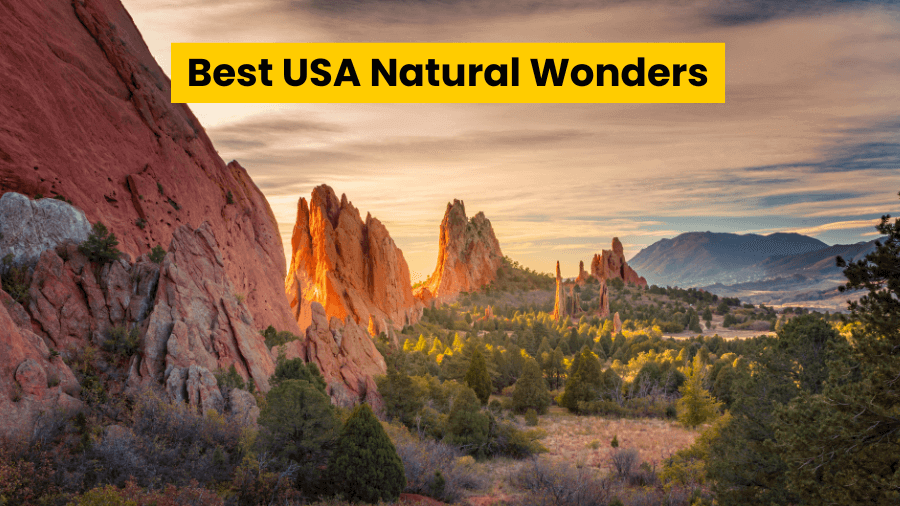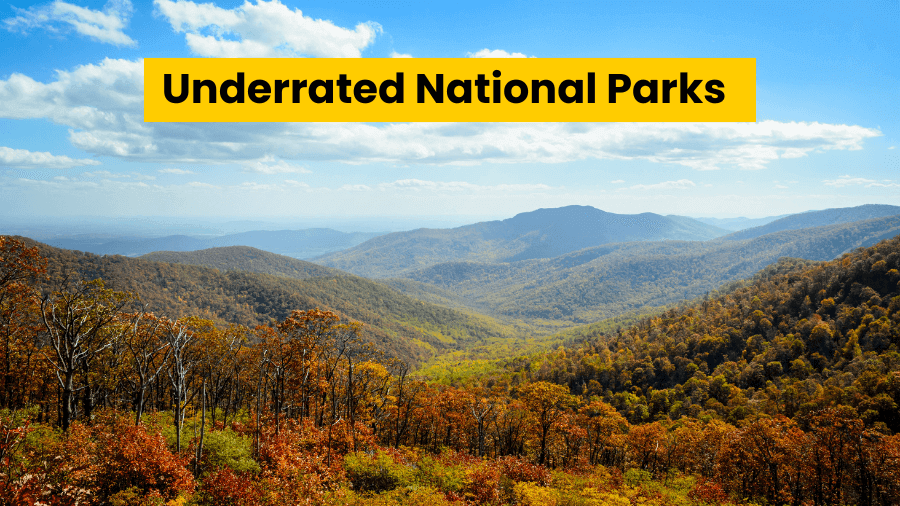
Are you tired of the crowds at Yellowstone or the long lines at Yosemite?
Ready to trade the well-trodden paths for hidden gems where nature still feels untouched and every corner is a new adventure?
In this article, we’re revealing America’s best-kept secrets—the lesser-known national parks that promise solitude, stunning landscapes and stories you’ll want to share.

From mystical sand dunes to lush forests and deep canyons, these under-the-radar parks are just waiting to be explored.
Lace up those hiking boots and join me as we uncover the hidden wonders of the US national parks you absolutely must visit!
1. Lassen Volcanic National Park, California
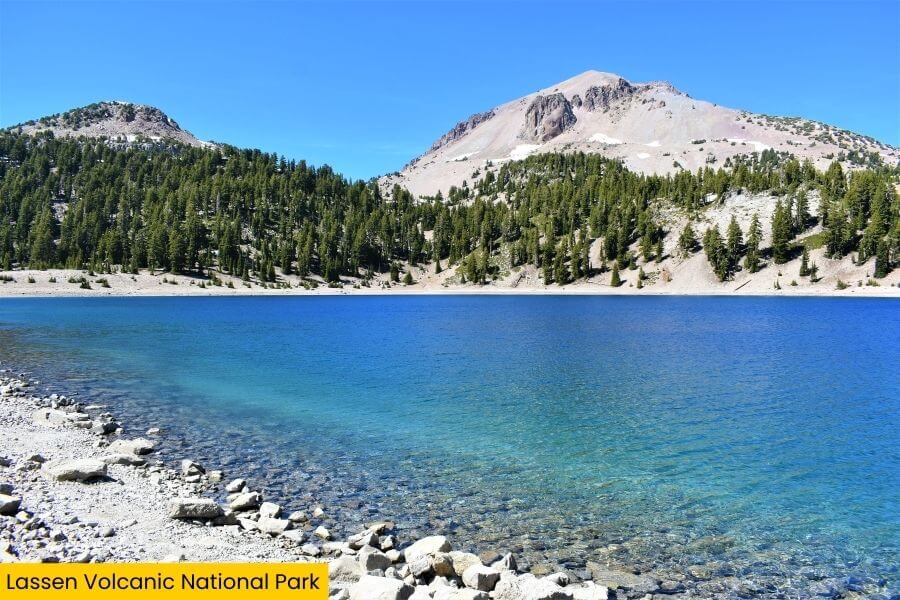
Forget Yellowstone, Lassen Volcanic National Park is a fascinating place known for its volcanic activity and stunning landscapes.
The park features steaming fumaroles, bubbling mud pots and clear mountain lakes, all set against a backdrop of jagged peaks and lush meadows.
One of the highlights is Lassen Peak, the largest plug dome volcano in the world, which you can hike for breathtaking views.
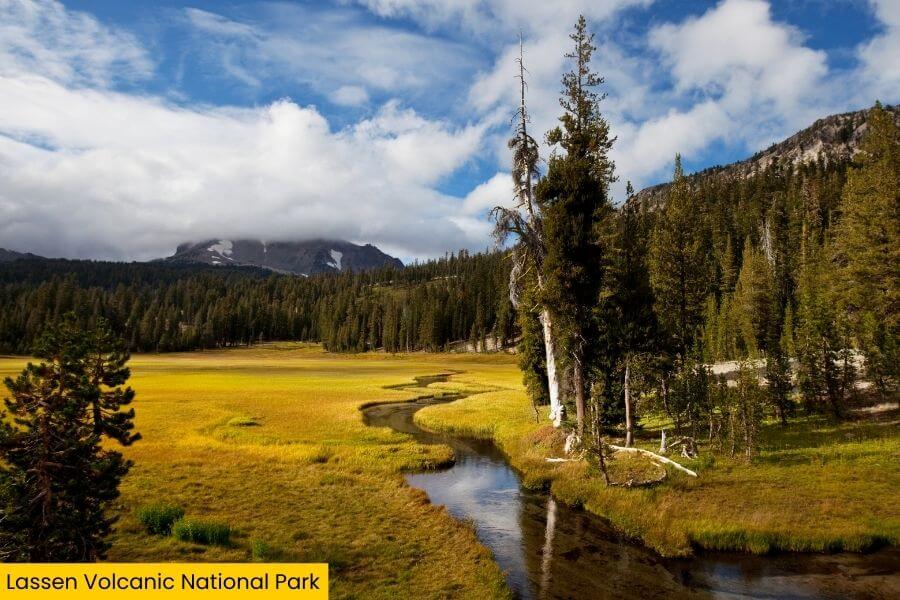
You can also explore Bumpass Hell which is a geothermal area with boiling springs and hissing steam vents.
The park is great for outdoor activities like hiking, camping, fishing and even stargazing, with its dark skies perfect for spotting the Milky Way due to minimal light pollution.
Fun fact: Lassen Volcanic National Park is one of the few places on Earth where you can find all four types of volcanoes—plug dome, shield, cinder cone and stratovolcano.
2. Guadalupe Mountains National Park, Texas

Guadalupe Mountains National Park is a stunning destination known for its rugged beauty and diverse landscapes that include mountains, canyons and deserts.
The park features the highest point in Texas, Guadalupe Peak, which stands at 8,751 feet, offering breathtaking views for those who hike to its summit.
You can also explore over 80 miles of trails that wind through scenic canyons, lush forests and desert scrub.
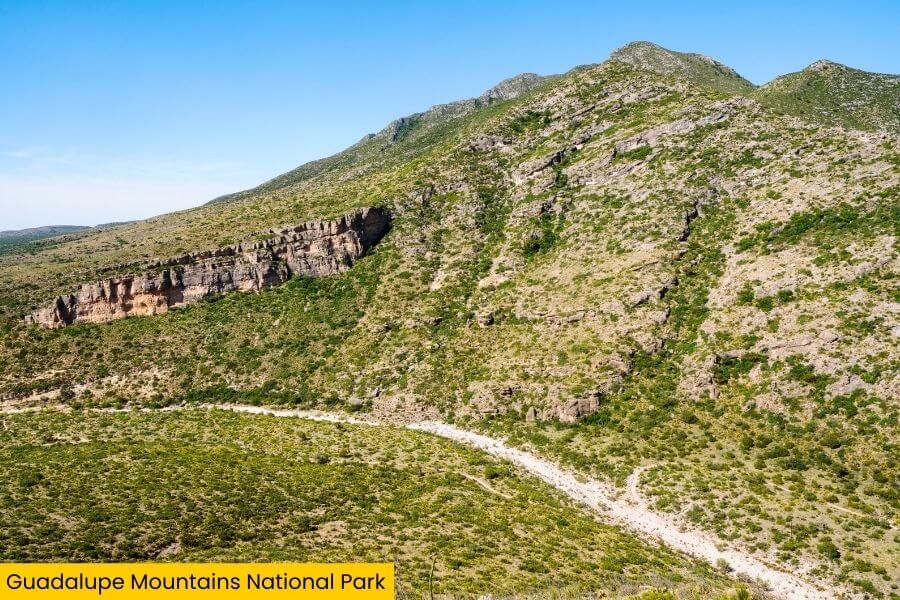
One popular trail is the McKittrick Canyon Trail which leads to the historic Pratt Cabin with beautiful fall foliage views.
The park is also home to El Capitan, a prominent limestone cliff that was a landmark for travelers in the past.
Fun fact: The Guadalupe Mountains were once an ancient reef submerged under an inland sea, which also formed the nearby Carlsbad Caverns.
3. Saguaro National Park, Arizona

Saguaro National Park is a unique and beautiful destination known for its iconic saguaro cacti, the largest cacti in the United States.
The park is split into two districts: the Tucson Mountain District to the west and the Rincon Mountain District to the east, each offering distinct landscapes and activities.
You can hike over 165 miles of trails, explore ancient petroglyphs and take a scenic drive through dense forests of towering saguaros.

The park is also home to diverse wildlife including coyotes, bobcats and over 200 species of birds.
Interestingly, Saguaro cacti can grow up to 40-60 feet tall and live for over 150 years, serving as a vital part of the desert ecosystem by providing habitat and food for various animals.
The park also holds cultural significance for the Tohono O’odham people, who consider the saguaro sacred.
4. Hot Springs National Park, Arkansas

Hot Springs National Park is a fascinating destination known for its natural thermal springs and long history.
The park features 47 hot springs that have been attracting visitors for centuries due to their believed healing properties.
One of the key attractions is Bathhouse Row which is a collection of historic bathhouses where you can still soak in the soothing thermal waters.

You can also explore scenic hiking trails that wind through lush forests and offer beautiful views of the Ouachita Mountains.
Additionally, the park is home to the Grand Promenade which is a lovely brick walkway that provides a relaxing stroll with views of the springs and historic buildings.
Hot Springs National Park was actually established back in 1832, making it one of the oldest protected areas in the United States, even predating the National Park Service.
5. Capitol Reef National Park, Utah

Capitol Reef National Park is a hidden gem known for its stunning rock formations.
The park’s standout feature is the Waterpocket Fold, a 100-mile-long wrinkle in the Earth’s crust that creates dramatic cliffs, canyons and domes.
You can hike through scenic trails, explore ancient petroglyphs and drive along the picturesque Scenic Drive for breathtaking views.

The Fruita Historic District, with its lush orchards and historic buildings, offers a glimpse into the past and a chance to pick fresh fruit during harvest season.
Capitol Reef is also an International Dark Sky Park, making it a fantastic spot for stargazing.
Fun fact: the park’s name comes from the white dome formations that resemble the U.S. Capitol building and the rocky “reef” that once made travel difficult.
6. Wind Cave National Park, South Dakota

Wind Cave National Park is a fascinating place known for its unique cave system and the extensive mixed-grass prairie landscapes above it.
The park is home to Wind Cave, one of the longest and most intricate caves in the world, famous for its rare boxwork formations that look like honeycombs.
Above ground, you can explore the largest remaining natural mixed-grass prairie in the United States, where bison, elk and prairie dogs roam freely.

When you visit, you can take a guided tour through the cave to see its intricate passages and learn about its history.
The Garden of Eden Tour is perfect for beginners, while the Natural Entrance Tour offers a bit more adventure.
Wind Cave is named for the strong gusts of air that blow in and out of its entrance, a phenomenon caused by changes in atmospheric pressure.
7. Channel Islands National Park, California

Channel Islands National Park is a stunning and remote destination made up of five unique islands: Anacapa, Santa Cruz, Santa Rosa, San Miguel and Santa Barbara.
Known as the “Galápagos of North America,” these islands are home to over 2,000 species of plants and animals, many of which are found nowhere else on Earth.
You can enjoy a variety of activities such as hiking scenic trails, snorkeling in the vibrant kelp forests and kayaking through sea caves.

You can also explore the seabird nesting colonies on Anacapa Island or hike up to Inspiration Point for breathtaking views.
One of the highlights is the opportunity to see wildlife including sea lions, dolphins and even whales during certain times of the year.
Accessible only by boat or plane from nearby Los Angeles, the park provides a peaceful escape from city life.
8. Black Canyon of the Gunnison National Park, Colorado

Forget the Grand Canyon, instead visit the Black Canyon of the Gunnison National Park which is a breathtaking destination known for its dramatic and steep black cliffs.
The park features some of the oldest rock formations in North America, sculpted by the Gunnison River over millions of years.
You can enjoy stunning views from the South Rim’s 12 overlooks, with favorites like Chasm View and Painted Wall.
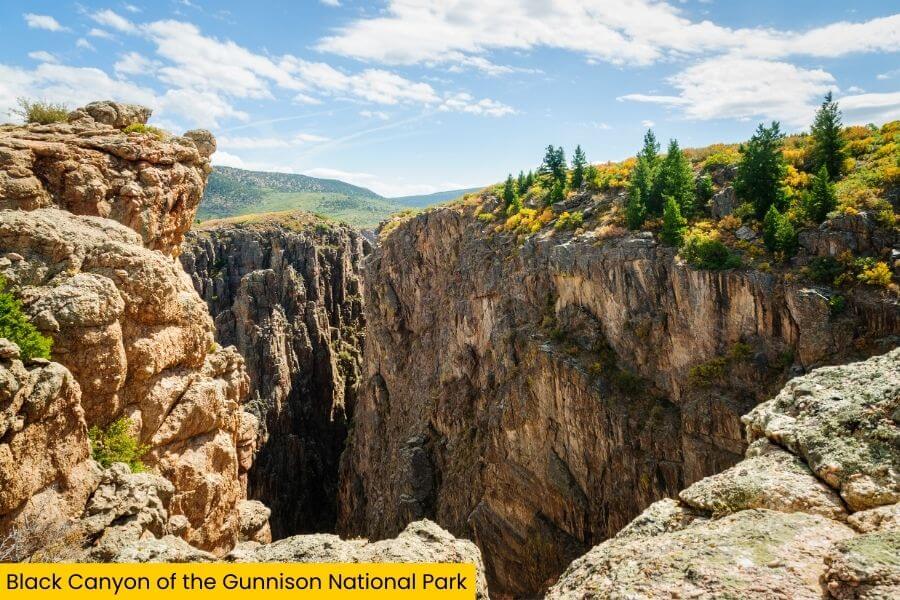
For a thrilling experience, you can even drive along the steep East Portal Road to the canyon floor or hike the challenging trails down to the river.
The park is also designated as an International Dark Sky Park, making it perfect for stargazing and night-sky photography.
Fun fact: parts of the canyon receive only 33 minutes of sunlight a day due to its narrow and deep structure!
9. Theodore Roosevelt National Park, North Dakota
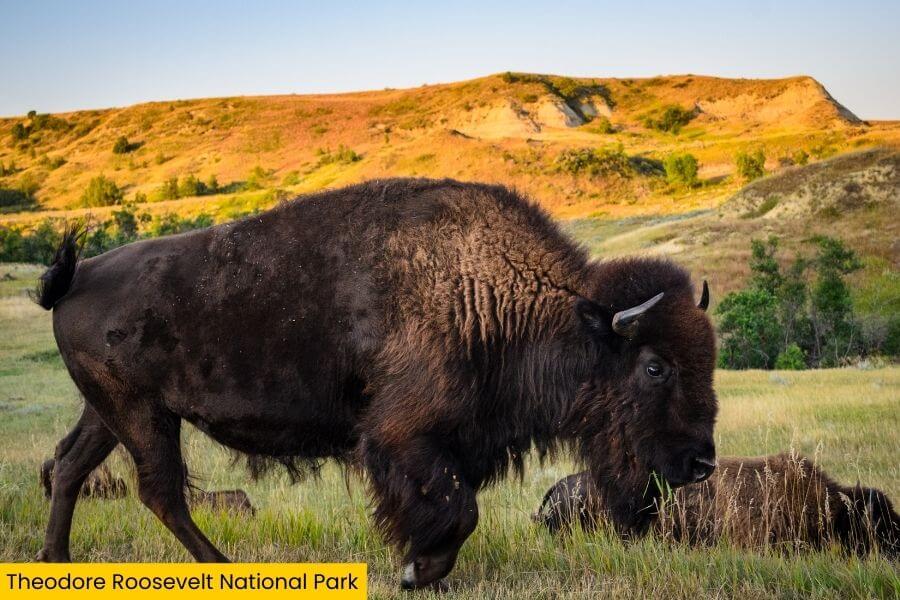
Theodore Roosevelt National Park is a beautiful place named after the 26th President of the United States, who loved nature and worked hard to protect it.
The park features stunning badlands, rolling hills and wide-open prairies, showcasing the diverse landscapes of the Northern Great Plains.
You can hike scenic trails, take picturesque drives and watch wildlife like bison, elk and wild horses.

One of the park’s highlights is the South Unit’s Painted Canyon, with its colorful rock layers and sweeping views.
The park also has a rich history, as President Roosevelt spent time here in the late 1800s, which inspired his conservation efforts.
Interestingly, Theodore Roosevelt National Park is home to one of the largest remaining populations of black-tailed prairie dogs.
10. North Cascades National Park, Washington

North Cascades National Park is a breathtaking wilderness area known for its rugged beauty and diverse landscapes.
The park features jagged peaks, deep forested valleys and over 300 glaciers, earning it the nickname “American Alps” for its dramatic scenery.
You can enjoy a variety of activities such as hiking nearly 400 miles of trails, fishing in pristine lakes and rivers, and boating on Ross Lake and Lake Chelan.

One of the park’s highlights is the stunning Diablo Lake Vista Point which offers panoramic views of turquoise waters and surrounding mountains.
North Cascades actually has more glaciers than any other U.S. park outside of Alaska, making it a unique destination for glacier viewing.
For those interested in history, the park also preserves the legacy of early Native American inhabitants and fur traders.
11. New River Gorge National Park, West Virginia

New River Gorge National Park is a stunning natural area known for its deep canyons and the ancient New River, which is one of the world’s oldest rivers.
The park stretches for 53 miles and features the iconic New River Gorge Bridge, which is the longest single-arch bridge in the Western Hemisphere.
You can enjoy a variety of outdoor activities such as hiking nearly 100 miles of trails, whitewater rafting, and rock climbing on over 1,600 established routes.

The park is also rich in history, with old mining towns like Thurmond and Kaymoor offering a glimpse into the past.
Interestingly, the New River actually flows south to north, which is unusual for major rivers in the United States.
The park is also filled with wildlife, with opportunities to see animals like deer, otters and over 300 species of birds.
12. Dry Tortugas National Park, Florida

Dry Tortugas National Park is a stunning and remote paradise located about 70 miles west of Key West.
The park is famous for its crystal-clear blue waters, vibrant coral reefs and abundant marine life, making it a top destination for snorkeling and diving.
One of the key features is Fort Jefferson, a massive 19th-century brick fortress that is the largest of its kind in the Western Hemisphere.
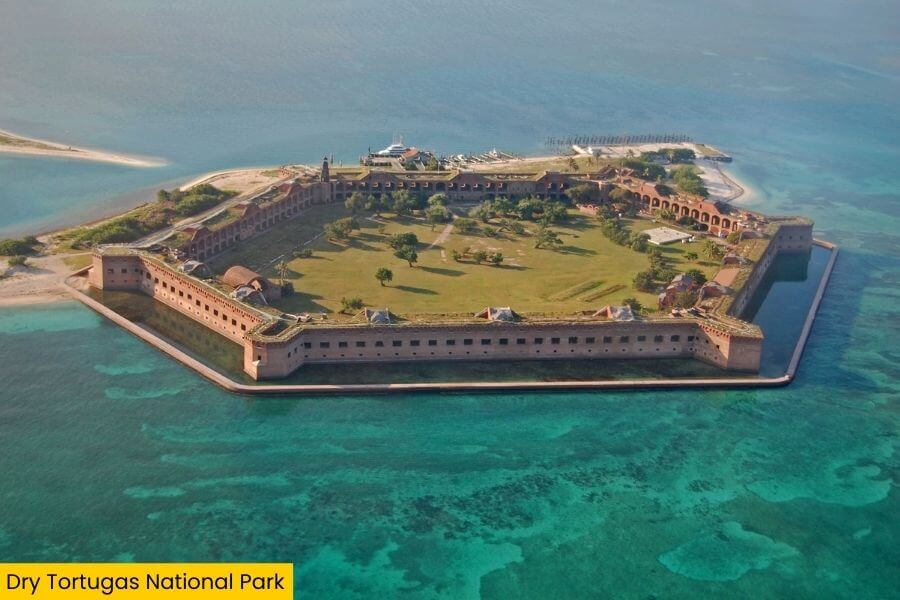
You can explore the fort, learn about its history and enjoy panoramic views from its walls.
The park is only accessible by boat or seaplane which makes it a secluded paradise.
The park’s name comes from a Spanish explorer, who named it “Las Tortugas” for the many sea turtles he found there, and “Dry” was later added to indicate the lack of fresh water.
Activities at the park include birdwatching, as it is a nesting ground for several tropical bird species, and camping on Garden Key for those who want an overnight adventure.
13. Mesa Verde National Park, Colorado

Mesa Verde National Park is a fascinating place known for its well-preserved cliff dwellings built by the Ancestral Pueblo people over 700 years ago.
The park features more than 5,000 archaeological sites, including 600 cliff dwellings which makes it the largest archaeological preserve in the United States.
One of the most famous sites is Cliff Palace, the largest cliff dwelling in North America, which you can tour to see its intricate stonework and learn about its history.

You can hike scenic trails, explore the ancient ruins and enjoy panoramic views from Park Point, the highest point in the park at 8,572 feet.
The park also offers ranger-guided tours, where you can get up close to the cliff dwellings and hear stories about the ancient people who used to live there.

Mesa Verde actually means “green table” in Spanish, named for the lush juniper trees that cover the area.
The park is also a UNESCO World Heritage Site and an International Dark Sky Park, perfect for stargazing.
14. Great Basin National Park, Nevada
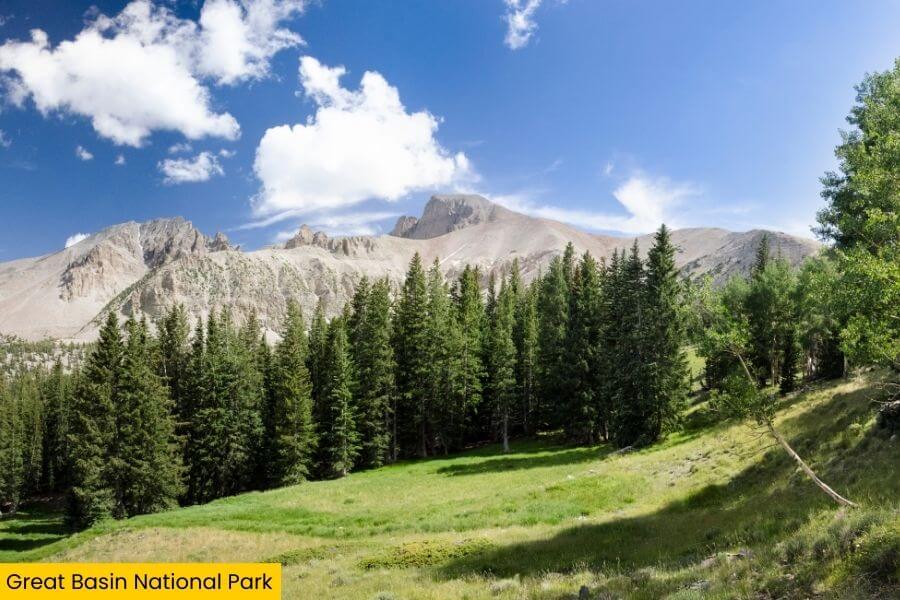
Great Basin National Park is a stunning and remote destination known for its diverse landscapes including mountains, valleys and caves.
The park is home to Wheeler Peak, which soars over 13,000 feet and offers breathtaking views and challenging hikes.
One of the park’s highlights is the ancient bristlecone pines, some of the oldest living trees on Earth, with some over 5,000 years old.

You can also explore the famous Lehman Caves which is filled with beautiful stalactites, stalagmites and other fascinating formations.
Great Basin National Park is also amazing for stargazing as it boasts some of the darkest night skies in the country, perfect for spotting the Milky Way and constellations.
The park is named after the Great Basin region, an area where water does not flow to the ocean but instead collects in lakes and wetlands.
15. Mammoth Cave National Park, Kentucky

Mammoth Cave National Park is an incredible destination known for having the longest cave system in the world, with over 400 miles of explored passages.
The park features stunning limestone formations, deep caverns and fascinating underground rivers that you can see on a guided cave tour.
You can also enjoy hiking on scenic trails above ground, camping in beautiful natural surroundings and exploring the park’s rich biodiversity.
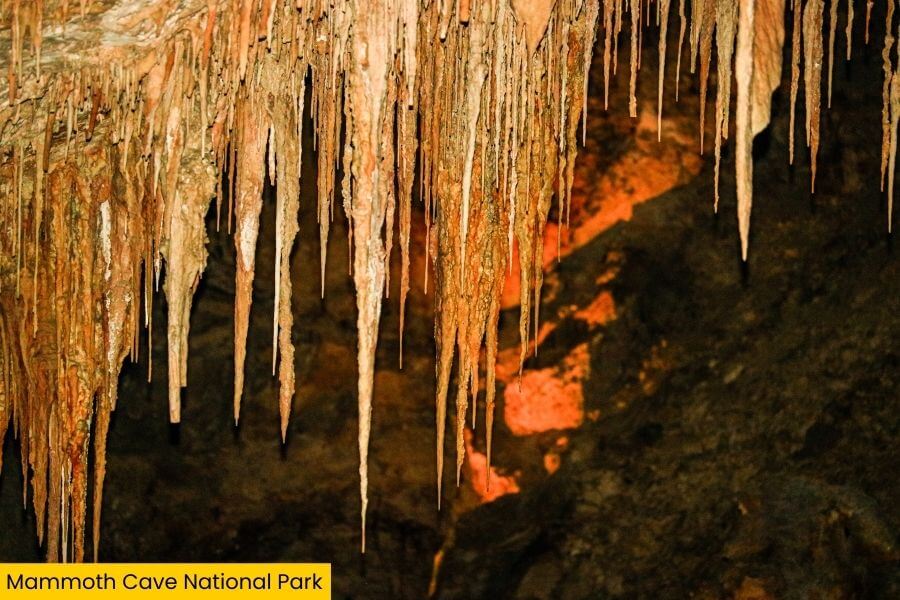
One of the park’s highlights is the Frozen Niagara tour, where you can see spectacular flowstone formations that look like a frozen waterfall.
The park is also home to many rare species of plants and animals, some of which are found nowhere else on Earth.
Mammoth Cave was actually designated as a UNESCO World Heritage Site in 1981 and is also part of the larger Mammoth Cave Biosphere Reserve.
16. Isle Royale National Park, Michigan

Isle Royale National Park is a remote and rugged island paradise located in the northwest corner of Lake Superior.
The park is known for its stunning wilderness, featuring over 400 smaller islands and surrounding waters.
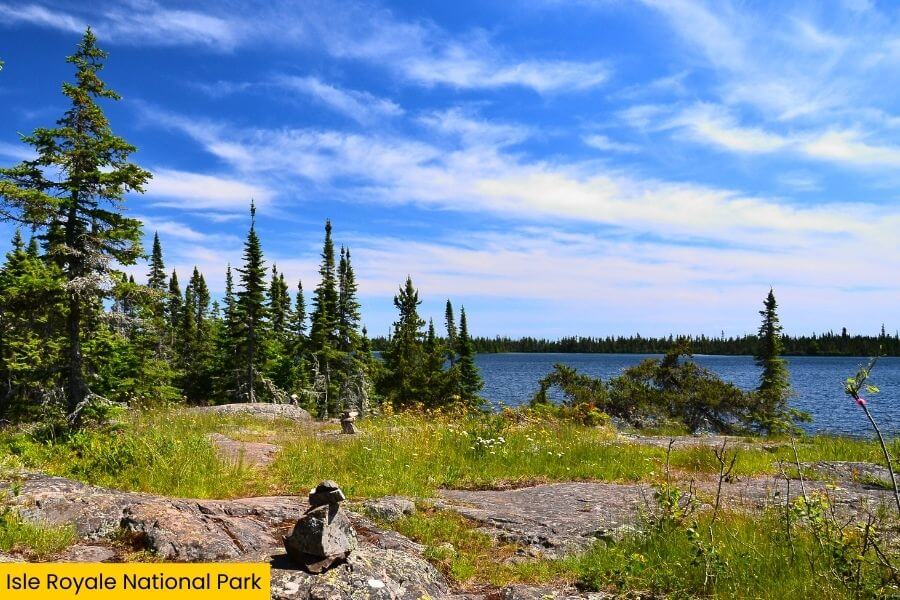
You can enjoy a variety of activities such as hiking on 165 miles of trails as well as canoeing and kayaking through scenic bays and crystal clear waters.
One of the park’s highlights is the Greenstone Ridge Trail, a 40-mile hike that offers breathtaking views and leads to the highest point on the island, Mount Desor.
The park is also famous for its wildlife, including moose and wolves, which have been the focus of scientific studies for decades.

Interestingly, Isle Royale is the only national park in the U.S. that completely closes during the off-season, from November to mid-April, due to harsh weather conditions.
Accessible only by ferry, seaplane or private boat, Isle Royale offers a true escape from the hustle and bustle of everyday life.
17. Cuyahoga Valley National Park, Ohio

Cuyahoga Valley National Park is a beautiful natural area that showcases the stunning landscapes along the Cuyahoga River.
The park features rolling hills, lush forests and cascading waterfalls, with the 65-foot Brandywine Falls being one of the most famous and picturesque spots.
You can enjoy a variety of activities such as hiking the Towpath Trail, biking on scenic paths and exploring historic sites like the Ohio & Erie Canal.
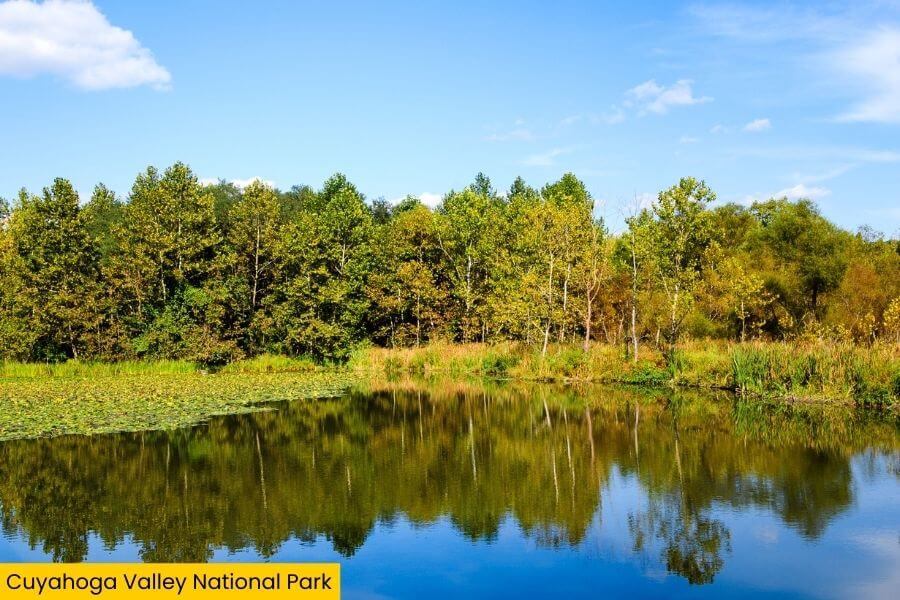
Cuyahoga Valley National Park is actually home to over 150 species of birds, making it a paradise for birdwatchers.
Whether you’re picnicking, birdwatching or just soaking in the beautiful scenery, Cuyahoga Valley National Park offers an unforgettable experience.
18. Congaree National Park, South Carolina

Congaree National Park is a stunning and unique wilderness area that protects one of the largest remaining old-growth bottomland hardwood forests in the United States.
The park is known for its towering trees including massive bald cypress and sweetgum trees, which create a lush canopy overhead.
You can enjoy various activities such as hiking on the boardwalk or dirt trails, canoeing along the Congaree River and birdwatching for over 200 species of birds.

As well as birds, you’ll also be able to see deer, otters and more than 30 species of amphibians.
The park is also designated as a UNESCO Biosphere Reserve, highlighting its importance for conservation.
19. Shenandoah National Park, Virginia

Shenandoah National Park is a breathtaking natural area known for its stunning Blue Ridge Mountain vistas and lush, green forests.
The park spans over 200,000 acres and features the scenic Skyline Drive, a 105-mile road that offers spectacular views of the surrounding landscape.
You can enjoy hiking on more than 500 miles of trails, including a portion of the famous Appalachian Trail, which provides opportunities for both short walks and challenging hikes.

One of the park’s highlights is its waterfalls, with 36 to explore, including the popular and easily accessible Dark Hollow Falls.
Shenandoah also offers chances to see black bears, deer and a variety of bird species.
Whether you’re camping under the stars, picnicking with family or simply taking in the panoramic views from the overlooks, Shenandoah National Parkis a must-visit.
20. Indiana Dunes National Park, Indiana

Indiana Dunes National Park is a beautiful natural area located along the southern shore of Lake Michigan, known for its stunning sand dunes and diverse ecosystems.
The park features sand dunes that can reach nearly 250 feet high, along with wetlands, forests and 15 miles of beaches along Lake Michigan.
You can enjoy a variety of activities such as hiking over 50 miles of trails, swimming in the lake, birdwatching and picnicking at scenic spots.

The park is famous for its remarkable biodiversity and is home to more than 1,100 plant species and various wildlife, including deer and migratory birds.
One of the highlights is the Dune Succession Trail, where you can see how the landscape changes from beach to forest.
Fun fact: Indiana Dunes National Park was designated a national park in 2019, making it one of the newest national parks in the United States.
Related Posts