Across North Carolina, abandoned communities filled with empty houses, crumbling foundations, and silent streets are slowly being reclaimed by nature.
Some disappeared after devastating floods, while others faded when mills closed, transportation routes changed, or entire communities packed up and moved away.
A few are easy to explore, but others require long hikes, boat rides, or trips into remote corners of the state where cell service may disappear before you arrive.
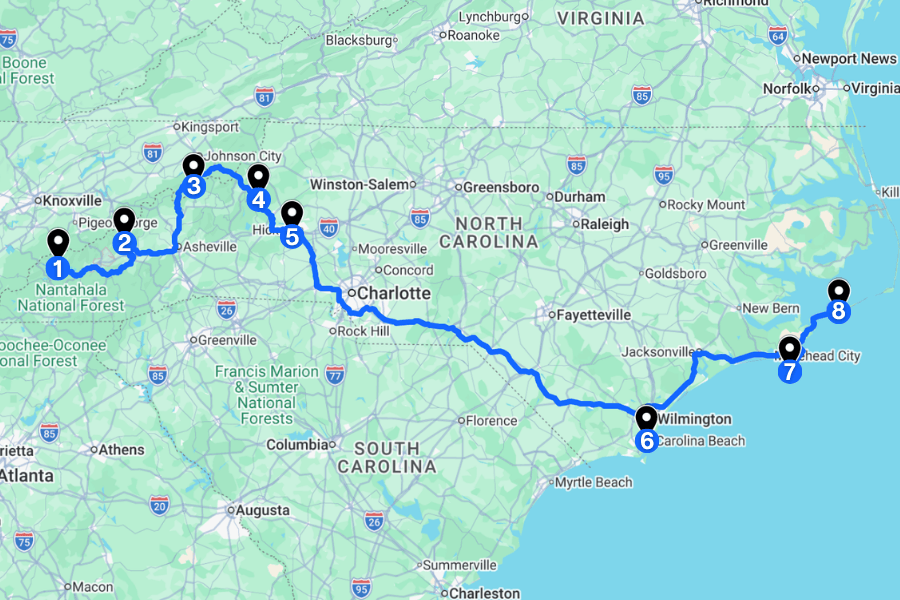
No matter how you reach them, these eight creepy ghost towns reveal what the state left behind, along with strange stories hidden beyond their empty doorways.
1. Proctor
Proctor is an abandoned lumber town in Swain County, hidden along Hazel Creek on the north shore of Fontana Lake in Great Smoky Mountains National Park.
It grew into a busy company town after W.M. Ritter Lumber Company arrived in the early 1900s, bringing logging jobs, new homes, schools, stores, and churches.
But that growth didn’t last, and by 1944, residents had moved away as rising waters from Fontana Dam submerged parts of the area and cut off road access.
Today, you can only reach the remote site by boat or a long hike, where you’ll find old mill ruins, a single remaining house, and cemeteries hidden in the woods.
2. Cataloochee
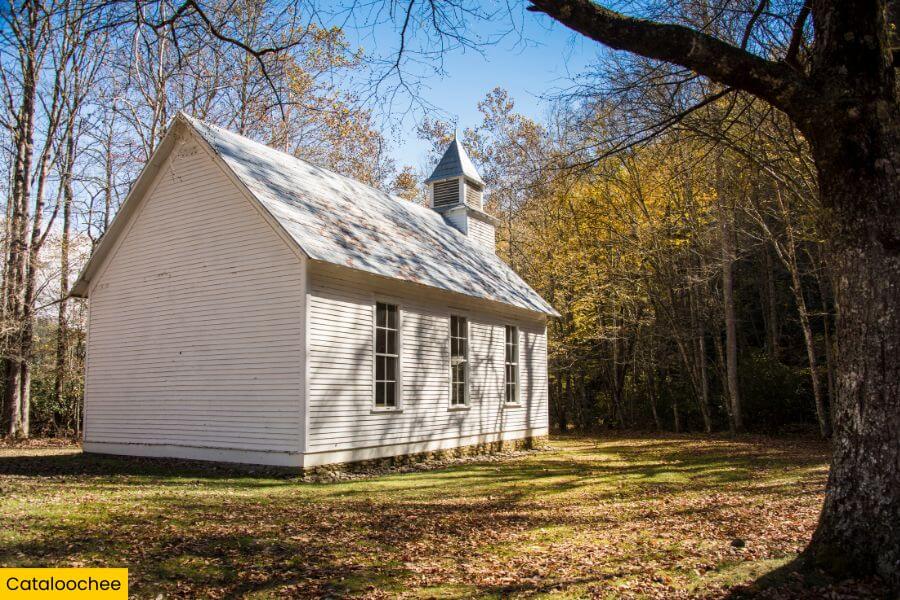
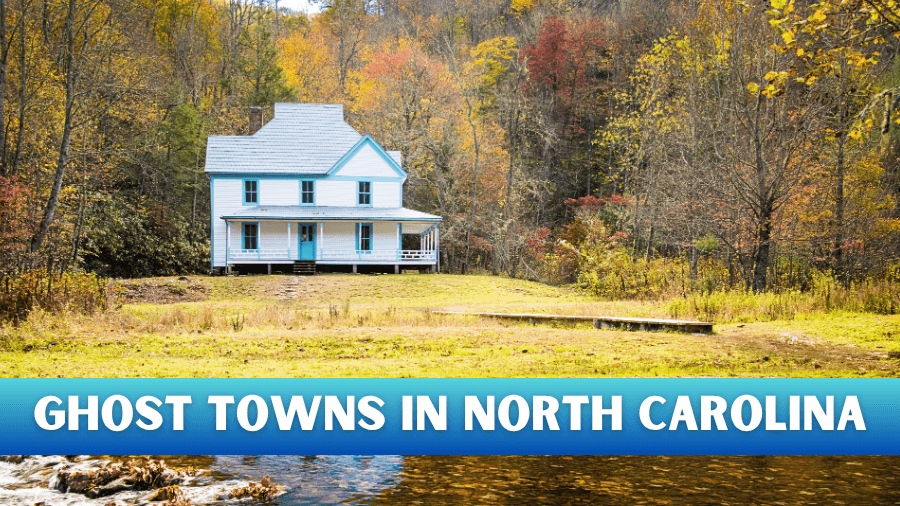
Deep in Great Smoky Mountains National Park is Cataloochee, where old homes and historic buildings still stand as reminders of a once-busy mountain community.
By 1910, about 1,251 people lived in Big and Little Cataloochee, farming the land, raising livestock, and building a close-knit community around schools and churches.
Plans for the national park eventually pushed most residents to leave, and by 1938, only a few remained as forests began reclaiming the former farms and orchards.
It feels strangely frozen in time today, and exploring the Palmer House, Beech Grove School, Caldwell House, and Palmer Chapel gives you a glimpse into life here long ago.
3. Lost Cove
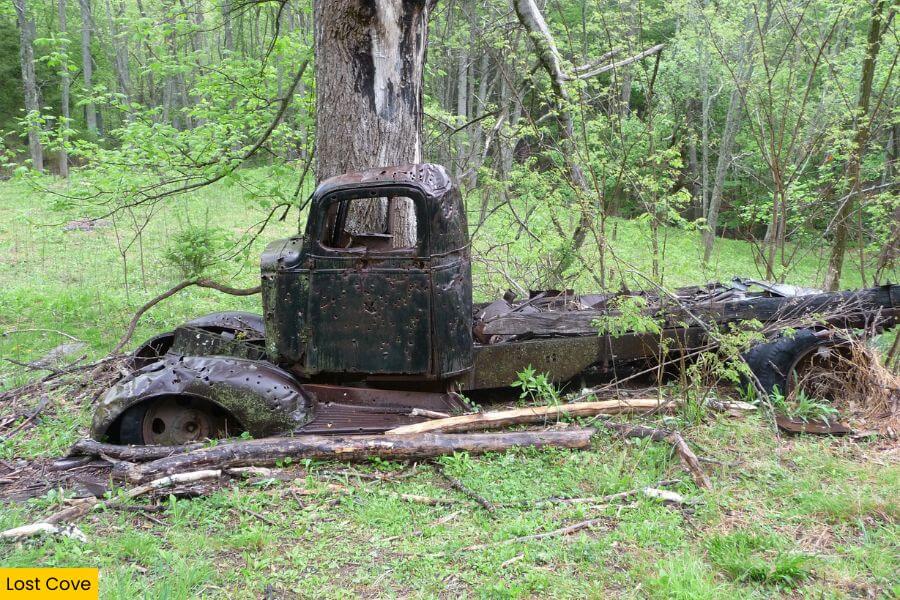
From Cataloochee, the ghost-town hunt gets even wilder at Lost Cove, perched above the Nolichucky River in Yancey County near the Tennessee border.
Families began settling here in the 1800s, making a living through farming, logging, and even moonshine production despite its remote location and lack of road access.
When passenger trains no longer stopped nearby, life got tougher, leading the last family to leave in 1957, decades before fires destroyed most of what remained.
Reaching it today requires a challenging hike through Pisgah National Forest, where three old houses, a cemetery, and a rusted Chevy still offer eerie reminders of the past.
4. Mortimer
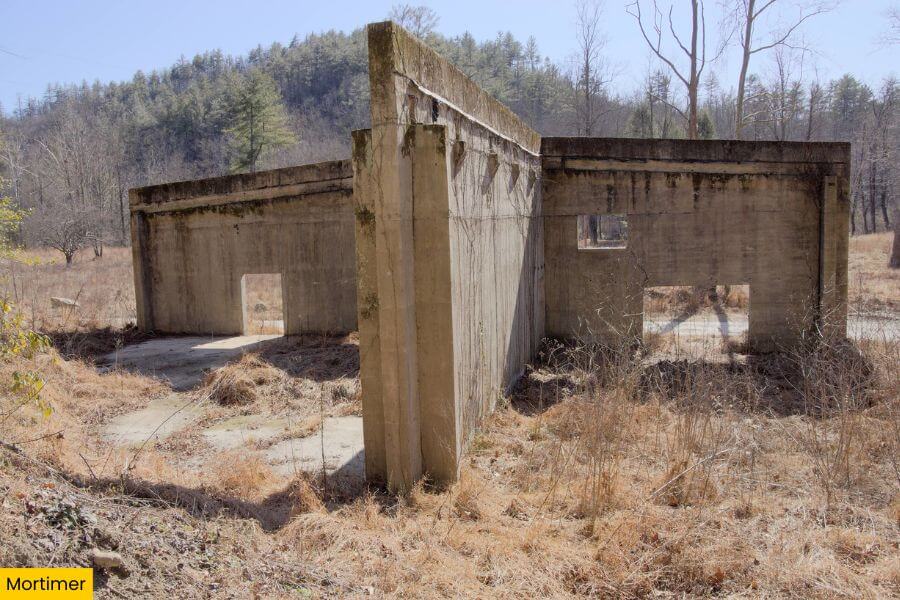
After the hard-to-reach ruins of Lost Cove, the ghost-town journey continues to Mortimer in Wilson Creek Township, Caldwell County.
This former mill town came to life after Ritter Lumber Company arrived in 1904, growing to 800 residents with houses, shops, a church, a school, and a movie theater.
By the mid-1900s, fires and repeated floods had taken their toll, and a devastating flood in 1940 finally left the community abandoned.
Now, you can explore crumbling foundations and old mill remains that nature is slowly reclaiming, giving your stroll a slightly spooky atmosphere.
5. Henry River Mill Village
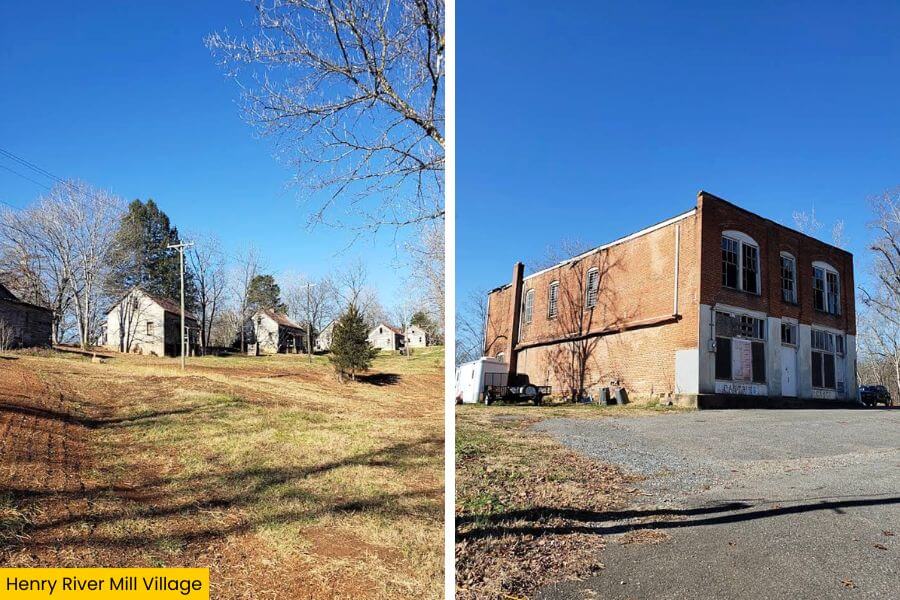
Mortimer’s forest-covered remains give way to a more cinematic stop at Henry River Mill Village, set along a small gorge of the Henry River in Burke County.
Built in 1905, it grew around the Henry River Manufacturing Company textile mill, with about 35 cottages housing workers until the mill closed in the late 1960s.
The abandoned village later became famous as District 12 in the 2012 movie The Hunger Games, with several original buildings appearing on screen.
If you want a closer look at what remains, join a guided tour that leads you past weathered mill houses, the general store, old foundations, and ruins.
6. Brunswick Town
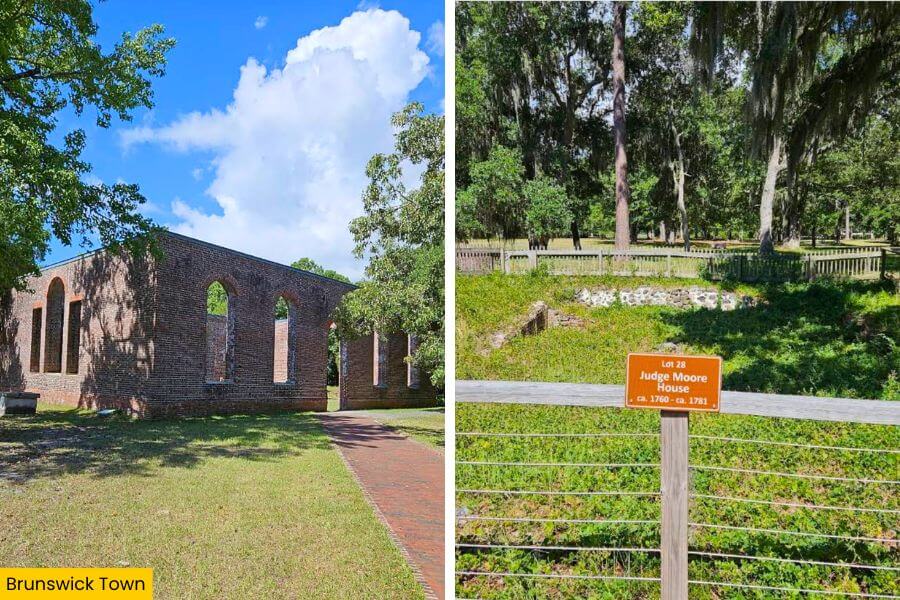
Leaving Henry River behind, Brunswick Town takes you back centuries to a colonial port founded in 1726 along the Cape Fear River.
This place once thrived as a major shipping center for tar, pitch, and turpentine, but British troops burned much of it in 1776, and the community never fully recovered.
During the Civil War, Confederate forces built Fort Anderson directly over part of the abandoned town to defend the river route to Wilmington.
Today, Brunswick Town/Fort Anderson State Historic Site lets you walk among colonial foundations, fort earthworks, and the surviving walls of St. Philip’s Church.
7. Cape Lookout Village Historic District
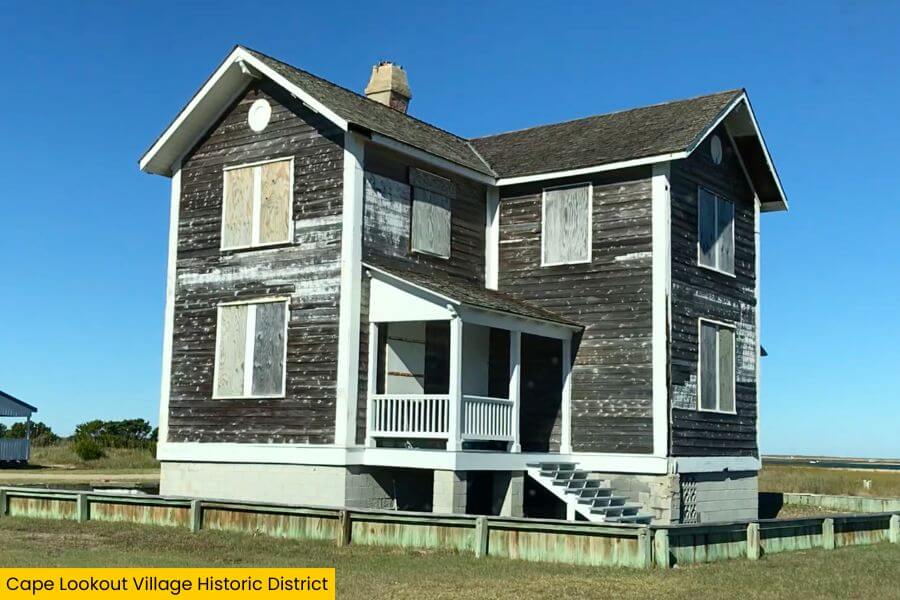
Next, head offshore to Cape Lookout Village Historic District, a remote collection of historic buildings on South Core Banks within Cape Lookout National Seashore.
The area developed around maritime life, with a lighthouse, lifesaving station, Coast Guard operations, fishing cottages, and homes all shaping its history.
The community reached around 80 residents in the early 1900s, but as motorboats made nearby islands and the mainland easier to reach, families gradually moved away.
To reach it today, take a passenger ferry, then explore Queen Anne-style homes, beach bungalows, the old Life-Saving Station, and the 163-foot Cape Lookout Lighthouse.
8. Portsmouth Village
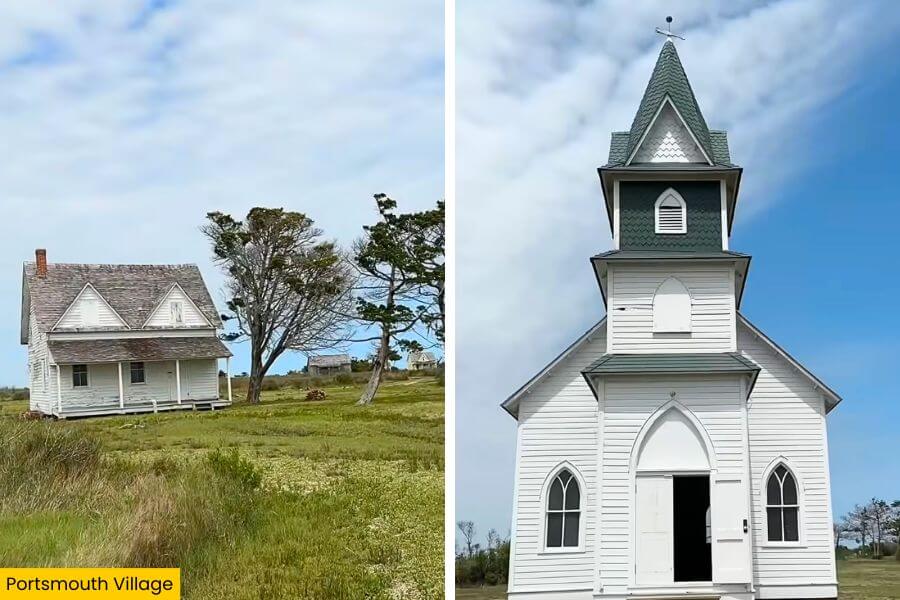
Keep following the Outer Banks north and you’ll reach Portsmouth Village on remote Portsmouth Island in Carteret County, across Ocracoke Inlet from Ocracoke.
Founded in 1753, the community grew as a busy lightering port where workers transferred cargo between ships, eventually reaching 685 residents by 1860.
But its busy days faded as new shipping routes, shallow harbor waters, the Civil War, and hurricanes slowly drove families away.
Eventually, the post office closed in 1959, and the last two permanent residents, Marian Gray Babb and Nora Dixon, left the island for good in 1971.
You can still explore the church, Coast Guard station, schoolhouse, and post office today, while old homes make it feel like the villagers simply disappeared.
Related Posts