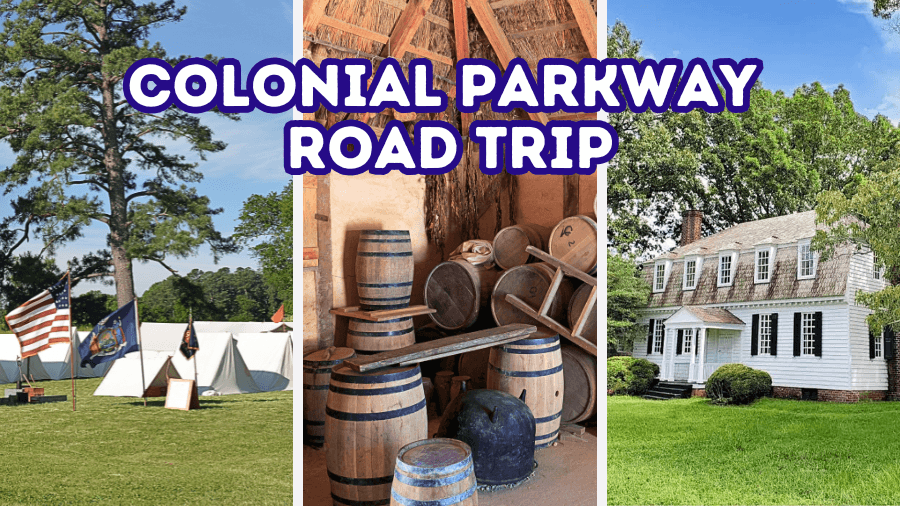
What if one road trip could take you from America’s earliest colonial days straight to the battle that helped secure independence?
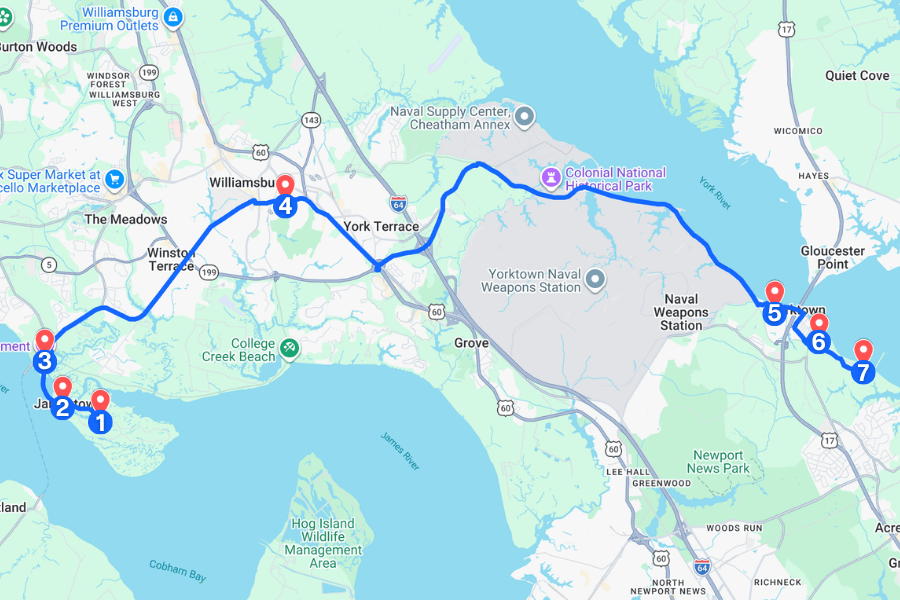
That’s the journey waiting along the Colonial Parkway, a scenic route connecting three corners of Virginia’s Historic Triangle through centuries of American history.
Along the way, you can walk where colonists once lived, climb aboard recreated ships, watch traditional trades in action, and explore preserved battlefields.
To help you experience it all, this guide covers the essential stops, what to see at each one, and how to make the most of your road trip, so keep reading to start planning.
1. Jamestown Island Loop Drive
Island Loop Drive winds through Historic Jamestowne on Jamestown Island, where English settlers established their colony along the James River in 1607.
This scenic one-way road offers 3-mile and 5-mile routes through marshes and forests, with river views and pull-offs for short walks and wildlife watching.
You’ll also see Confederate earthworks, the Travis family cemetery, and interpretive signs sharing stories about Native Americans, early settlers, and life on the island.
With so much history and natural beauty packed into one drive, it’s the perfect first stop on your road trip, so take your time and enjoy the views.
2. Historic Jamestowne
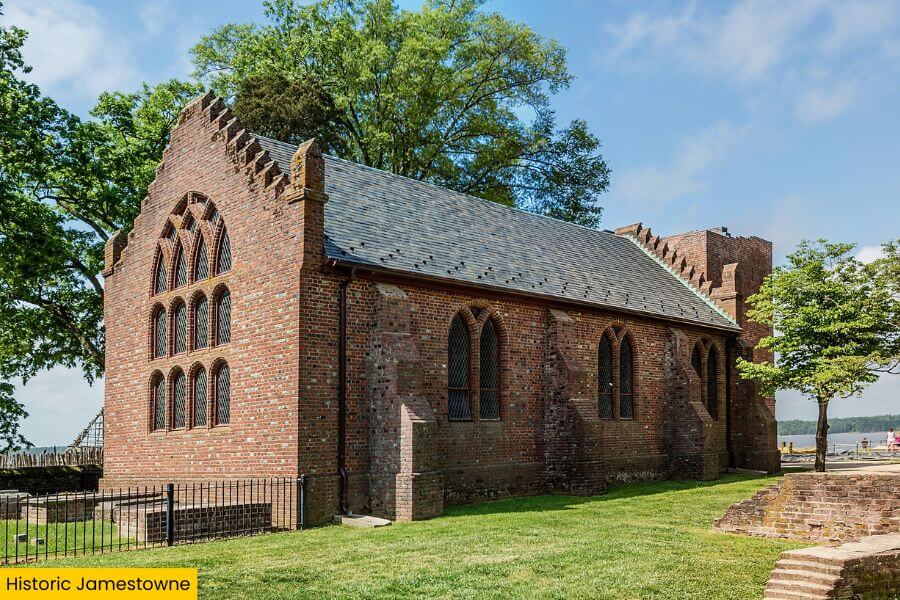
After circling the island, head to Historic Jamestowne, the actual site where 104 English settlers established America’s first permanent English settlement in 1607.
Here, you can walk through the original James Fort site, see active archaeological digs, and hear stories about the colonists who lived here more than 400 years ago.
Don’t miss the 1907 Memorial Church to see the foundations of earlier churches, then explore the Archaearium museum, where excavated tools are displayed.
If you’re visiting Thursday through Sunday, you might catch living history programs or watch skilled tradespeople demonstrate blacksmithing and woodworking.
3. Jamestown Settlement
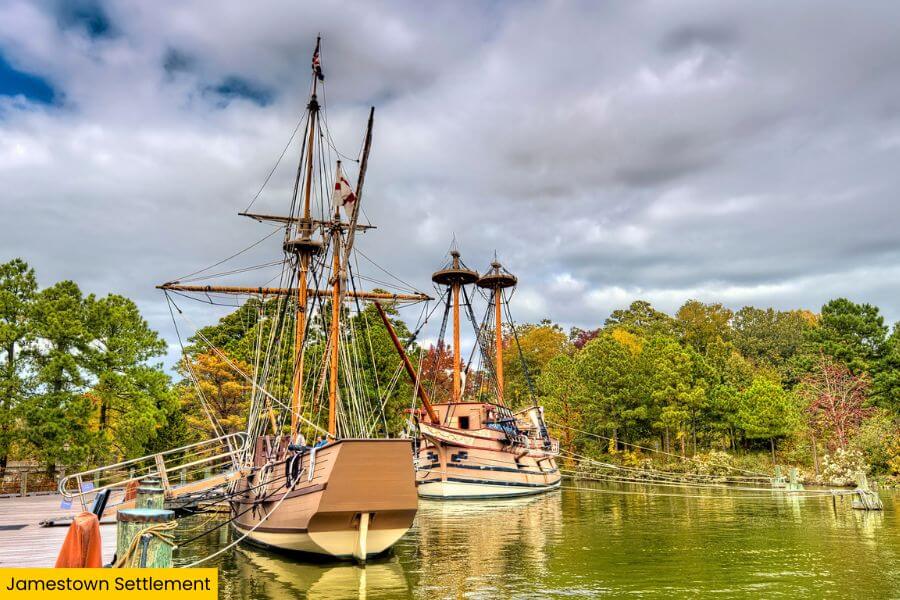
About 5 minutes from Historic Jamestowne, Jamestown Settlement brings 17th-century Virginia to life through hands-on exhibits and costumed interpreters.
You can even climb aboard full-size replicas of the Susan Constant, Godspeed, and Discovery, the three ships that carried the English colonists across the Atlantic.
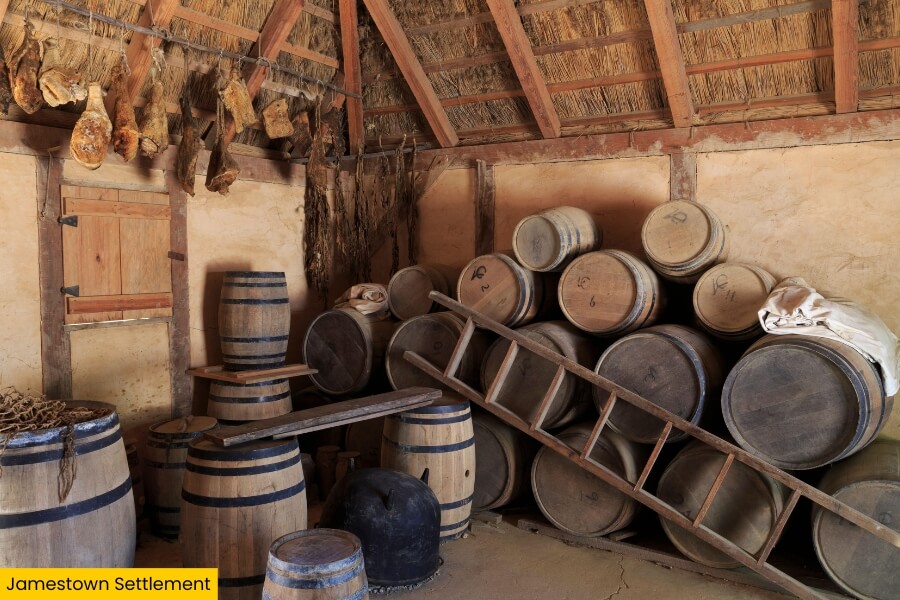
Back on land, walk through a recreated Paspahegh town and 1610-1614 fort, where you can watch demonstrations of blacksmithing, navigation, and musket firing.
For something indoors, check out the huge galleries filled with centuries-old artifacts, interactive displays, films, and a 4D theater experience about Bacon’s Rebellion.
4. Colonial Williamsburg Historic Area
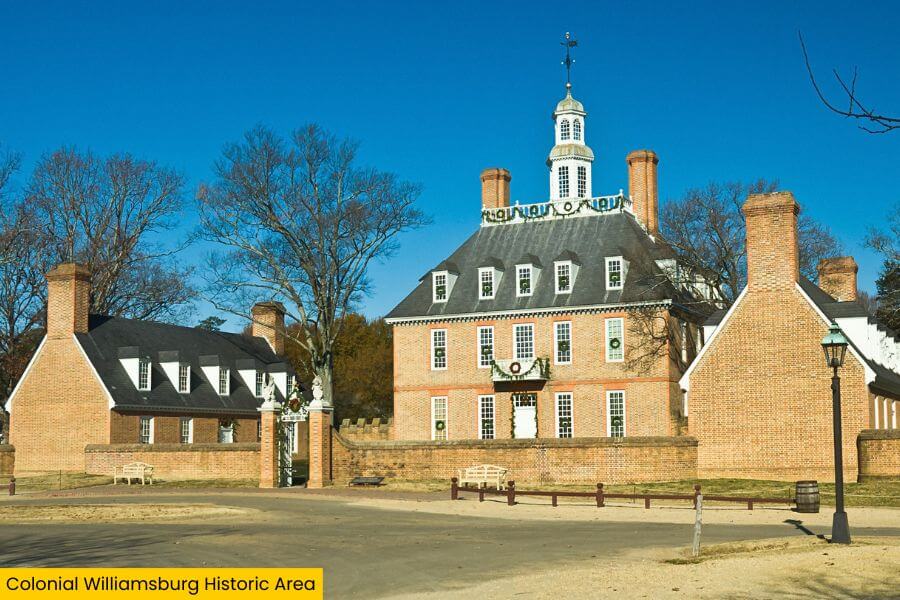
From Jamestown Settlement, drive 15 minutes to Colonial Williamsburg, where 301 acres of restored buildings and gardens bring Virginia’s 18th-century capital to life.
There’s plenty to explore here, including the Courthouse, Capitol, and Raleigh Tavern, with historical interpreters sharing stories of daily life before the American Revolution.
One highlight is the Governor’s Palace, where you can tour richly furnished rooms and see hundreds of weapons covering the walls of its dramatic entrance hall.
And if you’re in the mood to shop, head to nearby Merchants Square for local boutiques, specialty stores, restaurants, and cafés just steps from the historic area.
5. American Revolution Museum at Yorktown
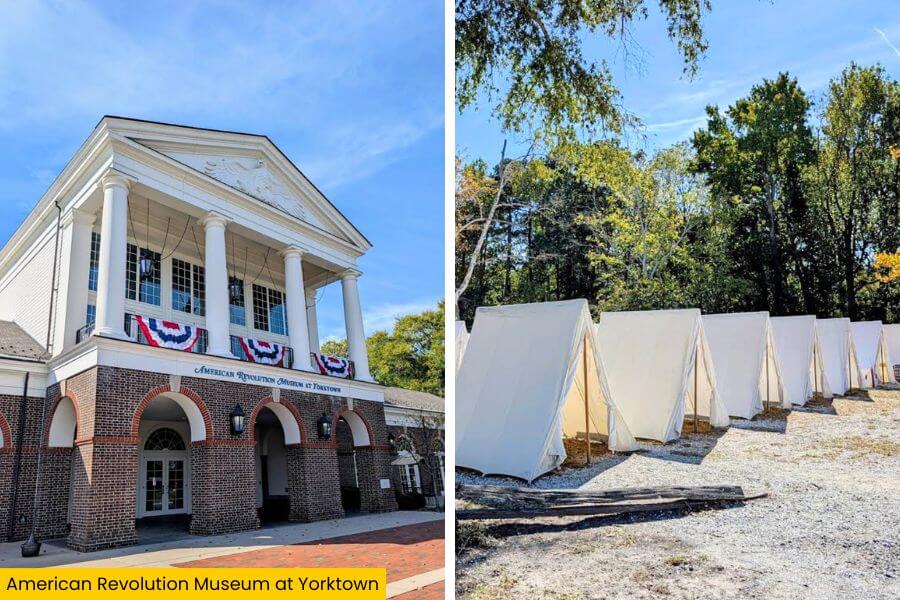
Next is the American Revolution Museum at Yorktown, where galleries follow the Revolution from growing tensions with Britain to the creation of the United States.
Inside, check out original weapons, uniforms, maps, and documents, plus a 180-degree theater that puts you in the middle of the 1781 Siege of Yorktown.
Outside, explore a recreated Continental Army encampment, where you can walk among soldiers’ tents and watch musket firing and military drill demonstrations.
You can also visit a Revolution-era farm with crops, livestock, and period buildings, showing what everyday American life looked like just after independence.
6. Yorktown Battlefield
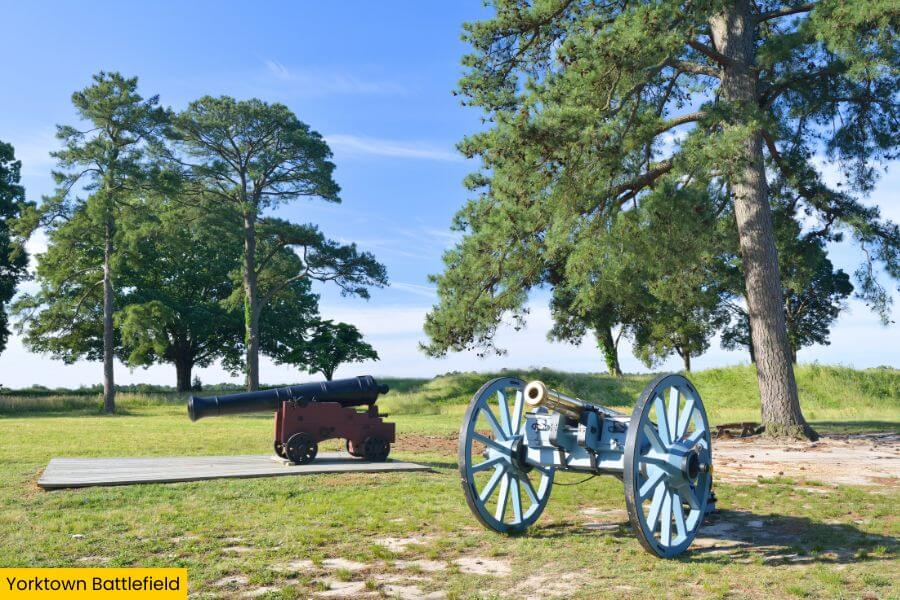
Continue for 5 minutes to Yorktown Battlefield, where American and French forces surrounded British General Cornwallis, leading to his surrender in October 1781.
Start at the Yorktown Battlefield Visitor Center, then head out to see historic earthworks, siege lines, and the field where British troops laid down their arms.
You can also drive two self-guided routes covering 16 miles through the battlefield and Allied encampment areas, with the main route stopping at Redoubts 9 and 10.
It’s the kind of place where taking your time makes the experience even more meaningful, so plan to spend a while exploring before moving on.
7. Moore House
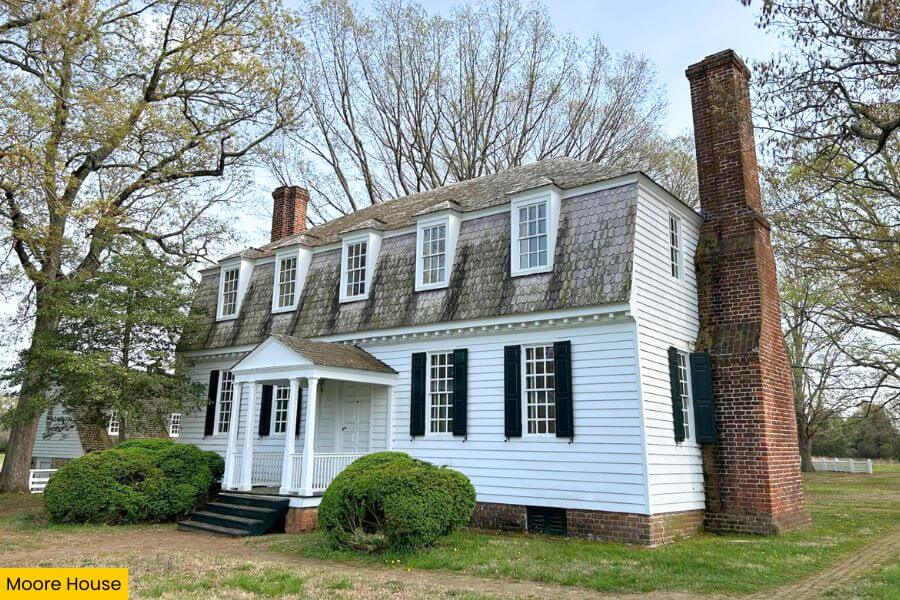
While touring Yorktown Battlefield, stop at the Moore House, where American, French, and British officers met in 1781 to negotiate the terms of Cornwallis’s surrender.
The house belonged to Augustine Moore, whose family fled to Richmond during the siege, leaving behind a neutral and convenient location for the surrender talks.
Although it is closed to visitors today, you can still photograph the exterior, especially its northwest corner, where the terms were reportedly drafted on the first floor.
A short walk around the property also reveals peaceful views of the York River, creating a fascinating contrast with the huge military decision made here.
Related Posts