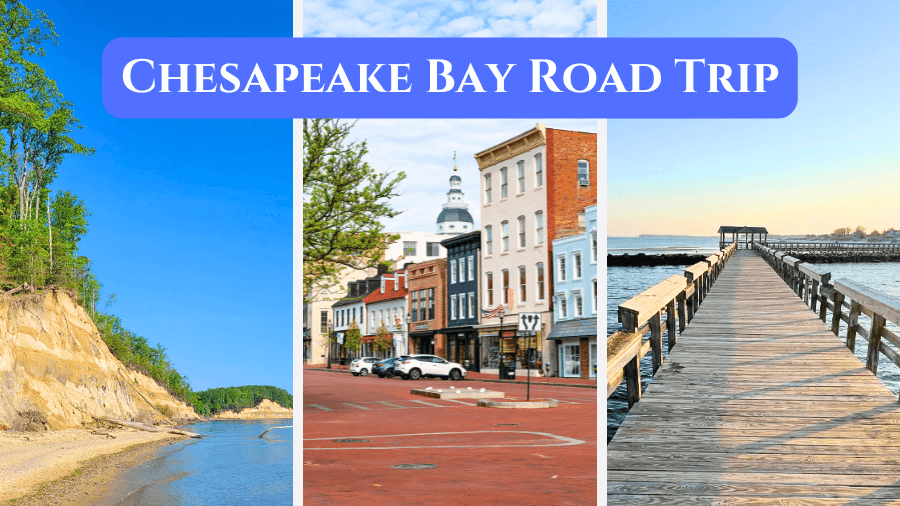
The Chesapeake Bay stretches for about 200 miles, with centuries-old forts, waterfront towns, sandy beaches, fossil-filled cliffs, wildlife-packed marshes, and working fishing harbors lining its shores.
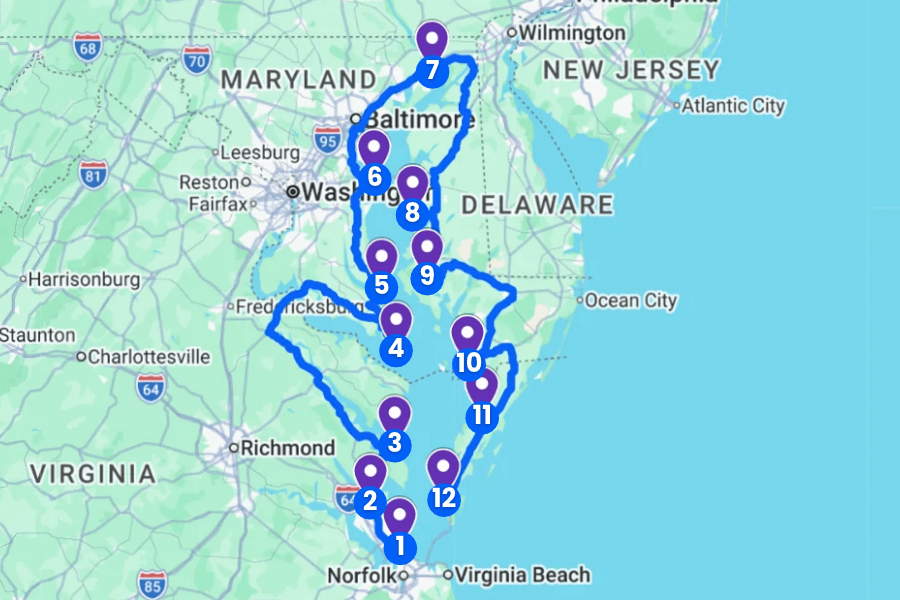
This Chesapeake Bay road trip takes you through Virginia and Maryland, stopping at lighthouses, hiking trails, museums, beaches, and historic sites along the way.
You’ll also find the best things to do and useful tips for planning your drive along America’s largest estuary.
1. Fort Monroe National Monument, Virginia
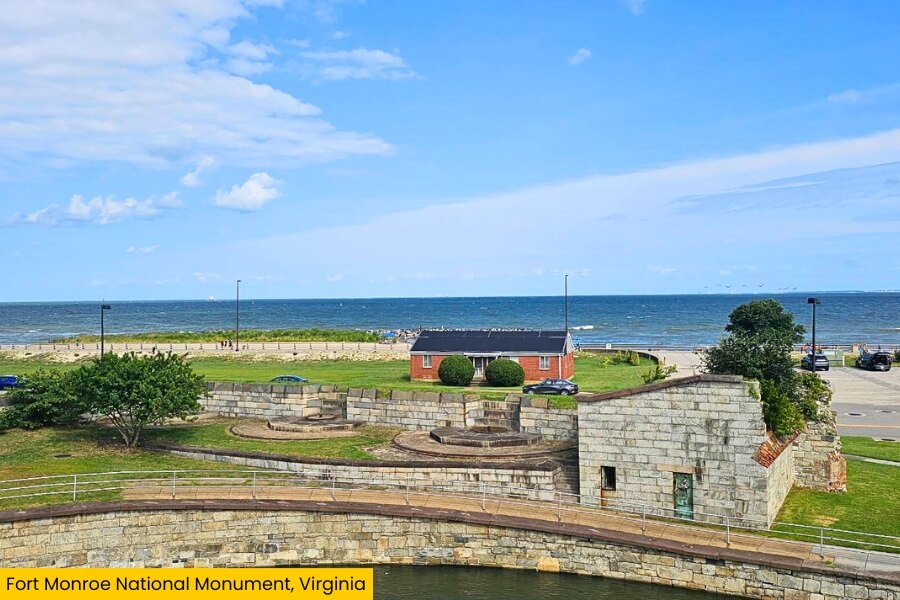
Fort Monroe National Monument sits at the southern tip of Virginia’s Chesapeake Bay in Hampton, where the bay meets the James River and Atlantic waters.
The star attraction is massive Fort Monroe, an irregular-shaped stone fortress with six sides and seven bastions, completed in 1834 with thick walls, a moat, and dozens of historic buildings across the site.
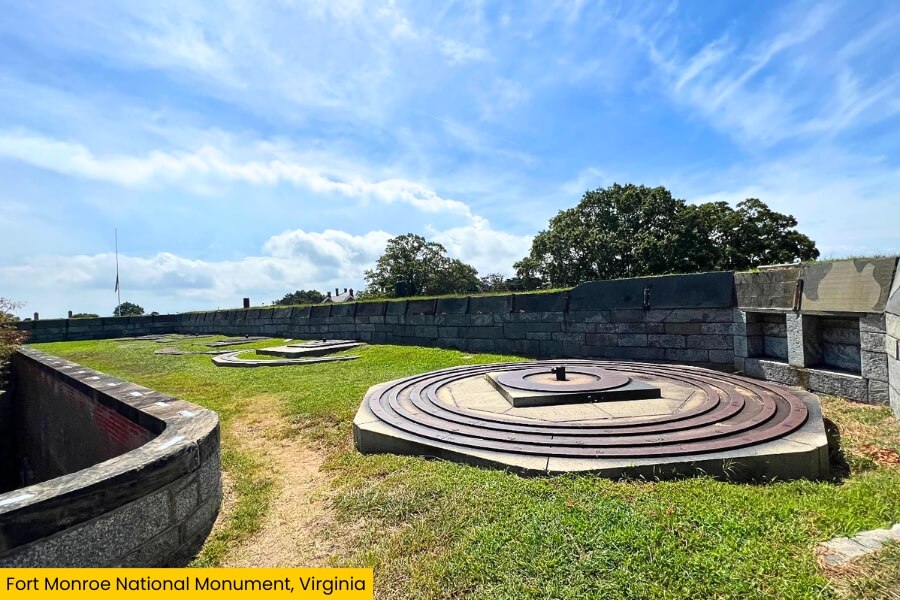
Walk the fort’s ramparts, explore the Casemate Museum, see the cell where Confederate president Jefferson Davis was imprisoned, and visit Old Point Comfort Lighthouse, first lit in 1802.
Fort Monroe also played a major role in Black history when three enslaved men sought freedom here in 1861, helping spark the “Contraband Decision,” and you can pair that powerful history with a stroll along Chesapeake Bay beaches.
2. Yorktown, Virginia
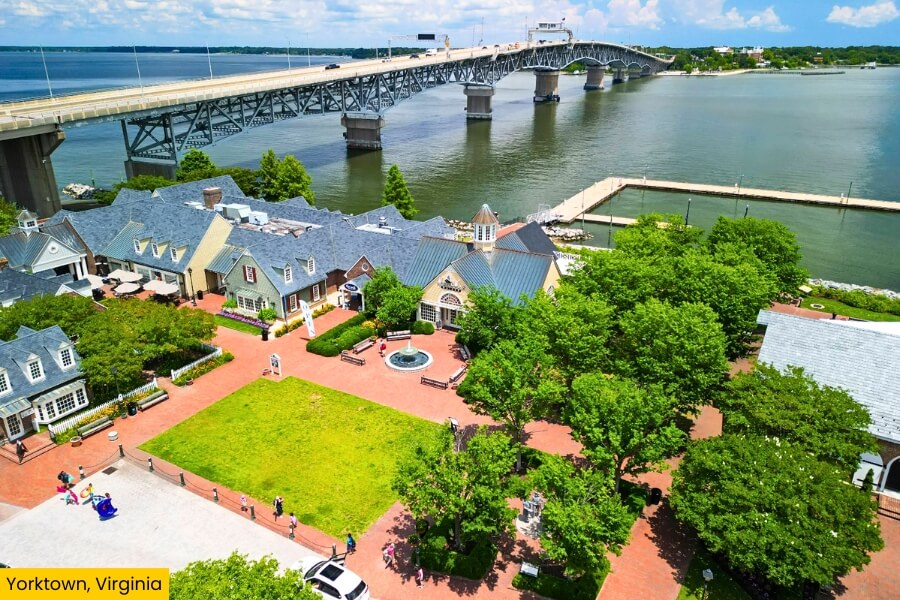
From Fort Monroe, head toward Yorktown, a small waterfront town about a 30-minute drive away that played a huge role in America’s fight for independence.
This is where British General Charles Cornwallis surrendered to George Washington’s forces on October 19, 1781, effectively ending the last major battle of the Revolutionary War.
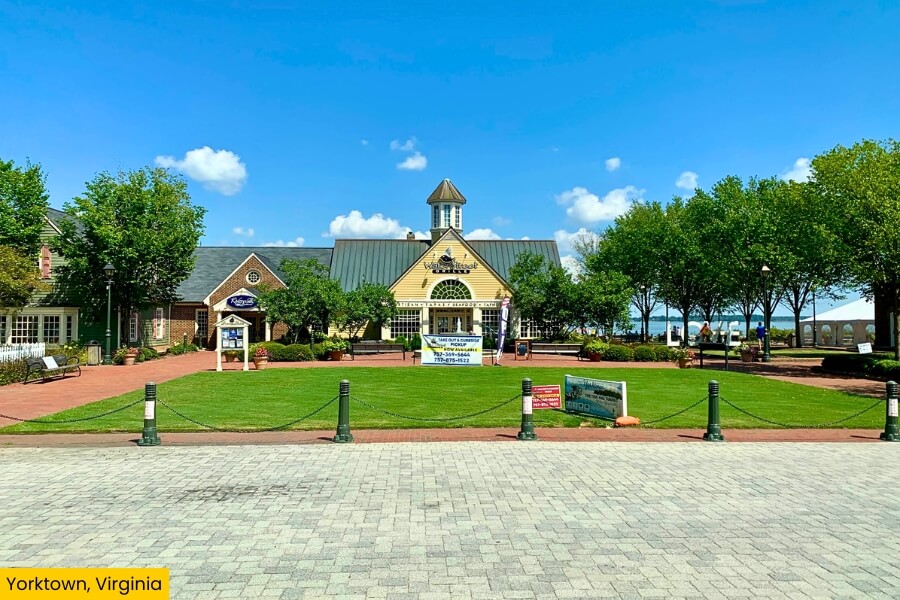
Explore Yorktown Battlefield’s historic roads and earthworks, then stop at the 84-foot Yorktown Victory Monument.
From there, head to the American Revolution Museum at Yorktown for recreated military camps, cannon demonstrations, and hands-on exhibits.
After all that history, walk the Yorktown Riverwalk Landing beside the York River, browse local shops, grab seafood, or relax on the sandy Yorktown Beach, just steps from the historic waterfront.
3. Deltaville, Virginia
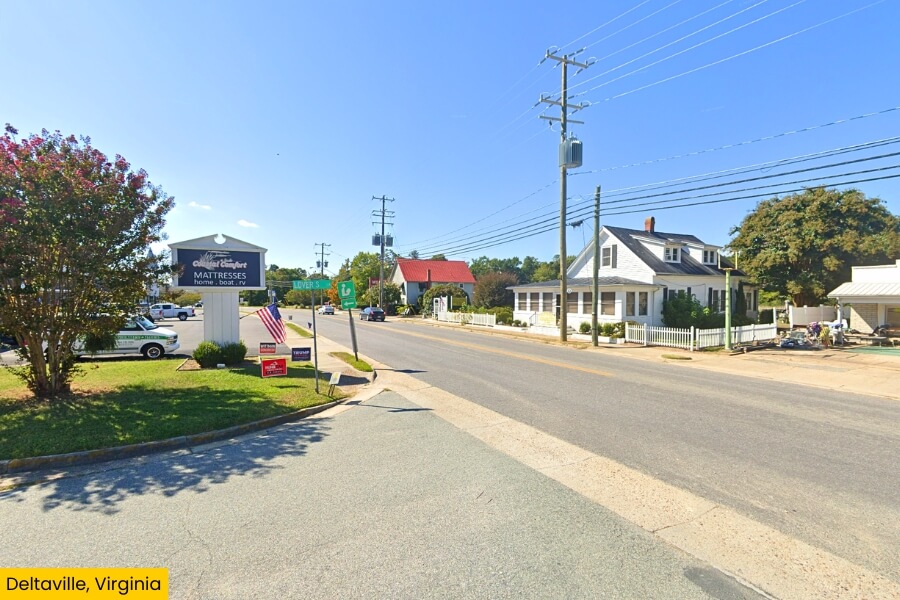
Leaving Yorktown behind, cruise for about 40 minutes to Deltaville, a tiny boating town on Virginia’s Middle Peninsula between the Rappahannock and Piankatank rivers near Chesapeake Bay.
Known as the “Boating Capital of the Chesapeake,” Deltaville has dozens of marinas and easy access to sailing, fishing, kayaking, and quiet creeks packed with classic Chesapeake scenery.
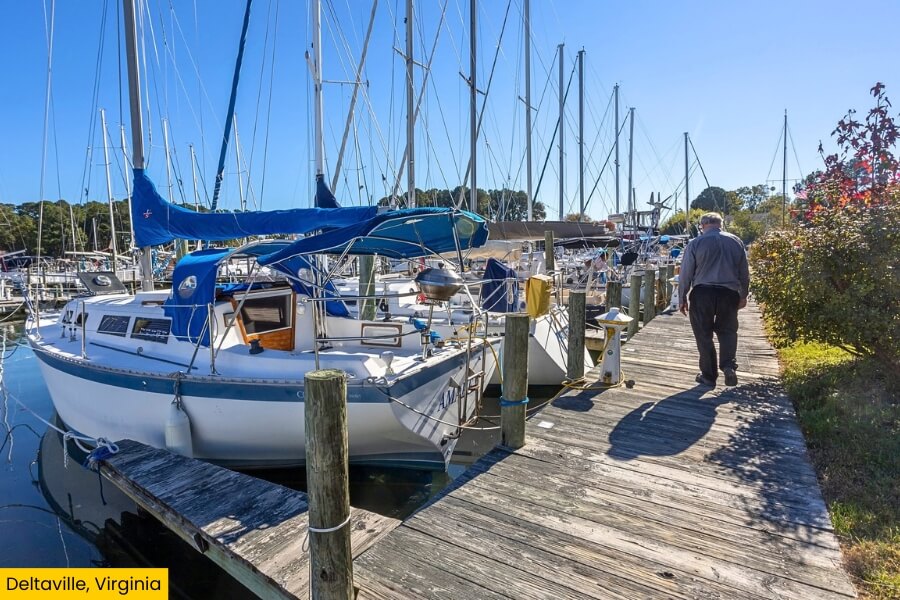
Stop at the Deltaville Maritime Museum and Holly Point Nature Park, where you can explore the region’s boatbuilding history, see traditional wooden vessels, and walk through a 34-acre waterfront park.
For extra time on the water, launch a kayak at Holly Point Nature Park and paddle Jackson Creek, charter a fishing boat for striped bass and cobia, or catch a colorful Chesapeake sunset from one of Deltaville’s waterfront docks.
4. Point Lookout State Park, Maryland
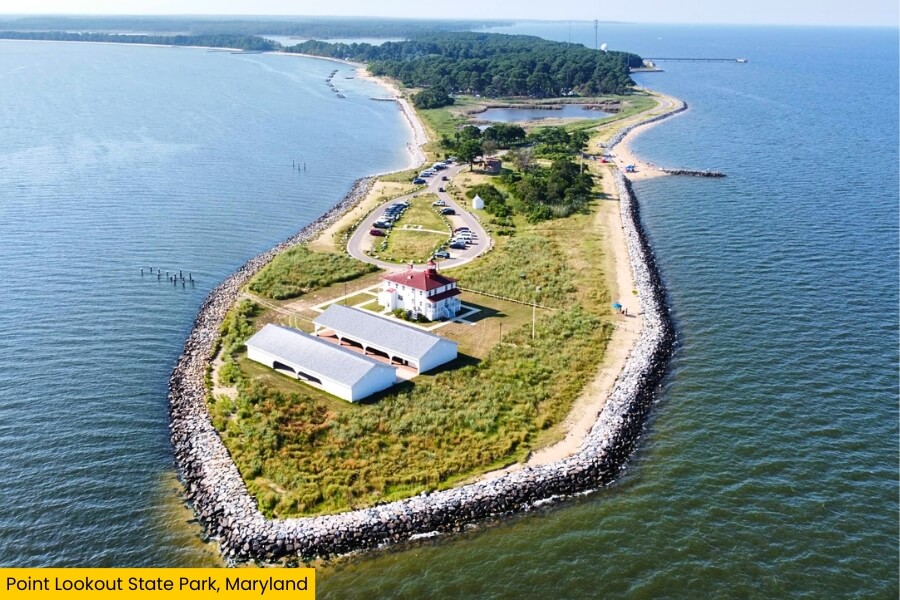
After Deltaville, continue up the Chesapeake to Point Lookout State Park, which covers more than 1,000 acres at Maryland’s southern tip where the Potomac River meets the bay.
The park mixes sandy shoreline and fishing spots with serious Civil War history, since more than 50,000 Confederate prisoners passed through the Point Lookout prison camp between 1863 and 1865.
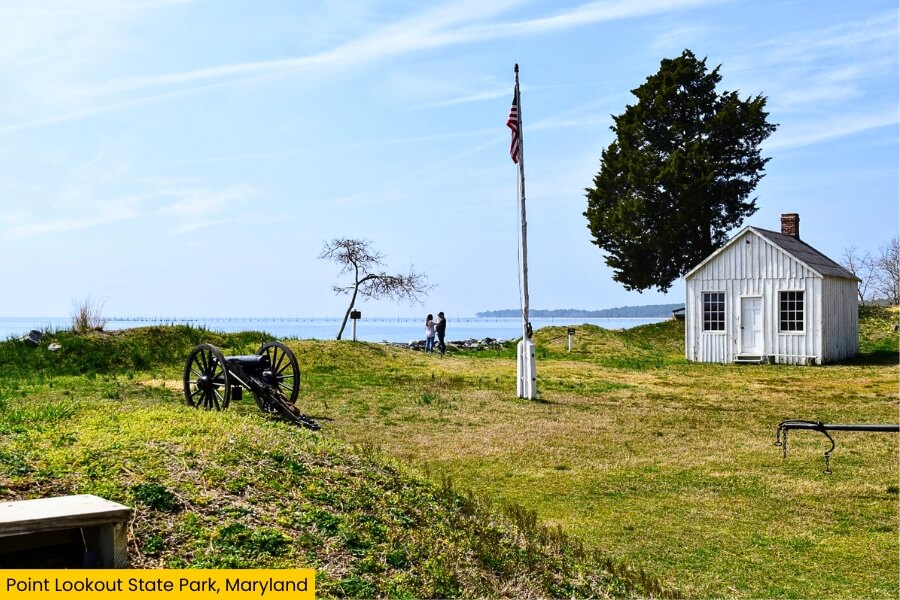
You can visit the Civil War Museum and Marshland Nature Center, walk the roughly 1-mile Periwinkle Point Trail, paddle calm coves, swim at the designated beach, or cast for striped bass, croaker, and bluefish.
Before leaving, check out the Point Lookout Lighthouse, first lit in 1830, and scan the water for ospreys, bald eagles, herons, and other birds that crowd this wild corner of Chesapeake Bay.
5. Calvert Cliffs State Park, Maryland
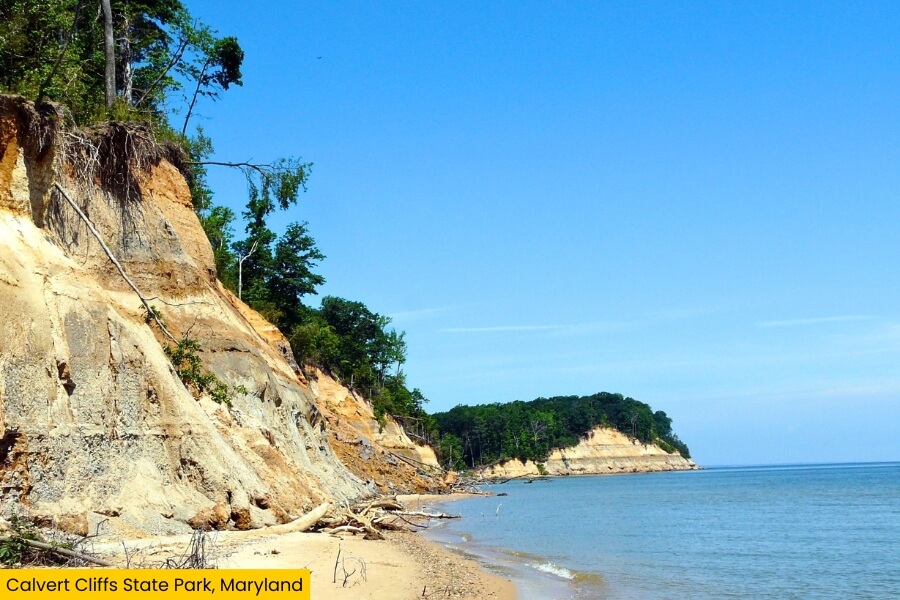
From Point Lookout, it’s about a 35-minute drive through Southern Maryland to Calvert Cliffs State Park, a 1,079-acre park famous for towering cliffs that stretch for roughly 24 miles along Chesapeake Bay.
These cliffs hold fossils from the Miocene Epoch, and you can search the beach for ancient shark teeth, shells, and other remains dating back 10 to 20 million years.
Take the 1.8-mile Red Trail through forest and wetlands to reach the bay, where the cliffs rise as high as 100 feet above the shoreline and make a dramatic backdrop for fossil hunting.
Make sure to keep a safe distance from the unstable cliff faces while you explore more of the park’s 13 miles of hiking trails, watch for bald eagles and great blue herons, or enjoy a picnic before hitting the road again.
6. Annapolis, Maryland
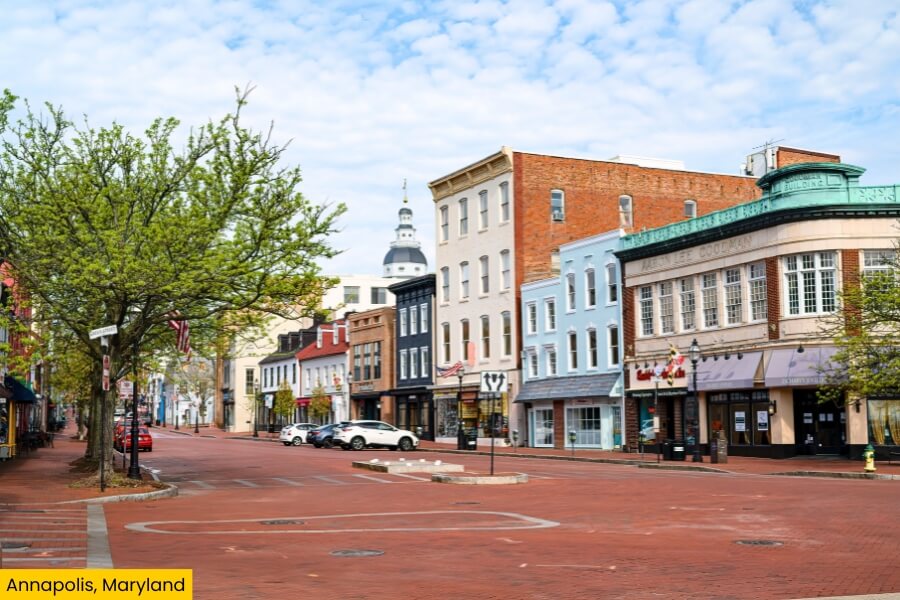
After hunting for fossils at Calvert Cliffs, drive for about an hour to Annapolis, Maryland’s capital and a waterfront city packed with colonial landmarks, sailboats, and Chesapeake Bay seafood.
Start at the Maryland State House, completed in 1779 and famous as the oldest U.S. state capitol still in continuous legislative use, then wander the brick streets surrounding nearby Main Street.
Head toward City Dock to watch boats along Ego Alley, grab a Maryland crab cake, or tour the U.S. Naval Academy, founded here in 1845 beside the Severn River.
If you have extra time, take a sailing cruise onto Chesapeake Bay, photograph the colorful homes around the historic district, and stop inside the Naval Academy Museum to see ship models, artifacts, and centuries of naval history.
7. Havre de Grace, Maryland
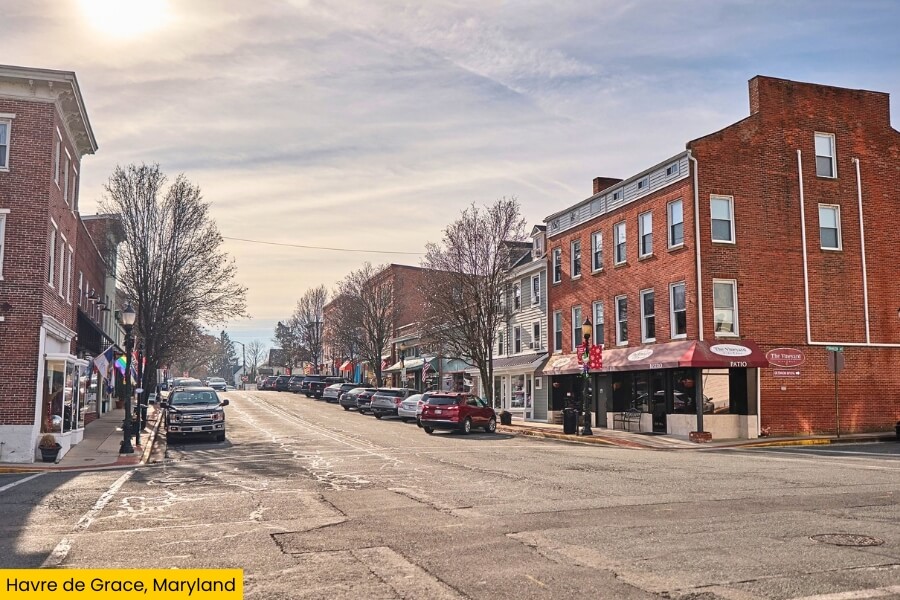
Leaving Annapolis, it’s just over an hour’s drive along Chesapeake Bay to Havre de Grace, a small Maryland city where the Susquehanna River empties into the bay, creating one of the road trip’s best waterfront stops.
Walk the 0.75-mile Havre de Grace Promenade along the shoreline to Concord Point Lighthouse, a 36-foot stone tower built in 1827 and one of the oldest Chesapeake Bay lighthouses still standing.
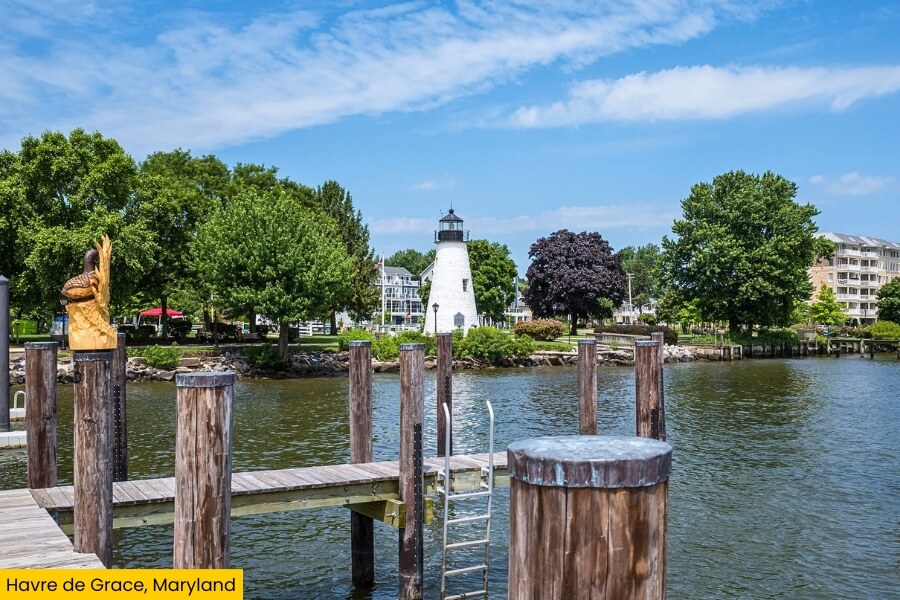
Next door, the Havre de Grace Maritime Museum covers local fishing, boatbuilding, and Susquehanna River history, while the nearby Decoy Museum displays hundreds of carved waterfowl decoys tied to Chesapeake hunting traditions.
Save time for Susquehanna State Park, where you can hike beside the river, see the 1798 Rock Run Grist Mill, and explore remains of the historic Susquehanna and Tidewater Canal.
8. St. Michaels, Maryland
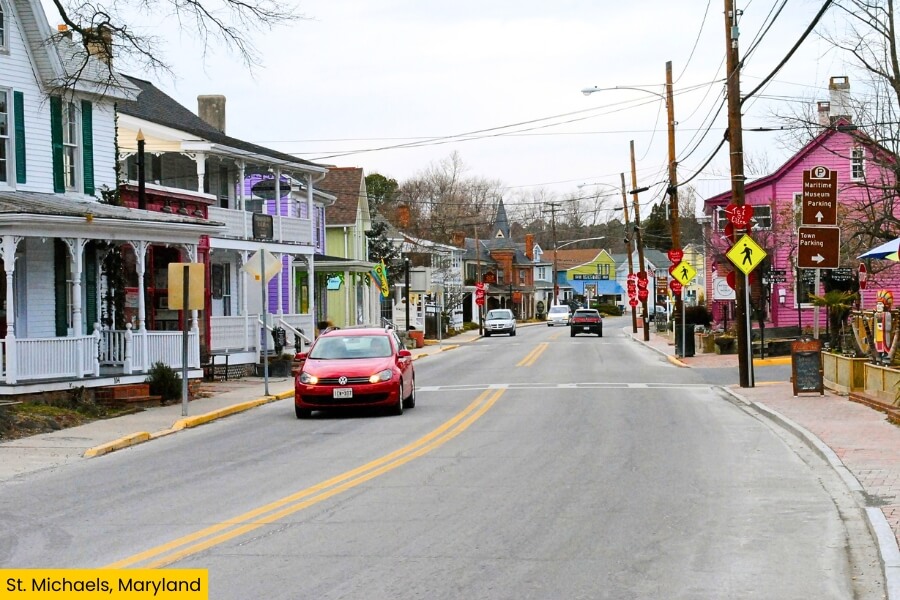
After Havre de Grace, swing down Maryland’s Eastern Shore to St. Michaels, a small harbor town on the Miles River where skipjacks, sailboats, and crab boats fill the waterfront.
Make the Chesapeake Bay Maritime Museum your first stop, with an 18-acre waterfront campus, historic vessels, working boatyard exhibits, and the 1879 Hooper Strait Lighthouse that you can climb inside.
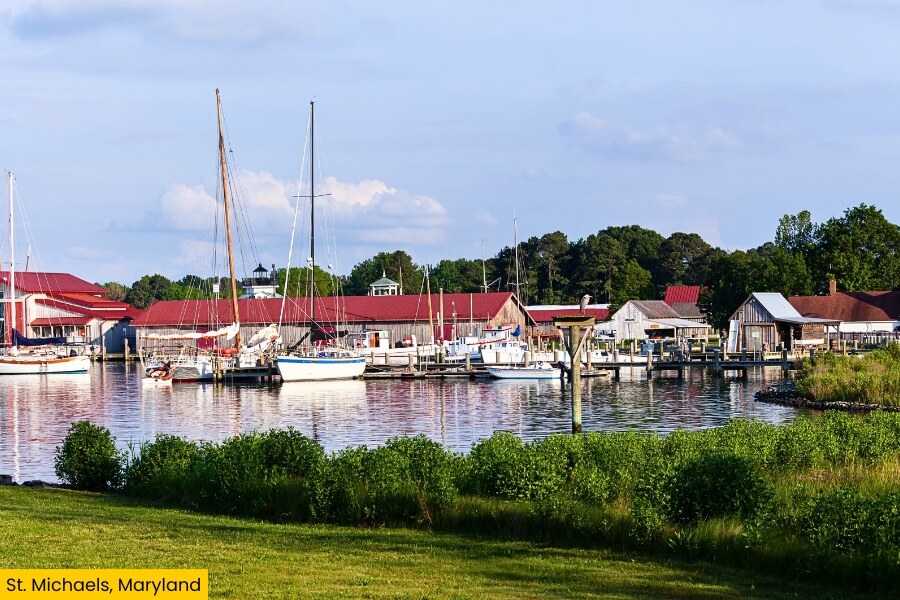
Stroll along Talbot Street for local shops and restaurants, then get back on the water with a sailing trip or cruise past quiet creeks where you may spot ospreys and great blue herons.
St. Michaels even earned the nickname “The Town That Fooled the British” when, according to local legend, residents reportedly hung lanterns beyond town during an 1813 attack, causing British cannons to overshoot most of their targets.
9. Blackwater National Wildlife Refuge, Maryland
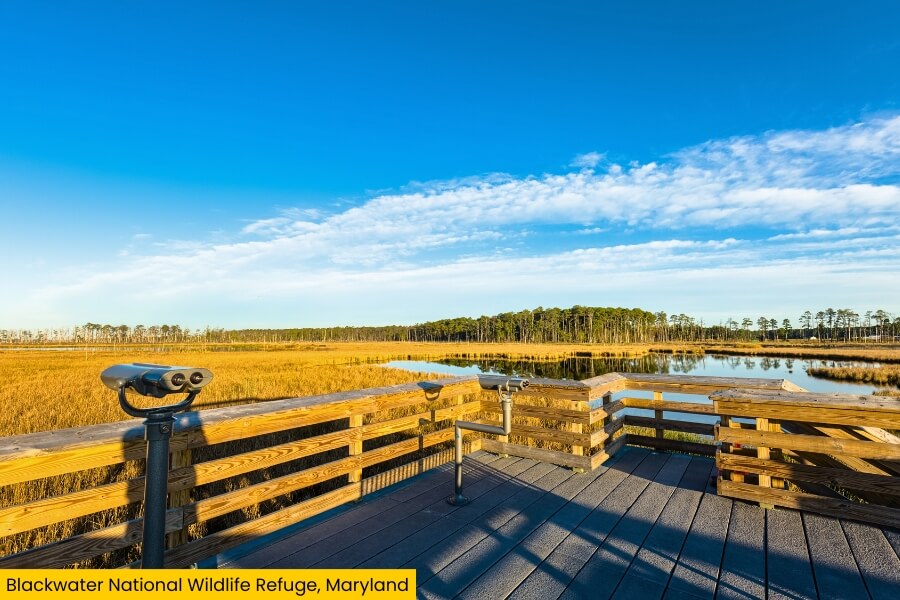
From St. Michaels, head about 50 minutes to Blackwater National Wildlife Refuge, a more than 32,000-acre protected area near Cambridge filled with tidal marshes, forests, and shallow Chesapeake Bay waterways.
Wildlife steals the show here, with one of the East Coast’s largest breeding populations of bald eagles plus thousands of ducks and geese arriving during fall and winter migrations.
Drive the nearly 4-mile Wildlife Drive for easy viewing stops, or hike the roughly 2.5-mile Key Wallace Trail through pine forest and marsh habitat while watching for Delmarva fox squirrels, ospreys, herons, and turtles.
Blackwater is closely connected to the Harriet Tubman Underground Railroad National Historical Park area.
To learn more about that connection, pair your wildlife stop with the nearby Harriet Tubman Underground Railroad Visitor Center and see how this landscape shaped her remarkable story.
10. Crisfield, Maryland
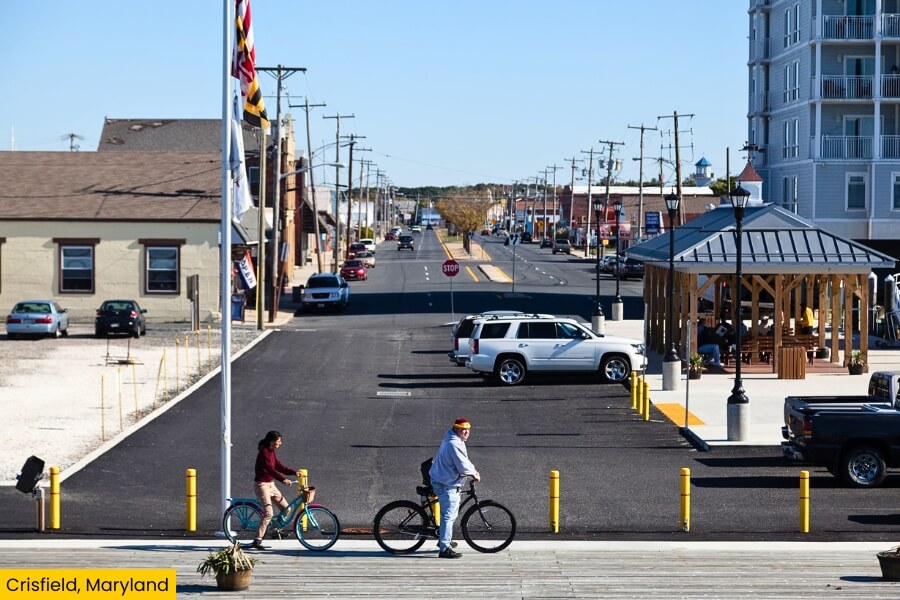
Keep rolling for about 1.5 hours from Blackwater to Crisfield, a working waterfront town on Tangier Sound near Maryland’s southern tip and famously tied to Chesapeake Bay crabbing.
Nicknamed the “Crab Capital of the World,” Crisfield is the place to order steamed blue crabs or crab cakes while taking in the town’s working harbor, where commercial watermen still operate during crab season.
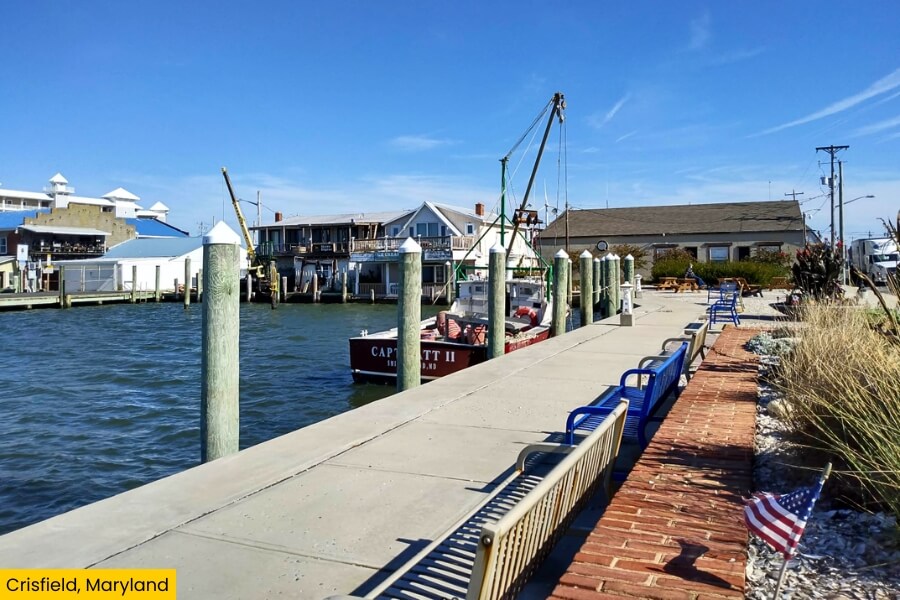
Stop at the J. Millard Tawes Historical Museum to learn about local seafood and watermen, then follow the waterfront around Somers Cove Marina, which has more than 500 slips.
Crisfield is also your jumping-off point for a ferry ride to Smith Island, Maryland’s only inhabited island accessible exclusively by boat.
At Smith Island you can explore tiny communities, spot waterbirds, and try Smith Island Cake, the state dessert famous for its many thin layers.
11. Onancock, Virginia
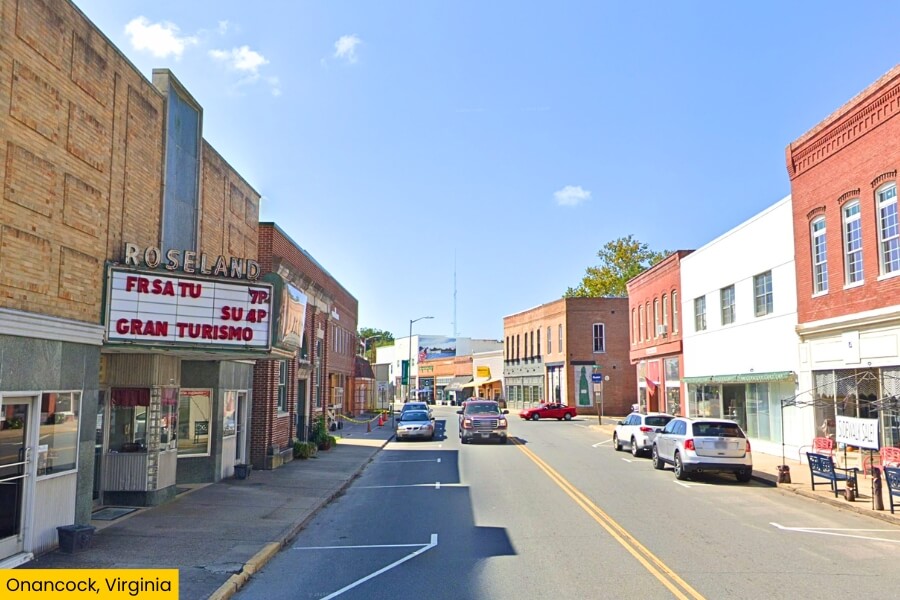
Cross back into Virginia after Crisfield and make your way to Onancock, a small Eastern Shore town set along Onancock Creek about 4 miles from Chesapeake Bay.
Founded in 1680, the town is made for exploring on foot, with historic homes lining Market Street, local galleries downtown, and waterfront restaurants serving Eastern Shore seafood.
Head to Onancock Wharf to rent a kayak and paddle the winding creek, where calm water and marshy banks give you a good chance of spotting herons, ospreys, and bald eagles.
12. Cape Charles, Virginia
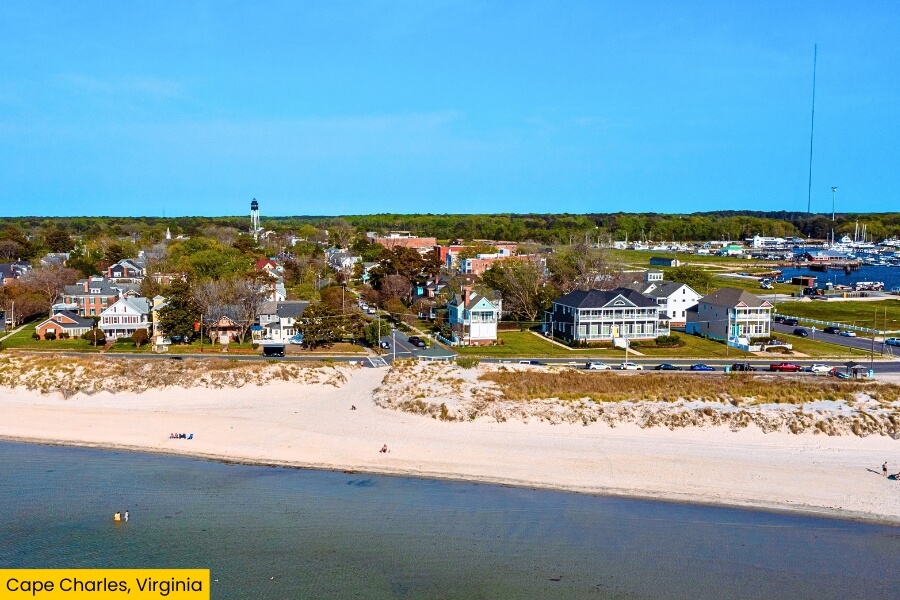
Finish your Chesapeake Bay road trip about 45 minutes from Onancock in Cape Charles, a laid-back Eastern Shore town with a public beach right along the bay and a walkable historic district.
Cape Charles Beach is the big draw, with free public access, calm shallow water, and west-facing sand that gives you a front-row seat for colorful sunsets over Chesapeake Bay.
Stroll Mason Avenue for locally owned shops and restaurants, walk out on the Cape Charles Fishing Pier, or visit Cape Charles Brewing Company for a cold drink after the drive.
For one last outdoor adventure, head about 15 minutes to Kiptopeke State Park, where you can hike, kayak, fish, watch migrating birds, and spot nine concrete ships sunk offshore in 1948 to form a protective breakwater.
Related Posts