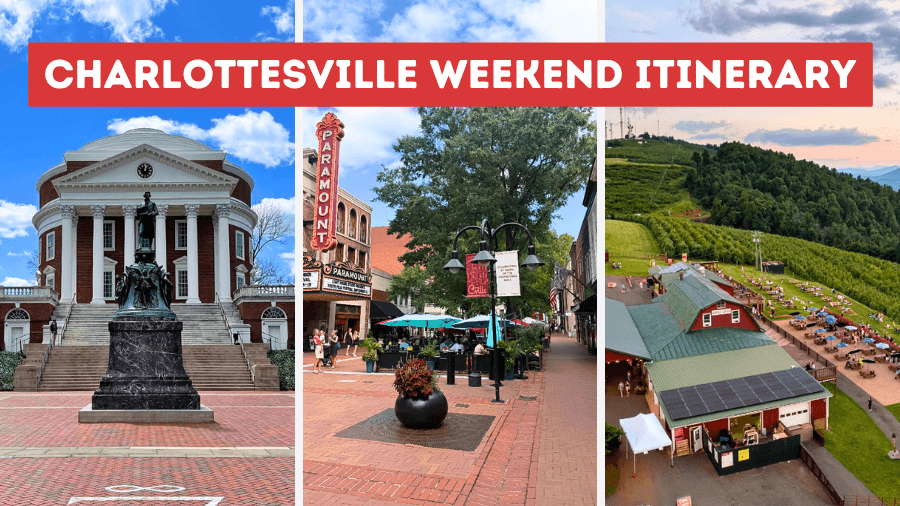
Planning a weekend in Charlottesville, Virginia?
You’re in for two days packed with famous American history, mountain views, colorful art, scenic walks, and a few seriously tasty local treats.
Charlottesville sits near the foothills of the Blue Ridge Mountains, so you can go from exploring historic architecture to walking through the woods without spending half your weekend in the car.
There’s also a fun college-town energy, a walkable downtown, and plenty of places where you can eat, shop, and explore between the bigger attractions.
This Charlottesville weekend itinerary brings all of that together in an easy route and enough variety to keep every part of the trip interesting.
If you’ve only got a weekend to see what makes Charlottesville special, here’s exactly how to spend it.
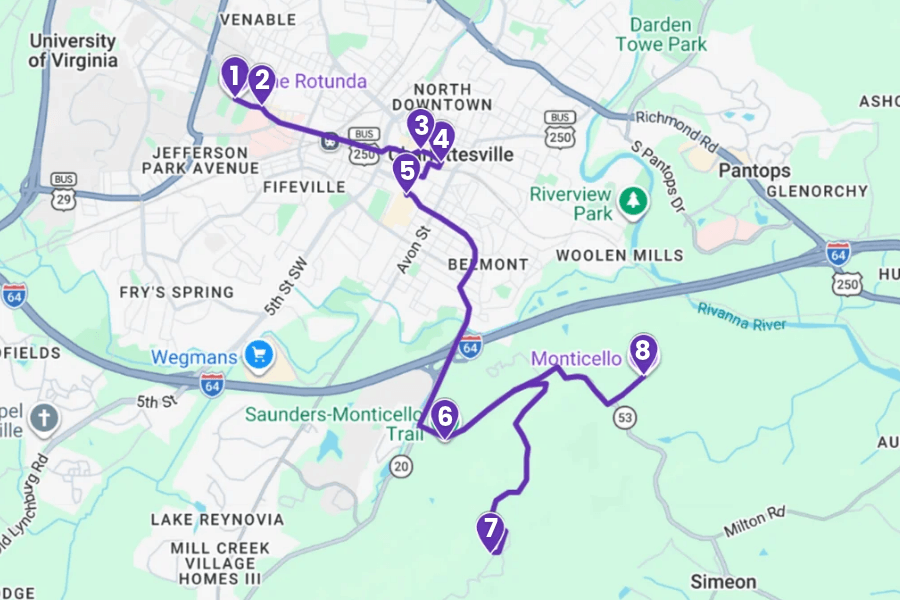
1. The Rotunda (University of Virginia)
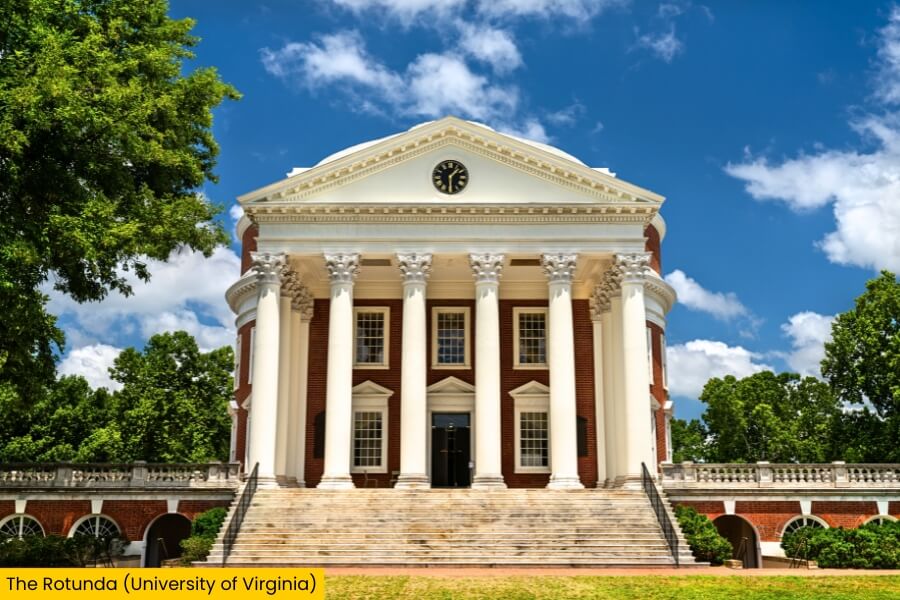
The Rotunda sits at the heart of the University of Virginia, at the north end of the Lawn, and its huge white columns and domed roof make it one of the campus’s easiest landmarks to spot.
Thomas Jefferson designed the building after Rome’s Pantheon, and when it was completed in 1828, the Rotunda’s 77-foot-diameter upper level served as the university library.
Today, you can walk around the Rotunda, explore the column-lined Lawn, and take a self-guided tour to learn more about Jefferson’s Academical Village and UVA’s early years.
The Rotunda and surrounding Academical Village became a UNESCO World Heritage Site in 1987, so you’re looking at one of Charlottesville’s biggest architectural landmarks.
2. The Corner
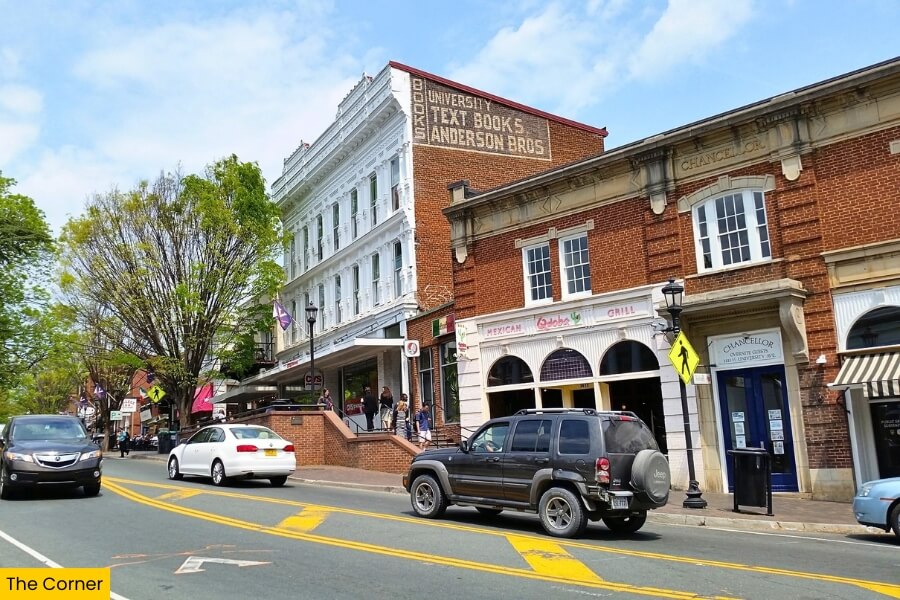
Once you’ve finished exploring UVA’s famous landmarks, walk over to The Corner, a busy stretch of shops, restaurants, and bars along University Avenue beside campus.
This seven-block commercial district has been part of Charlottesville student life for generations, with longtime favorites like The Virginian, which opened in 1923, serving its famous Stumble Down Mac N’ Cheese.
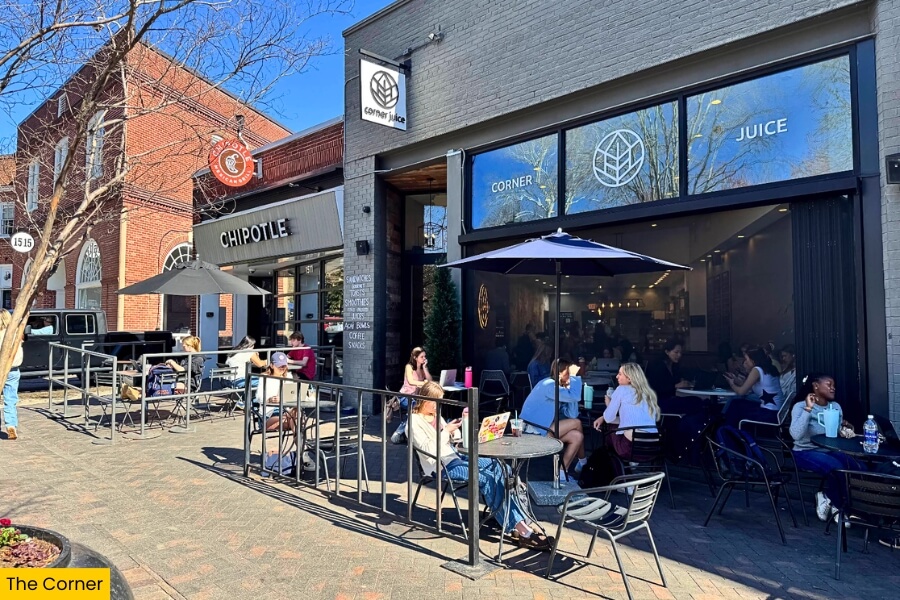
Grab a bagel at Bodo’s Bagels, browse UVA gear at Mincer’s, or catch live music at The Southern Café and Music Hall on South First Street nearby.
The Corner gets especially busy before Cavaliers football and basketball games, so come hungry, wander the storefronts, and enjoy one of the best spots in town for seeing everyday UVA life beyond the historic Lawn.
3. Charlottesville Downtown Mall
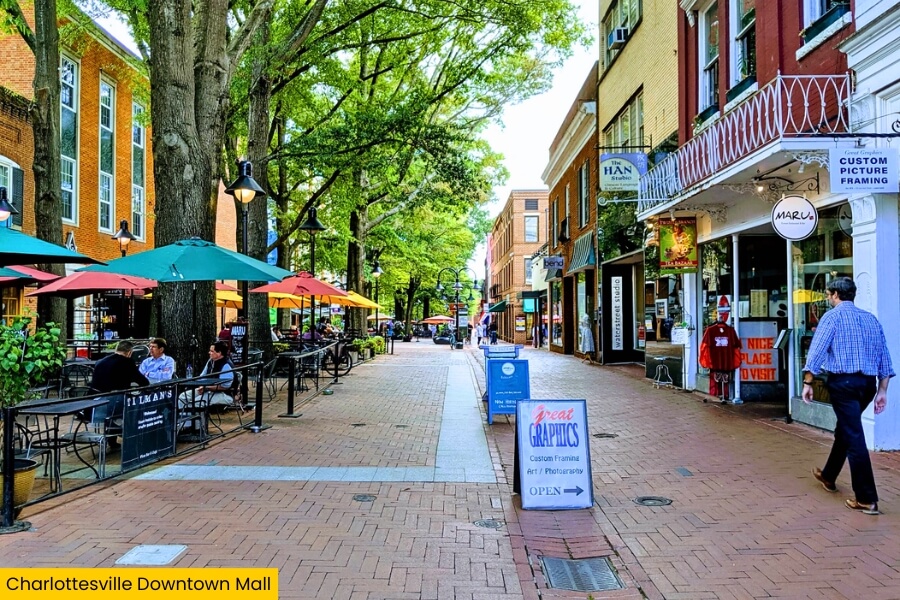
After grabbing a bite around The Corner, drive less than 10 minutes to Charlottesville’s Downtown Mall, where eight blocks of brick-paved streets are closed to regular car traffic.
The mall runs along East Main Street and packs more than 120 shops and 30 restaurants into historic buildings, making it easy to explore on foot without constantly watching for traffic.
Browse independent shops, catch a show at the beautifully restored Paramount Theater, or check the schedule at the Ting Pavilion, an outdoor concert venue at the mall’s eastern end.
Keep an eye out for the Freedom of Speech Wall near City Hall, then grab a patio table for dinner and watch this downtown stretch fill with people.
4. Virginia Discovery Museum
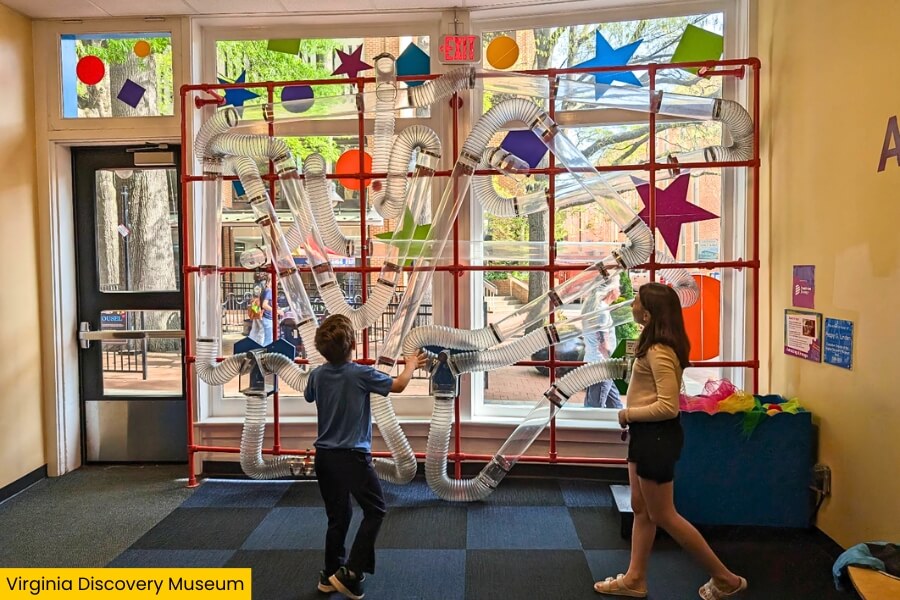
If you have kids, pop into the Virginia Discovery Museum at 524 East Main Street while you’re exploring the Downtown Mall, right near the mall’s eastern end and just steps from the Ting Pavilion.
This hands-on children’s museum is designed mainly for infants and kids up to age 8, with interactive exhibits that turn science, history, art, and everyday life into activities you can touch and try.

Kids can experiment with simple machines in the STEM Lab, create projects in the Creation Station, and burn off extra energy in play areas built for climbing and games.
The museum has served Charlottesville families since 1981, making it an easy indoor stop when you need a break from walking or your kids need some playtime.
5. IX Art Park
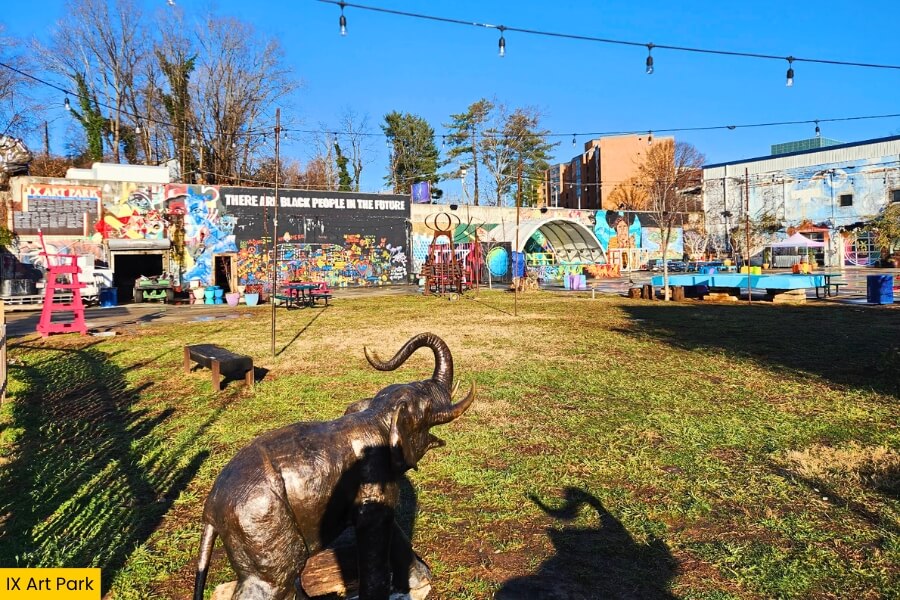
From the Downtown Mall area, take a short drive to IX Art Park, where giant murals, sculptures, and colorful outdoor installations turn a former industrial site into an eye-catching stop.
The big attraction is The Looking Glass, Virginia’s first immersive art space, where rooms packed with lights, sounds, mirrors, and interactive artwork invite you to explore instead of simply standing back and looking.
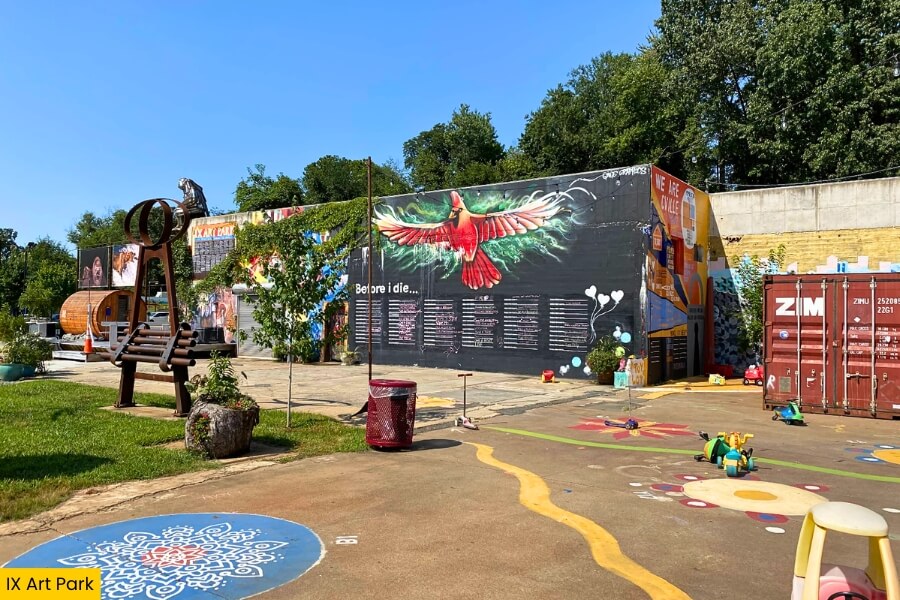
Outside, wander among oversized sculptures and painted walls, snap plenty of photos, or time your visit for one of the park’s concerts, markets, festivals, and community events.
IX Art Park is free to explore outdoors, while The Looking Glass requires admission, so you can easily fit this creative detour into a Charlottesville weekend without filling your entire afternoon.
6. Saunders-Monticello Trail
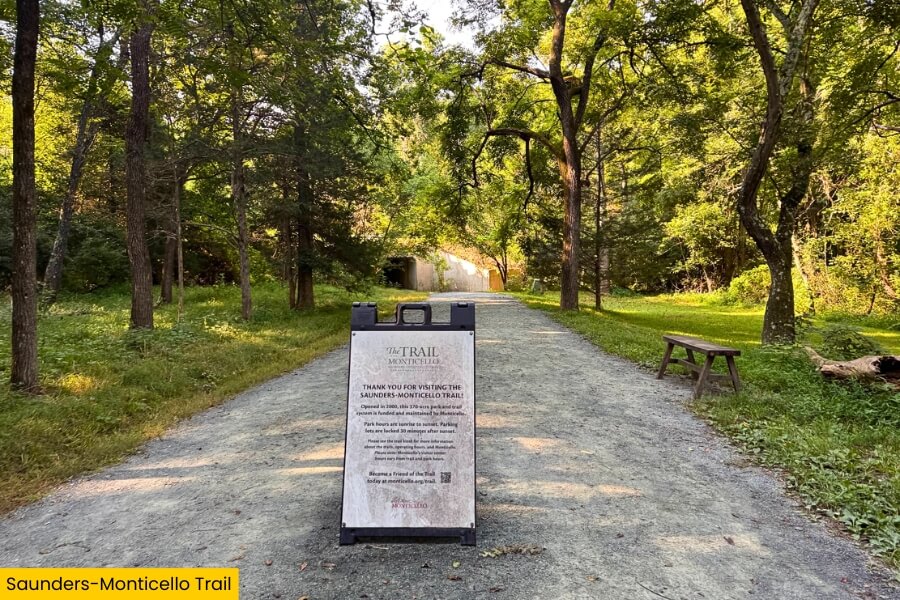
After all that colorful art, trade murals for trees on the Saunders-Monticello Trail, less than a 10-minute drive from IX Art Park and downtown Charlottesville along Thomas Jefferson Parkway.
The main trail climbs roughly 2 miles from the Kemper Park area toward Monticello, winding through hardwood forest and crossing several long wooden boardwalks that make the gradual uphill walk surprisingly relaxing.
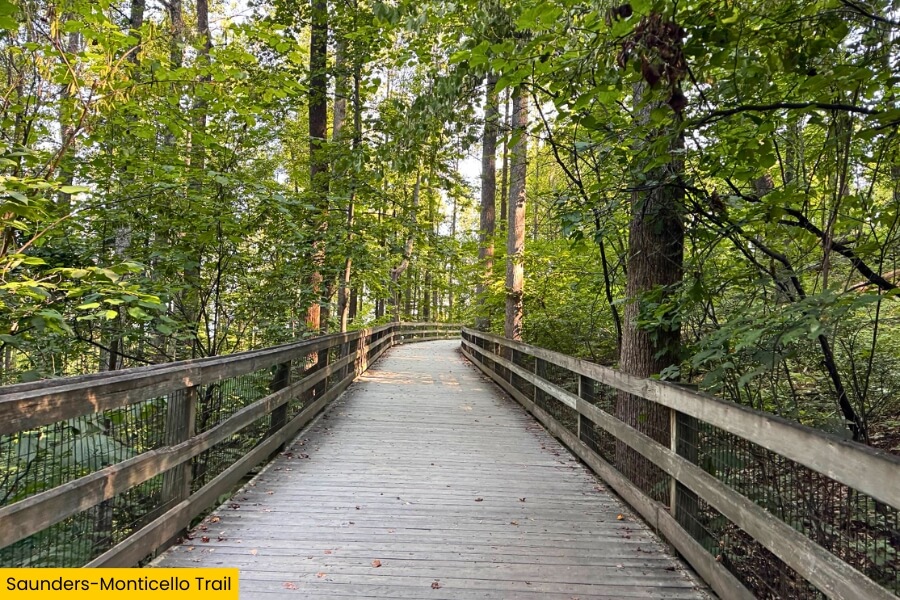
You’ll gain several hundred feet in elevation as you pass native plants, small ponds, mountain views, and side trails within the 89-acre Kemper Park.
The wide path is popular with walkers and families, and since access to the trail is free, it’s a great way to stretch your legs before continuing your road trip.
7. Carter Mountain Orchard
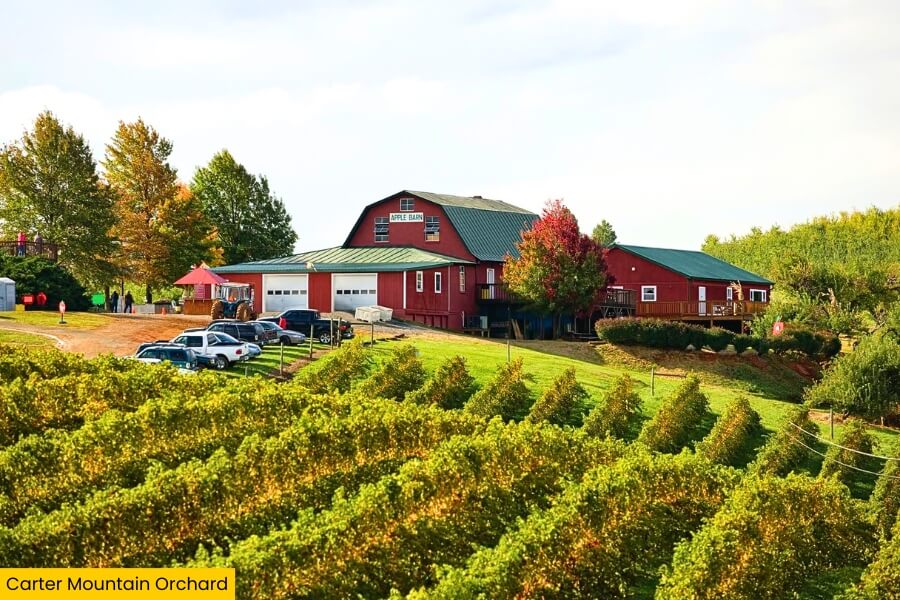
Next, drive about 8 minutes to Carter Mountain Orchard, a family-run orchard perched high above Charlottesville at 1435 Carters Mountain Trail.
Depending on the season, you can pick peaches in summer or apples in fall, with popular varieties including Fuji, Pink Lady, Granny Smith, and Golden Delicious.
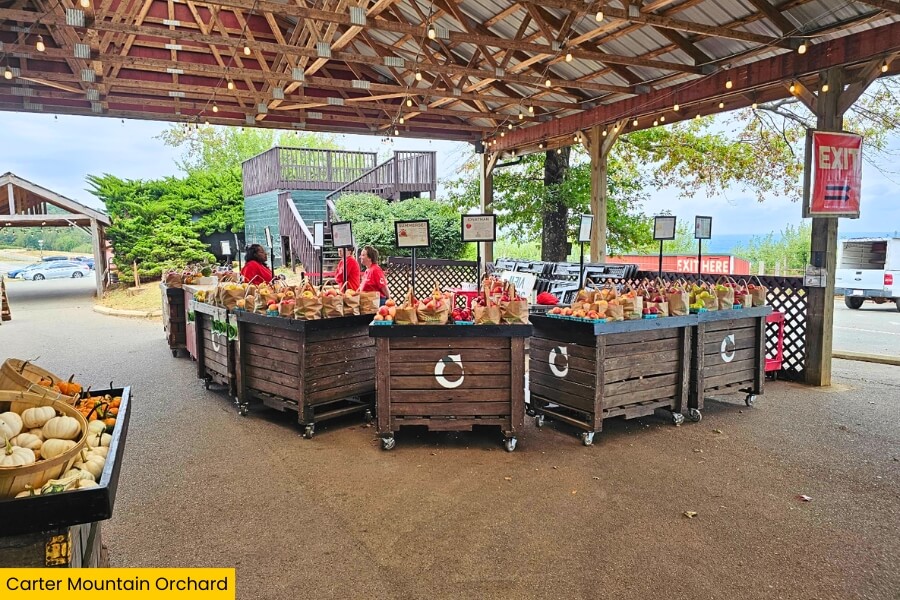
Save room for the orchard’s famous apple cider donuts, then grab fresh-pressed cider, fruit, jams, and other Virginia-made treats inside the Country Store.
The mountain setting also delivers huge views across Charlottesville toward the Blue Ridge Mountains, and seasonal events like Thursday Evening Sunset Series nights add live music, food, and cider to an already tasty stop.
8. Thomas Jefferson’s Monticello
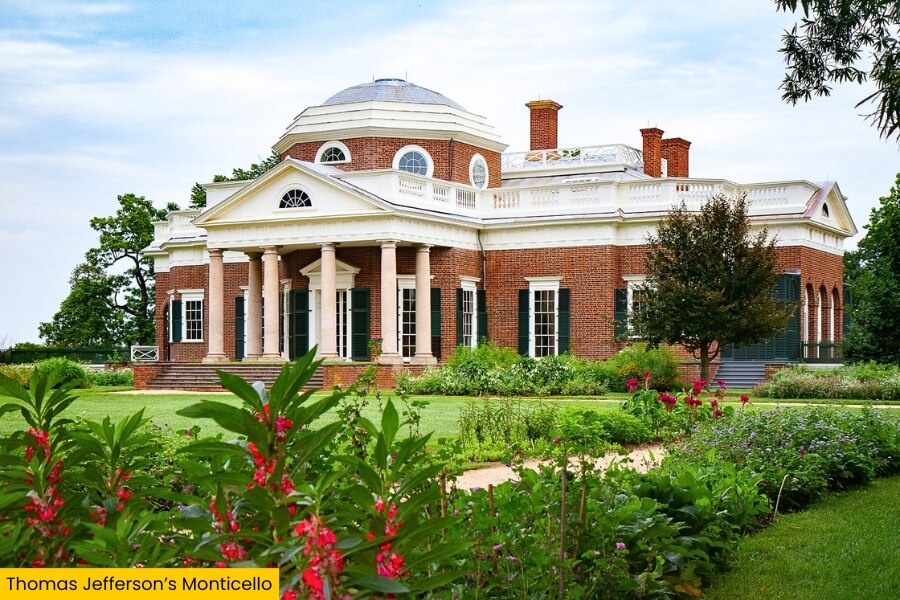
Finish your Charlottesville weekend at Thomas Jefferson’s Monticello, the plantation home Jefferson designed and rebuilt over more than 40 years on a 5,000-acre estate.
Tour the 33-room house to see Jefferson’s book-filled Cabinet, Great Clock, alcove bed, and clever inventions, then walk through the flower gardens and 1,000-foot-long vegetable garden.
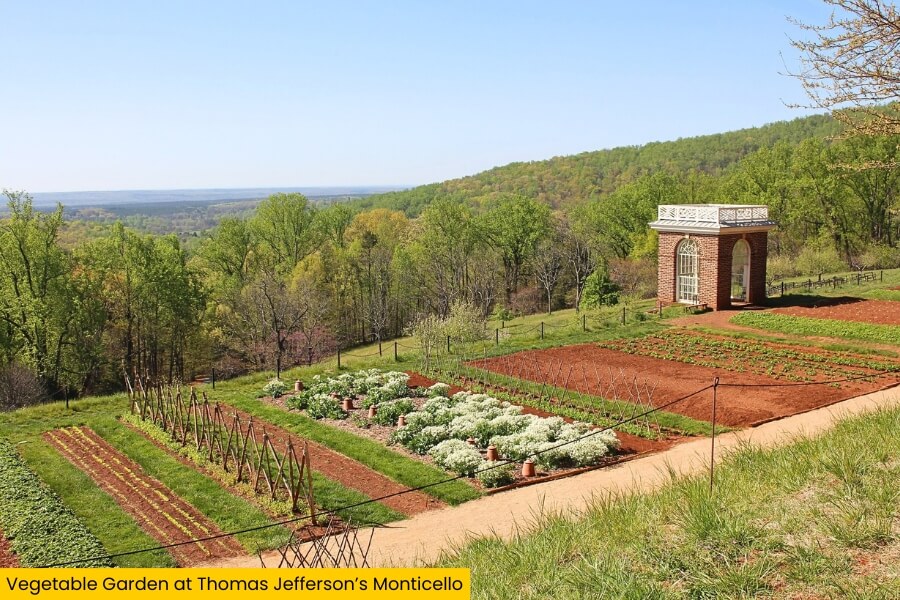
Make time for Mulberry Row, once the plantation’s main work area, where exhibits share the documented stories of enslaved people who lived and worked at Monticello, including the Hemings family.
Monticello became a UNESCO World Heritage Site in 1987, giving your itinerary a fitting finale that connects Jefferson’s architecture and ideas with the complicated history behind his famous Charlottesville home.
Related Posts