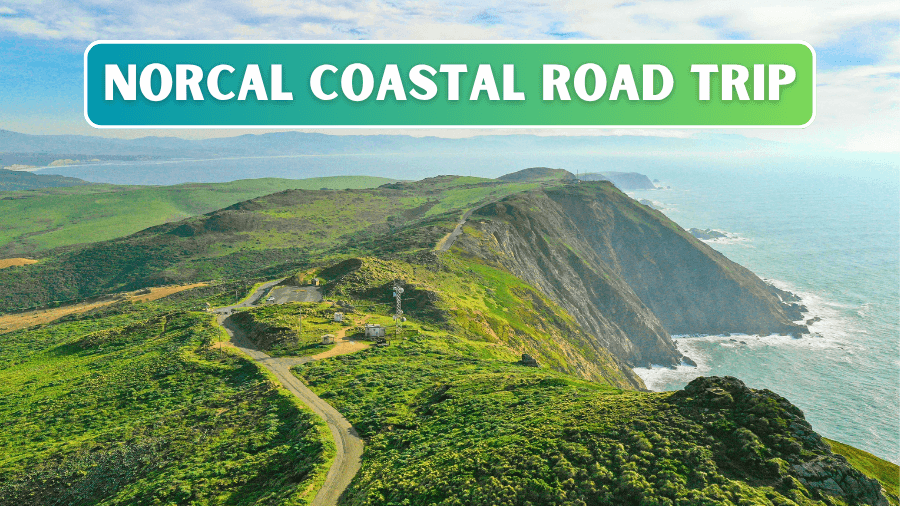
California is packed with places that seem almost too incredible to be real, from record-breaking natural wonders to world-famous landmarks that have captured visitors’ attention for generations.
One stop will have you standing beside something so massive it’s hard to believe it’s alive, while another puts you at an elevation that holds a surprising North American record.
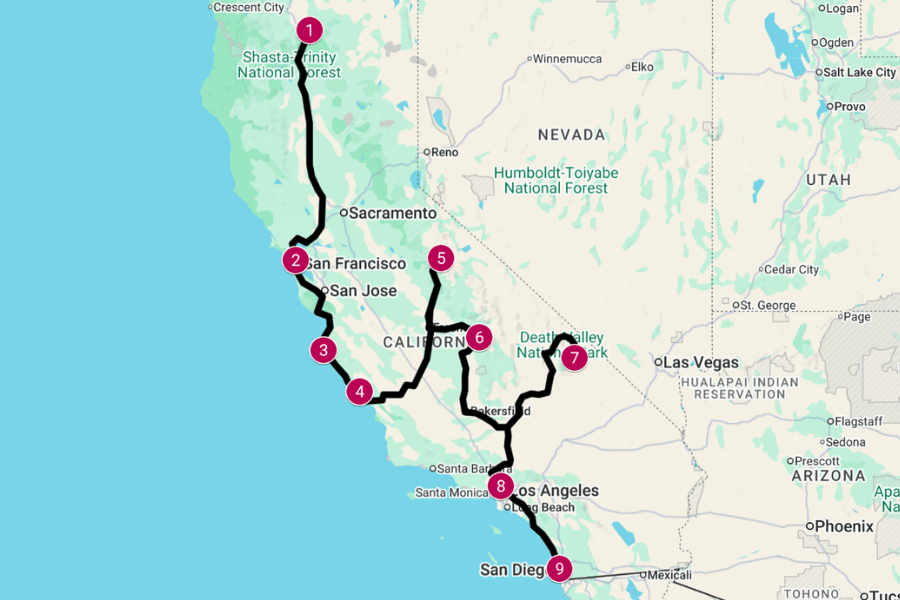
You’ll find towering peaks, dramatic coastal scenery, architectural masterpieces, and iconic sights that draw millions of people from around the globe.
If you’re putting together a California bucket list, these nine unforgettable landmarks deserve a spot at the very top.
1. Mount Shasta
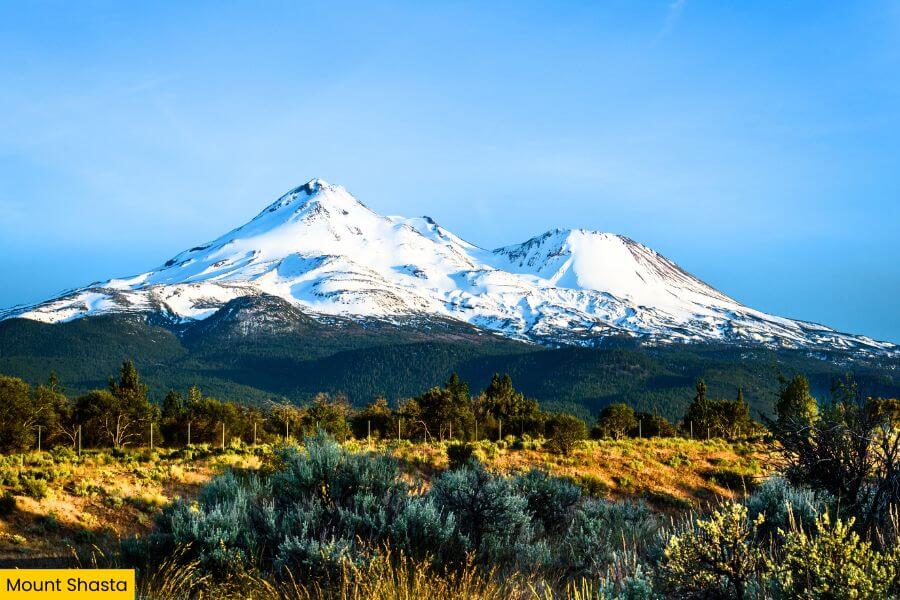
Mount Shasta rises 14,179 feet in Northern California’s Cascade Range, near the Oregon border, and its snow-covered volcanic cone is one of the most recognizable mountain landmarks in the western United States.
The mountain is part of Shasta-Trinity National Forest and is known for hiking, climbing, camping, fishing, and winter sports, with popular routes including the Avalanche Gulch trail used by thousands of climbers each year.
If you want incredible views without a summit attempt, explore nearby Panther Meadow, drive sections of the Mount Shasta Scenic Byway, or visit Siskiyou Lake, a 430-acre lake with kayaking, swimming, and picnic areas.
Fun fact: Mount Shasta is a potentially active stratovolcano made up of four overlapping volcanic cones, and on clear days its massive peak can be seen from more than 100 miles away.
2. Golden Gate Bridge
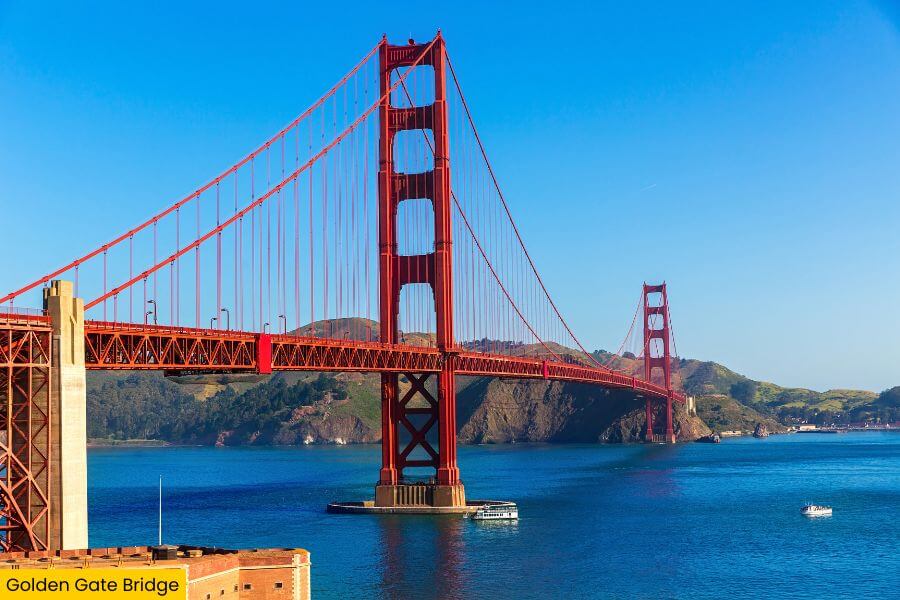
After taking in Mount Shasta’s towering peak, continue to San Francisco’s Golden Gate Bridge, the famous 1.7-mile-long suspension bridge that stretches across the Golden Gate Strait between San Francisco and Marin County.
Opened in 1937, the bridge stands 746 feet tall at its towers and is painted International Orange, a color chosen to stay visible through the city’s frequent fog.
One of the best ways to experience it is by walking or biking across the span, where you’ll get sweeping views of Alcatraz Island, the San Francisco skyline, Angel Island, and the Pacific Ocean.
For even more postcard-worthy views, stop at Battery Spencer in the Marin Headlands or Crissy Field, both favorite photo spots that showcase one of the most photographed bridges on Earth.
3. Bixby Bridge
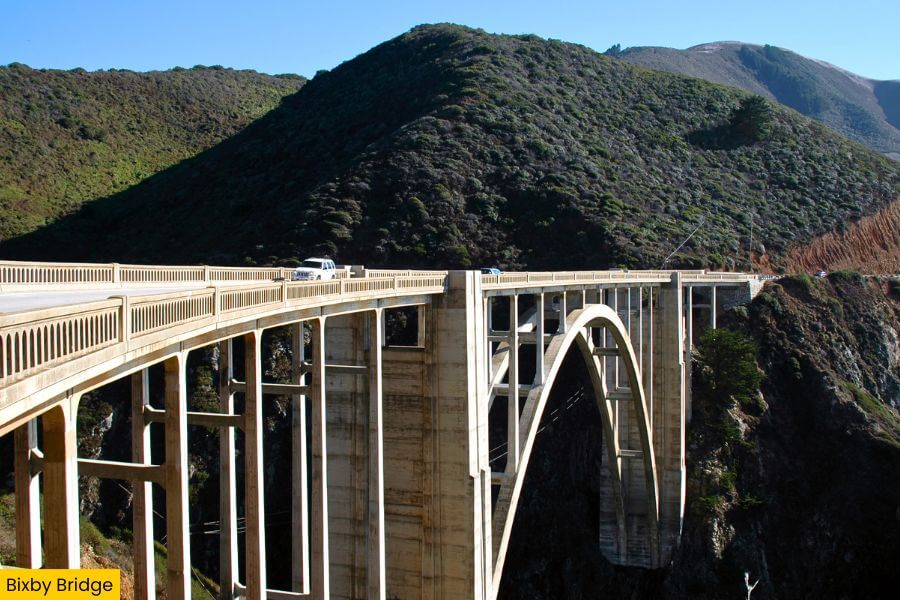
Bixby Bridge steals the show with its soaring 280-foot-high arch and dramatic location above a rocky Pacific Ocean canyon along Highway 1.
Completed in 1932, this concrete arch bridge stretches 714 feet across Bixby Creek and is one of the most photographed landmarks on the entire California coast.
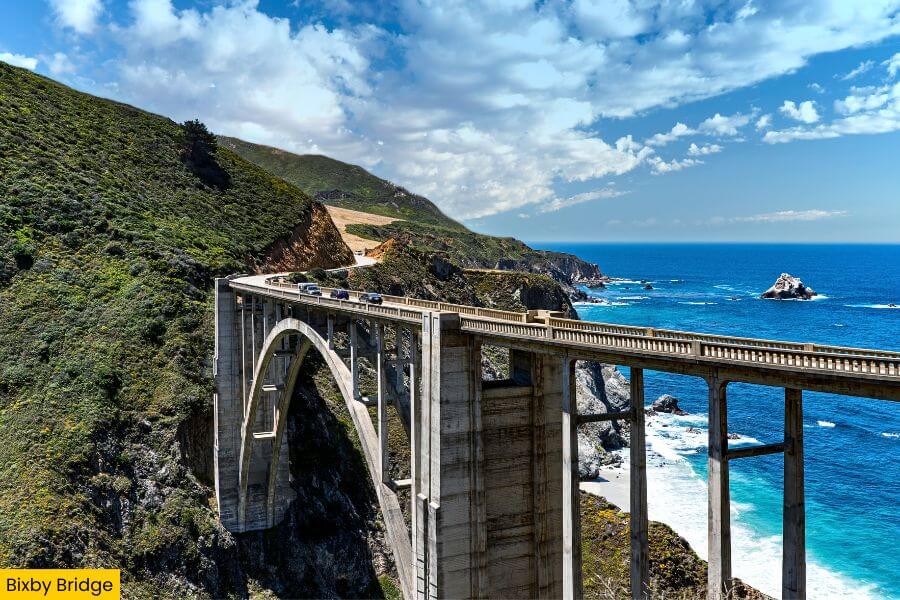
You’ll find some of the best viewpoints at Castle Rock Viewpoint and the pullouts just north of the bridge, where waves crash against steep cliffs and rolling green hills drop toward the sea.
The bridge has appeared in countless commercials, movies, and television shows, and on foggy mornings its graceful arch often seems to float above the coastline, creating one of Big Sur’s most unforgettable sights.
4. Hearst Castle
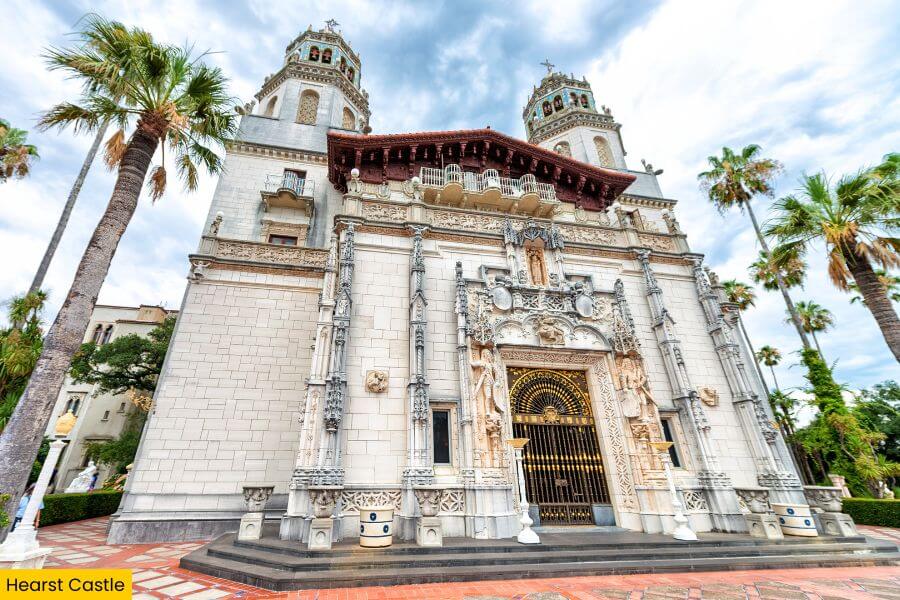
Hearst Castle sits high on a hill near San Simeon, where newspaper publisher William Randolph Hearst built a lavish 165-room estate overlooking the Pacific Ocean.
Completed over nearly three decades with architect Julia Morgan, the property features 127 acres of gardens, 56 bedrooms, 61 bathrooms, and the stunning Neptune Pool, which holds about 345,000 gallons of water.

Touring the estate lets you explore grand rooms filled with European art, antique tapestries, carved ceilings, and thousands of historic artifacts collected from around the world.
One of the most surprising sights is the hillside herd of zebras that still roam the area today, descendants of animals from Hearst’s private zoo, which once included a wide variety of species.
5. Yosemite National Park
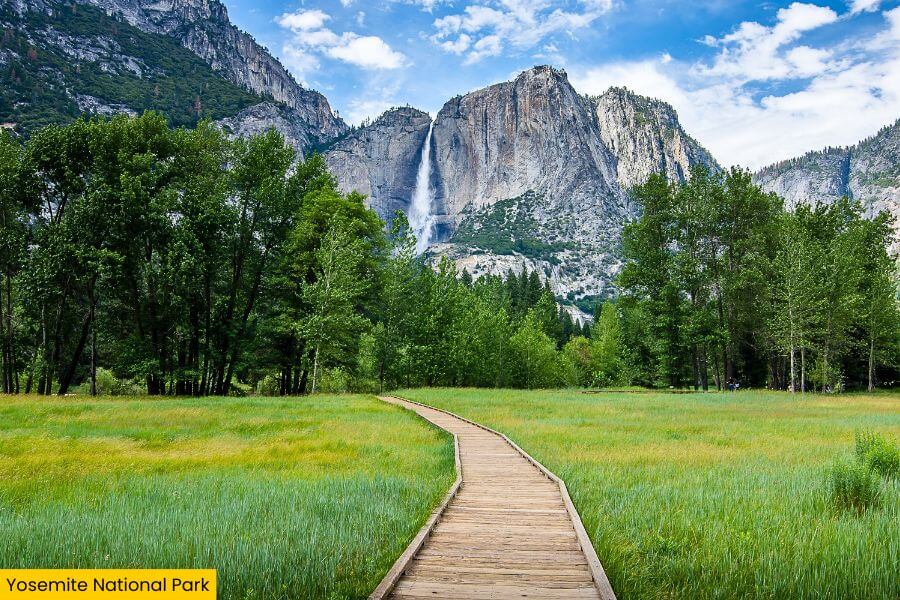
From grand mansions and hilltop estates, the scenery shifts to something even bigger at Yosemite National Park, a 747,956-acre wilderness in California’s Sierra Nevada that draws millions of visitors each year.
Yosemite Valley is packed with famous landmarks, including El Capitan, a 3,000-foot granite rock face, Half Dome, which rises above the valley floor, and Yosemite Falls, one of North America’s tallest waterfalls at 2,425 feet.
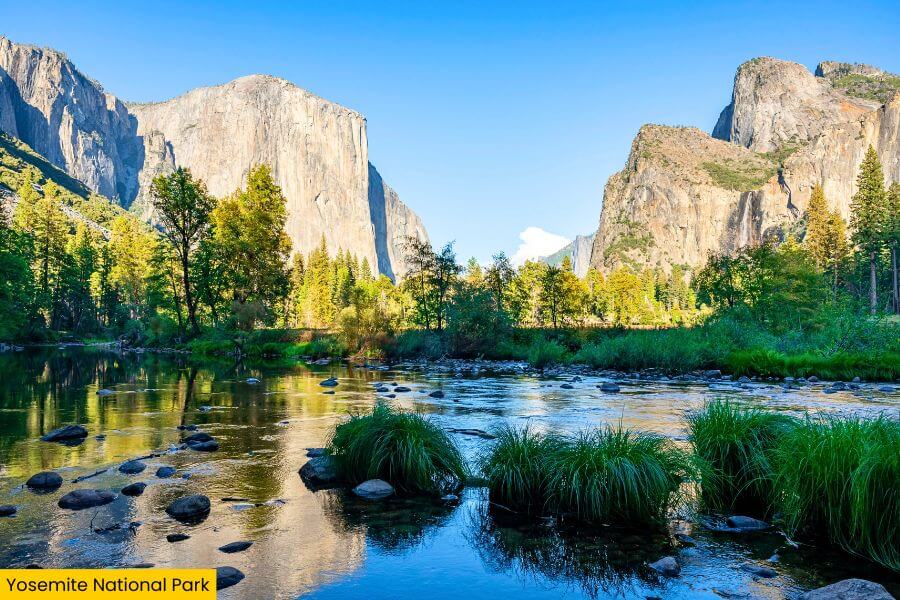
You can hike the 5.4-mile Mist Trail to Vernal Fall and Nevada Fall, drive to Glacier Point for panoramic views, or explore giant sequoias in the Mariposa Grove, home to more than 500 mature trees.
The park was central to the conservation movement led by John Muir, and its towering cliffs, waterfalls, and ancient forests helped inspire the creation of America’s national park system.
6. General Sherman Tree
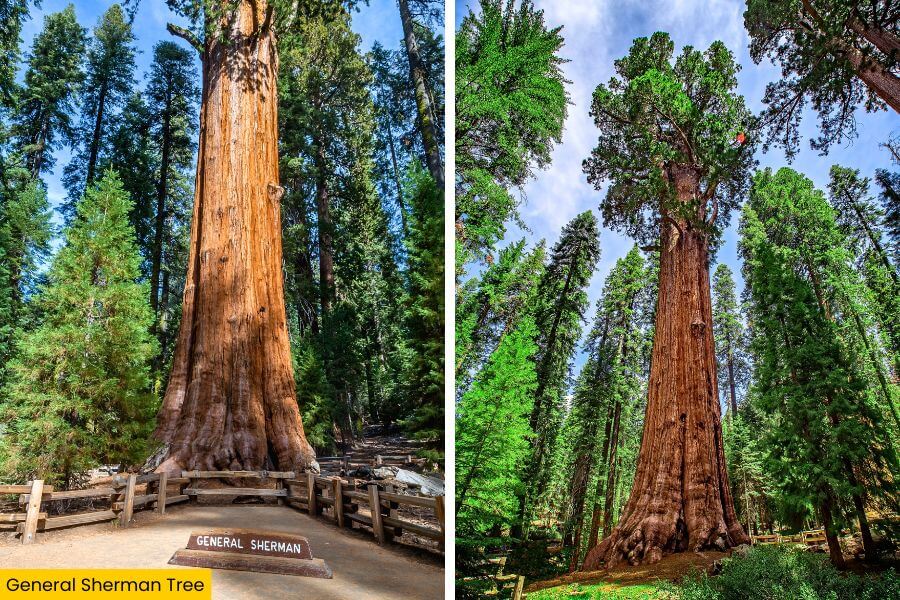
After seeing Yosemite’s towering granite cliffs, get ready for an even bigger natural record holder at the General Sherman Tree, located in Sequoia National Park in California’s southern Sierra Nevada mountains.
This giant sequoia stands about 275 feet tall, measures 36.5 feet in diameter at its base, and is recognized as the largest tree on Earth by volume, containing roughly 52,500 cubic feet of wood.
A short 1-mile round-trip walk leads to the tree, where you can stand beside its massive trunk and appreciate a giant that is estimated to be between 2,200 and 2,700 years old.
The surrounding Giant Forest contains thousands of sequoias, but General Sherman remains the star attraction, drawing visitors from around the world to see one of the most impressive living organisms on the planet.
7. Badwater Basin
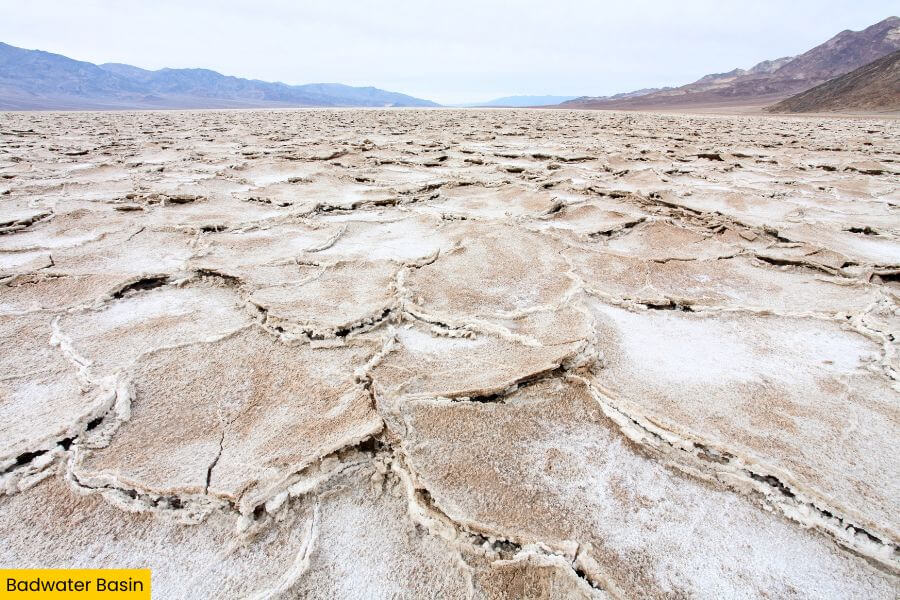
Leaving the giant sequoias behind, the landscape changes completely at Badwater Basin in Death Valley National Park, where you can stand at the lowest point in North America, 282 feet below sea level.
The basin is famous for its vast white salt flats, which stretch for miles across the valley floor and create striking geometric patterns as minerals left behind by evaporated water crystallize in the desert heat.
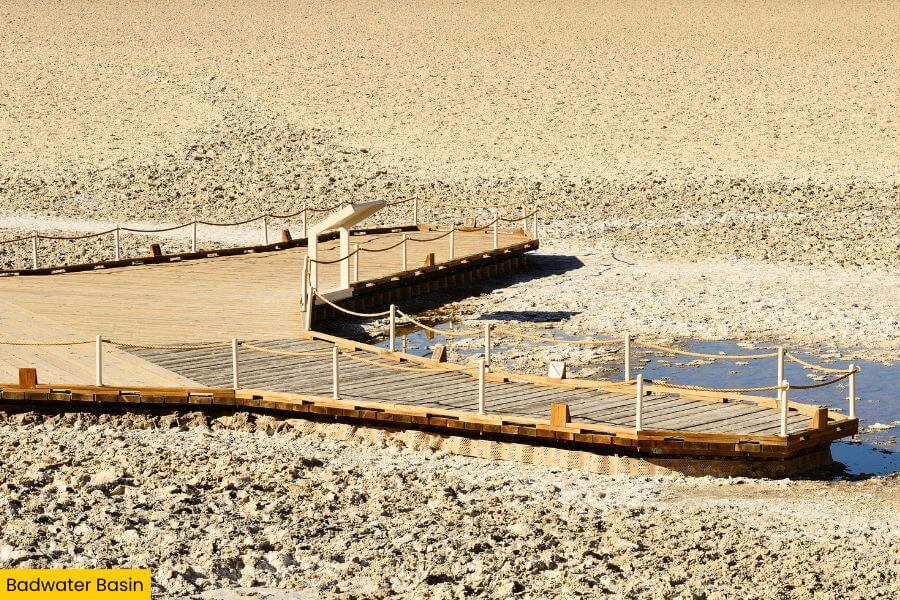
A short walk from the parking area takes you onto the flats, while a sign high on the Black Mountains marks sea level and highlights just how far below it you are standing.
Badwater sits in one of the hottest places on Earth, and nearby Furnace Creek recorded an air temperature of 134°F in 1913, which remains the highest temperature ever measured on Earth.
8. Hollywood Sign
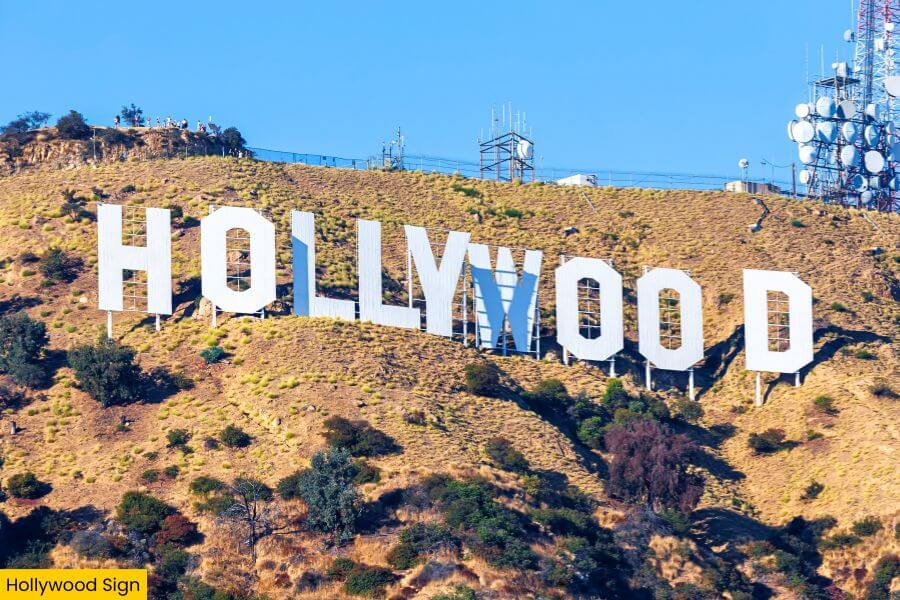
From Death Valley’s salt-covered flats, the route continues toward the heart of Los Angeles, where the world-famous Hollywood Sign sits high on Mount Lee in the Santa Monica Mountains.
The landmark’s nine white letters stand 45 feet tall, overlooking Hollywood and serving as one of the most recognizable symbols of the entertainment industry.
You can get great views from Griffith Observatory, Lake Hollywood Park, or hiking trails such as the Mount Hollywood Trail in Griffith Park, which offers sweeping views of the city and surrounding peaks.
Originally installed in 1923 as a real estate advertisement reading “Hollywoodland,” the sign was originally intended as a temporary advertisement, but it became such an icon that it remains one of Southern California’s most visited attractions today.
9. Balboa Park
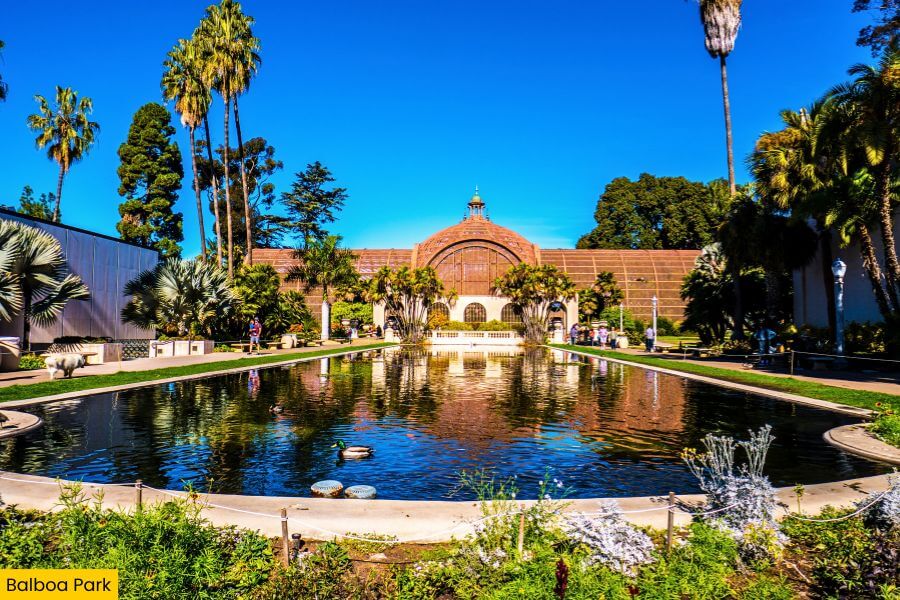
Wrapping up California’s lineup of famous landmarks, Balboa Park spreads across 1,200 acres in San Diego and packs more museums, gardens, and historic buildings into one place than almost anywhere else in the state.
The park is home to the San Diego Zoo, which covers 100 acres and houses more than 12,000 animals representing over 680 species and subspecies from around the world.
You can spend hours exploring attractions like the San Diego Museum of Art, Fleet Science Center, Botanical Building, and the Japanese Friendship Garden, all connected by beautiful walkways and Spanish Colonial Revival architecture.
Many of Balboa Park’s most famous buildings and gardens were originally developed for the 1915-1916 Panama-California Exposition.
The park welcomes millions of visitors each year and remains one of the largest urban cultural parks in the United States.
Related Posts