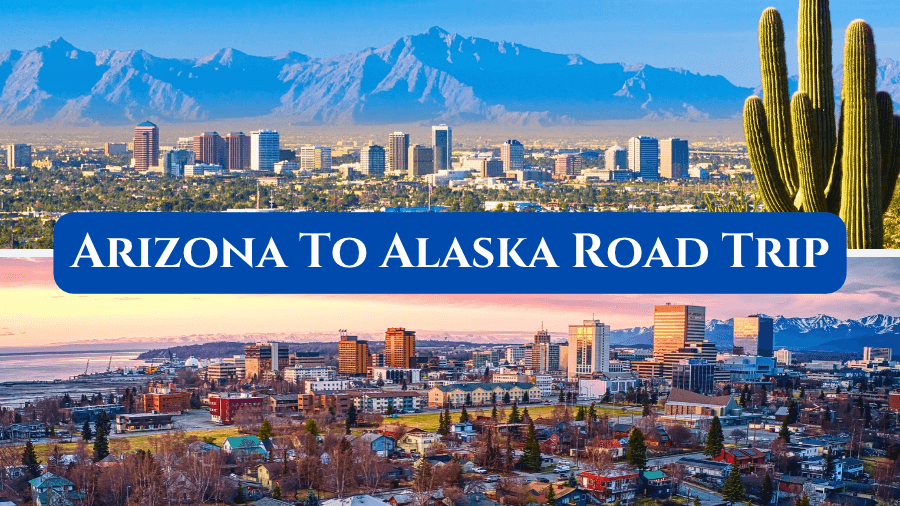
Ever dreamed of driving from the scorching deserts of Arizona all the way to the wild, glacier-covered landscapes of Alaska?
This epic road trip takes you through some of North America’s most stunning scenery, from red rock canyons and hot springs to turquoise lakes, snow-capped mountains, and wilderness where moose, bears, and bison roam.
Along the way, you’ll cross international borders, drive one of the world’s most famous highways, explore breathtaking national parks, and discover quirky little towns you probably never knew existed.
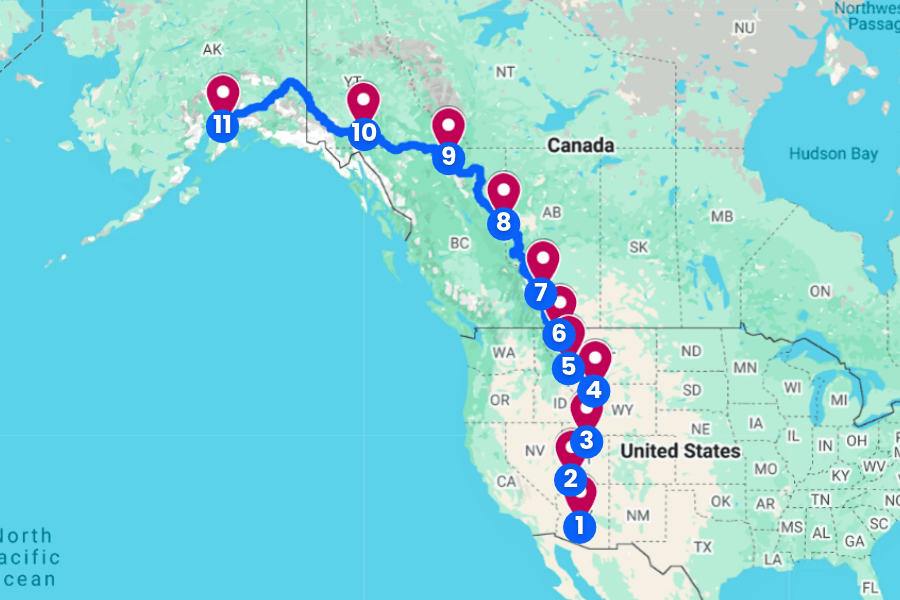
But with thousands of miles to cover, winding mountain roads, and so many amazing places to explore, figuring out where to stop and what to see can feel a little overwhelming.
That’s where this Arizona to Alaska road trip itinerary comes in, with all the best stops, must-see attractions, and helpful tips to make this once-in-a-lifetime adventure one you’ll never forget!
1. Phoenix, Arizona
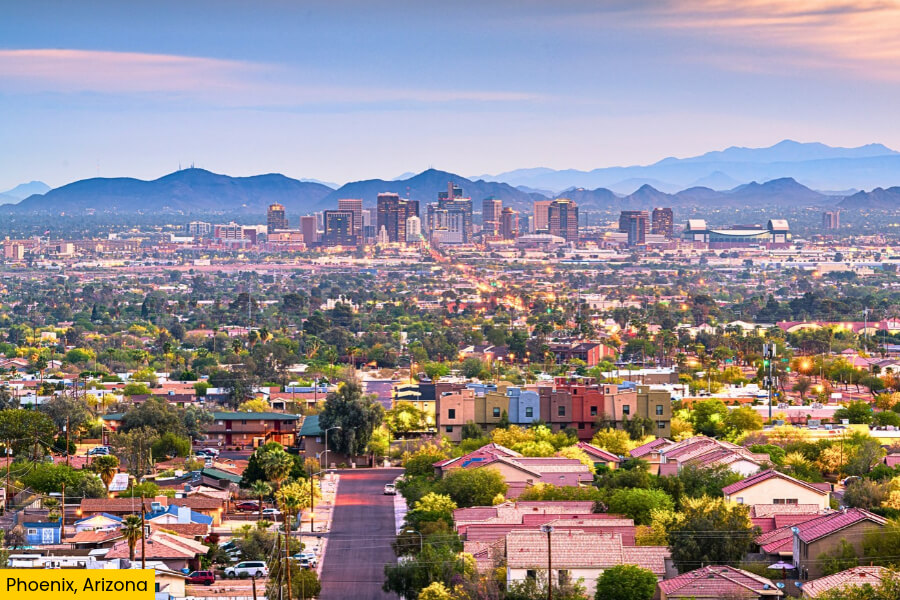
Phoenix is the perfect place to kick off your epic Arizona to Alaska road trip, with towering saguaro cacti, incredible desert hikes, and more than 300 days of sunshine each year.
Located in the Sonoran Desert in central Arizona, Phoenix is surrounded by mountains and famous for its scorching summers.
Start your adventure by hiking the 2.4-mile round-trip Echo Canyon Trail up Camelback Mountain, exploring the 140-acre Desert Botanical Garden, or admiring over 20,000 artworks at the Phoenix Art Museum.
Before hitting the road, check out the musical instruments at the Musical Instrument Museum, catch a sunset at South Mountain Park and Preserve, or grab some delicious tacos in downtown Phoenix.
2. Zion National Park, Utah
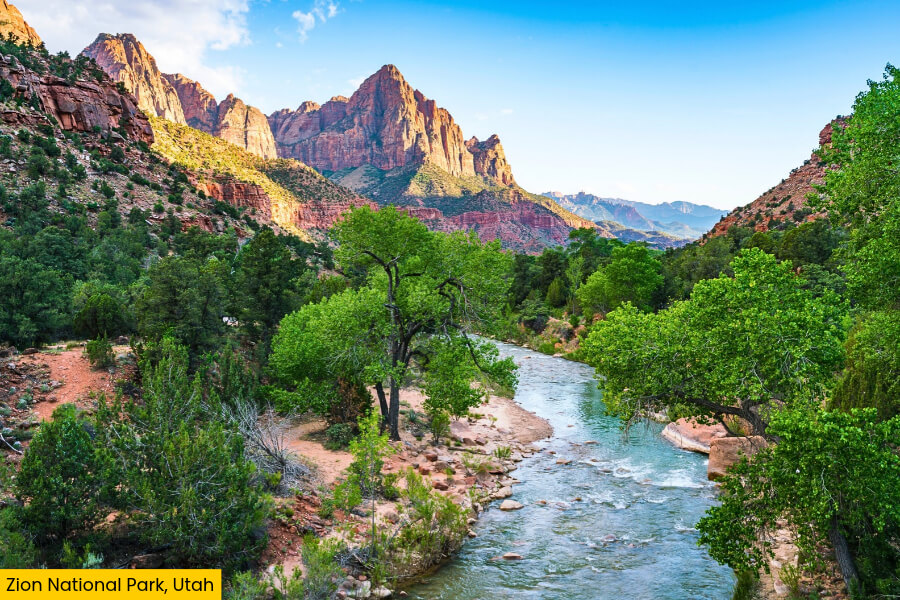
Leaving Phoenix behind, drive about 6 hours to Zion National Park in southwestern Utah, where massive red sandstone cliffs rise up to 2,000 feet above the canyon floor, and the Virgin River winds through some of the most incredible scenery in the Southwest.
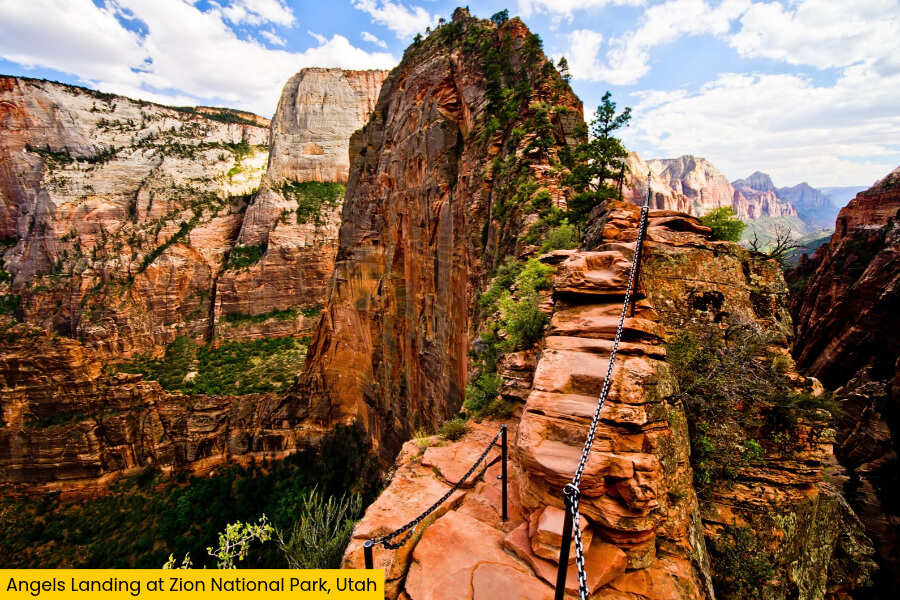
One of Zion’s biggest attractions is Angels Landing, a thrilling 5.4-mile round-trip hike with steep drop-offs, narrow ridges, and chains to hold onto, although you’ll need a permit to tackle the final section.
For something different, hike through The Narrows, where you’ll wade through the Virgin River between towering canyon walls that narrow to just 20 feet in places.
Don’t miss the 1-mile round-trip Canyon Overlook Trail for jaw-dropping views of Pine Creek Canyon, especially around sunset when the sandstone cliffs glow orange and red.
3. Park City, Utah
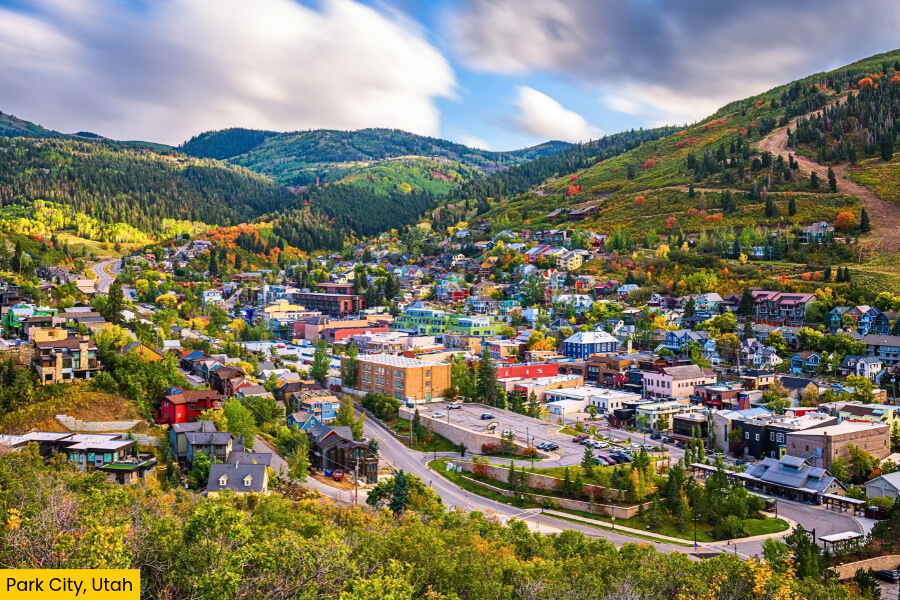
Continue driving for about 4 hours to Park City, a mountain town in Utah’s Wasatch Range, famous for its world-class ski resorts, historic silver mines, and outdoor adventures.
Park City hosted several events during the 2002 Winter Olympics, and you can still experience the excitement at Utah Olympic Park, where you can watch athletes train on ski jumps or try the thrilling bobsled experience.
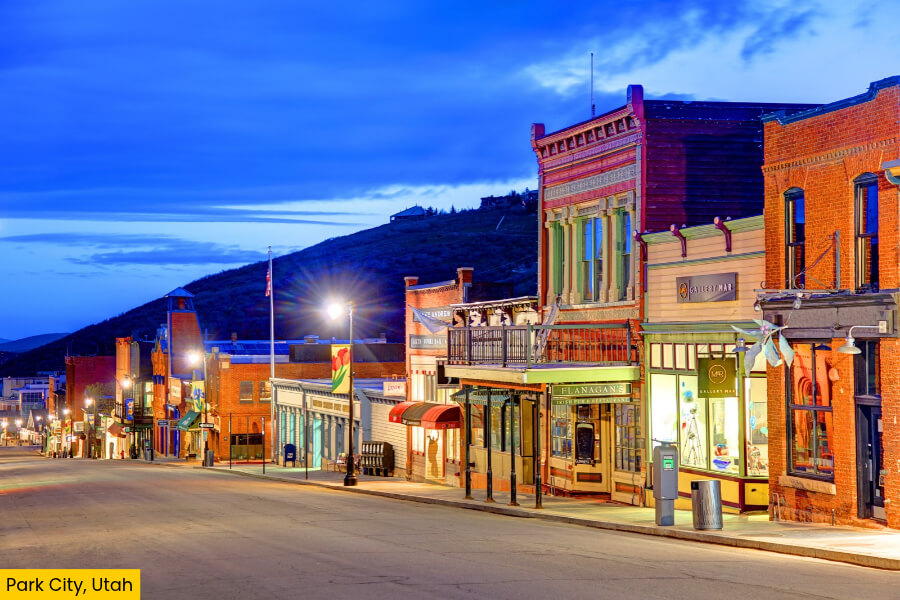
If you’re visiting in summer, ride the scenic chairlifts at Deer Valley Resort, hike the Bloods Lake Trail, or explore over 400 miles of trails around town.
Before continuing your road trip, wander down Historic Main Street, where colorful 19th-century buildings house restaurants, art galleries, and shops selling everything from handmade jewelry to outdoor gear.
4. Yellowstone National Park, Wyoming
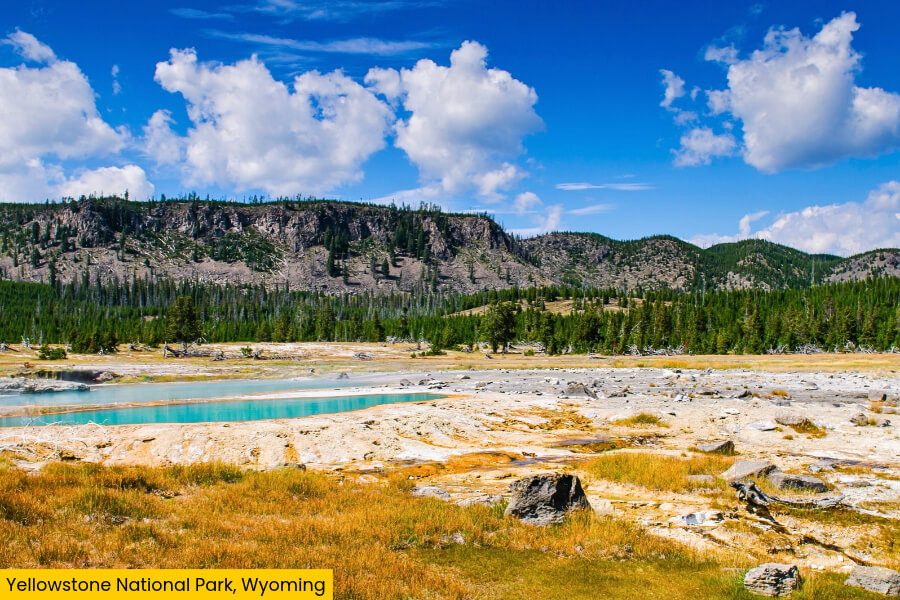
From Park City, make your way to Yellowstone National Park in Wyoming, about 6 hours and 15 minutes away.
Established in 1872, America’s first national park covers over 2.2 million acres of steaming geysers, colorful hot springs, thundering waterfalls, and wildlife-filled valleys.
Yellowstone is home to more than 500 active geysers, including the famous Old Faithful, which shoots boiling water more than 180 feet into the air, usually erupting every 90 to 110 minutes.
Don’t miss the Grand Prismatic Spring, a massive 370-foot-wide hot spring with bright blue, orange, and yellow rings, or the Grand Canyon of the Yellowstone, where the 308-foot Lower Falls crashes into a dramatic canyon.
For wildlife spotting, drive through Lamar Valley at sunrise, where you might see wild bison, elk, grizzly bears, and even wolves roaming across the grasslands.
5. Philipsburg, Montana
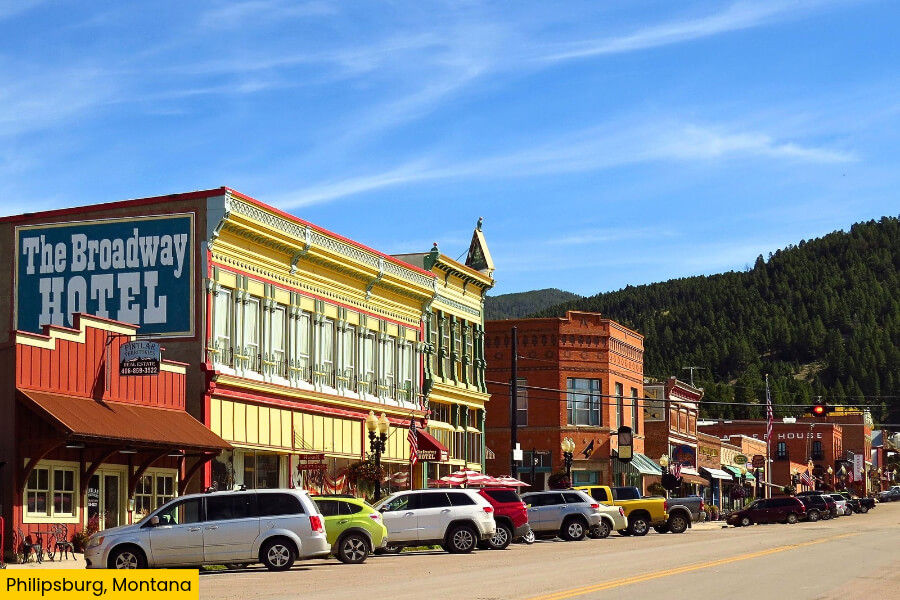
After exploring Yellowstone’s steaming geysers and wildlife-filled valleys, continue for about 4 hours and 45 minutes to Philipsburg, a small Montana town located in the Flint Creek Valley.
Surrounded by picturesque mountain ranges, this charming town is famous for its 19th-century mining buildings, colorful storefronts, and sapphire gemstones.
Founded in 1867 as a silver mining town, Philipsburg now attracts travelers who want to try their luck finding real Montana sapphires at the Sapphire Gallery, where you can sift through gravel and keep the gems you discover.
Make sure to stop at The Sweet Palace, a massive old-fashioned candy store offering hundreds of sweet treats, including homemade fudge, saltwater taffy, and chocolates.
For some outdoor fun, drive the scenic Pintler Veterans’ Memorial Scenic Highway to Georgetown Lake, a 2,818-acre mountain lake where you can fish, kayak, or enjoy a peaceful picnic.
6. Whitefish, Montana
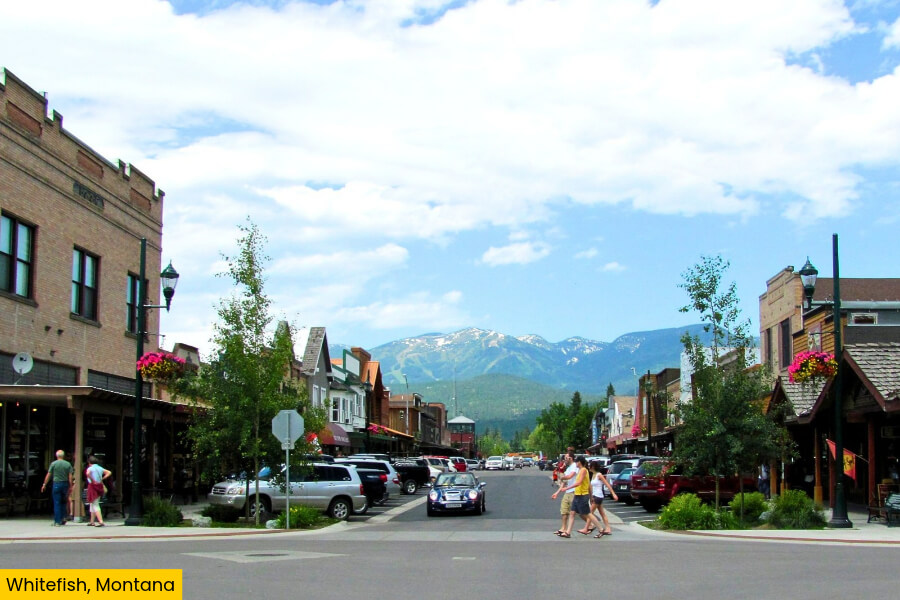
From Philipsburg, make the 3.5-hour drive to Whitefish, a mountain town in northwestern Montana, where you’ll find a beautiful freshwater lake, snow-capped peaks, and some of the best outdoor adventures in the state.
Start by visiting Whitefish Lake, where you can swim, rent a kayak, or relax on the sandy beach at Whitefish City Beach while enjoying incredible views of the surrounding mountains.
For even more excitement, head to Whitefish Mountain Resort on Big Mountain, where you can ride scenic chairlifts, race down an alpine slide, or explore mountain biking trails during the summer months.
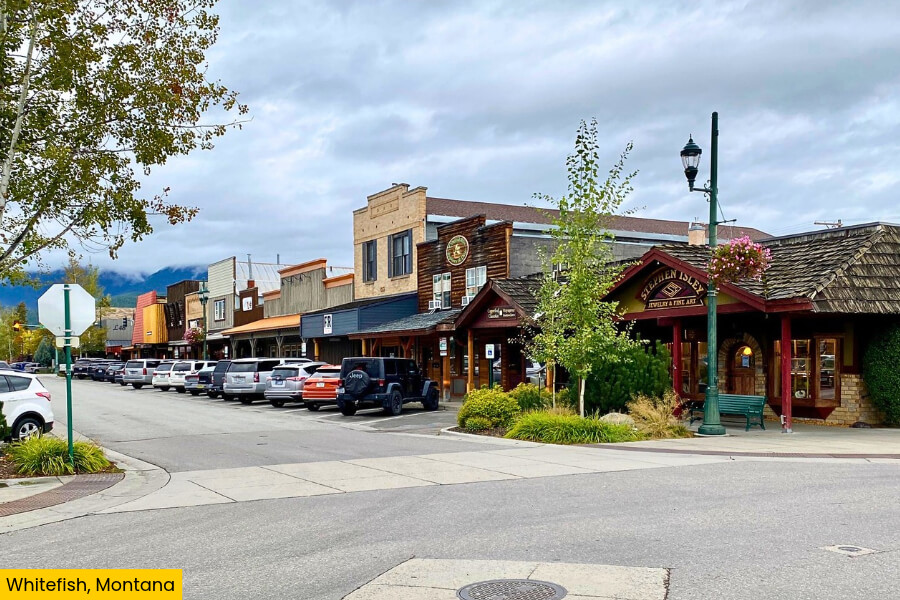
Before heading toward Canada, stroll through downtown Whitefish along Central Avenue, packed with local coffee shops, restaurants, outdoor gear stores, and historic buildings dating back to the town’s early railroad days.
7. Banff National Park, Alberta (Canada)
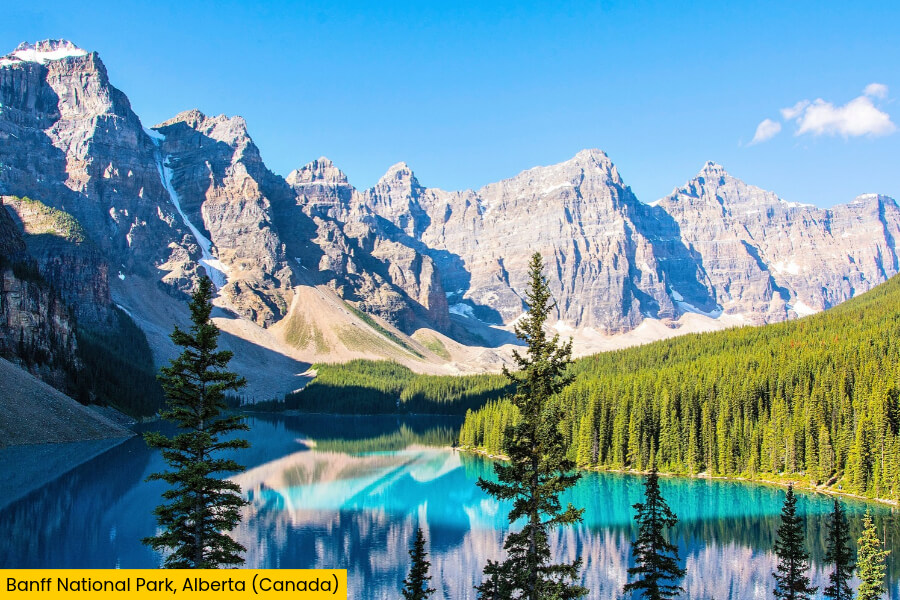
After leaving Whitefish and crossing the Canadian border, make your way to Banff National Park in Alberta, Canada’s oldest national park, established in 1885.
Covering 2,564 square miles, this breathtaking park is home to towering Rocky Mountain peaks, turquoise lakes, glaciers, and thick pine forests.
One of Banff’s biggest highlights is Lake Louise, a stunning glacier-fed lake surrounded by mountains, where you can paddle a canoe across bright blue water or hike the 4.5-mile round-trip trail to Lake Agnes Tea House.
Another must-see is Moraine Lake, famous for its incredible turquoise water and the ten mountain peaks rising behind it, although you’ll need to take a shuttle or other authorized transportation since personal vehicles aren’t allowed.
For something extra special, ride the Banff Gondola to the summit of Sulphur Mountain, where you’ll enjoy sweeping views of six mountain ranges from 7,486 feet above sea level.
8. Dawson Creek, British Columbia (Canada)
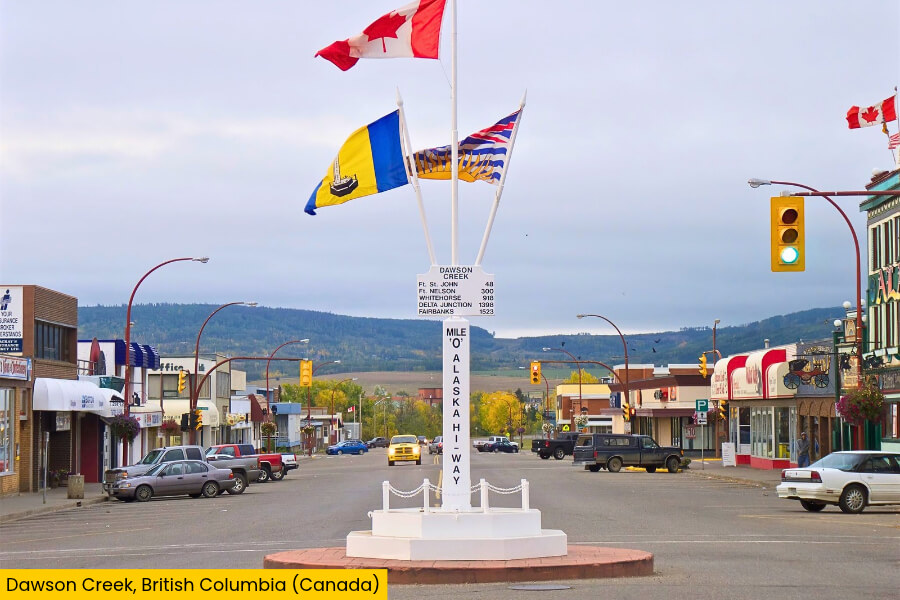
Leaving Banff’s turquoise lakes and towering mountains behind, continue for about 6 hours and 45 minutes to Dawson Creek in northeastern British Columbia.
This small Canadian city is famous for being the official starting point of the legendary Alaska Highway, which stretches roughly 1,390 miles to Delta Junction, Alaska.
Start your visit at the iconic Mile 0 Post in downtown Dawson Creek, where you can snap a photo marking the beginning of one of North America’s most famous road trips.
Before heading north, check out the Walter Wright Pioneer Village, where historic log cabins, old farm equipment, and vintage vehicles are on site.
9. Liard River Hot Springs Provincial Park, British Columbia (Canada)
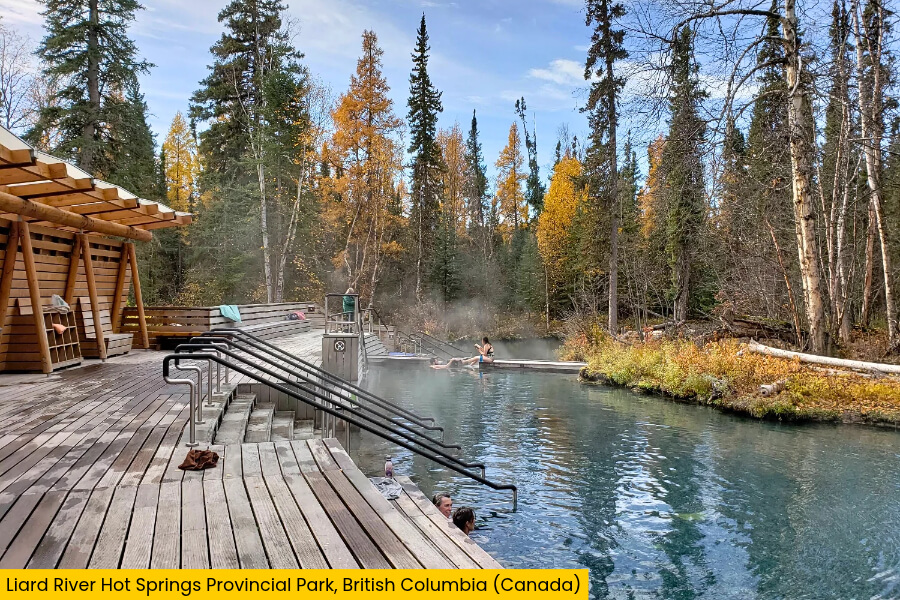
Following the Alaska Highway north, make a stop at Liard River Hot Springs Provincial Park in northern British Columbia, where you can soak in natural hot springs surrounded by thick boreal forests and towering spruce trees.
The park’s main attraction is Alpha Pool, a beautiful natural hot spring where water temperatures range from around 107°F to 125°F near the source, with cooler areas perfect for a relaxing soak after hours of driving.
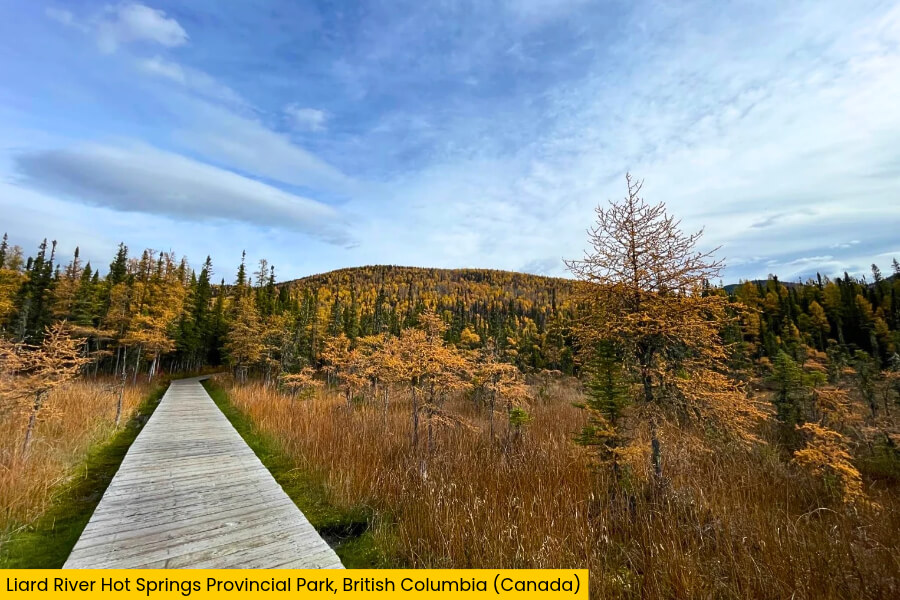
To reach the pools, follow the wooden boardwalk through a warm-water wetland, where you might spot moose feeding among the plants.
You can also spend the night at the park’s campground, which has 53 campsites, making this a fantastic overnight stop before continuing toward the Yukon.
10. Whitehorse, Yukon (Canada)
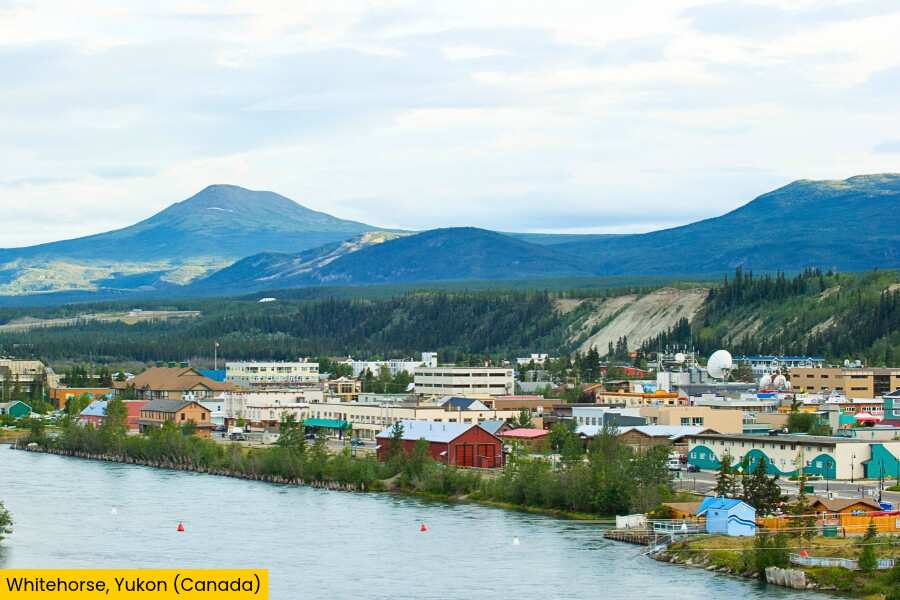
After a 6-hour-and-45-minute drive from Liard River, you’ll reach Whitehorse, the capital of Canada’s Yukon Territory, where the mighty Yukon River flows past colorful downtown buildings and mountains rise in the distance.
One of the coolest attractions is the S.S. Klondike, a restored sternwheeler that once carried cargo and passengers along the Yukon River system.
For outdoor adventures, visit Miles Canyon, where you can cross a suspension bridge above the turquoise Yukon River, or explore the trails around nearby Schwatka Lake.
Don’t miss the Yukon Wildlife Preserve, a 700-acre park where you can spot 12 species of northern Canadian wildlife, including muskoxen, woodland caribou, moose, and mountain goats.
Please note that at the time of writing, SS Klondike National Historic Site is currently closed for tours inside the vessel due to rehabilitation work, though the grounds remain open for visitors.
11. Anchorage, Alaska
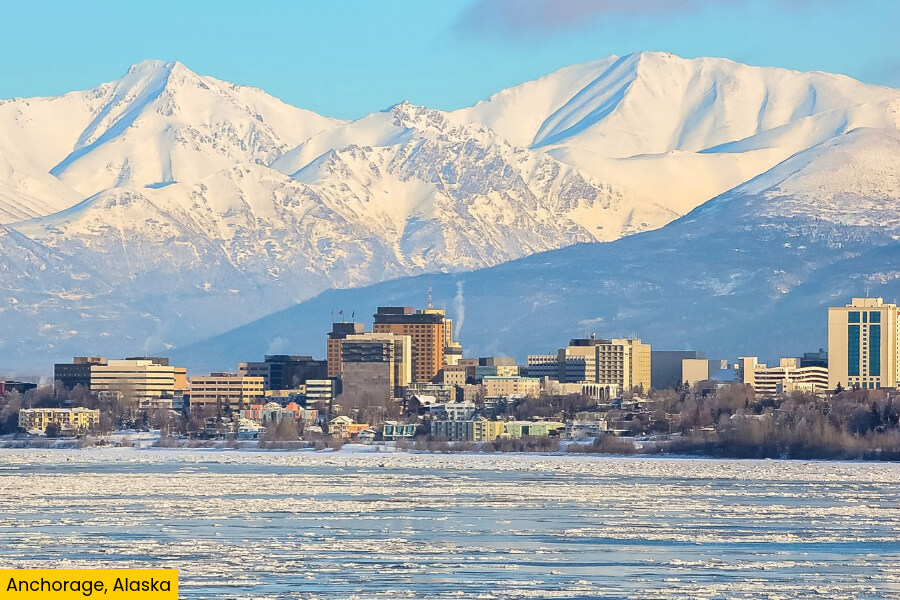
To finish your epic road trip, cross into Alaska and arrive in Anchorage, the state’s largest city, located along Cook Inlet with the towering Chugach Mountains as its backdrop.
This incredible destination offers plenty of opportunities to spot wildlife, explore glaciers, and experience Alaska’s wild landscapes.
Start by exploring the 11-mile Tony Knowles Coastal Trail, where you can bike along the waterfront, watch for moose, and enjoy views of Denali on clear days.
For an unforgettable adventure, drive about 1 hour and 20 minutes to Portage Glacier, where you can take a boat tour across Portage Lake to see the massive glacier up close.
Before wrapping up your journey, visit the Alaska Native Heritage Center to learn about Alaska’s Indigenous cultures, or head to Flattop Mountain for panoramic views of Anchorage, Cook Inlet, and the surrounding peaks.
Related Posts