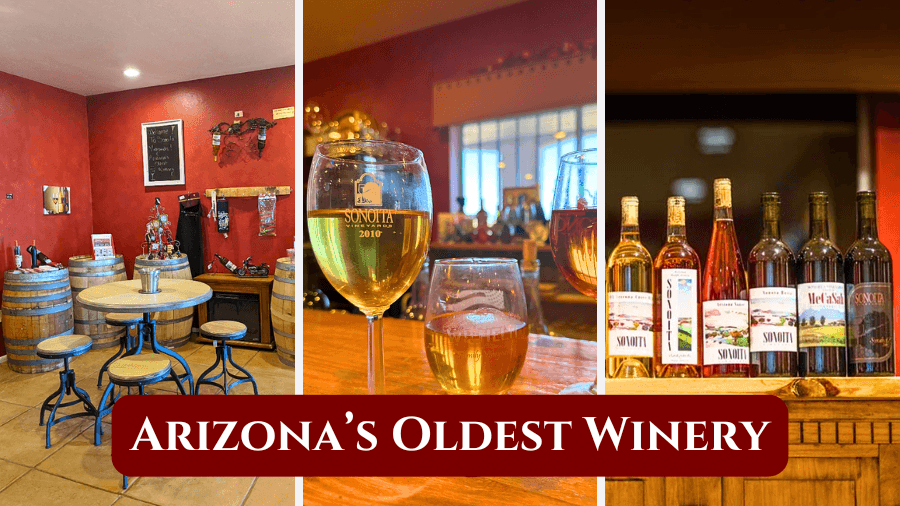
When you think of Arizona, vineyards and wine tastings probably aren’t the first things that come to mind.
But tucked away in the mountains at around 5,000 feet is a winery that’s been pouring wine since 1983.
It all started with a scientist who believed Arizona could grow grapes just as well as some of the world’s famous wine regions.
More than 40 years later, you can still visit this family-run winery, sample its signature wines, and enjoy beautiful mountain views.
And the story behind how it all began is just as interesting as the wine itself.
Where Is It?
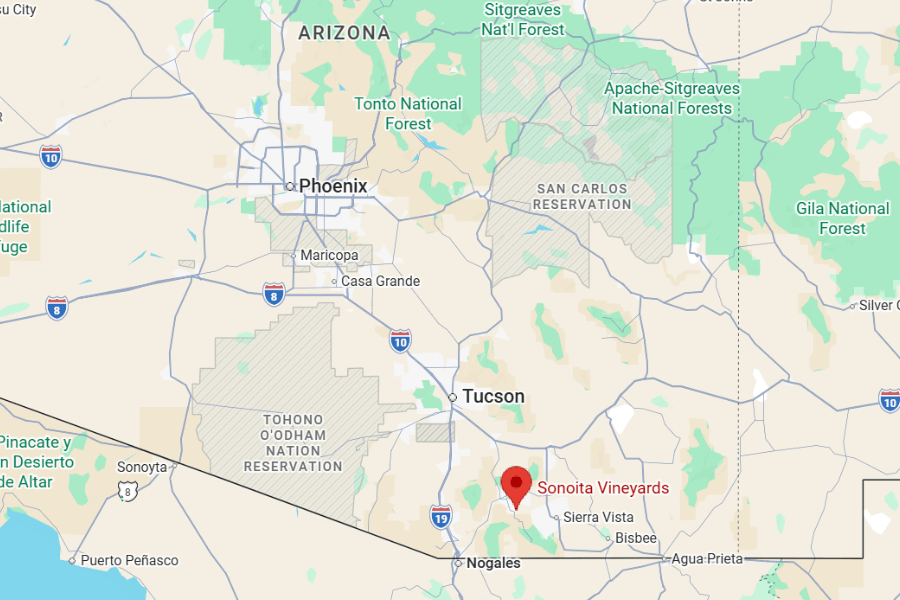
Sonoita Vineyards is located in Elgin, a small town in southeastern Arizona.
The winery sits in the rolling grasslands of Arizona’s Sonoita-Elgin wine country, surrounded by the Santa Rita, Huachuca, and Whetstone mountain ranges.
It’s about a 1-hour-and-15-minute drive from Tucson, 35 minutes from Sierra Vista, and 2 hours and 50 minutes from Phoenix, making it an easy day trip if you’re exploring southern Arizona.
About
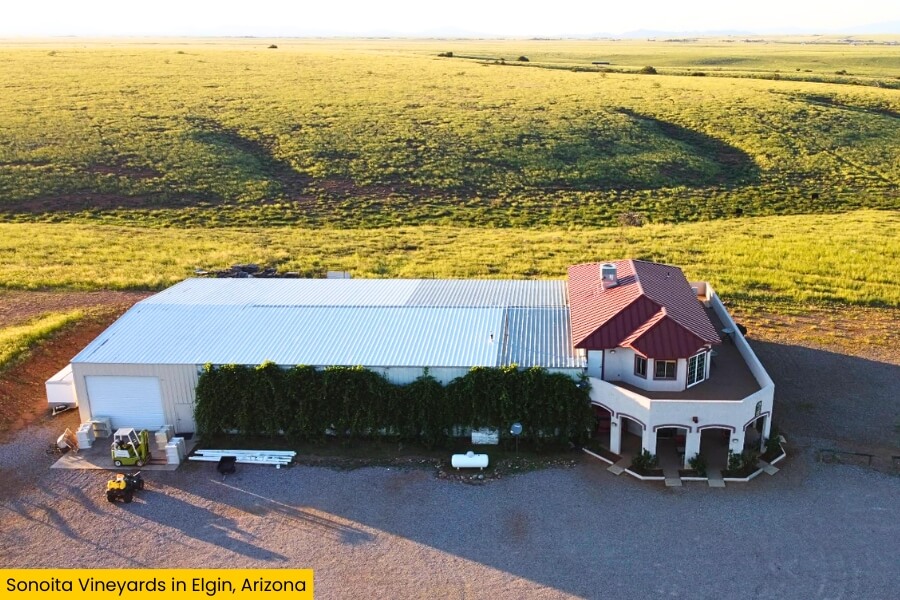
Sonoita Vineyards holds the title of Arizona’s oldest commercial vineyard and winery, and it’s still pouring award-winning wines more than four decades after opening in 1983.
Located at an elevation of approximately 5,000 feet, the winery takes advantage of warm, sunny days, cool mountain nights, and mineral-rich soils that help produce grapes with bold flavors.
The high elevation also makes this one of the most unusual places to go wine tasting in Arizona, especially if you’re used to picturing the state as nothing but desert and cactus.
The winery specializes in wines made from grapes that thrive in southern Arizona’s high-desert climate, including Cabernet Sauvignon, Merlot, Syrah, and other European varieties.
One of its best-known wines is Arizona Sunset, a semi-sweet blend that’s been available at the winery for years.
If you prefer something on the sweeter side, Angel Wings is another signature option.
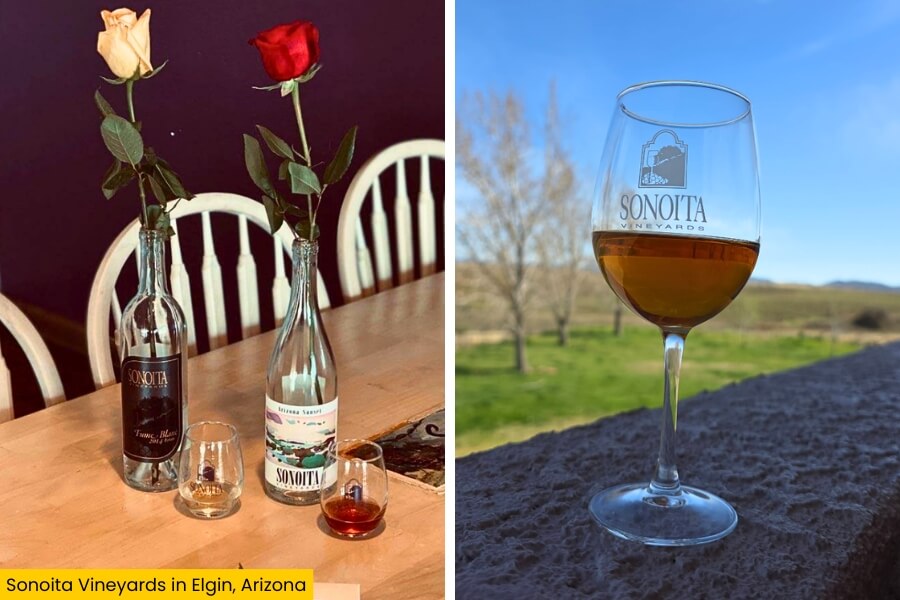
This semi-sweet blush wine offers an alternative to the winery’s drier red wines.
For red wine lovers, MeCaSah is one of the winery’s standout blends, combining Merlot, Cabernet Sauvignon, and Syrah into a full-bodied wine with layers of dark fruit and spice.
You’ll also find wines such as Sonora Rossa, a dry rosé-style wine, along with a rotating selection of whites, reds, and dessert wines.
The selection gives you plenty of options, whether you love a bold Cabernet Sauvignon or prefer something sweet enough to sip after dinner.
And unlike wineries that focus entirely on dry, traditional European-style wines, Sonoita Vineyards has built a reputation for offering approachable, fruit-forward options alongside its more complex reds.
The winery has a spacious, relaxed tasting room, with upstairs wraparound windows offering views of the surrounding vineyards and countryside.
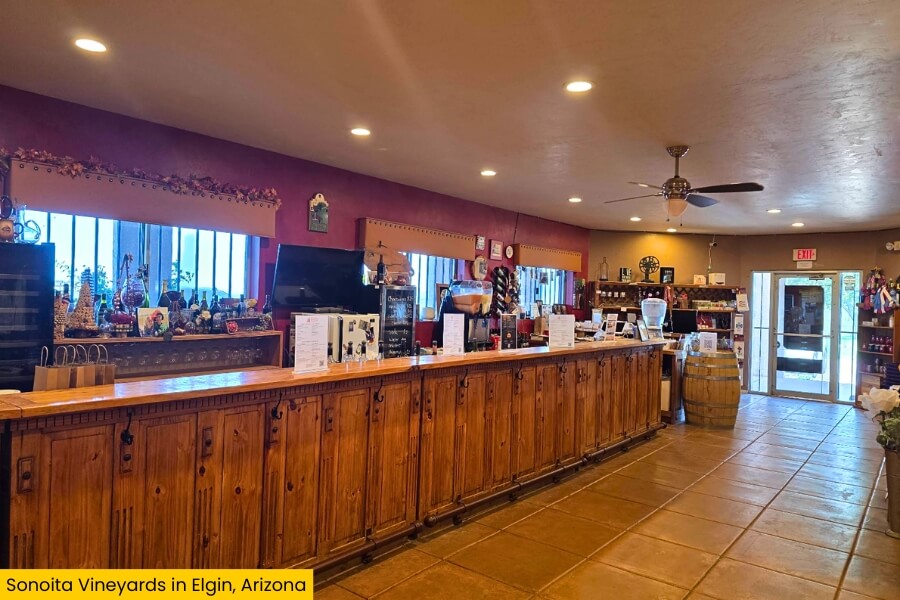
Inside, you’ll find a casual, welcoming setup where you can sample different wines, chat with the staff, and learn how Arizona-grown grapes turn into the bottles on the shelves.
You don’t need to know the difference between Syrah and Cabernet Sauvignon to have a good time here, either.
Wine tastings typically feature a selection of the winery’s available bottles, giving you a chance to try several styles before deciding which ones deserve a spot in your wine rack.
If you find something you love, you can purchase bottles to take home, including some of the winery’s signature blends and sweeter selections.
One of the biggest draws is the outdoor setting, where you can enjoy a glass of wine while looking out across the vineyards and wide-open grasslands.
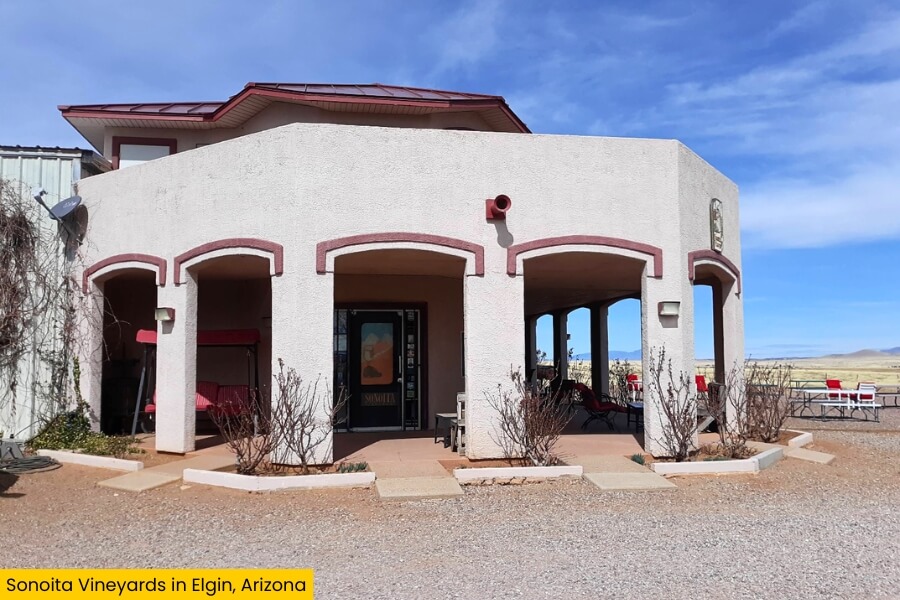
The surrounding landscape changes with the seasons, with green hills during the summer monsoon months and golden grasses during the drier parts of the year.
And because the winery sits at such a high elevation, temperatures are often noticeably cooler than in Tucson, making outdoor wine tasting especially enjoyable during spring and fall.
Sonoita Vineyards also hosts special events throughout the year, including wine-related celebrations and opportunities to experience the winery beyond a standard tasting.
Its annual harvest festivities have long been part of the winery’s appeal, giving guests a chance to celebrate Arizona’s grape-growing season.
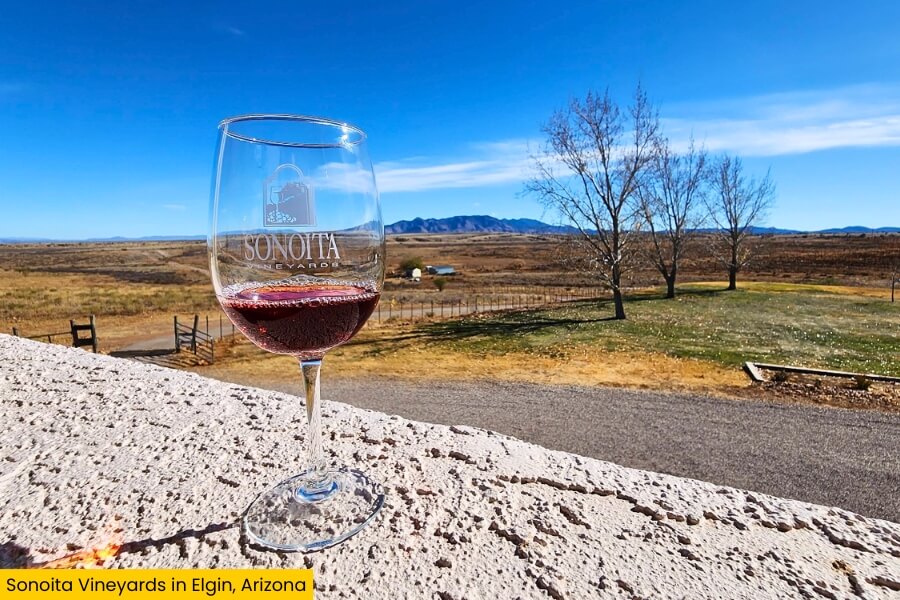
And there’s something pretty cool about tasting a wine like Arizona Sunset at one of the wineries that helped put Arizona wine on the map.
History
The story of Sonoita Vineyards begins with Dr. Gordon Dutt, a soil scientist from the University of Arizona who believed southern Arizona had the potential to produce excellent wine.
In the 1970s, Dutt began studying the soils and climate of the Sonoita area, looking for conditions similar to those found in famous wine-growing regions around the world.
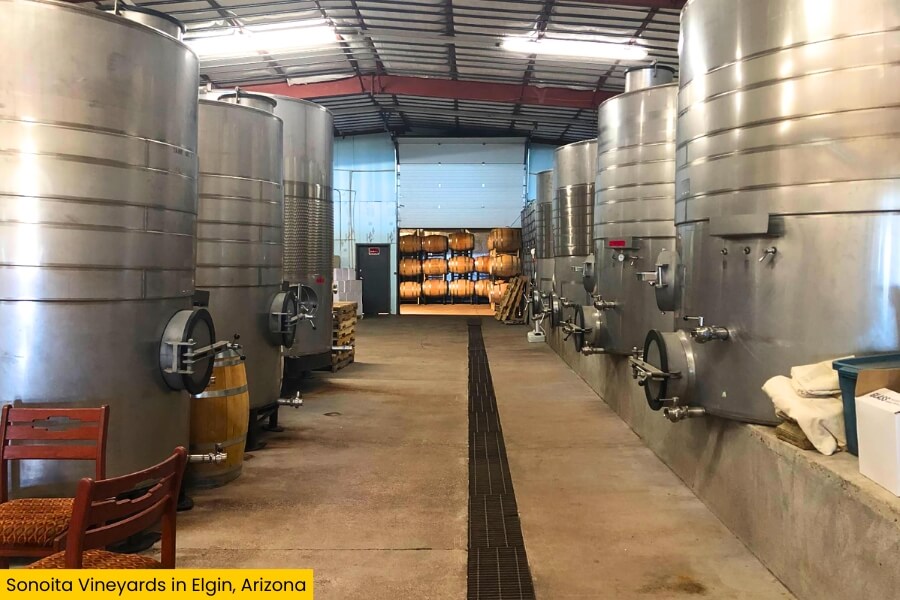
What he discovered was pretty surprising, especially at a time when Arizona wasn’t exactly known for its vineyards.
The area’s combination of distinctive reddish soils, high elevation, summer rainfall, and dramatic temperature changes between day and night created promising conditions for growing wine grapes.
Dutt was convinced that European grape varieties could thrive here, even though the idea of making wine in Arizona was still considered unusual.
To test his theory, he established an experimental vineyard near Sonoita in 1973, planting grape varieties and studying how they performed in the local climate.
The results were encouraging enough that Dutt decided to turn his research into a commercial venture.
Working with fellow vineyard owners and investors, Dutt helped establish Sonoita Vineyards, which opened in 1983 as one of Arizona’s pioneering commercial wineries.
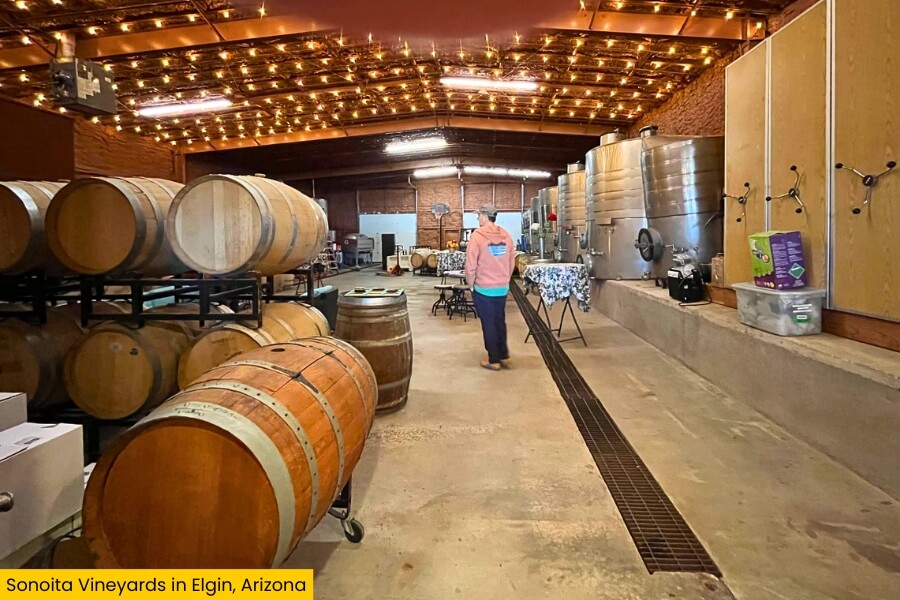
It was a major milestone for the state, marking the beginning of what would eventually become a growing Arizona wine industry.
But getting the winery off the ground wasn’t exactly easy.
Arizona had little modern commercial winemaking infrastructure at the time.
So Dutt and his team had to figure out which grape varieties worked best, how to manage the area’s challenging growing conditions, and how to convince customers that Arizona wine was worth trying.
The vineyards also faced the challenges of growing grapes in a region with intense summer storms, occasional winter freezes, and unpredictable weather.
Despite those obstacles, Sonoita Vineyards began producing wines that demonstrated the potential of grapes grown in southern Arizona.
One of the winery’s most important early achievements came in 1984, when the Sonoita area received federal recognition as an American Viticultural Area, or AVA.
This made Sonoita the first officially designated wine-growing region in Arizona and one of the earliest AVAs established in the United States.
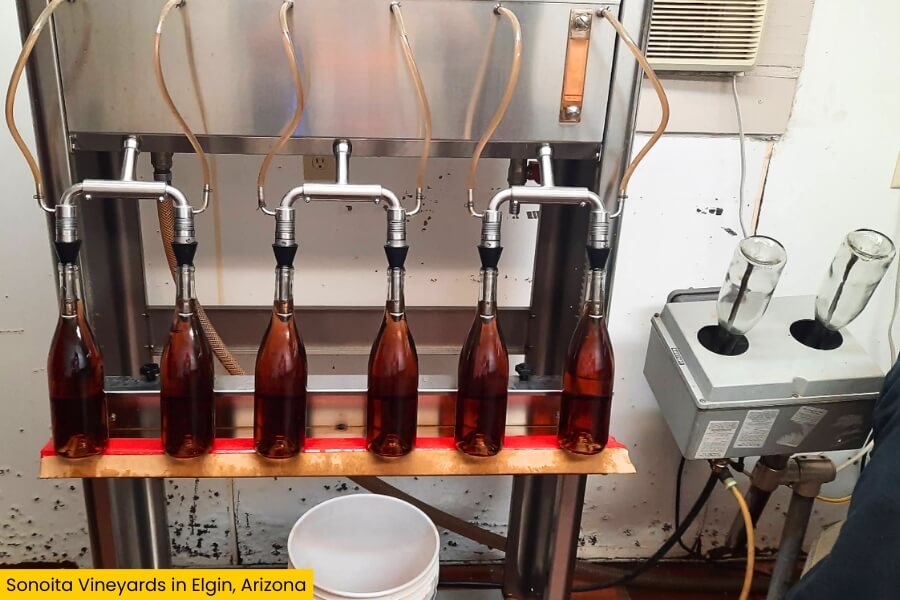
The designation recognized the area’s distinctive growing conditions and helped establish its credibility as a legitimate wine-producing region.
Dutt’s research played an important role in making that recognition possible, and his work helped lay the foundation for future Arizona winemakers.
As the winery developed, it became a family operation, with Dutt’s granddaughter, Lori Reynolds, eventually taking on a major role in managing the business and continuing her grandfather’s work.
Reynolds helped carry the winery into a new generation while maintaining its focus on Arizona-grown grapes and wines that reflected the local growing conditions.
Over the years, Sonoita Vineyards expanded its selection to include a variety of reds, whites, and blends, and welcomed generations of guests curious about Arizona winemaking.
The winery also became known for its annual harvest celebrations, which helped introduce more people to the area’s grape-growing traditions.
These events give guests a chance to celebrate the start of harvest season, with activities such as grape stomping, wine tastings, and opportunities to learn about the winemaking process.
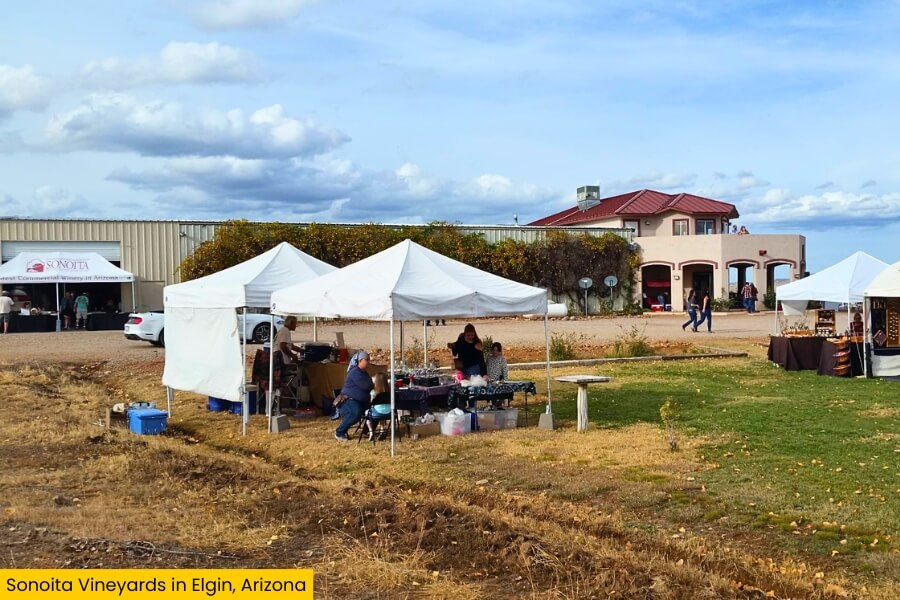
Meanwhile, the surrounding wine region was growing.
Other vineyards and tasting rooms began opening throughout Sonoita and Elgin, transforming the area into one of Arizona’s best-known wine destinations.
The region’s reputation grew even further as Arizona wines began receiving recognition beyond the state.
Today, the winery continues to operate as a family-run business, preserving the legacy of Gordon Dutt while introducing new generations to the wines of southern Arizona.
And perhaps the coolest part of its story is that the winery began as a scientific experiment in a place where few people expected wine grapes to succeed.
What started with Dutt’s research and a pioneering vineyard experiment helped launch an entire industry, and you can still visit the winery where that journey began.
Know Before You Go
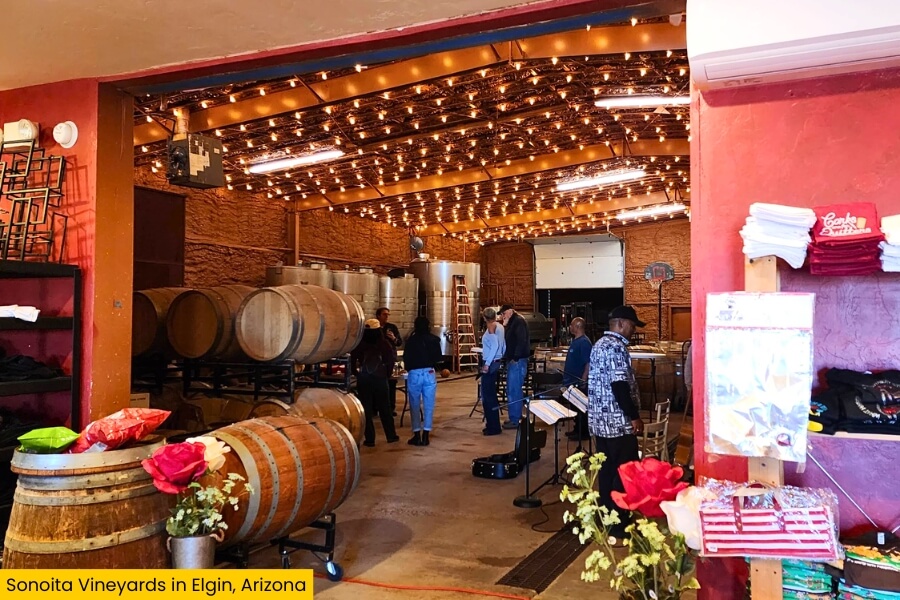
Sonoita Vineyards is located at 290 Elgin-Canelo Road in Elgin, and it’s worth checking the winery’s current hours before heading out.
The tasting room is generally open from 10 a.m. to 4 p.m., Wednesday through Monday, but is closed on Tuesdays and major holidays.
You can check the latest information on the official Sonoita Vineyards website or call (520) 455-5893 before your visit.
Reservations generally aren’t necessary for small groups, although it’s a good idea to contact the winery ahead of time if you’re bringing a larger group or planning a special occasion.
Wine tastings are available for a fee, with the selection and pricing subject to change.
You’ll need to be at least 21 years old and have a valid photo ID to sample the wines.
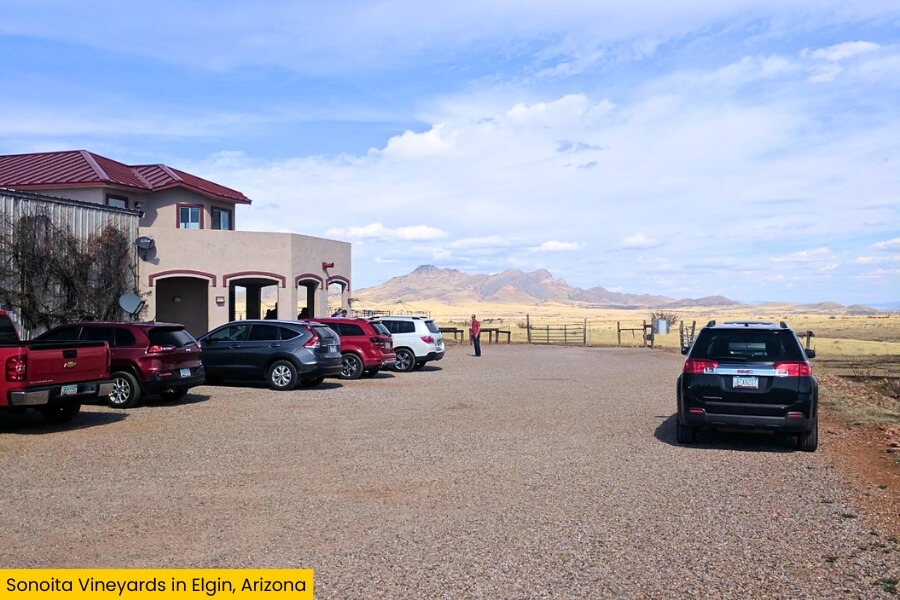
Parking is available on-site, so you won’t need to worry about finding a spot along the road or walking a long distance to the tasting room.
For the most comfortable weather, plan your visit between March and May or September and November, when temperatures are generally pleasant for spending time outside.
Summer visits can be beautiful, especially when monsoon rains turn the surrounding hills green, but afternoon thunderstorms are common from July through September.
If you’re visiting during monsoon season, keep an eye on the forecast and try to arrive earlier in the day.
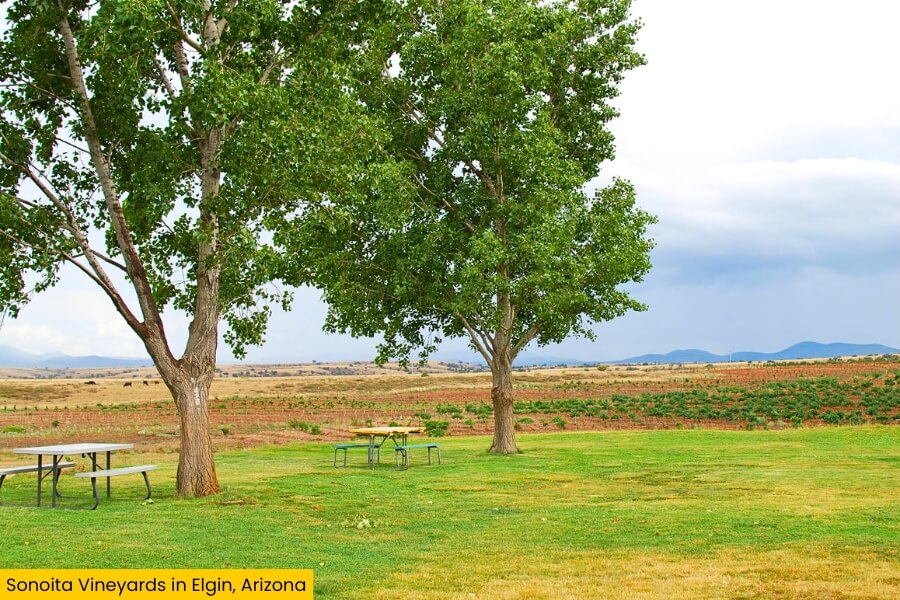
Winter is another option, although chilly temperatures, strong winds, and occasional snow can make outdoor seating less appealing.
Cell service can be spotty in parts of the surrounding countryside, so downloading offline directions before leaving is a smart move.
You’ll also want to arrange for a designated driver if you plan to sample wines at several tasting rooms, since public transportation and rideshare options are limited in this rural area.
And if you’re hoping to make a full day of it, there are several other wineries nearby.
Callaghan Vineyards, located at 336 Elgin Road, is known for its small-production wines and has played an important role in Arizona’s modern wine industry.
Dos Cabezas WineWorks, at 3248 Highway 82 in Sonoita, is another popular stop, especially if you’re interested in trying more Arizona-grown wines.
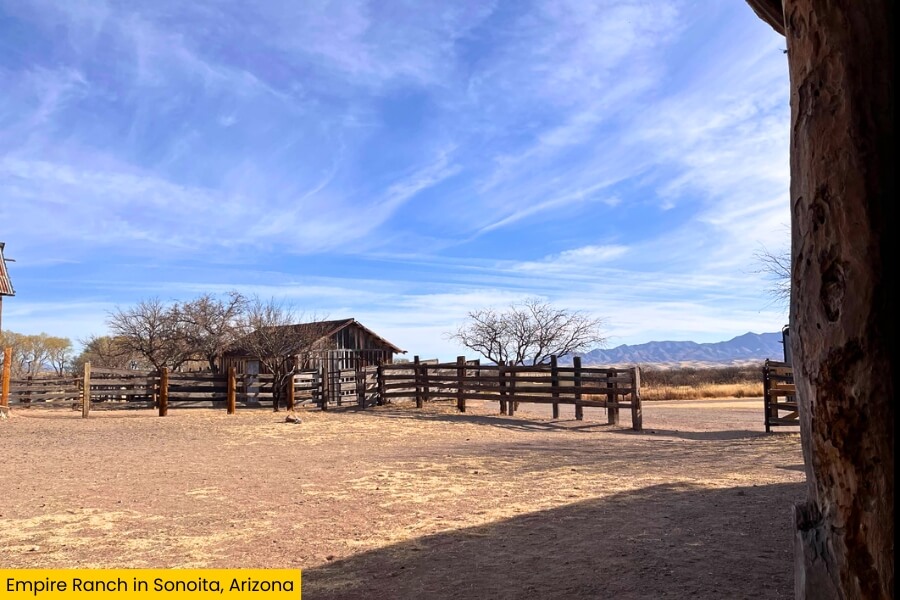
For something completely different, head to Empire Ranch, a historic cattle ranch within Las Cienegas National Conservation Area, where you can explore preserved ranch buildings and learn about southern Arizona’s ranching past.
Just remember that winery hours and tasting availability can vary, so checking ahead will help you make the most of your trip.
Related Posts