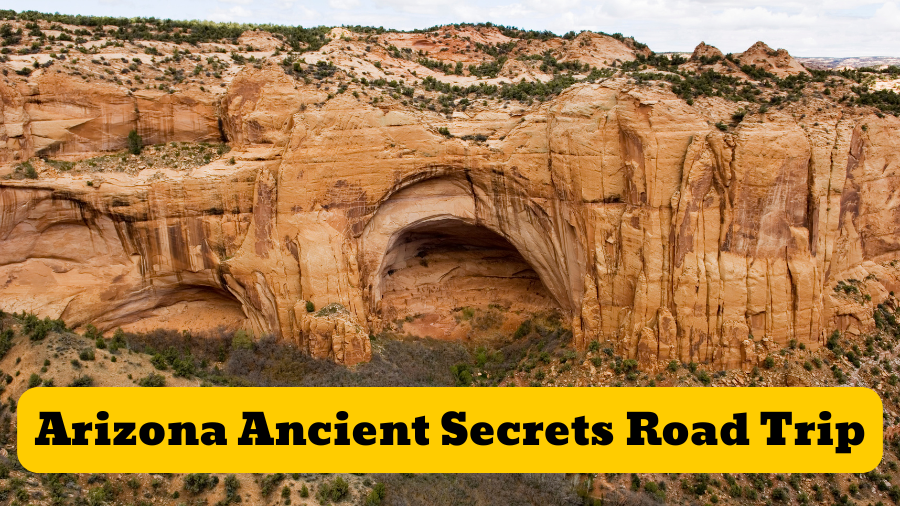
Arizona’s desert has been hiding some incredible secrets, and some of them have been waiting millions of years to be discovered!
We’re talking about 200-million-year-old dinosaur footprints, mysterious symbols carved into stone, ancient villages built into towering cliffs, and massive craters left behind by rocks from outer space.
Long before highways and modern cities covered the Southwest, prehistoric creatures roamed this land, and ancient civilizations built impressive communities that still leave archaeologists scratching their heads.
And believe it or not, you can still see the evidence of these ancient worlds scattered across Arizona’s deserts, canyons, and rocky landscapes.
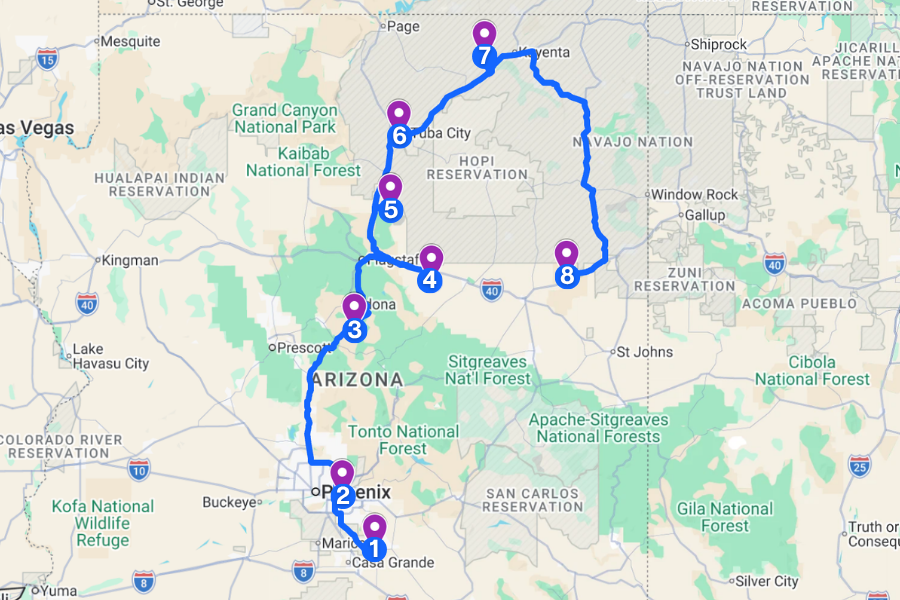
This road trip takes you to eight incredible places in Arizona where the past has left in its wake some truly mind-blowing remnants, all waiting for you to come visit!
1. Casa Grande Ruins National Monument
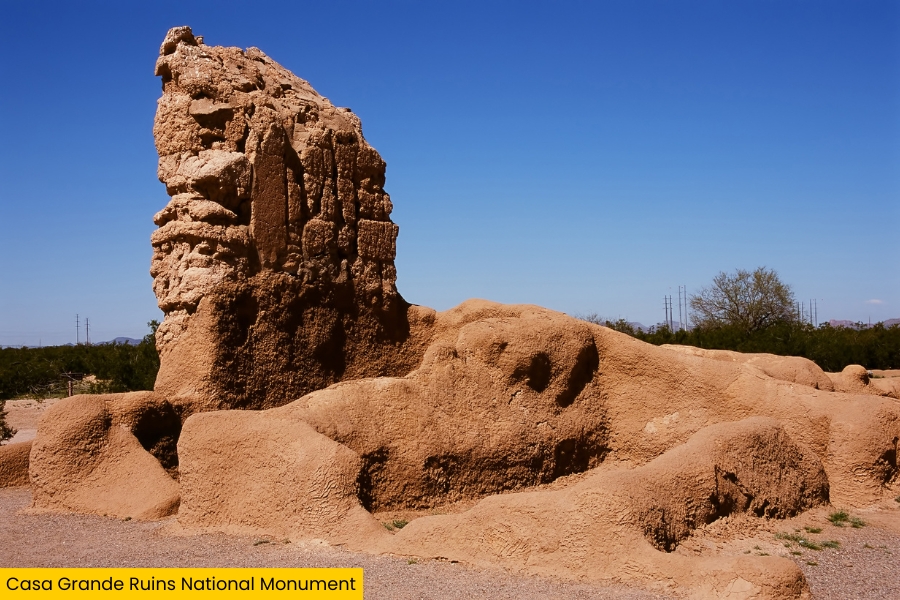
Located in Coolidge, Casa Grande Ruins National Monument protects the ruins left behind by an old desert community, the ancestral Sonoran Desert people formerly called the Hohokam.
The star attraction is the mysterious Great House, a massive four-story structure built around the 1300s using caliche, a natural concrete-like material made from desert soil.
Even cooler, some openings and holes in the wall seem to purposefully line up with the sun during the summer solstice, the fall and spring equinoxes, and even the moon roughly every 18.6 years.
This suggests its builders carefully tracked the changing seasons and lunar cycles.
As you explore the ruins, you’ll spot ancient walled compounds and learn how the clever farmers of this period built hundreds of miles of irrigation canals to grow crops in Arizona’s scorching desert, centuries ahead of modern tools and equipment.
2. Arizona Museum of Natural History
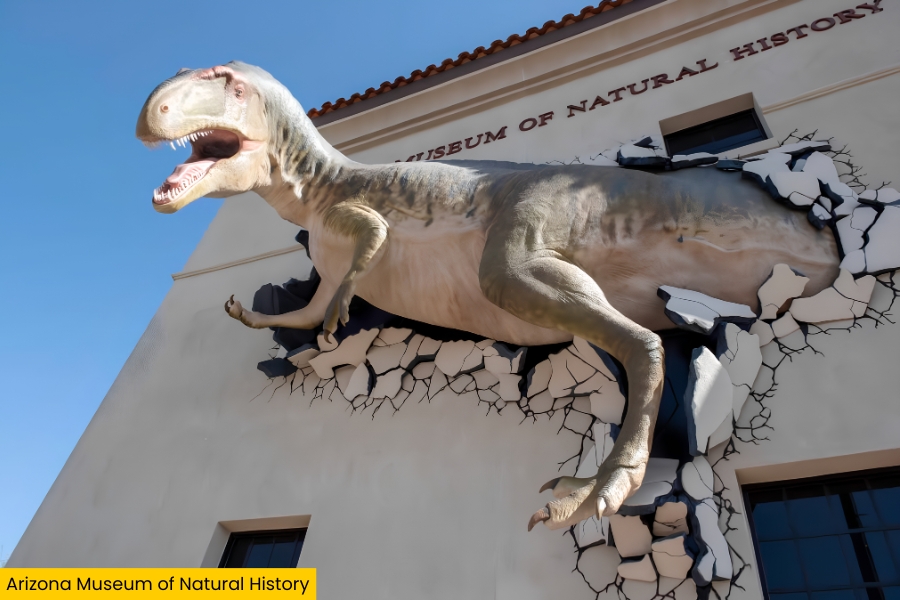
After exploring the ancient ruins of Casa Grande, head to the Arizona Museum of Natural History in downtown Mesa, where you can travel even further back in time to when dinosaurs roamed Arizona more than 75 million years ago.
Inside Dinosaur Mountain, you’ll find towering life-size animatronic dinosaurs from the Mesozoic era, plus a three-story indoor waterfall that crashes down every 23 minutes to simulate a prehistoric flash flood.
But the ancient secrets don’t stop with dinosaurs, as the museum also oversees the nearby Sce:dagĭ Mu:val Va’aki, which highlights significant structures built by the ancestors of the modern O’odham people.
Also take time to examine exhibits showcasing artifacts from Native American peoples, including textiles and ceramics from communities such as the Navajo, Hopi, and Hualapai.
3. Crane Petroglyph Heritage Site
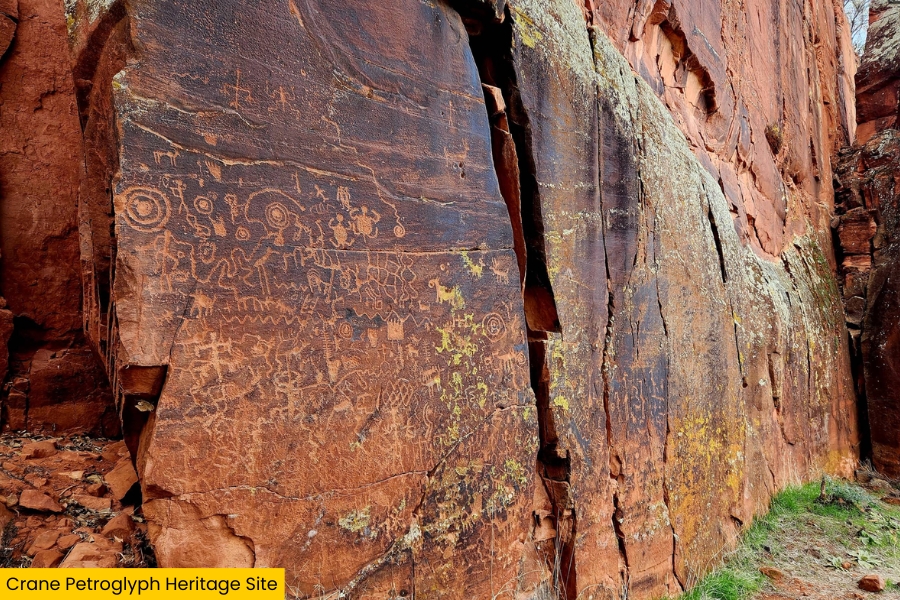
Once you’ve marveled at enough dinosaur artifacts, head to the Crane Petroglyph Heritage Site in the Verde Valley, where you can find prehistoric artwork carved directly into the rocks along Beaver Creek.
This remarkable site, formerly known as V Bar V Heritage Site, features more than 1,000 petroglyphs spread across 13 rock panels, making it one of the largest and best-preserved collections of rock art in the Verde Valley.
In a rock art style created by the Southern Sinagua people between roughly 1150 and 1400 AD, these carvings include spirals, snakes, antelopes, other animals, and human-looking figures, along with other patterns that still leave archaeologists guessing about their meanings.
One particularly fascinating petroglyph is a pair of shadow-casting rocks that may have helped ancient residents track significant dates and the changing seasons using sunlight and shadows.
4. Meteor Crater Natural Landmark
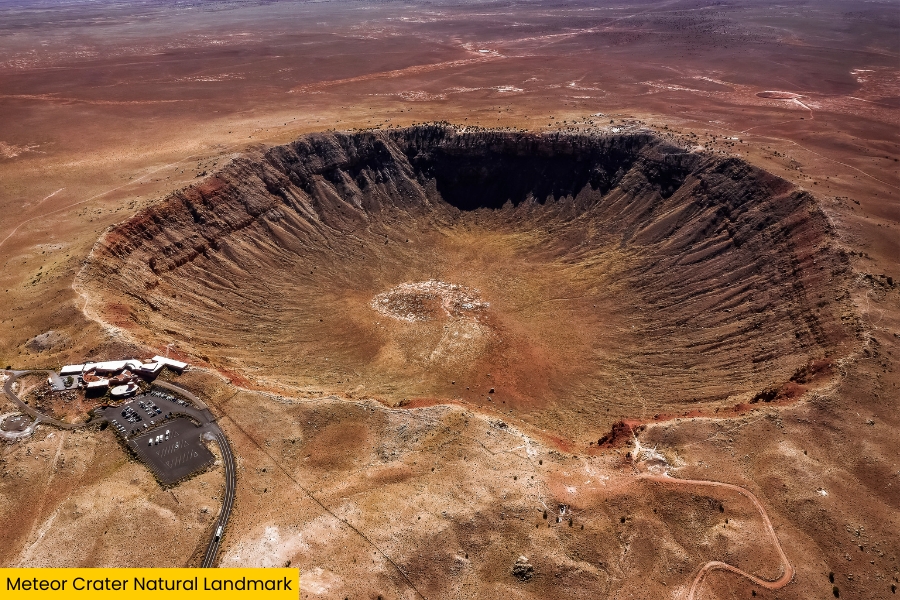
Arizona’s ancient mysteries aren’t limited to things humans left behind, and Meteor Crater Natural Landmark (also known as Barringer Crater) proves that outer space has left some pretty incredible marks on the desert, too.
Around 50,000 years ago, a massive iron-nickel meteorite measuring roughly 150 feet across slammed into the ground at approximately 26,000 miles per hour, blasting out a crater that’s currently almost a mile wide and 550 feet deep.
Today, you can visit multiple lookout points or go on floor tours to see the crater up close.
Plus you can also explore the Discovery Center & Space Museum, where exhibits display real meteorite fragments, including the famous 1,406-pound Holsinger Meteorite.
Scientists consider this one of the world’s best-preserved meteorite impact sites, and its remarkably intact shape helped researchers understand how ancient asteroid impacts shaped Earth’s surface.
5. Wupatki National Monument
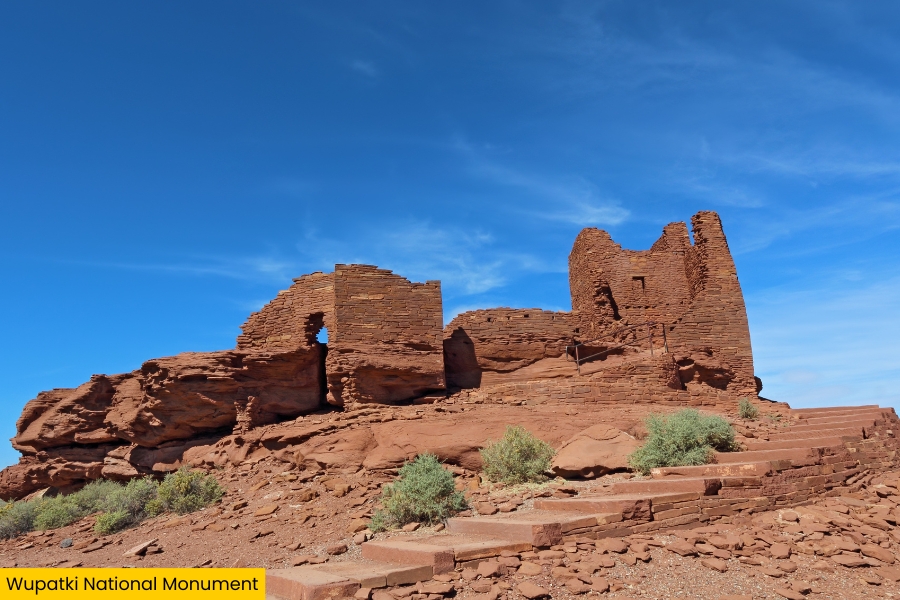
Around 40-45 minutes from Flagstaff, Wupatki National Monument reveals how ancient communities built thriving settlements in the shadow of Sunset Crater Volcano, whose eruption covered the surrounding desert in volcanic ash.
The main attraction is Wupatki Pueblo, a massive red sandstone settlement that once contained more than 100 rooms, a community room, and a ball court.
One of the site’s standout features is a natural blowhole, a fascinating geological phenomenon that Hopi traditions associate with the source of wind and the home of the wind god, Yaponcha.
Follow the 0.5-mile Wupatki Pueblo Trail to explore these remarkable ruins, where archaeologists were able to preserve materials and artifacts such as tools, cloths, and pottery from different cultures, including the Sinagua.
6. Navajo Moenave Dinosaur Tracks
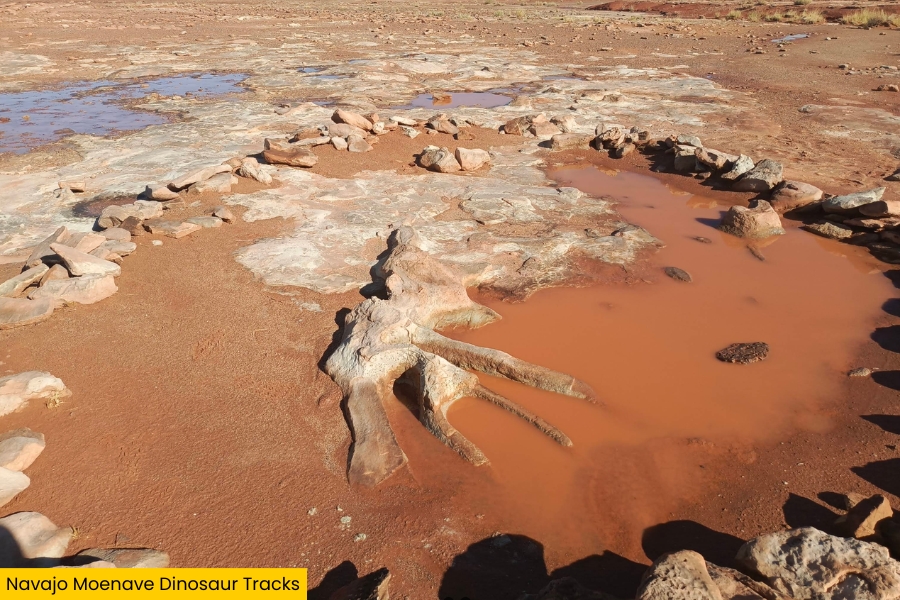
Dinosaurs left their own ancient footprints across Arizona too, and at the Navajo Moenave Dinosaur Tracks, you can see evidence of prehistoric giants that walked this land roughly 200 million years ago.
Scattered across slabs of reddish sandstone, these fossilized three-toed footprints date back to the early Jurassic Period, when this part of Arizona was covered in muddy plains and shallow waterways instead of dry desert.
Unlike a typical museum exhibit, you can walk across the exposed rock and spot actual dinosaur tracks, including prints believed to have been made by theropod dinosaurs.
Local Navajo guides can also help you identify the best tracks and share stories and information about this remarkable prehistoric landscape.
7. Navajo National Monument
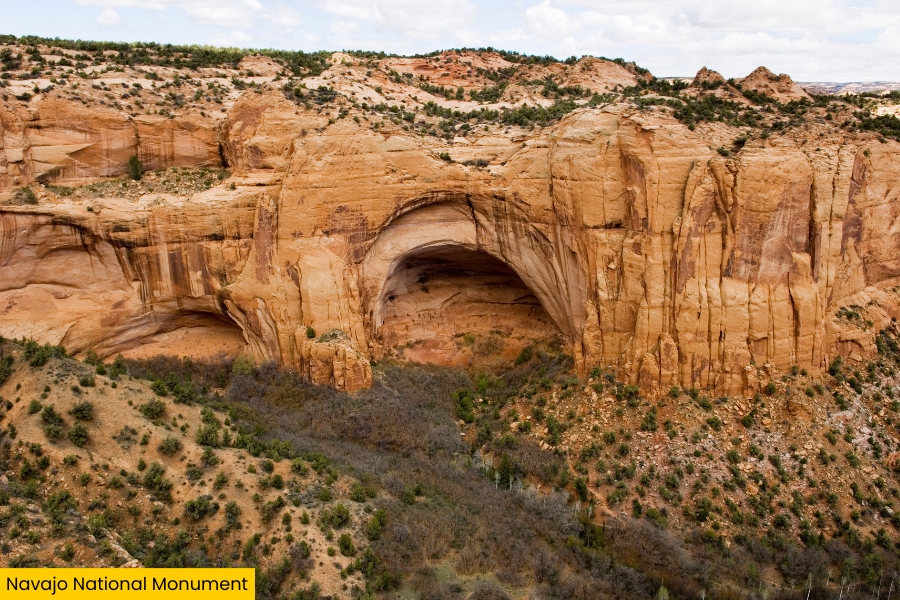
From dinosaur footprints to ancient cliff dwellings, Navajo National Monument in northern Arizona takes you back to the 1200s, when the land was thriving with remarkable stone villages built by Ancestral Puebloan families.
The monument protects three primary cliff dwellings: Betatakin, Keet Seel, and Inscription House, with Betatakin once containing around 135 rooms and a few ceremonial kivas.
Archaeologists believe Betatakin was occupied from roughly 1250 to 1300, making its short period of settlement especially fascinating, while its preserved storage rooms and masonry walls reveal how families survived in this remote canyon.
You can follow the 1-mile round-trip Sandal Trail to an overlook where Betatakin’s ruins are visible across the canyon, or join a ranger-led hike when available for a closer look at the ancient buildings.
8. Petrified Forest National Park
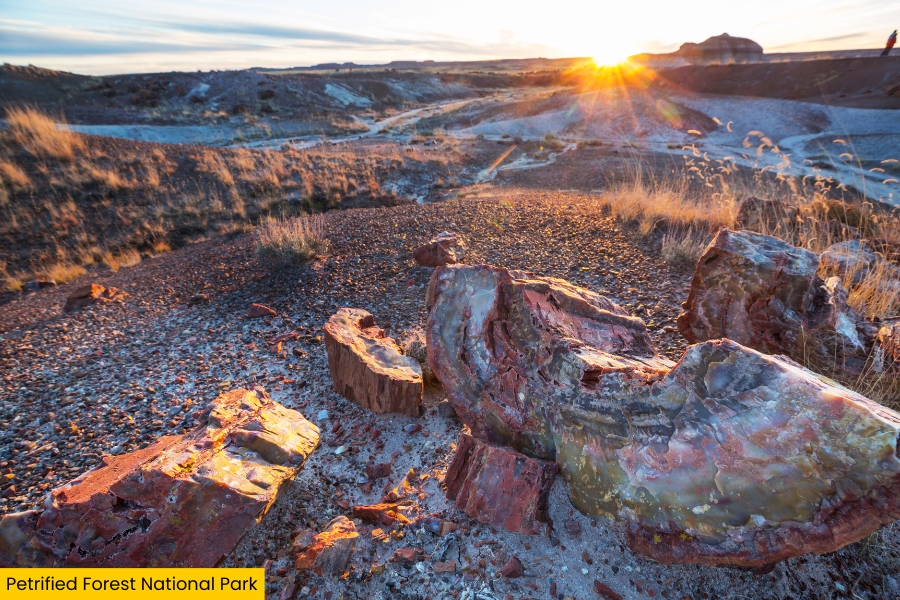
Ready to travel back by around 225 million years?
Petrified Forest National Park protects one of the world’s largest collections of petrified wood, with ancient trees dating back roughly to the Late Triassic Period.
These fallen trees were buried by stream channels or sediment and slowly turned to stone, and during this petrification process, iron, quartz, and minerals created the colorful logs that make today’s beautiful landscape.
Walk the 0.75-mile Crystal Forest Trail to see enormous fossilized trunks scattered across the desert, then check out the Rainbow Forest Museum for displays of prehistoric animals, fossils, and even more petrified wood!
For a more recent ancient mystery, visit Puerco Pueblo, where the remains of roughly 100 rooms and petroglyphs reveal how Ancestral Puebloan communities lived here from the 1200s to 1380 AD.
Related Posts