
Some historic forts have a fascinating past.
This one has a past involving three different nations fighting to control it.
For centuries, this stronghold occupied one of the most important strategic locations in North America and played a role in several major conflicts.
French soldiers, British troops, and American forces all occupied its walls at different points in history, leaving behind stories of sieges, battles, and shifting borders that helped shape the future of a nation.
Today, you can walk through buildings that have stood for about 300 years, explore military defenses, and experience history where it actually happened.
If you love history, scenic waterfront views, and places with incredible stories to tell, this is one destination you won’t want to miss.
Where Is It?
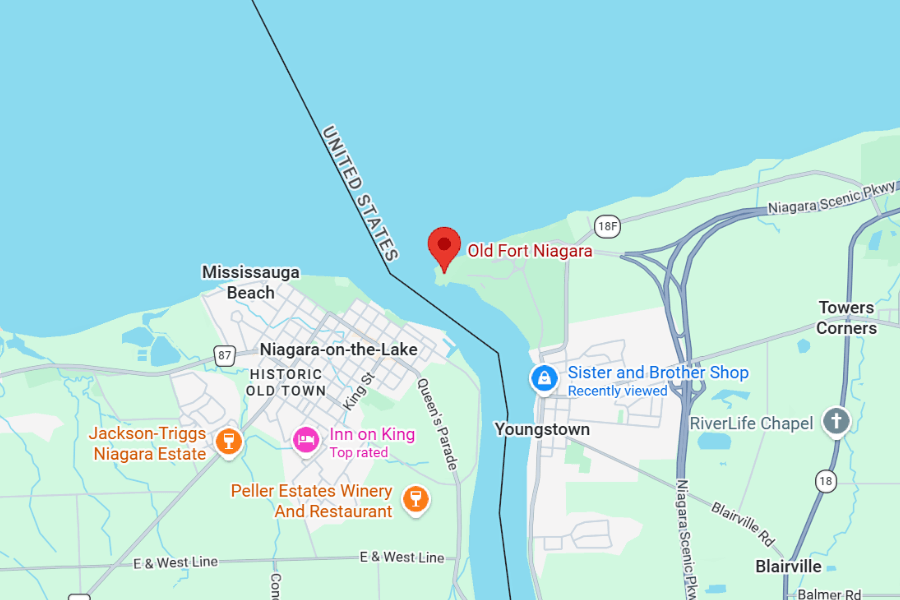
Old Fort Niagara is located in Youngstown, New York, at the mouth of the Niagara River where it meets Lake Ontario in the far western corner of New York State.
You’ll find it inside Fort Niagara State Park, about 40 minutes from downtown Buffalo, 25 minutes from Niagara Falls, and nearly 7 hours from New York City by car.
The fort sits directly across the river from Niagara-on-the-Lake, Ontario, giving you a front-row seat to one of the most strategically important waterways in North American history.
About
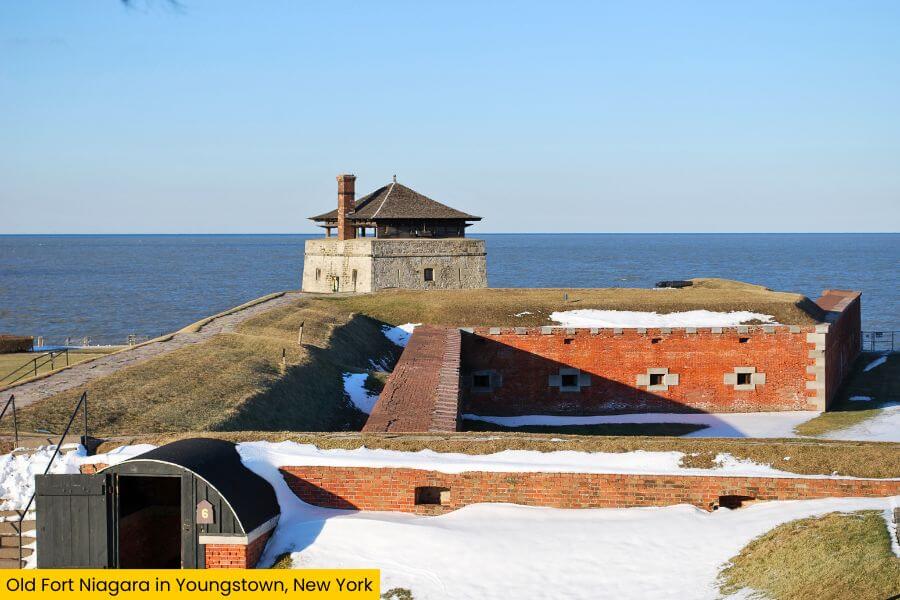
Old Fort Niagara is one of the oldest military sites in North America and one of the few forts in the United States that was controlled and fought over by three different nations: France, Great Britain, and the United States.
Whoever controlled this location controlled access between Lake Ontario and the interior of North America, making it a key military and trade hub throughout the colonial era.
The story of the fort began in 1679 when French explorer René-Robert Cavelier, Sieur de La Salle, established a small post near the site.
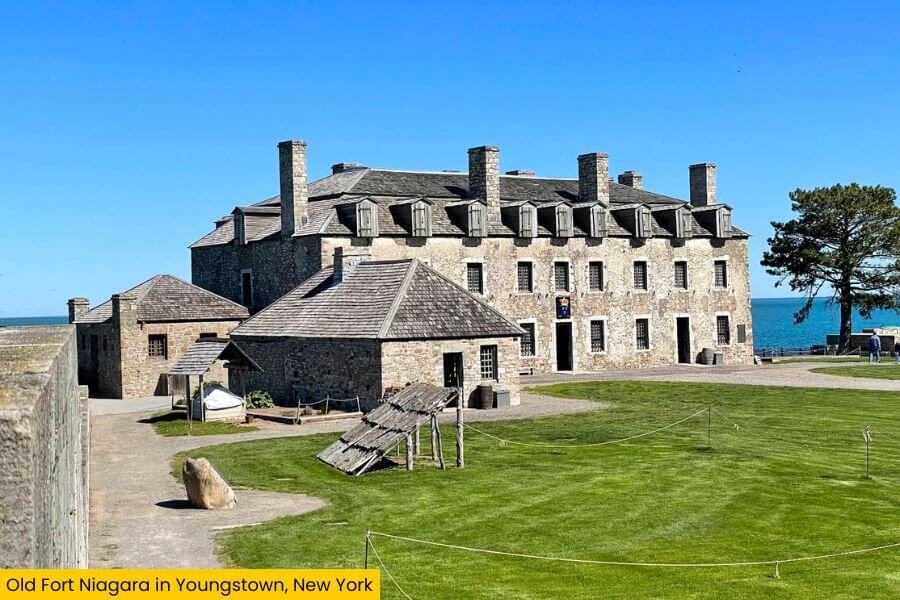
The first substantial structure arrived in 1726 when the French built the “French Castle,” a large stone building that still stands today.
Remarkably, the French Castle is considered the oldest building in the Great Lakes region and one of the oldest surviving military buildings in North America.
During the French and Indian War, the fort became a major target for British forces.
In 1759, British troops laid siege to Fort Niagara during a campaign that helped shift control of North America away from France.
After a nineteen-day siege, the British captured the fort, ending decades of French control.
The British held the fort throughout the American Revolution and used it as a base for military operations and support of Loyalist forces.
Although the United States gained independence in 1783, British troops remained at Fort Niagara until 1796, when the fort was finally transferred to American control under the terms of the Jay Treaty.
The fort continued to play an important role during the War of 1812.
In December 1813, British forces recaptured Fort Niagara during a nighttime assault, only for the United States to regain possession after the war ended in 1815.
That unique history makes Old Fort Niagara one of the very few forts in America that saw military action involving three different nations over its lifetime.
Today, the fort serves as a National Historic Landmark and one of New York’s most impressive historic attractions.
When you visit, you can expect to find a remarkably well-preserved collection of military buildings spanning the French, British, and American periods.
Stone walls, defensive earthworks, historic barracks, powder magazines, and officer quarters help tell the story of more than three centuries of conflict along the Niagara frontier.
The site covers around 30 acres within Fort Niagara State Park, with many structures dating back to the 1700s and early 1800s.
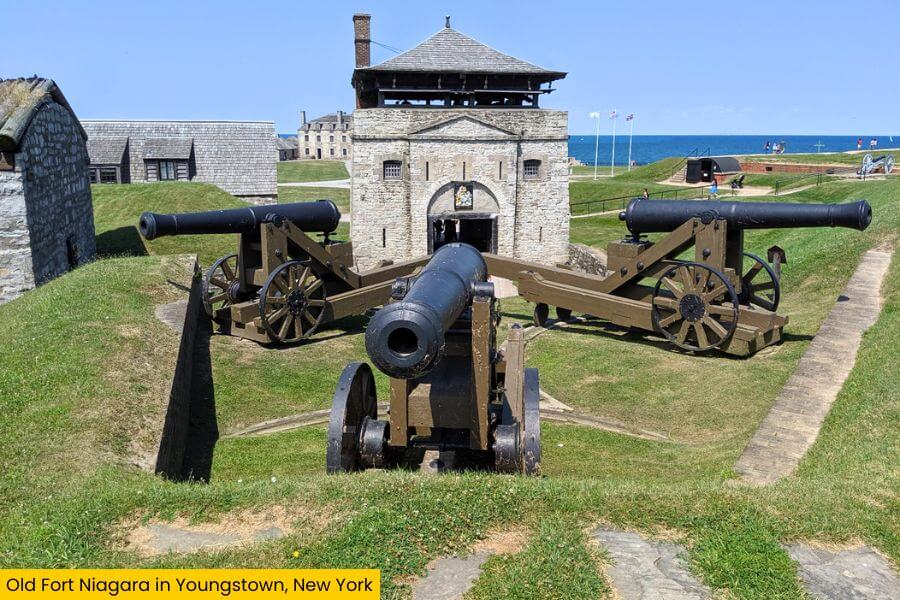
Costumed interpreters, military demonstrations, historical exhibits, and museum displays help bring the fort’s past to life throughout the year.
Even if you’re not a history enthusiast, the setting alone is worth the trip.
The fort sits on a scenic stretch of Lake Ontario with sweeping views of the Niagara River, passing ships, and the shoreline of Ontario, Canada.
Between its strategic location, exceptionally preserved architecture, and centuries of military history, Old Fort Niagara offers one of the most fascinating glimpses into colonial America you’ll find anywhere in New York State.
Things To Do
One of the best parts of visiting Old Fort Niagara is that you are not just looking at history from behind glass cases.
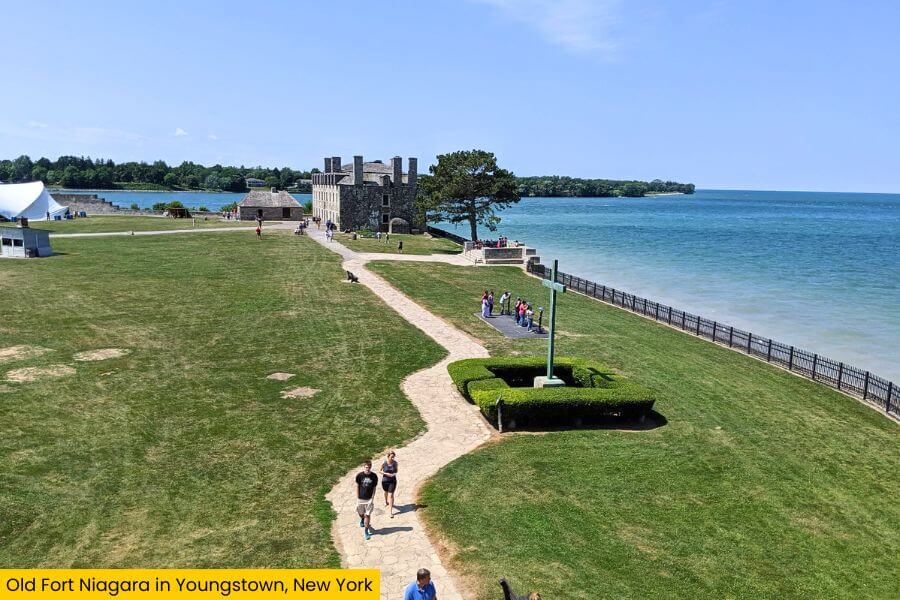
You can actually walk through centuries-old buildings, explore defensive positions, and watch demonstrations that show exactly how life worked inside a frontier fort.
Start with the French Castle, the fort’s most famous structure.
Built in 1726, this massive stone building served as a trading post, military headquarters, and residence for officers.
Inside, you can explore furnished rooms, period displays, and exhibits that explain daily life during the French colonial period.
As you move through the building, keep an eye out for the thick limestone walls and original architectural features that have survived about 300 years.
Next, explore the fort’s defensive walls and fortifications.
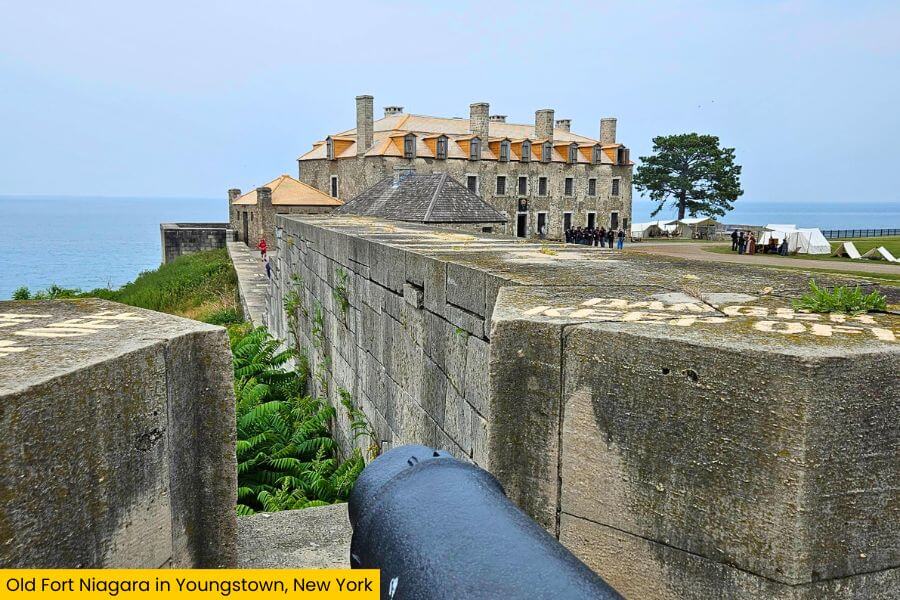
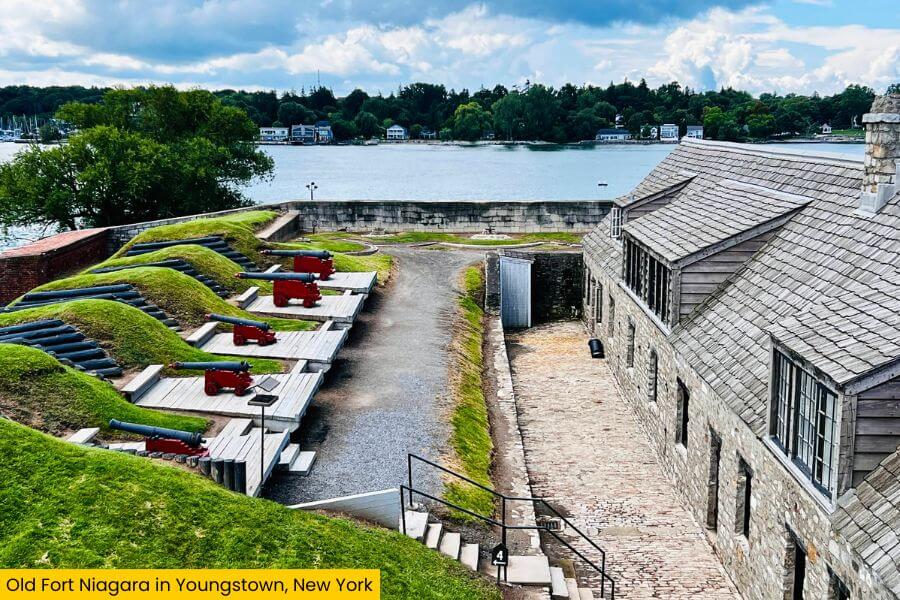
Walking along the ramparts gives you a chance to see how soldiers monitored approaching ships and protected the strategic entrance to the Niagara River.
From several vantage points, you’ll enjoy wide-open views of Lake Ontario and the Canadian shoreline across the water.
The grounds are packed with historic military buildings that represent different eras of the fort’s long history.
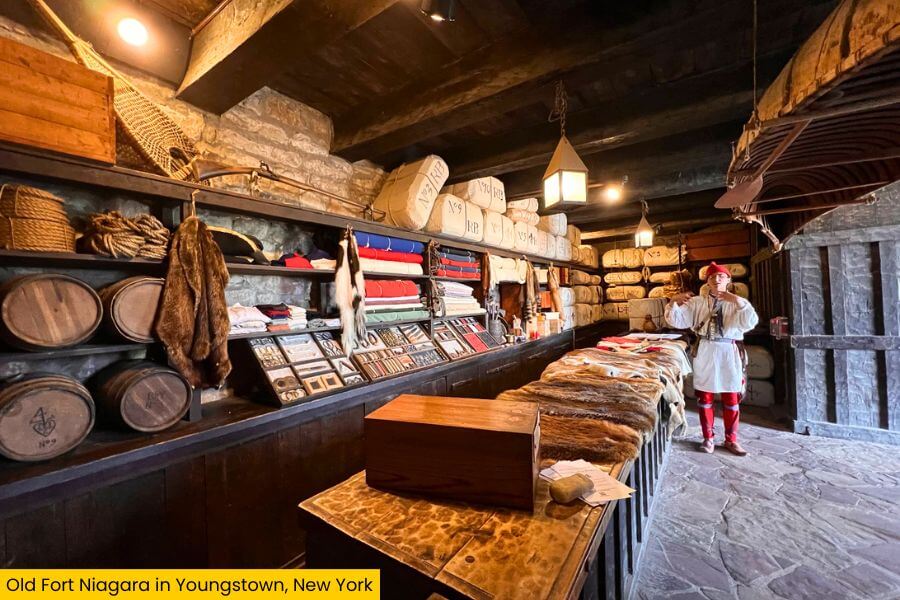
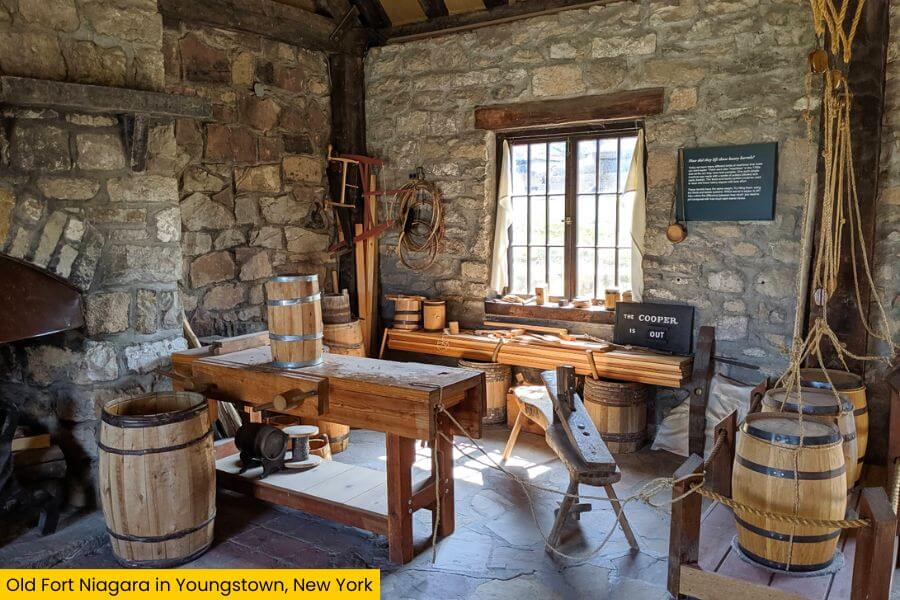
You can step inside soldiers’ barracks, officer quarters, powder magazines, guardhouses, and storage buildings that help paint a picture of life on the frontier.
Interpretive signs throughout the site explain how each structure was used and why it was important to the fort’s operation.
One of the biggest highlights is watching the live historical demonstrations offered throughout the season.
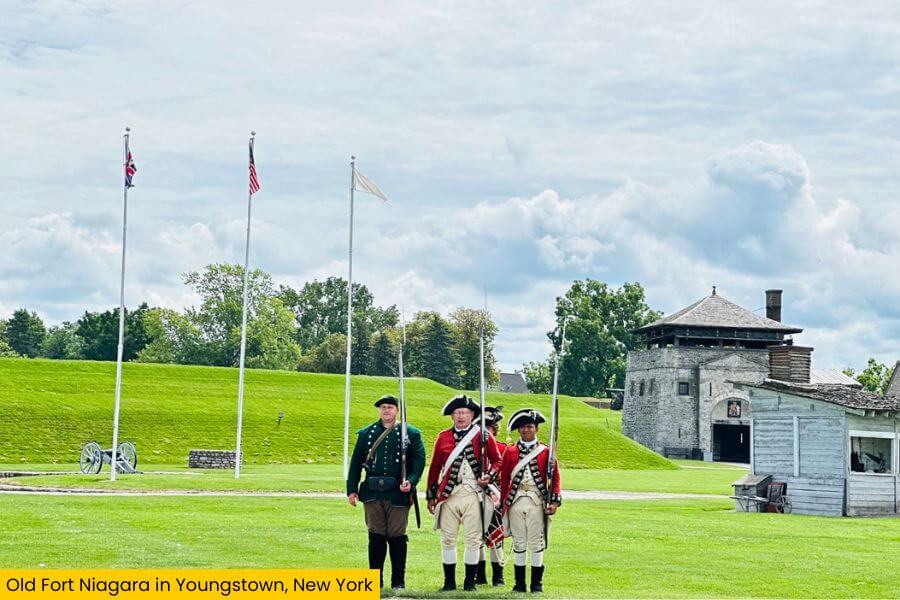
Costumed interpreters often demonstrate musket firing, artillery drills, military marching techniques, and camp life from the 18th and early 19th centuries.
Seeing a musket fired or hearing a cannon blast across the fort grounds adds a whole new level of appreciation for what soldiers experienced here centuries ago.
If your timing is right, you may also catch larger military reenactments.
Old Fort Niagara regularly hosts special events that recreate battles, military encampments, and historical scenarios from the French and Indian War, the American Revolution, and the War of 1812.
History lovers should also spend time exploring the site’s museum exhibits.
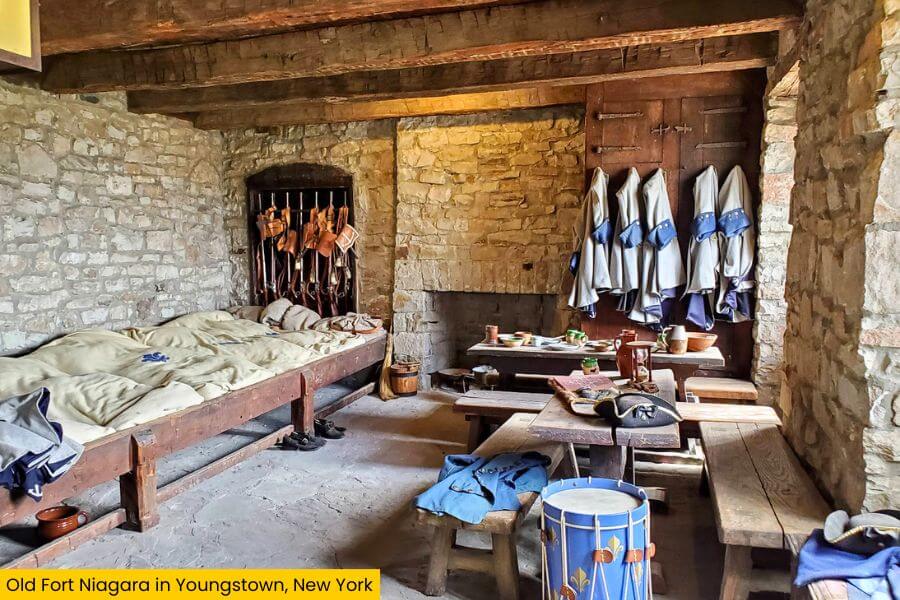
Artifacts recovered from the fort help tell the story of the soldiers, traders, Native American allies, and civilians who passed through the region over the centuries.
Displays include weapons, uniforms, tools, maps, military equipment, and household items that provide a fascinating look at everyday life during different periods of occupation.
Guided tours are another great way to experience the fort.
Knowledgeable guides share stories about famous commanders, dramatic battles, military strategy, and the political struggles that shaped control of the Niagara frontier.
You’ll often hear details and anecdotes that are easy to miss when exploring on your own.
Photography is a popular activity throughout the property too.
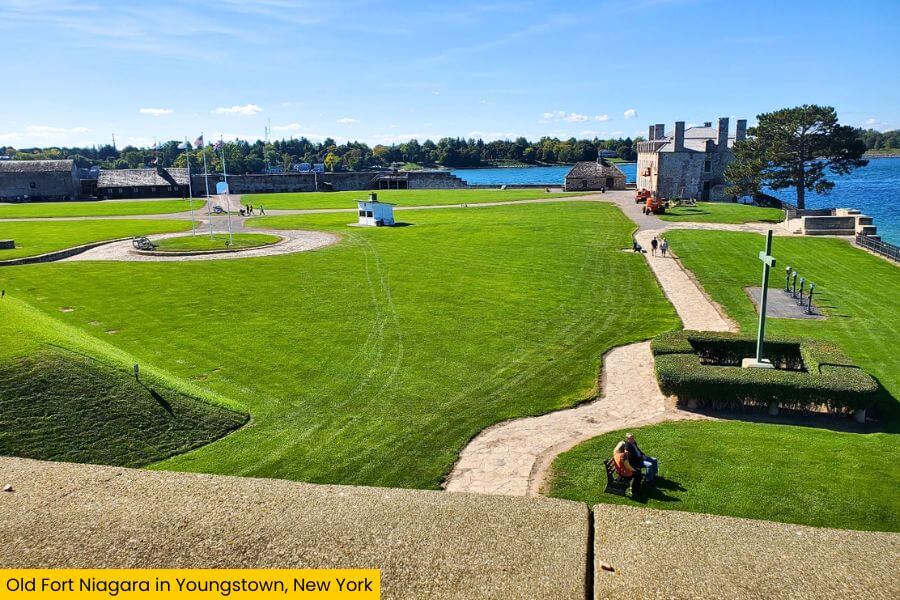
The combination of historic stone buildings, military architecture, waterfront scenery, and expansive lake views creates plenty of opportunities for memorable photos.
Sunrise and sunset can be especially beautiful as the light reflects off Lake Ontario and illuminates the fort’s stone walls.
You can also spend time watching ships navigate the entrance to the Niagara River.
Large freighters, sailboats, fishing vessels, and recreational boats frequently pass by the fort, offering a constant reminder of why this location was so strategically valuable.
Wildlife enthusiasts should keep an eye on the shoreline as well.
The surrounding waters attract gulls, waterfowl, and migratory birds throughout the year.
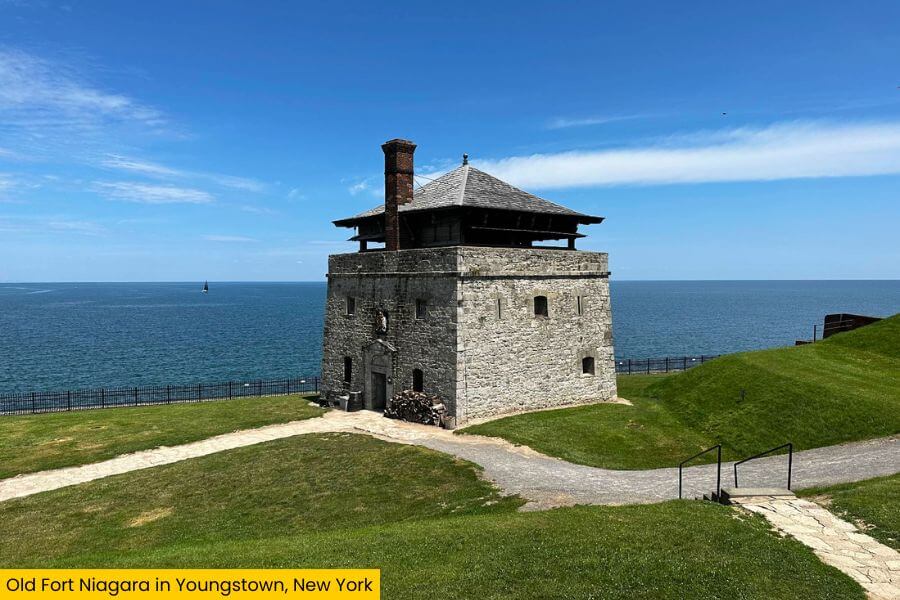
Because the fort sits within Fort Niagara State Park, your visit does not have to end at the historic site.
The park includes picnic areas, open green spaces, lakeside walking paths, and scenic shoreline viewpoints that make it easy to turn a quick visit into a relaxing afternoon.
If you enjoy combining history with outdoor scenery, few places in New York offer such a unique mix of both.
Know Before You Go
Old Fort Niagara is open year-round, although hours vary by season.
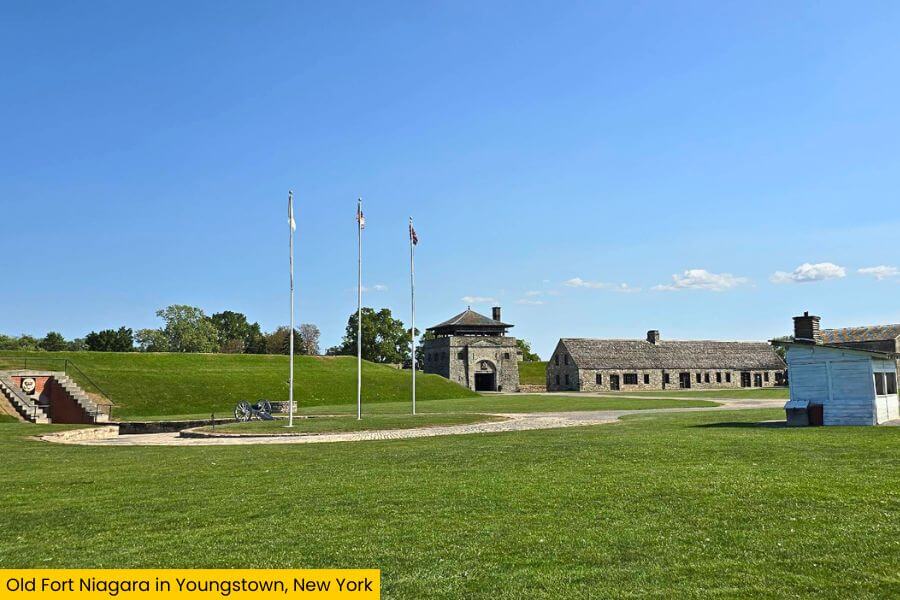
During the main visitor season, which typically runs from spring through fall, the fort generally operates daily from 10:00 a.m. to 4:00 p.m.
Winter hours are usually more limited, so it is worth checking the official Old Fort Niagara website before your visit for the most up-to-date schedule.
Admission fees apply for most visitors.
Ticket prices can change from year to year, but general admission is currently $21 for adults and $13 for children ages 6 to 12. Children 5 and under are admitted free.
Discounts are available for senior citizens, military personnel, and veterans with valid ID. Admission prices for special events may vary.
The fort also hosts special events throughout the year that may have separate admission prices.
Late spring through early fall is the best time to visit if you want the full experience.
This is when most historical demonstrations, guided programs, musket firings, and special events take place.
Summer offers the most activity, but it is also the busiest season.
If you prefer smaller crowds, consider visiting in May, early June, September, or October.
The weather is often comfortable during these months, and you will still have access to most programs and exhibits.
If you enjoy photography, plan your visit for the morning or late afternoon.
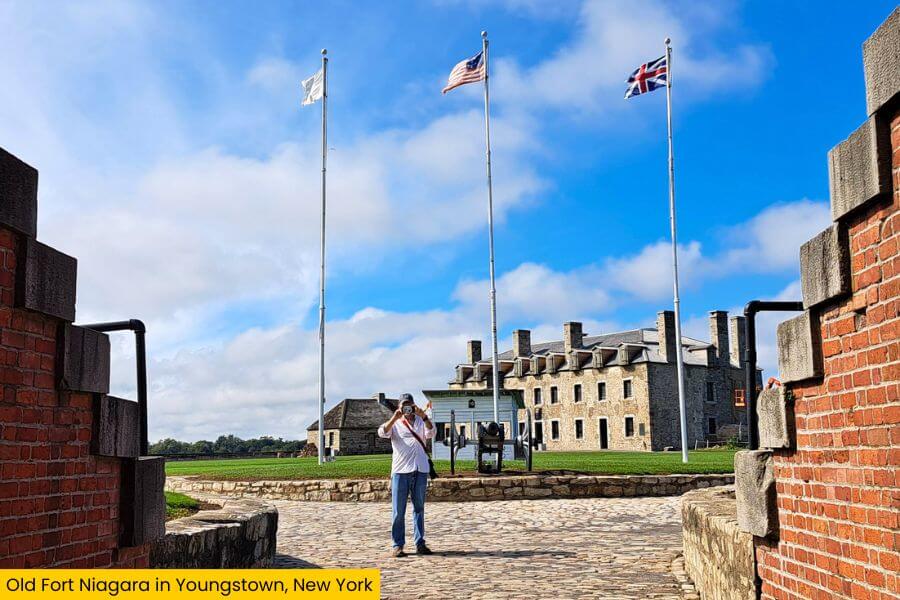
The sunlight creates beautiful views across Lake Ontario, and the historic buildings look especially impressive during the golden hours around sunrise and sunset.
Wear comfortable walking shoes.
The grounds include gravel paths, grassy areas, stone surfaces, and plenty of places to explore on foot.
You will likely spend several hours walking between buildings, exhibits, and fortifications.
Give yourself at least two to three hours to see the major attractions.
History enthusiasts could easily spend half a day exploring the grounds, reading exhibits, attending demonstrations, and taking a guided tour.
Because the fort sits directly on the waterfront, conditions can be windier and cooler than expected, even during summer.
Bringing a light jacket is often a good idea, especially if you plan to spend time along the lakefront.
Don’t forget your camera.
The combination of historic architecture, military fortifications, lake views, and passing ships creates excellent photo opportunities throughout the property.
After exploring the fort, there are several nearby attractions worth adding to your itinerary.
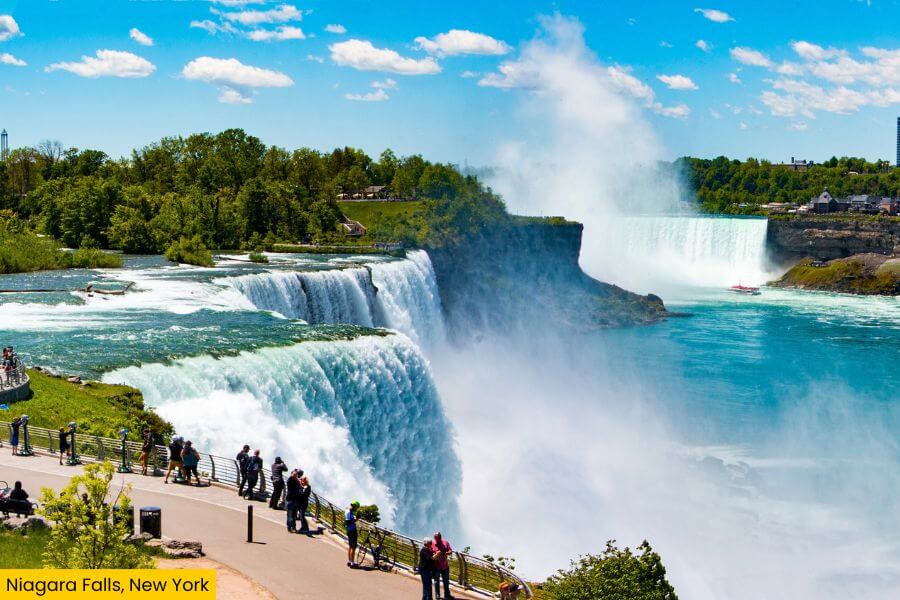
Niagara Falls is only about 25 minutes away and remains one of the most famous natural attractions in North America.
You can pair a morning at the fort with an afternoon at the falls without feeling rushed.
Just a few minutes from the fort, you’ll find the village of Youngstown.
This small community offers restaurants, cafés, local shops, and waterfront views along the lower Niagara River.
Before you leave, stop by the fort’s gift shop.
You’ll find books, historical reproductions, educational materials, and unique souvenirs related to the fort’s French, British, and American past.
With a little planning, Old Fort Niagara can easily become the centerpiece of a full day exploring one of the most historic corners of New York State.
Related Posts